
Characterization of Phytoconstituents: Methods & Techniques
An in-depth professional review integrating advanced analytical methodologies and research insights
Key Highlights
- Comprehensive Analytical Approaches: Integration of chromatographic, spectroscopic, and extraction techniques provides a robust foundation for phytoconstituent analysis.
- Qualitative and Quantitative Analysis: Employing both screening tests and sophisticated instruments enables detailed chemical profiling and bioactivity assessment.
- Synergy of Techniques: Combining methods such as HPLC-MS, FTIR, and NMR maximizes identification accuracy and structural elucidation.
Introduction
In recent years, the study of phytoconstituents—the naturally occurring chemical compounds in plants—has gained significant momentum due to their promising therapeutic potentials and industrial applications. The accurate identification, quantification, and structural elucidation of these compounds are of paramount importance in fields ranging from pharmacognosy to nutritional science. This comprehensive review discusses the various modern techniques for the characterization of phytoconstituents, offering detailed overviews of chromatographic, spectroscopic, and bioassay methods, underpinned by numerous research studies and papers.
Analytical Strategies for Phytoconstituent Characterization
Chromatographic Techniques
Chromatography forms the cornerstone of phytoconstituent analysis. It is essential as both a preliminary and an advanced analytical technique, allowing for the separation, identification, and quantification of diverse bioactive compounds. Each chromatographic method has its own strengths:
Thin Layer Chromatography (TLC)
TLC is widely used for initial screening of plant extracts. This method is cost-effective and simple, making it ideal for a quick assessment of compound complexity. By using different solvent systems, researchers can visually assess the number of components present, enabling decisions on whether more sophisticated analysis is needed in subsequent stages.
High-Performance Liquid Chromatography (HPLC)
HPLC is a more advanced technique used for precise separation and quantification of phytoconstituents. Its ability to generate both qualitative and quantitative data renders it crucial for quality control and standardization. HPLC is often coupled with detectors like UV-Visible spectroscopy or mass spectrometry (MS), enhancing its application in characterizing complex mixtures.
Gas Chromatography (GC)
GC is particularly suited for the analysis of volatile phytoconstituents, such as essential oils. The method’s high resolution and sensitivity make it invaluable for the identification of components that may be present in trace amounts. GC coupled with mass spectrometry (GC-MS) offers robust identification by determining molecular weights and structural fragments.
Ultra Performance Liquid Chromatography Electrospray Ionisation Tandem Mass Spectrometry (UPLC-ESI-MS/MS)
This state-of-the-art method greatly enhances the speed and precision of phytoconstituent analysis. UPLC-ESI-MS/MS offers rapid identification and quantification, frequently used in pharmaceutical research for profiling bioactive compounds in plant extracts.
Spectroscopic Techniques
Spectroscopic methods provide detailed structural information that is essential for the identification of unknown compounds. They are generally used in conjunction with chromatographic methods.
Ultraviolet-Visible (UV-Vis) Spectroscopy
The UV-Vis spectroscopy technique measures the absorbance of light in the ultraviolet and visible spectrum by a compound. It is particularly useful for quantifying compounds that possess chromophores. When combined with HPLC, UV-Vis detectors can provide quantitative profiles of phytoconstituents.
Infrared (IR) Spectroscopy
IR spectroscopy is instrumental in identifying functional groups present within phytoconstituents. By analyzing the vibrational frequencies of molecules, IR spectroscopy aids in elucidating the molecular structure and chemical composition of isolated compounds.
Mass Spectrometry (MS)
Mass spectrometry is a high-impact technique that determines the molecular weight and fragmentation pattern of compounds. When coupled with chromatographic methods such as HPLC or GC, MS provides a powerful tool for identifying compounds precisely, even in complex mixtures. This synergy is critical in confirming the literature and expanding knowledge in phytochemical research.
Nuclear Magnetic Resonance (NMR) Spectroscopy
NMR spectroscopy is recognized for its unparalleled ability to elucidate the molecular structure of organic compounds. Through the interaction of nuclear spins with an external magnetic field, detailed information relating to the chemical environment of atoms within a molecule can be obtained. Despite being resource-intensive, NMR remains the gold standard for the structural analysis of phytoconstituents.
Qualitative Phytochemical Screening
Before undertaking quantitative analyses, qualitative phytochemical screening methods are employed to classify the types of compounds present within an extract. These methods, often based on simple chemical reactions and colorimetric tests, provide a rapid assessment of several major classes such as:
Alkaloids
Detection of alkaloids often involves tests such as Mayer’s, Wagner’s, or Hager’s tests. The formation of precipitates or color changes indicates presence, facilitating subsequent purification.
Flavonoids
Flavonoids are typically identified using reactions with alkaline reagents or lead acetate, with confirmatory tests involving sulfuric acid leading to characteristic color changes.
Terpenoids and Phenolics
Terpenoids are detected by employing Salkowski’s test, while phenolic compounds can be identified using ferric chloride or lead acetate reagents. Saponins and tannins also have specific tests such as the froth test and gelatin test, respectively.
Quantitative Analysis
Quantitative techniques provide numerical data regarding the concentration of phytoconstituents. Among these, methods that quantify the total phenolic content (TPC) and total flavonoid content (TFC) are prominent, using reagents such as Folin-Ciocalteu and aluminum chloride (AlCl3) respectively, with gallic acid and quercetin serving as standards.
Integrated Approaches and Combined Methodologies
To fully exploit the strengths of different analytical methods, modern phytochemical analysis often implements integrated approaches. By coupling chromatographic separation with advanced spectroscopic detection methods, researchers achieve a higher degree of precision in identifying and quantifying complex phytoconstituent profiles. The integrated use of multiple techniques not only validates findings but also allows for deeper insights into the bioactivities and potential synergistic effects of compounds present within plant extracts.
Case Study: Combining TLC, HPLC, and MS
A recent research paper exemplifies this integrated approach by employing TLC for initial screening, HPLC for separation, and MS for definitive identification of phytoconstituents in medicinal plants. This tailored methodology enhances the reliability of the analytical process, ensuring that subtle differences in compound structures are accurately captured. Such protocols are fundamental in the development of standardized phytomedicines and nutraceuticals.
Extraction Methods and Preparative Techniques
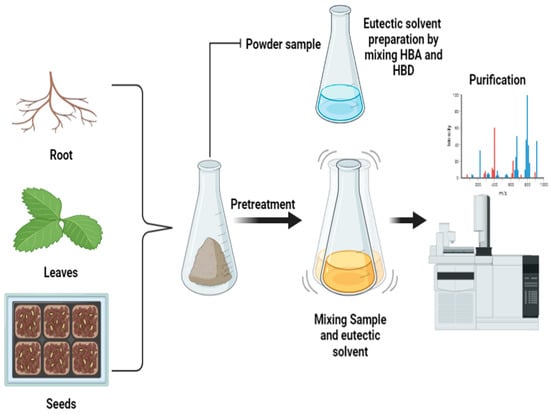
Prior to detailed analysis, efficient extraction and isolation of phytoconstituents are crucial. Commonly used extraction methods include solvent extraction and Soxhlet extraction, which help in isolating the compounds of interest from plant matrices. The choice of solvent (e.g., methanol, ethanol, water) depends on the target phytoconstituents’ polarity and stability.
Solvent Extraction
Solvent extraction methods are preferred due to their simplicity and effectiveness. During this process, plant materials are macerated in the selected solvent, allowing bioactive compounds to dissolve. The resultant extract is then concentrated, serving as the precursor for further chromatographic and spectroscopic analyses.
Soxhlet Extraction
Soxhlet extraction provides a continuous and efficient means of extracting phytoconstituents. This technique is particularly beneficial when exhaustive extraction is required, and it is frequently used for isolating compounds such as phenolics. The method ensures that the solvent repeatedly contacts the plant material, thereby maximizing yield.
Comparative Table of Key Analytical Methods
The following table provides a comparative overview of the main analytical techniques used in the characterization of phytoconstituents, highlighting their advantages and typical applications:
| Technique | Application | Key Advantages | Typical Coupling |
|---|---|---|---|
| TLC | Preliminary screening | Simple, rapid, cost-effective | None or HPLC for further separation |
| HPLC | Separation & quantification | High-resolution, quantitative | UV-Vis, MS |
| GC | Analysis of volatile compounds | High sensitivity, resolution | Mass Spectrometry (GC-MS) |
| UPLC-ESI-MS/MS | Rapid identification & quantification | Fast and accurate | Standalone with integrated MS detection |
| UV-Vis & IR Spectroscopy | Detection of functional groups | Rapid qualitative analysis | HPLC integration |
| NMR Spectroscopy | Structural elucidation | Detailed molecular structure | Standalone |
Research Papers and References
The methodologies described above have been thoroughly evaluated in various peer-reviewed research papers. These studies provide critical insights into both the techniques and their applications in characterizing phytoconstituents:
-
Various Methods Of Phytoconstituent Estimation - IJPS Journal
- A Review on Analytical Methods for Antiviral Phytoconstituents - Journal of Young Pharmacists
-
Characterization of Phytoconstituents and Evaluation of Total Phenolic Content - NCBI
- Rapid Analytical Method for Phytoconstituents in Piper betle - Analytical Methods, RSC Publishing
- Best Practice in the Chemical Characterization of Extracts - Frontiers in Pharmacology
Recommended Queries for Further Exploration
To deepen your understanding of phytoconstituent characterization, consider exploring the following related queries:
Last updated March 16, 2025