
Navigating the Literary Labyrinth: Your Next Charles Dickens Adventure
Unlocking the Timeless Tales of Victorian England's Master Storyteller
Embarking on a journey through the works of Charles Dickens is an unparalleled literary experience. His novels are not merely stories; they are vibrant tapestries woven with rich social commentary, unforgettable characters, and gripping narratives that transport readers to the heart of Victorian England. Choosing your next Dickensian adventure can be a delightful dilemma, given his prolific output of 15 major novels, numerous novellas, and short stories.
Key Insights for Your Dickensian Journey
- Start with Accessibility: For new readers or those seeking a gentler introduction to Dickens's style, A Christmas Carol and Oliver Twist are frequently recommended due to their shorter length and compelling, familiar storylines.
- Explore Masterpieces: Great Expectations and David Copperfield are often cited as Dickens's most critically acclaimed and personally favored works, offering profound character development and intricate plots.
- Consider Thematic Interests: Dickens masterfully explores themes of social injustice, poverty, love, and redemption. Your choice can be guided by your interest in specific social critiques, coming-of-age stories, or historical dramas.
Decoding Dickens: Understanding His Unique Style
Charles Dickens's writing style is distinctive and immersive, often characterized by its descriptive prose, intricate sentence structures, and a penchant for melodrama and social satire. His novels were typically published in serial form, influencing their episodic nature and cliffhanger endings designed to keep readers eagerly awaiting the next installment. This serialization also allowed Dickens to gauge public opinion and even modify plots, a revolutionary approach at the time.
While his language might initially seem challenging due to its Victorian-era vocabulary and elaborate phrasing, many readers find that adapting to his style quickly becomes part of the charm. His ability to create vivid characters and transport readers to bustling London streets or the grim realities of debtor's prisons remains unmatched. Engaging with Dickens means immersing yourself in a world where humor, drama, and biting social commentary coexist.
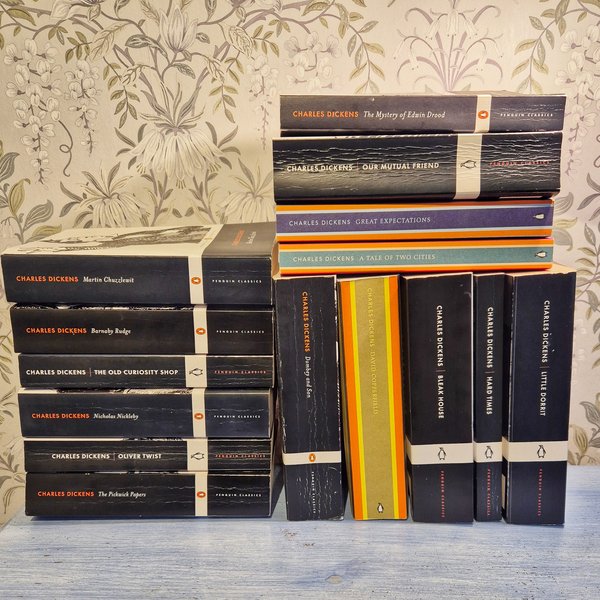
A display of classic Charles Dickens novels, showcasing the enduring appeal of his works.
Accessibility and Engagement for Modern Readers
For those new to Dickens, or who have struggled with his longer works, it's helpful to remember that adaptations have made many of his characters and stories widely known. This familiarity can be an advantage when diving into the original texts, as you'll already have a sense of the plot and key figures. Consider The Muppet Christmas Carol or the musical Oliver! as examples of how his narratives transcend time and medium.
Dickens's contemporaries themselves noted a shift in his style as he aged, with some later works being more complex or darker. However, the consistent thread throughout his bibliography is his profound humanity and extraordinary ability to create memorable characters who embody universal struggles and triumphs. From the miserly Scrooge to the gentle Tiny Tim, Dickens's characters are timeless because they balance humor, drama, and social commentary, making his books incredibly atmospheric.
Top Recommendations for Your Next Read
For the First-Time Reader or a Quick Dive
A Christmas Carol (1843)
This beloved novella is arguably the most accessible starting point for anyone interested in Charles Dickens. It's short, heartwarming, and packed with timeless lessons about redemption and generosity. Its familiar story of Ebenezer Scrooge's transformation, guided by three Christmas spirits, has defined modern Christmas traditions. It's a perfect introduction to Dickens's storytelling genius, blending moral urgency with supernatural charm. Many readers find it an excellent entry point due to its brevity and widely known narrative, allowing them to acclimate to Dickens's prose without being overwhelmed by length.
Oliver Twist (1837)
Another excellent choice for beginners, Oliver Twist is a classic Dickensian tale of an orphan's struggle against the grim realities of poverty and crime in London. It's an entertaining and relatively easy read compared to some of his longer novels, yet it still showcases his signature social commentary on the cruel labor conditions and childhood cruelty of the era. The memorable characters like the Artful Dodger and Fagin make it a captivating read, and its accessibility has made it a popular choice for new readers.
For Those Seeking a Masterpiece
Great Expectations (1861)
Often hailed as Dickens's most critically acclaimed and finely crafted novel, Great Expectations is a profound coming-of-age story. It follows the journey of Pip, an orphan, as he navigates themes of class, ambition, love, and disillusionment. The novel features some of Dickens's most iconic characters, including the eccentric Miss Havisham and the captivating Estella. It is a powerful narrative that blends Gothic atmosphere with a sharp critique of social climbing, making it a favorite among both critics and readers. Many consider it to be "the best" Dickens novel due to its almost perfect harmony of character, plot, and theme.
David Copperfield (1849-1850)
Described by Dickens himself as his "favourite child," David Copperfield is a semi-autobiographical novel charting a young boy's life from childhood to maturity. It's a sprawling, joyous romp filled with an outlandish cast of characters, including the cheerful Mr. Micawber, the villainous Uriah Heep, and the eccentric Betsey Trotwood. This novel offers a deep dive into Dickens's personal experiences and his masterful ability to create sympathetic and unforgettable figures. It is often recommended as a second or third Dickens read after an easier entry, as its length is considerable but its engaging narrative makes it worthwhile.
For History Buffs and Social Critics
A Tale of Two Cities (1859)
Opening with one of the most famous lines in literature—"It was the best of times, it was the worst of times"—this historical novel is set during the tumultuous French Revolution. It's a gripping story of sacrifice, redemption, and political intrigue, intertwining the destinies of characters in London and Paris. If you enjoy historical fiction with a strong dramatic core, A Tale of Two Cities offers a thrilling mix of romance and revolutionary fervor. It's also one of the best-selling novels of all time, testifying to its enduring appeal.
Bleak House (1852-1853)
Considered by many to be Dickens's masterpiece and one of his most sophisticated works, Bleak House is a darker, more intricate novel that takes aim at the inefficiencies and injustices of the English legal system, particularly through the never-ending court case of Jarndyce and Jarndyce. It features a host of intriguing characters and showcases Dickens's detailed, multi-layered storytelling and incisive social critique. This novel is perfect for readers who enjoy atmospheric tales and a deep dive into social reform issues, and its impact even contributed to legal reforms in the 1870s.
For Those Who Enjoy Humor and Episodic Adventures
The Pickwick Papers (1836-1837)
Dickens's debut novel, The Pickwick Papers, is a comedic romp filled with glorious characters and hilarious episodes. It started as a series of sketches and evolved into a novel, following the adventures of the benign and naïve Samuel Pickwick and his friends. It's less plot-driven than his later works and more episodic, making it easy to read in bits and pieces. If you prefer a humorous and lighthearted introduction to Dickens's wit and character work, this is an excellent choice. It was also the work that propelled Dickens into widespread fame.
A Comparative Overview of Dickens's Notable Works
To help you decide, here's a table comparing some of Dickens's most frequently recommended novels across various dimensions:
| Novel Title | Primary Themes | Complexity/Length | Key Characters | Why Read It Next? |
|---|---|---|---|---|
| A Christmas Carol | Redemption, Generosity, Christmas Spirit, Social Responsibility | Short Novella, Very Accessible | Ebenezer Scrooge, Tiny Tim, Ghosts of Christmas | Perfect for a quick, heartwarming introduction to Dickens's moral storytelling. |
| Oliver Twist | Poverty, Injustice, Childhood Cruelty, Good vs. Evil | Medium Length, Accessible | Oliver Twist, Fagin, Artful Dodger, Nancy | Engaging plot, familiar characters, and a clear social message. |
| Great Expectations | Class, Ambition, Love, Disillusionment, Identity | Medium-Long, Highly Acclaimed | Pip, Miss Havisham, Estella, Magwitch | Considered a literary masterpiece, profound character development, and intricate plot. |
| David Copperfield | Coming-of-Age, Identity, Memory, Personal Growth | Long, Autobiographical Elements | David Copperfield, Mr. Micawber, Uriah Heep, Betsey Trotwood | Dickens's personal favorite, rich characters, and a sweeping life story. |
| A Tale of Two Cities | Sacrifice, Resurrection, Revolution, Love, Loyalty | Medium-Long, Historical Fiction | Sydney Carton, Charles Darnay, Lucie Manette, Madame Defarge | A thrilling historical drama with iconic opening lines and powerful themes. |
| Bleak House | Legal Injustice, Social Critique, Disease, Hypocrisy | Very Long, Complex Narrative | Esther Summerson, Lady Dedlock, John Jarndyce, Inspector Bucket | A profound and intricate critique of society, showcasing Dickens's narrative mastery. |
| The Pickwick Papers | Travel, Humor, Social Observation, Friendship | Long, Episodic, Comedic | Samuel Pickwick, Sam Weller, Alfred Jingle | A lighthearted, humorous romp, excellent for enjoying Dickens's wit without a heavy plot. |
Visualizing Your Dickensian Preferences
To further assist in your decision, this radar chart illustrates the perceived characteristics of some of Dickens's key works across various dimensions. This is an opinionated analysis designed to highlight different aspects of each novel, helping you choose based on what you prioritize in a reading experience.
This chart aims to give you a quick visual comparison: for instance, if "Accessibility" and "Emotional Impact" are high priorities, A Christmas Carol might be your ideal choice. If you're looking for deep "Character Depth" and strong "Social Commentary," Bleak House or Great Expectations could be more suitable.
Understanding Dickens's World
Charles Dickens lived from 1812 to 1870, a period of immense social and industrial change in Britain. His personal experiences, including his family's financial struggles and his time working in a blacking factory as a child, deeply influenced his writing. He became a voice for the poor and the marginalized, exposing societal injustices through his vivid narratives. His popularity was immense during his lifetime, and he often gave public readings of his works, further cementing his connection with his audience.
His novels were not just entertainment; they were often powerful vehicles for social reform. For example, Bleak House contributed to legal reforms, and his portrayals of poverty and working conditions resonated deeply with readers and policymakers. Understanding this context can enrich your reading experience, allowing you to appreciate the satirical edge and emotional depth of his critiques.
A comprehensive guide on how to approach reading Charles Dickens, offering tips for beginners and seasoned readers.
This video provides valuable insights into how to approach Charles Dickens's works, offering practical advice on tackling his longer novels and appreciating his distinctive style. It reinforces the idea that while Dickens can seem daunting, with the right approach, his stories are incredibly rewarding.
Frequently Asked Questions (FAQ)
What is the easiest Charles Dickens book to start with?
Which Charles Dickens novel is considered his greatest?
Are Charles Dickens's novels difficult to read?
Did Dickens base his characters on real people?
Conclusion
Choosing your next Charles Dickens book is an exciting prospect, promising a deep dive into masterful storytelling, vibrant characters, and incisive social commentary. Whether you opt for the festive charm of A Christmas Carol, the gripping social critique of Oliver Twist, the profound coming-of-age journey in Great Expectations, or the sweeping narrative of David Copperfield, you're guaranteed a rewarding literary experience. Consider your personal preferences for length, theme, and tone, and prepare to be transported to the richly imagined world of one of English literature's greatest novelists. Happy reading!
Recommended Further Exploration
- Literary adaptations of Charles Dickens's novels
- Charles Dickens's impact on Victorian society
- Thematic analysis of Dickens's social commentary
- Exploring Charles Dickens's short stories and novellas