
The Global Success and Challenges of Piezoelectric Technology
Exploring a dynamic field transforming energy and innovation across industries
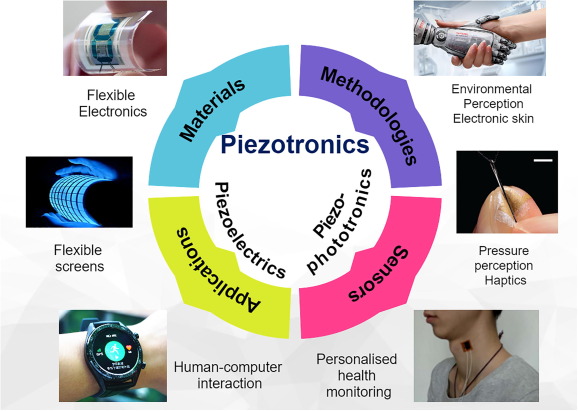
Highlights
- Versatile Applications: From medical devices to energy harvesting, piezoelectric technology powers innovations across diverse sectors.
- Sustainable Energy Solutions: Its ability to convert mechanical stress into usable electrical power promotes sustainability and energy efficiency.
- Complex Challenges: Material limitations, manufacturing complexities, and integration issues remain key hurdles for mass adoption.
Introduction
Piezoelectric technology has emerged as one of the most promising innovations in modern science and industry. Harnessing the power to convert mechanical stress—such as pressure, vibrations, or deformation—into electrical energy, this technology has demonstrated both versatility and effectiveness in myriad applications. From powering everyday consumer devices to advancing critical medical instruments, piezoelectricity stands at the intersection of materials science and practical engineering. The transformation of mechanical to electrical energy is central not only to energy harvesting but also to other sectors including aerospace, automotive, robotics, and water treatment.
Applications of Piezoelectric Technology
Energy Harvesting
One of the most transformative applications of piezoelectric technology is in energy harvesting. Piezoelectric devices can capture the minute energy generated from environmental vibrations, human movement, or machinery operations and convert it into electrical power. This capability supports the development of self-powered sensor networks and wearable devices, effectively reducing the dependency on conventional battery systems. Many innovative projects have integrated piezoelectric materials into floors, roads, and bridges, where the mechanical strains of everyday use are converted into usable electrical energy, potentially powering street lighting or signaling systems.
Key Benefits
The primary benefits include:
- Reduction in energy waste by capturing ambient kinetic energy.
- Sustainability through renewable energy solutions.
- Enhanced efficiency in powering remote and IoT devices.
Medical Technology
In the realm of healthcare, piezoelectric materials have significantly impacted the design and functionality of medical devices. Ultrasound machines, pacemakers, and various sensors rely on the precise actuation capabilities and sensitivity of piezoelectric components. The technology is critical for generating high-frequency sound waves in diagnostic imaging, thus enhancing image quality and diagnostic accuracy.
Medical Innovations
Some innovative applications include:
- Ultrasound devices: Using piezoelectric transducers to generate and receive sound waves for high-definition imaging.
- Portable diagnostics: Sensor technologies integrated into wearable devices providing continuous health monitoring and patient care.
- Tissue engineering: Advanced research is exploring the use of piezoelectricity to foster tissue regeneration by simulating bioelectrical cues, a promising approach for regenerative medicine.
Automotive and Aerospace
The automotive and aerospace industries also benefit remarkably from piezoelectric technology. In automotive applications, piezoelectric sensors contribute to improved vehicle safety by monitoring engine functions, optimizing performance, and even aiding in airbag deployment systems. Meanwhile, in aerospace, lightweight and efficient piezoelectric actuators are used to manage vibrations, enhance control systems, and contribute to energy-efficient designs of aircraft and spacecraft.
Critical Roles in Engineering
The roles include:
- Deploying sensors in engines and structural components to monitor stress and performance.
- Enhancing aerodynamic performance by dampening unwanted vibrations and oscillations.
- Integration into advanced control systems for flight dynamics and stability in spacecraft.
Consumer Electronics and Haptic Feedback
Beyond industrial and medical applications, piezoelectric devices are increasingly present in consumer electronics. They are used in devices such as smartphones, laptops, and wearable gadgets, where the efficient conversion of small mechanical displacements into electrical signals enables precise and responsive control mechanisms. Furthermore, piezoelectric actuators are pivotal in the development of haptic feedback systems—devices that simulate the sense of touch, thereby enhancing user-interface experiences.
Innovative Integrations
Applications in this sector include:
- Touch responsiveness in interactive screens and gaming controllers.
- Compact sensors for motion and orientation detection in consumer devices.
- Miniaturized systems that integrate seamlessly into wearable technology for both entertainment and health monitoring applications.
Global Market Trends
The market for piezoelectric devices has seen impressive growth in recent years. Projections indicate that the market value is set to increase from approximately $26.55 billion in 2024 to around $27.28 billion in 2025, with forecasts estimating an expansion to over $50.32 billion by 2030 at an attractive growth rate (CAGR) of roughly 7.4%. This robust market performance is driven not only by technological advancements and increased demand in sustainable energy applications but also by the diversification of piezoelectric components among various industries.
Investment in research and development, coupled with the integration of piezoelectric technology into new and revolutionary products, continues to fuel this upward trend. The focus remains on increasing energy output, enhancing device efficiency, and reducing production costs through new materials and innovative fabrication techniques.
Challenges Facing Piezoelectric Technology
Despite its promising potential, piezoelectric technology is not without significant challenges. These challenges span from technical material issues to broader market and regulatory hurdles. Addressing these challenges is crucial for the continued growth and adoption of piezoelectric solutions.
Material and Manufacturing Limitations
The performance of piezoelectric elements is highly dependent on the materials used. While ceramics such as lead zirconate titanate (PZT) have high piezoelectric coefficients, they also raise environmental and health concerns due to the lead content. In contrast, piezoelectric polymers offer greater flexibility and environmental safety but suffer from reduced efficiency. Thus, the need for research into new composite materials or eco-friendly alternatives remains a critical driver for future development.
Manufacturing Complexities
Producing piezoelectric devices involves intricate processes that demand precise control over the material composition and structural properties. This complexity can result in higher manufacturing costs and scalability issues. Additionally, many piezoelectric materials require integration with standard CMOS technology, presenting compatibility challenges.
Integration Challenges
Incorporating piezoelectric components into existing systems can be quite challenging. The miniaturization required by modern consumer electronics and medical devices demands precise engineering to maintain efficiency without compromising the performance of other system components. Moreover, the lack of uniformity in materials and device standards complicates the design process and may hinder interoperability in multi-component systems.
Standardization Issues
An additional challenge arises from the lack of industry-wide standardization. As manufacturers employ different materials and technological approaches, it becomes difficult to compare device performance or develop interoperable systems. Harmonizing standards across the industry stands as an important goal to foster broader adoption and unlock the full potential of piezoelectric technology.
Cost and Market Adoption
While piezoelectric devices offer substantial benefits, the high costs associated with fabrication and integration remain a significant barrier to widespread market penetration. In sectors such as consumer electronics and automotive manufacturing, where cost sensitivity is paramount, these expenses can limit adoption. Additionally, a general lack of market awareness hinders the investment and research needed to drive further advancements.
Addressing Cost Concerns
To overcome cost barriers, ongoing research is focused on optimizing manufacturing techniques and discovering new materials that combine performance with affordability. Collaborative efforts among industry leaders, academic institutions, and regulatory bodies are expected to pave the way for more cost-effective production methods. This progress is essential for making piezoelectric technology accessible on a global scale.
Summary Table of Applications and Challenges
| Category | Applications | Key Benefits | Challenges |
|---|---|---|---|
| Energy Harvesting | Sensors; IoT devices; wearable technology | Renewable power supply; sustainability; reduced battery dependency | Efficiency; energy output stability; ambient energy variability |
| Medical Technology | Ultrasound machines; diagnostic sensors; pacemakers | Precision imaging; improved patient monitoring; non-invasive diagnostics | Material biocompatibility; manufacturing costs; integration with biological systems |
| Automotive & Aerospace | Sensors; actuators; structural vibration control | Enhanced safety; improved performance; real-time monitoring | Miniaturization challenges; integration with legacy systems; high reliability requirements |
| Consumer Electronics | Haptic feedback systems; touch sensors; wearable devices | User interface enhancement; low power consumption; responsive control | Material uniformity; standardization; cost constraints |
Future Outlook and Research Directions
The future of piezoelectric technology appears both promising and dynamic. Continuous research is essential to address the present limitations while paving the way for new applications. Researchers are actively exploring novel materials that combine high piezoelectric coefficients with environmental friendliness. For instance, advancements in composite materials may offer the flexibility of polymers with enhanced electrical performance, reducing reliance on hazardous substances without sacrificing efficiency.
Another promising avenue is the integration of piezoelectric systems with digital control systems. Leveraging the Internet of Things (IoT) and advanced sensor networks, future piezoelectric devices are expected to become even more efficient, autonomous, and seamlessly integrated with smart technologies. This evolution will not only bolster energy efficiency but also drive innovation in fields such as robotics, where the precise control of motion and force is paramount.
Collaboration and Standardization
Global collaboration among academic institutions, industry stakeholders, and regulatory agencies is vital to standardize materials, processes, and performance benchmarks. Standardization can foster broader adoption and enable the integration of piezoelectric devices into multi-functional systems. As these standards develop, the market is likely to see reduced costs, greater compatibility, and heightened trust among consumers and industries alike.
In practical terms, the development of cost-effective manufacturing methods, such as advanced printing technologies or new deposition techniques, will further revolutionize the production of piezoelectric devices. With increased economies of scale, we can expect these innovations to lower production costs, opening up new markets and applications that were previously constrained by financial limitations.
References
- Piezoelectric Devices Market Size, Share | Industry Growth, 2030 - Fortune Business Insights
- Unlocking Japanese Innovation: The Global Impact of Piezoelectric Elements - NewJi
- Piezoelectric Systems in Aerospace and Medical Devices - AP News
- Challenges in Piezoelectric Materials - Tandfonline
- Global Market Report on Piezoelectric Devices - The Business Research Company
Recommended Related Queries
Last updated March 15, 2025