
Technologies to Enhance Pigment Production from Microorganisms
Innovative Approaches to Sustainable Microbial Pigments
Key Highlights
- Genetic and Metabolic Engineering – Advanced gene manipulation techniques boost biosynthetic efficiency.
- Process and Fermentation Optimization – Tailored fermentation strategies and medium adjustments maximize yields.
- Waste Valorization and Innovative Extraction – Utilizing agro-industrial waste and novel extraction methods drive sustainability.
Overview of Microbial Pigment Production
The field of microbial pigment production is burgeoning, driven by the need for sustainable, non-toxic, and eco-friendly colorants to replace synthetic alternatives. Microorganisms, such as bacteria, fungi, and yeasts, produce a variety of pigments used in food, cosmetics, textiles, and pharmaceuticals. Several advanced technologies are now being deployed to enhance both the yield and cost-effectiveness of these pigments. This comprehensive discussion reviews strategies ranging from precision genetic modifications and fermentation improvements to waste valorization and innovative extraction techniques.
Genetic and Metabolic Engineering
Genetic engineering remains at the forefront of improving pigment production. Researchers manipulate microbial genomes to enhance the biosynthetic pathways responsible for producing pigments. Metabolic engineering involves re-routing the metabolic networks within microbial cells, ensuring that more substrates are funneled into pigment production.
Gene Expression and Pathway Manipulation
Using tools such as CRISPR-Cas9 and other gene-editing technologies, scientists can introduce, knock out, or overexpress genes that are essential for pigment biosynthesis. For instance, by inserting heterologous genes from other organisms or optimizing native genes, microbial strains can be made to produce pigments at a much higher rate. With advances in synthetic biology, entire pigment biosynthetic pathways can be reconstructed in model organisms like Escherichia coli or Saccharomyces cerevisiae. This approach not only increases yields but also opens the door to producing novel pigments with desirable properties.
Techniques in Genetic Engineering
Technologies such as genome shuffling, molecular cloning, and random mutagenesis (e.g., UV mutagenesis, chemical mutagens) contribute to strain improvement. By exposing microorganisms to controlled mutations, researchers select high-yield pigment-producing phenotypes. Additional techniques like gene knockout and promoter engineering further refine these microbial factories.
Fermentation and Medium Optimization
Fermentation processes are pivotal in cultivating microbial cells under optimal conditions for pigment production. Both submerged and solid-state fermentation methods have been successfully employed, each offering unique advantages in terms of scalability and cost-effectiveness.
Submerged and Solid-State Fermentations
Submerged fermentation offers tight control over environmental conditions such as pH, temperature, and aeration. This control is crucial for maintaining consistent production quality. Conversely, solid-state fermentation makes efficient use of agro-industrial wastes, such as sugarcane bagasse or paper mill sludge. This not only lowers costs but also aligns with sustainable practices by recycling waste materials.
Process Scaling-Up and Optimization Strategies
Tools such as Response Surface Methodology (RSM) are used to optimize fermentation conditions. By systematically varying parameters such as carbon and nitrogen sources, temperature, agitation, and pH, researchers can identify the precise combination that maximizes pigment yield. Co-substrate supplementation introduces additional nutrients that specifically enhance metabolic pathways leading to pigment synthesis.
| Process Aspect | Technology/Approach | Benefits |
|---|---|---|
| Genetic Engineering | CRISPR-Cas9, Genome Shuffling, Gene Overexpression | Enhanced pigment biosynthetic pathways; increased yield |
| Fermentation Optimization | Submerged & Solid-State Fermentation, RSM | Precise control of growth parameters; scalable production |
| Waste Utilization | Agro-industrial waste as substrate | Cost-effective; sustainable raw material sourcing |
| Immobilization Techniques | Cell encapsulation and aggregation | Improved stability and reusability of microbial cells |
| Advanced Extraction | Ultrasound and Enzyme-Assisted Extraction | Higher recovery accuracy; eco-friendly processing |
Omics and Systems Biology Approaches
The integration of omics technologies—encompassing genomics, transcriptomics, proteomics, and metabolomics—has significantly advanced the understanding of pigment biosynthetic pathways. By analyzing the complete cellular machinery, scientists can identify rate-limiting steps in pigment synthesis and develop strategies to overcome these limitations.
Application of Omics in Pigment Production
Through transcriptomic analysis, researchers pinpoint which genes are up- or down-regulated during pigment synthesis. Proteomic studies unveil the interactions between enzymes, while metabolomic profiling provides precise data on substrate-to-product conversion rates. Together, these insights allow for a comprehensive re-engineering of metabolic networks, ensuring that more cellular resources are devoted to pigment production, thus enhancing overall production efficiency.
Systems Biology and Metabolic Modeling
Systems biology, aided by computational models, can simulate cellular behavior under various conditions. This modeling helps predict the outcomes of genetic modifications and fermentation parameters on pigment yield. Such predictive analysis reduces experimental trial and error, thereby streamlining the path to high-yield production systems.
Nanotechnology and Advanced Extraction Techniques
Recent developments in nanotechnology have also contributed to optimizing pigment production. These innovations primarily improve the extraction and formulation processes, ensuring that the final pigments are of high purity and stability.
Nanotech-Enhanced Extraction
Nanotechnology-assisted extraction methods, such as ultrasound-assisted extraction and enzyme-assisted extraction, have shown promise in recovering pigments from microbial cultures. These methods reduce processing time and improve yield by breaking down cellular matrices and facilitating the release of intracellular pigments. The smaller particle sizes generated by these technologies also allow for more efficient downstream processing.
Emerging Nanotechnological Applications
In addition to extraction, nanotechnology is being applied to pigment formulation, where nano-carriers help disperse pigments uniformly in various mediums. This application is particularly valuable in industries like cosmetics and food, where uniform coloration is crucial.
Waste Valorization and Sustainable Substrates
The sustainable aspect of pigment production is increasingly emphasized by the utilization of agro-industrial waste. Instead of relying on expensive and non-renewable substrates, researchers now focus on converting waste materials into valuable resources for fermentation.
Utilizing Agro-Industrial Waste
Agro-industrial wastes such as sugarcane bagasse, paper mill sludge, and agri-food residues are rich in carbohydrates and other nutrients vital for microbial growth. By optimizing fermentation media with these by-products, cost savings are realized while reducing environmental impact. This approach not only makes pigment production more economical but also contributes to waste recycling and sustainable industrial practices.
Substrate Optimization and Co-substrate Strategies
In addition to using waste materials, co-substrate supplementation has emerged as a key strategy. The addition of amino acids, vitamins, or specific nitrogen and carbon sources can amplify microbial metabolic activity. This dual-substrate strategy results in a more robust fermentation process and ultimately higher pigment yields.
Cell Immobilization and Enhanced Bioprocessing
Another innovative approach in microbial pigment production is the immobilization of cells during fermentation. Immobilization involves anchoring cells onto solid supports or within encapsulated matrices. This technique offers several advantages including increased cell stability, ease of separation, and potential for repeated batch operations. As immobilized cells experience reduced shear stress during agitation, they exhibit enhanced longevity and consistent pigment output.
Techniques and Applications in Immobilization
Common immobilization techniques include encapsulation, entrapment within polymer matrices, and attachment to porous carriers. These methods facilitate continuous or repeated fermentation cycles, thereby reducing production costs. Additionally, immobilization enhances downstream processing as the separation of biomass from the pigment extract becomes more straightforward. This is particularly beneficial in large-scale industrial applications where process efficiency is key.
Industrial Implementation
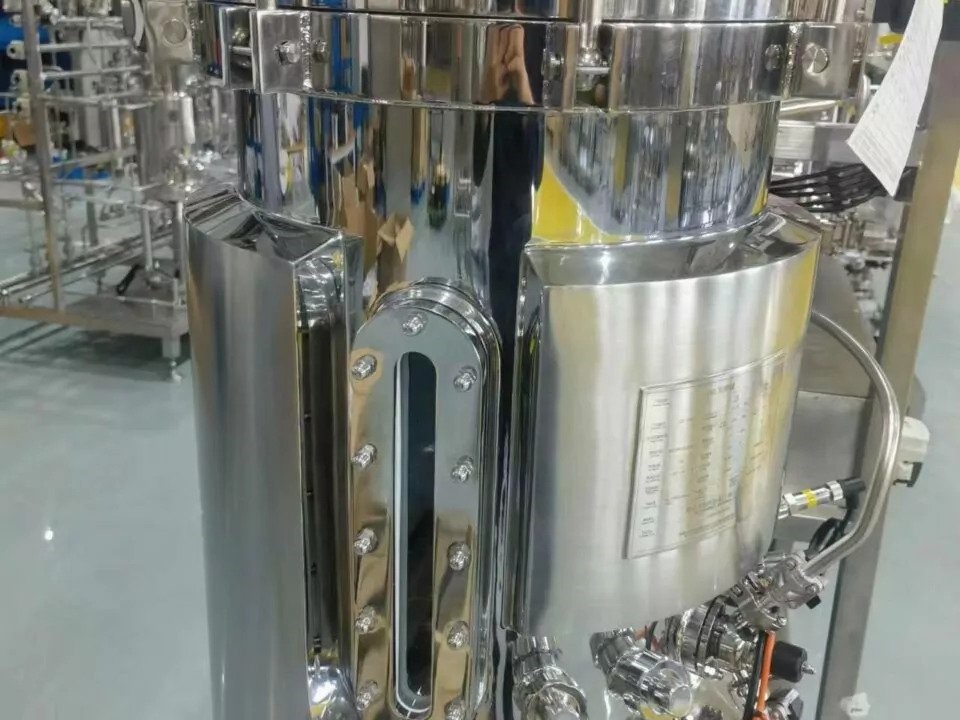
In an industrial setting, immobilized cell systems are often integrated with advanced bioreactor designs. Such systems ensure that pigments are consistently produced at the desired quality and yield, meeting the market demands of industries such as textiles, food, and cosmetics.
Integration of Advanced Technologies
The integration of multiple approaches – from genetic engineering and omics to fermentation optimization and nanotechnologies – represents a holistic strategy for improving pigment production. Combining these technologies leads to a synergistic effect where the sum is greater than its parts. By leveraging different disciplines, industries can overcome bottlenecks, reduce production costs, and scale up processes while maintaining product quality.
Multidisciplinary Approach
The modern drive towards sustainable bioprocessing is characterized by a multidisciplinary approach. Researchers routinely integrate biotechnological innovations with computational modeling and process engineering. This integration ensures that metabolic pathways are engineered properly, fermentation conditions are optimized, and extraction methods are efficient. It is a forward-thinking evolution that not only fosters high-yield pigment production but also encourages the development of eco-friendly and economically viable products.
Case Studies and Industrial Examples
Industrial implementations have shown that strategic modifications can lead to substantial improvements in pigment yield. For example, successful cases of recombinant pigment production in modified E. coli have demonstrated increased production rates and stability. Moreover, the use of waste substrates in bioreactors has set a benchmark for sustainable bioprocessing, inspiring further research and development in this field.
References
-
PMC Article - NCBI
-
Frontiers in Microbiology - Frontiers
-
ScienceDirect Article - ScienceDirect
-
PMC Article - NCBI
-
PMC Article - NCBI
Recommended Queries for Further Exploration
Last updated March 7, 2025