
PISA Type Test Items on Light Propagation, Reflection, and Refraction
Engaging assessment items exploring the dual nature of light models
Key Highlights
- Dual Modeling: Items integrate both the wave and particle perspectives of light.
- Concept Integration: Every question links fundamental principles with observable phenomena.
- Varied Formats: Stems, illustrations, and options ensure multi-dimensional assessment.
Overview
The following set of 10 PISA type test items are designed to assess students’ understanding of how light propagates, reflects, and refracts. These items incorporate explanations from both the wave model and the particle model of light, highlighting the dual nature of light essential for modern physics. Each test item includes a well-defined stem, multiple choices, and an illustration prompt to help students visualize the phenomena described. The integration of both models offers educators a robust tool to evaluate the depth of students’ conceptual understanding as set by current PISA framework objectives.
The wave model explains light phenomena in terms of wave properties such as wavelength, frequency, and speed. Concepts like diffraction, interference, and refraction are central to this model. Meanwhile, the particle model describes light in discrete packets called photons, which interact with matter through quantized energy exchanges. By including items that reference both models, this assessment ensures that learners appreciate the complementary nature of these theories and are prepared for more advanced studies where such dual interpretations are necessary.
Test Items
Item 1: Propagation of Light in Vacuum
Stem and Illustration
A beam of light is observed traveling through a vacuum (space), illustrated by a diagram of space with a beam of light progressing in a straight line. Which explanation best describes this phenomenon?
Options:
A) According to the wave model, light requires a medium, so this cannot be explained.
B) According to the particle model, light is composed of photons that do not require a medium.
C) Both models view the propagation as needing an ether medium.
D) Neither model can explain light propagation in a vacuum.
Answer: B) According to the particle model, light is composed of photons that do not require a medium.
Item 2: Reflection Off a Smooth Surface
Stem and Illustration
An illustration shows a beam of light striking a smooth mirror surface with marked angles of incidence and reflection. How does the wave model explain the reflection phenomenon?
Options:
A) The wavefronts reverse their direction upon hitting the mirror, maintaining the angle of incidence equal to the angle of reflection.
B) The photons are absorbed and re-emitted randomly by the mirror's surface.
C) The change in medium causes a change in the wavelength, resulting in reflection.
D) Reflected light is explained solely by the energy increase in photons.
Answer: A) The wavefronts reverse their direction upon hitting the mirror, maintaining the angle of incidence equal to the angle of reflection.
Item 3: Refraction at a Medium Interface
Stem and Illustration
A diagram depicts a beam of light entering water from air. The diagram includes the normal line and the bending of light at the interface. In the context of the wave model, what is the primary reason for the bending of light?
Options:
A) The light’s wavelength changes as it passes into the water, causing refraction.
B) The photons change direction due to scattering at the interface.
C) There is an increase in energy of light as it enters the water.
D) The refractive index of water is lower compared to air.
Answer: A) The light’s wavelength changes as it passes into the water, causing refraction. (This is consistent with the wave model where the change in speed leads to a change in wavelength and consequently a bend in the ray’s path.)
Item 4: Photoelectric Effect and Intensity
Stem and Illustration
An illustration shows a metal surface with beams of light striking it, leading to the ejection of electrons. How does the particle model explain the phenomenon observed in this experiment, commonly known as the photoelectric effect?
Options:
A) Each photon carries a discrete amount of energy, and increasing light intensity increases the number of photons rather than the energy of each photon.
B) The light waves interfere constructively to provide the necessary energy for electron ejection.
C) A change in wavelength directly increases the energy of the light waves.
D) The phenomenon is explained by the absorption of a continuum of energies from the mirrored surface.
Answer: A) Each photon carries a discrete amount of energy, and increasing light intensity increases the number of photons rather than the energy of each photon.
Item 5: Diffraction of Light Through a Slit
Stem and Illustration
The diagram illustrates a beam of light passing through a narrow slit, resulting in a spreading pattern on a screen (diffraction pattern). Which explanation best supports the wave model of light in this scenario?
Options:
A) Particles of light scatter away from the slit due to collisions.
B) Wavefronts spread out as they pass through the slit due to diffraction, leading to constructive and destructive interference patterns.
C) Light is refracted at each edge of the slit causing the pattern.
D) The increasing energy of photons as they pass the slit creates the diffraction effect.
Answer: B) Wavefronts spread out as they pass through the slit due to diffraction, leading to constructive and destructive interference patterns.
Item 6: Total Internal Reflection
Stem and Illustration
An illustration depicts light within a denser medium (e.g., water) approaching a boundary with a less dense medium (e.g., air) at an angle exceeding the critical angle. According to the wave model, what occurs when total internal reflection takes place?
Options:
A) A significant portion of the light is refracted into the second medium.
B) The light is completely reflected back into the original medium due to the change in speed at the boundary.
C) Photons pass through the boundary, but with diminished energy.
D) The angle of incidence equals zero.
Answer: B) The light is completely reflected back into the original medium due to the change in speed at the boundary.
Item 7: Straw in Water – Apparent Bending
Stem and Illustration
A photograph shows a straw in a glass of water appearing bent at the water’s surface. Use the wave model to explain this observation.
Options:
A) The straw is physically bent due to temperature differences.
B) The light rays bend at the boundary between air and water because their speed changes, making the straw appear displaced.
C) Photons are absorbed unevenly, causing the upper part to be less visible.
D) The refraction creates a magnetic field altering the path of light.
Answer: B) The light rays bend at the boundary between air and water because their speed changes, making the straw appear displaced.
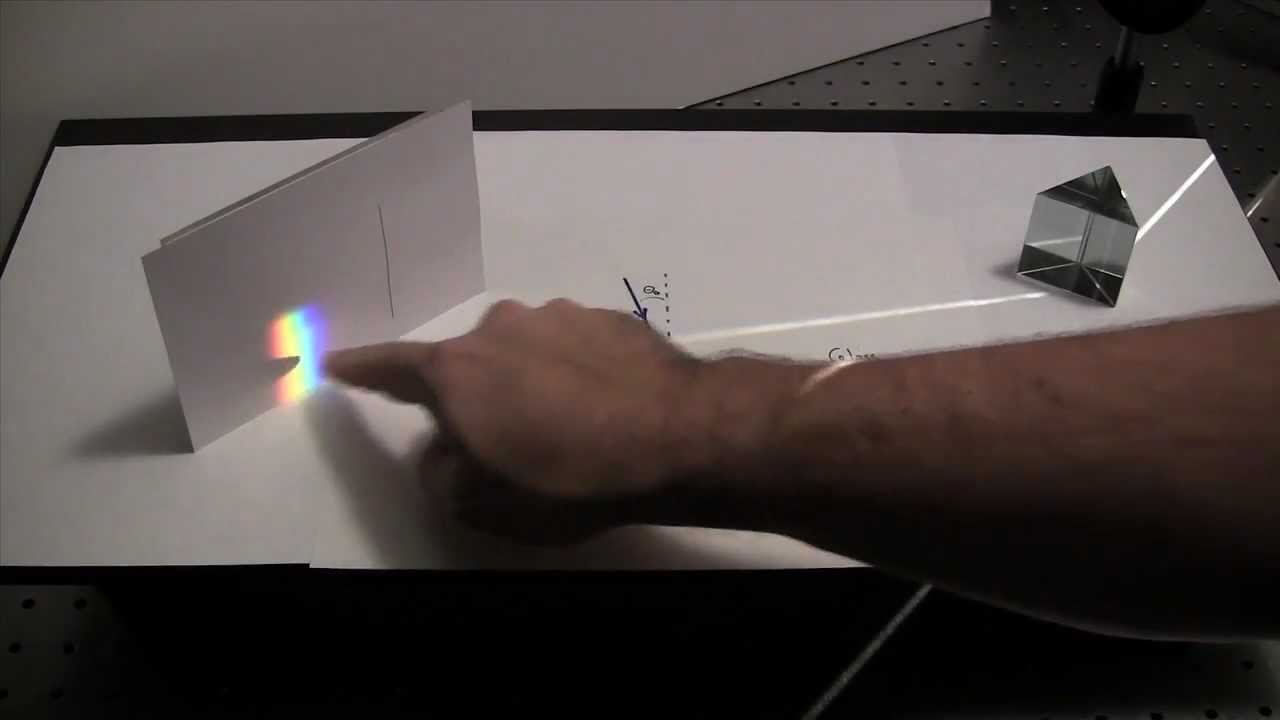
Item 8: Dual Nature Demonstrated in Prism Dispersion
Stem and Illustration
An illustration shows a beam of white light entering a prism and dispersing into a spectrum of colors. Which model(s) can be applied to explain the dispersion observed in this experiment?
Options:
A) Only the wave model explains the phenomenon by showing that different wavelengths refract at different angles.
B) Only the particle model explains the phenomenon by the energy differences of photons.
C) Both the wave and particle models are adequate since the wave model describes dispersion via refraction and the particle model explains individual photon energy differences.
D) Neither model can adequately explain dispersion.
Answer: C) Both the wave and particle models are adequate since the wave model describes dispersion via refraction and the particle model explains individual photon energy differences.
Item 9: Interference and Superposition
Stem and Illustration
A diagram depicts two coherent light sources producing overlapping waves that interfere on a distant screen. According to the wave model, what phenomenon is observed on the screen?
Options:
A) A uniform brightness corresponding solely to particle distribution.
B) An interference pattern with alternating bright and dark fringes due to constructive and destructive interference.
C) A bending of light without any interference features.
D) Complete absorption of light at the points of overlap.
Answer: B) An interference pattern with alternating bright and dark fringes due to constructive and destructive interference.
Item 10: Dual Explanation of Light’s Nature
Stem and Illustration
An illustration shows a combined diagram of a single-slit diffraction experiment on one side and the photoelectric effect on the other. Which statement best reflects the contemporary understanding of light based on both models?
Options:
A) Light behaves exclusively as a continuous wave and cannot be explained by discrete phenomena.
B) Light behaves only as a particle, rendering wave phenomena as secondary effects.
C) Light exhibits both wave and particle properties, and which aspect dominates depends on the particular experiment being performed.
D) The phenomena in the diagram cannot occur simultaneously.
Answer: C) Light exhibits both wave and particle properties, and which aspect dominates depends on the particular experiment being performed.
Summary Table of Test Items
| Item No. | Concept Covered | Primary Model Emphasized | Correct Answer |
|---|---|---|---|
| 1 | Propagation in vacuum | Particle Model | B |
| 2 | Reflection off a mirror | Wave Model | A |
| 3 | Refraction at air-water interface | Wave Model | A |
| 4 | Photoelectric Effect | Particle Model | A |
| 5 | Diffraction through a slit | Wave Model | B |
| 6 | Total internal reflection | Wave Model | B |
| 7 | Straw in water (apparent bending) | Wave Model | B |
| 8 | Dispersion in a prism | Both Models | C |
| 9 | Interference and superposition | Wave Model | B |
| 10 | Dual nature of light | Both Models | C |
References
- PISA 2025 SCIENCE FRAMEWORK (DRAFT) - OECD
- Propagation of Light Explanation - StudyX
-
Particle Nature of Light Quiz - Testbook
- Physical Science W-9: Refraction and Light - Scribd
- Particle and Wave Models - Manitoba Education
Recommended Related Queries
Last updated March 18, 2025