

Key Insights into Electron Beam-Plasma Interactions
- Energy Exchange Dynamics: Electron beams transfer energy to plasma through the excitation of various waves and oscillations, leading to heating and the generation of return currents.
- Versatile Applications: This fundamental interaction is pivotal for cutting-edge technologies like compact particle accelerators, controlled thermonuclear fusion, and advanced material processing, alongside understanding space phenomena.
- Wave Generation and Instabilities: The interaction is characterized by the excitation of diverse plasma waves, including Langmuir waves, and can lead to significant beam-plasma instabilities crucial for energy transfer and particle acceleration.
The interaction between plasma and an electron beam represents a cornerstone of modern plasma physics, a dynamic exchange of energy and momentum that underpins a vast array of natural phenomena and technological advancements. This intricate interplay occurs when a high-energy electron beam is introduced into an ionized gas, or plasma, leading to a cascade of physical effects from wave generation to energy transfer and even particle acceleration.
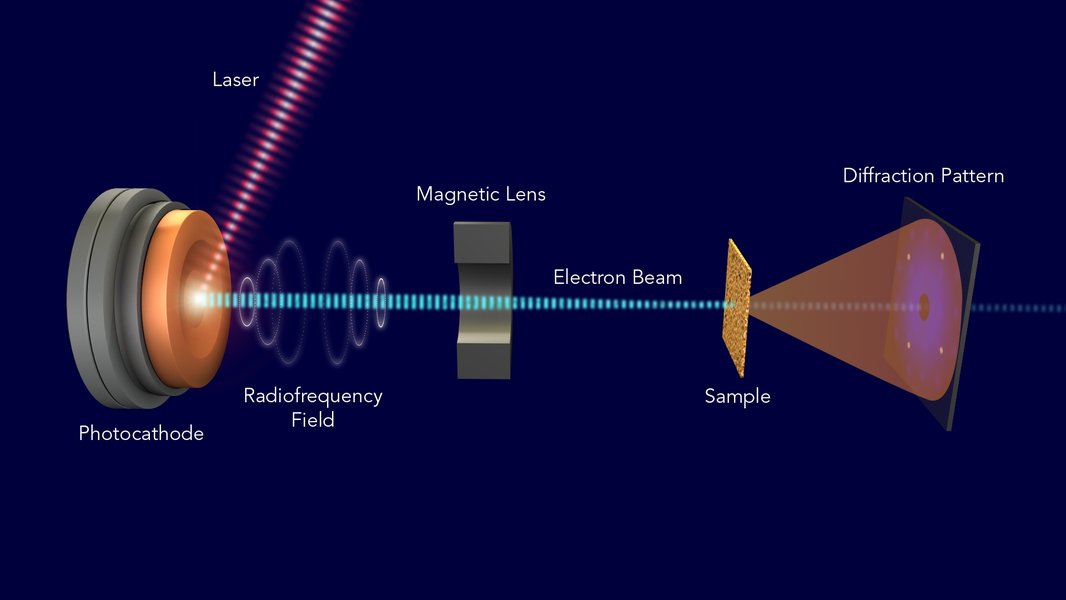
An ultrafast electron diffraction setup, illustrating the precise control and interaction of electron beams in experimental settings.
At its essence, the process involves the energetic electrons within the beam perturbing the plasma medium. This perturbation can manifest as the ionization of neutral gases, thereby generating or sustaining the plasma itself. Beyond mere ionization, the rapidly rising current of an injected electron beam can induce powerful electric fields, which in turn drive a return current within the plasma, ensuring charge neutrality and mediating further energy exchange. This fundamental interaction is not only a subject of intense theoretical study but also a focus of numerous experimental investigations aimed at unraveling its complex dynamics.
Applications and Experimental Landscape
The profound understanding of electron beam-plasma interactions has paved the way for diverse applications across scientific and technological domains.
Accelerators and Fusion Energy
One of the most impactful applications is in the field of particle accelerators. Plasma wakefield accelerators leverage the non-linear interaction between a driving electron or laser beam and a plasma to generate enormous electric fields. These fields can accelerate subsequent particle bunches to exceptionally high energies over very short distances, promising more compact and efficient accelerators compared to conventional radio-frequency technologies. Recent advancements, such as active energy compression techniques, are improving the quality of these laser-plasma electron beams, making them comparable to those produced by modern RF accelerators. In fusion energy research, the interaction is harnessed for plasma heating, essential for achieving the conditions necessary for controlled thermonuclear fusion.
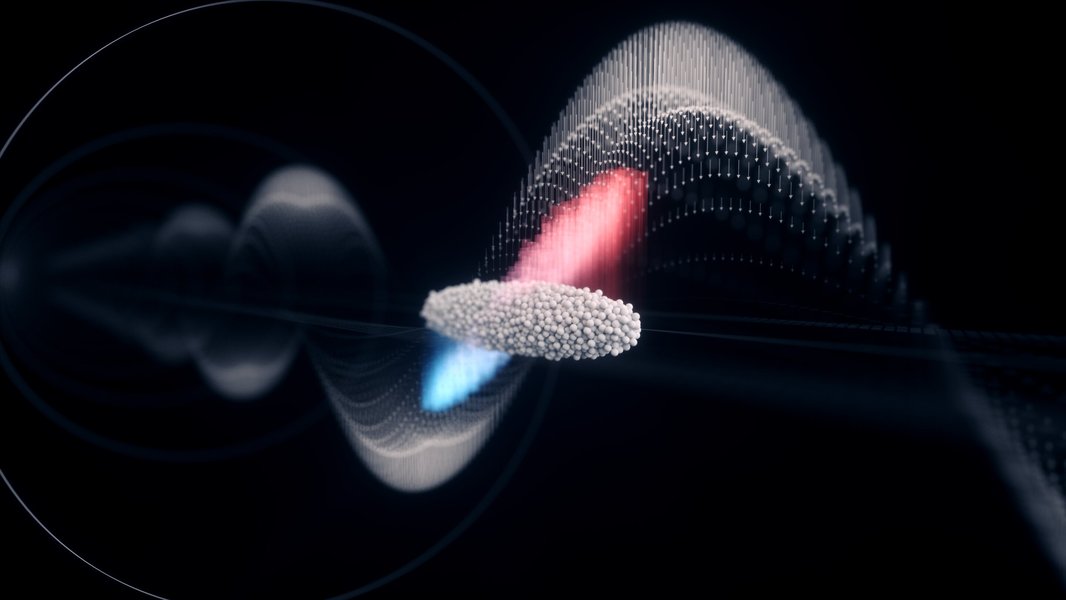
A visual representation of advancements in laser-plasma accelerator technology, underscoring the quest for enhanced electron beam quality.
Material Processing and Space Physics
Electron beam-generated plasmas are also vital in industrial applications, particularly in material processing. These plasmas exhibit high densities and low electron temperatures, making them ideal for low-damage processing techniques such as semiconductor fabrication and atomic layer etching. The electron beam serves as the primary driver for ionization in these scenarios. Furthermore, in space physics, electron beam experiments are invaluable for studying phenomena like spacecraft charging, spacecraft-plasma coupling, and the intricate dynamics of auroral physics. Experiments involving electron beams emitted from satellites at high altitudes provide critical data for understanding interactions with ambient space plasma.
This mindmap illustrates the multifaceted aspects of electron beam-plasma interaction, branching from fundamental mechanisms to diverse applications and the experimental techniques employed in their study.
Experimental setups often involve magnetic confinement, using devices like magnetic mirrors to study the interaction in a controlled environment. Electron beams are typically accelerated to high voltages and currents to maximize energy transfer. Various diagnostic tools, such as microwave interferometers, probes, and directional velocity analyzers, are employed to measure critical plasma properties like density, temperature, and stability, as well as the electron distribution functions.
Experimental Parameters and Considerations
The successful study and application of electron beam-plasma interactions rely heavily on the precise control of experimental parameters and sophisticated diagnostic techniques.
| Parameter | Description and Relevance |
|---|---|
| Electron Beam Energy & Current | High energy (e.g., 5 kV) and sufficient current (e.g., 0.5 A) are crucial for effective energy transfer and robust wave excitation. These parameters directly influence the degree of ionization and the strength of the induced electric fields. |
| Plasma Density & Temperature | Characterizing these properties is essential for understanding the efficiency of energy transfer and the types of waves that can be excited. High plasma densities are often sought for applications like compact accelerators. |
| Magnetic Confinement Strength | In many laboratory experiments, magnetic fields are used to confine the plasma and guide the electron beam, preventing particle losses and enabling controlled interaction studies. The field strength can influence beam propagation and plasma stability. |
| Plasma Uniformity | Non-uniform plasmas can lead to unique phenomena such as mode conversion of Langmuir waves into electromagnetic waves, as observed in astrophysical contexts. Controlling uniformity is important for predictable experimental outcomes. |
| Diagnostics Techniques | Tools like microwave interferometers measure plasma density, while probes and directional velocity analyzers characterize electron distribution functions and plasma stability. These are vital for real-time monitoring and data collection. |
| Gas Medium | The type of neutral gas (e.g., argon) into which the electron beam is injected influences the ionization process and the resulting plasma characteristics, including density and electron temperature. |
This table outlines key experimental parameters and considerations for studying electron beam-plasma interactions, highlighting their importance for controlled studies and practical applications.
One of the most exciting developments is the use of laser-plasma accelerators to create electron beams suitable for future X-ray free-electron lasers, which demand ultra-high quality beams. This involves generating "ice-cold" plasma electron beams with extremely low energy spread, achieved through innovative plasma concepts and precise beam manipulation. These advancements underscore the field's continuous drive towards more efficient and powerful particle sources.
Deep Dive: Laser-Plasma Accelerators
Laser-plasma accelerators represent a paradigm shift in particle acceleration, offering the potential for machines orders of magnitude smaller than conventional radio-frequency accelerators. This technology fundamentally relies on the precise interaction between a high-intensity laser pulse and a plasma.
This video, titled "Laser-Plasma Accelerators: Riding the Wave to the Next...", provides an excellent overview of how high-intensity laser pulses interact with plasma to generate wakefields, which then accelerate electrons. It contextualizes the significant advantages of plasma-based acceleration over traditional methods, emphasizing the drastic reduction in accelerator size and the potential for achieving higher accelerating gradients. This directly relates to the concept of electron beam-plasma interaction as the laser pulse effectively creates a self-driven electron beam (wakefield) within the plasma, which then can be used to accelerate external electrons or other particles to extreme energies.
In a laser-plasma accelerator, a powerful, ultra-short laser pulse propagates through a plasma, pushing the plasma electrons out of its way due to the ponderomotive force. This creates a "bubble" or "wakefield" of positive ions, followed by a region of high electron density. This wakefield propagates behind the laser pulse at nearly the speed of light, generating immense electric fields—far greater than those achievable in metallic cavities of conventional accelerators. These fields can then trap and accelerate electrons to very high energies over distances of just centimeters or millimeters, as opposed to kilometers in traditional accelerators. The video further elaborates on how ions, being much heavier than electrons, remain relatively stationary, providing a stable positive charge background for the wakefield, which is crucial for maintaining the accelerating fields. This intricate dance between light, electrons, and ions is a testament to the power of beam-plasma interactions at extreme intensities.
Frequently Asked Questions
What is plasma?
Why is the interaction important for fusion energy?
How does an electron beam generate waves in plasma?
What are plasma wakefield accelerators?
What are the applications in space physics?
Conclusion
The interaction between plasma and an electron beam is a rich and complex field of study, central to numerous advancements in science and technology. From enabling next-generation particle accelerators and pushing the boundaries of controlled thermonuclear fusion to refining material processing techniques and unraveling the mysteries of space plasmas, the profound dynamics of this interaction continue to drive innovation. Ongoing research focuses on achieving greater control and precision over these interactions, promising even more impactful applications in the future. The ability to manipulate and harness this fundamental physical process is key to addressing some of humanity's most pressing scientific and technological challenges.
Recommended Queries
- How are laser-plasma accelerators revolutionizing particle physics research?
- What are the latest breakthroughs in plasma heating for nuclear fusion?
- Explore the role of electron beams in advanced semiconductor manufacturing.
- Investigate the impact of beam-plasma interactions on spacecraft charging and mitigation strategies.