
Unlocking the Secrets of Plastic Rebirth: How Waste Becomes Resource
A deep dive into the intricate journey of plastic recycling, transforming discarded items into valuable new products.
The global challenge of plastic waste has spurred significant advancements in recycling technologies and processes. Understanding how plastic is recycled is crucial for both consumers and industries aiming for a more sustainable future. As of today, Monday, 2025-05-12, the plastic recycling process involves a series of sophisticated steps, from the moment you toss a bottle into a bin to its rebirth as a new product. This comprehensive guide will walk you through this fascinating journey.
Key Highlights of the Plastic Recycling Journey
- Multi-Stage Transformation: Plastic recycling is not a single action but a complex sequence including collection, meticulous sorting, intensive cleaning, size reduction, and finally, reprocessing into raw materials.
- Technology at its Core: Advanced technologies like near-infrared (NIR) sensors for sorting and sophisticated chemical processes like pyrolysis are increasingly pivotal in enhancing recycling efficiency and the quality of recycled materials.
- Variety in Recycling Methods: Beyond traditional mechanical recycling, chemical recycling methods are gaining traction, offering pathways to recycle harder-to-process plastics and produce virgin-quality polymers.
The Step-by-Step Path of Plastic Transformation
The journey of a piece of plastic from waste to a new product is intricate. Each stage is designed to purify and prepare the material for its next life, contributing to a circular economy.
Stage 1: Collection and Initial Transport
Gathering the Goods
The recycling process ignites with the collection of post-consumer and post-industrial plastic waste. This includes items from households, schools, businesses, and public recycling bins. Collection methods vary, ranging from curbside pickup programs and drop-off centers to specialized take-back schemes for specific items like plastic bags at grocery stores. Once gathered, these plastics are typically compacted into bales and transported by trucks or rail to Material Recovery Facilities (MRFs) or dedicated plastic recycling plants.
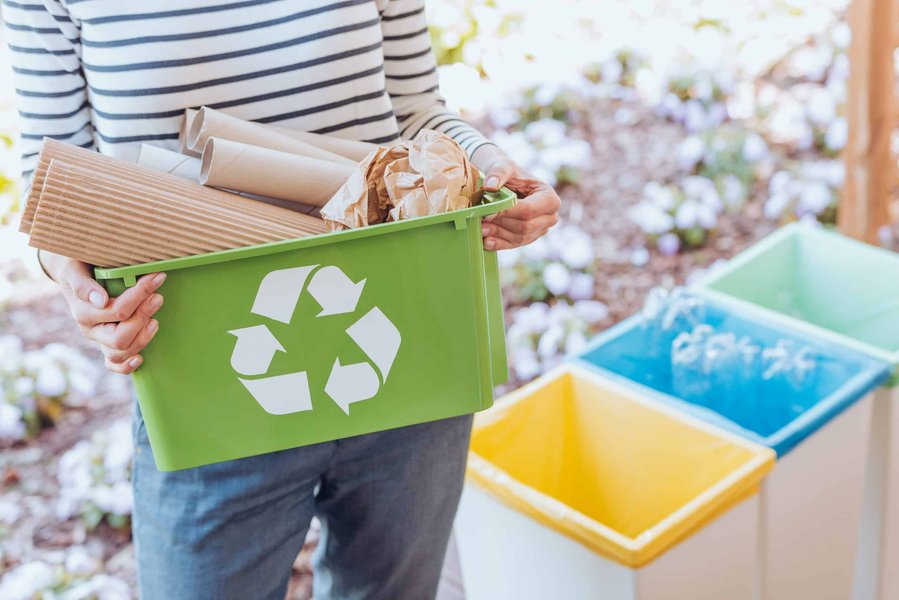
Recycling bins designated for plastic waste collection.
Stage 2: Sorting and Categorization
Separating the Stream
Upon arrival at the MRF, the mixed recyclables undergo a crucial sorting process. This step is vital because different types of plastic polymers have unique chemical compositions and cannot be recycled together. Sorting is performed based on several criteria:
- Resin Type: Plastics are identified by their Resin Identification Code (RIC), a number from 1 to 7 enclosed in a chasing arrows symbol. Common types include PET (Polyethylene Terephthalate, #1) and HDPE (High-Density Polyethylene, #2).
- Color: Plastics are often sorted by color, as colored plastics can affect the appearance of the final recycled product.
- Physical Properties: Density and thickness are also used for separation.
Sorting involves a combination of manual labor and increasingly sophisticated automated technologies:
- Manual Sorting: Workers physically remove contaminants (like paper, glass, metal, or food waste) and visibly distinct plastic types.
- Automated Sorting:
- Near-Infrared (NIR) Spectroscopy: Scanners identify different plastic types based on how they reflect infrared light.
- Air Classifiers: These use jets of air to separate lighter plastics (like films) from heavier ones (like rigid containers) in a wind tunnel.
- Sink-Float Tanks: Plastics are submerged in water; denser plastics sink while less dense ones float, allowing for separation (e.g., PET sinks, while HDPE and PP float).
- Optical Sorters: Cameras and software identify and sort plastics by color or shape.
Effective sorting is paramount to producing high-quality recycled plastic. After sorting, plastics of the same type are baled together for the next stage.

Automated systems and manual oversight ensure precise plastic sorting.
Stage 3: Washing and Cleaning
Purifying the Plastic
Once sorted, the plastics undergo an intensive washing process to remove any remaining impurities. Contaminants such as food residues, dirt, labels, adhesives, and chemical residues can compromise the quality of the recycled plastic. The washing process typically involves:
- Initial Rinse: To remove loose dirt and debris.
- Detergent Wash: Plastics are washed in large tanks or vats with water and detergents, sometimes heated, to break down oils, fats, and stubborn residues. Caustic solutions might be used for heavily soiled plastics.
- Friction Washers: Mechanical agitation helps to scrub the plastics clean.
- Final Rinse: To remove all detergents and loosened contaminants.
Cleanliness is critical; even small amounts of contamination can lead to defects in the final recycled products.
Stage 4: Shredding and Resizing
Breaking It Down
After washing and drying, the clean plastics are fed into shredders or granulators. These machines use powerful rotating blades to chop or grind the plastic items into small, uniform pieces called "flakes" or "granules." This size reduction offers several benefits:
- Easier Handling and Transport: Flakes are less bulky and easier to manage than whole plastic items.
- Increased Surface Area: Smaller pieces melt more uniformly and efficiently in the next stage.
- Further Impurity Removal: The shredding process can dislodge any remaining trapped contaminants, which can then be separated. For instance, air classification can be used again at this stage to separate lighter label fragments from heavier plastic flakes.
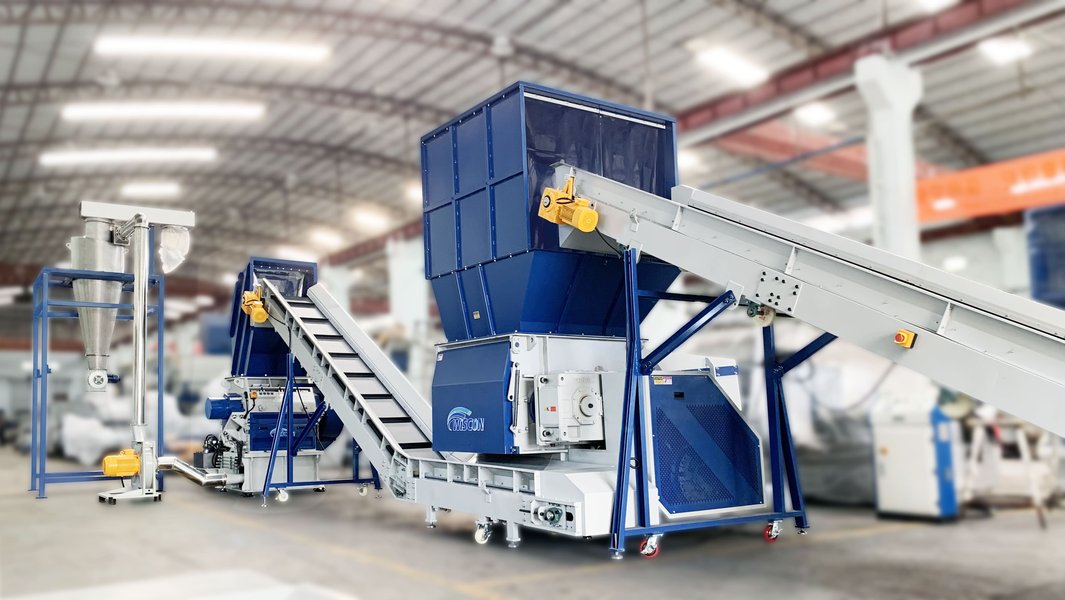
Industrial shredders reduce plastic items into manageable flakes.
Stage 5: Identification, Separation, and Compounding
Refining the Flakes
The plastic flakes may undergo further identification and separation processes to ensure high purity. This can involve testing batches for melt flow index, density, and color. Advanced techniques like spectroscopy can be employed to verify polymer composition. Different grades or types of the same polymer (e.g., different densities of PE) might be separated. Once the flakes are deemed sufficiently pure, they are ready for compounding. This involves melting and extruding the plastic flakes. During this process:
- The flakes are fed into an extruder, where they are heated and melted by screws rotating within a heated barrel.
- The molten plastic is then forced through a die, forming long strands (like spaghetti).
- These strands are cooled, often in a water bath, and then chopped into small pellets, also known as "nurdles."
Additives, such as colorants or strengthening agents, can be incorporated during the compounding stage to tailor the properties of the recycled plastic pellets for specific applications.

Recycled plastic pellets, ready for manufacturing new products.
Stage 6: Manufacturing New Products
A New Beginning
The recycled plastic pellets are the final output of the recycling process and serve as a raw material for manufacturers. These pellets are sold to companies that use them to create a wide array of new products. Examples include:
- New bottles and containers
- Plastic lumber for decking and fencing
- Fibers for clothing (e.g., polyester from PET bottles) and carpets
- Pipes and drainage products
- Automotive parts
- Office supplies
- Furniture
- Playground equipment
By using recycled plastic, manufacturers reduce the need for virgin plastic production, which in turn conserves natural resources like petroleum, reduces energy consumption, and lowers greenhouse gas emissions.
Types of Plastic Recycling Technologies
While the steps above primarily describe mechanical recycling, it's important to distinguish between the main technological approaches to plastic recycling.
Mechanical Recycling
The Physical Transformation
This is the most common and widespread method. It involves physically processing plastic waste – washing, shredding, melting, and reforming – into new products without fundamentally altering the chemical structure of the plastic. It's generally simpler and more economical for clean, sorted streams of plastics like PET and HDPE. However, repeated mechanical recycling can lead to polymer degradation (shortening of polymer chains), potentially reducing the quality and limiting the number of times a material can be recycled into high-value applications.
Chemical Recycling (Advanced Recycling)
Molecular Reconstruction
Chemical recycling encompasses a range of technologies that break down plastics into their basic chemical components (monomers, oligomers, or other valuable chemicals). These components can then be used to create new plastics that are often indistinguishable from virgin plastics, or other chemical products like fuels. Key chemical recycling processes include:
- Pyrolysis: Thermal decomposition of plastics in the absence of oxygen. It produces pyrolysis oil (a synthetic crude oil), syngas, and char. The oil can be refined into fuels or used as feedstock for new plastics.
- Depolymerization (e.g., Solvolysis, Glycolysis): Uses heat, pressure, solvents, or catalysts to break down specific polymers (like PET or Polystyrene) back into their constituent monomers. These monomers can then be purified and repolymerized to create new, high-quality plastics.
- Gasification: Converts plastics into syngas (a mixture of hydrogen and carbon monoxide), which can be used to produce energy or as a chemical building block.
Chemical recycling can often handle more complex waste streams, including mixed plastics, multi-layer packaging, and contaminated plastics that are difficult to recycle mechanically. It holds the promise of "closing the loop" more effectively by producing virgin-equivalent materials.
Thermal Recycling (Energy Recovery)
Waste-to-Energy
This process involves incinerating plastic waste to recover energy in the form of heat or electricity. While it helps manage waste and reduce landfill volume, it is generally considered less environmentally preferable than material recycling (mechanical or chemical) because the material resource is lost, and it can contribute to air pollution if not properly controlled. It is often used for plastics that are too contaminated or degraded for other recycling methods.
Visualizing Recycling Method Effectiveness
Different plastic recycling methods offer varying advantages and disadvantages across several key performance indicators. The radar chart below provides a comparative overview of Mechanical Recycling, Pyrolysis (a form of Chemical Recycling), and Depolymerization (another form of Chemical Recycling) based on typical characteristics. These are generalized assessments and can vary based on specific technologies and feedstocks.
Interpreting the Chart: Higher scores generally indicate better performance in that category. For 'Cost' and 'Environmental Impact', a higher score means 'Lower Cost' and 'Lower Environmental Impact' respectively, making them more favorable. This chart helps illustrate the trade-offs involved in choosing a recycling technology. For instance, while Mechanical Recycling is often lower cost and highly scalable, Depolymerization can achieve higher output quality and handle certain contaminants better, albeit potentially at a higher cost.
Mapping the Journey of Recycled Plastic
The plastic recycling process is a cyclical journey with multiple interconnected stages. This mindmap visualizes the typical flow, from initial collection to the creation of new products, highlighting key activities within each phase.
Households, Businesses,
Industrial"] id1b["Methods:
Curbside Pickup,
Drop-off Centers,
Deposit Schemes"] id2["Sorting at MRF"] id2a["By Type (Resin Code)"] id2b["By Color"] id2c["By Density (Sink/Float)"] id2d["Manual & Automated
(NIR, Air Classifiers)"] id3["Washing & Cleaning"] id3a["Remove Impurities:
Dirt, Labels, Food Residue"] id3b["Methods:
Water Baths, Detergents,
Friction Washers"] id4["Shredding & Resizing"] id4a["Into Flakes or Granules"] id4b["Purpose:
Easier Handling,
Uniform Melting"] id5["Reprocessing"] id5a["Mechanical Recycling"] id5a1["Melt & Extrude"] id5a2["Form Pellets (Nurdles)"] id5b["Chemical Recycling"] id5b1["Pyrolysis (Oil/Gas)"] id5b2["Depolymerization (Monomers)"] id6["Manufacturing New Products"] id6a["Bottles & Containers"] id6b["Fibers for Textiles"] id6c["Construction Materials"] id6d["Automotive Parts"] id6e["Furniture"]
This mindmap illustrates the core stages involved in transforming plastic waste. Each branch represents a critical step, ensuring the material is progressively purified and prepared for its reincarnation into useful items, thereby contributing to a more circular economy.
Understanding Plastic Types for Recycling
Not all plastics are created equal, especially when it comes to recyclability. The Resin Identification Code (RIC) system helps categorize plastics. The table below outlines common plastic types, their codes, typical uses, and general recyclability.
| RIC Code | Abbreviation | Polymer Name | Common Uses | General Recyclability |
|---|---|---|---|---|
| #1 | PET or PETE | Polyethylene Terephthalate | Soda/water bottles, food containers, polyester fibers | Widely recycled; good market value. |
| #2 | HDPE | High-Density Polyethylene | Milk jugs, detergent/shampoo bottles, pipes, toys | Widely recycled; good market value. |
| #3 | PVC or V | Polyvinyl Chloride | Pipes, window frames, siding, some packaging, medical tubing | Rarely recycled in curbside programs due to chlorine content and additives; specialized recycling exists. |
| #4 | LDPE | Low-Density Polyethylene | Plastic bags, films, squeeze bottles, six-pack rings | Sometimes recycled; often through store drop-off programs for films. Not always accepted in curbside. |
| #5 | PP | Polypropylene | Yogurt cups, butter tubs, bottle caps, food containers, car parts | Increasingly recycled; acceptance in curbside programs is growing. |
| #6 | PS | Polystyrene | Foam cups/plates (Styrofoam), disposable cutlery, CD cases, egg cartons | Difficult to recycle; limited acceptance due to low density (foam) and contamination. Some specialized programs exist. |
| #7 | OTHER | Various Plastics (e.g., Polycarbonate (PC), Polylactic Acid (PLA), Acrylic, Nylon) | Reusable water bottles, oven-bake bags, electronics casings, bio-plastics | Generally not recycled in curbside programs; includes mixed plastics or less common types. PLA may be compostable in industrial facilities. |
Understanding these codes helps consumers make informed decisions about which plastics to recycle and how. Local recycling guidelines should always be consulted, as acceptance varies by municipality.
Challenges in the Plastic Recycling Ecosystem
Despite advancements, the plastic recycling process faces several significant challenges:
- Contamination: Food residues, non-recyclable materials mixed with recyclables, and incorrect sorting by consumers can contaminate entire batches, rendering them unrecyclable or reducing the quality of the end product.
- Complex Packaging: Many modern products use multi-layer plastics, composites (plastic bonded with other materials like aluminum), or small components (like pumps on bottles) that are difficult to separate and process in standard facilities.
- Economic Viability: The price of virgin plastics (which is tied to oil prices) can sometimes be lower than recycled plastics, making recycled materials less attractive to manufacturers. Fluctuating market demand for recycled plastics also impacts the profitability of recycling operations.
- Chemical Additives: Plastics contain various additives (colorants, flame retardants, plasticizers) that can complicate recycling and may pose health or environmental risks if not properly managed. Some toxic chemicals can leach out during the recycling process.
- Limited Infrastructure: Not all communities have access to comprehensive recycling programs or facilities capable of handling all types of plastics. Investment in advanced sorting and processing technologies is still needed in many regions.
- Consumer Awareness and Participation: Lack of understanding about what and how to recycle correctly contributes to contamination and low recycling rates. Consistent public education is crucial.
- Degradation of Material: Particularly with mechanical recycling, plastics can degrade each time they are processed, limiting their use in high-quality applications over multiple cycles. This is known as "downcycling."
A Closer Look: How Plastic Recycling Works in Practice
To see the plastic recycling process in action, from discarded bottles to new materials, can be quite insightful. The video below provides a visual journey through the typical stages involved in transforming plastic waste.
This video offers a practical illustration of how plastic bottles are collected, sorted, cleaned, and processed into reusable forms. It highlights both the scale of the operations and the precision required at each step to ensure the quality of the recycled output. Understanding these real-world operations can help appreciate the complexities and importance of proper recycling habits.
Frequently Asked Questions (FAQ)
What do the numbers on plastic items mean?
The numbers (1-7) inside the chasing arrows symbol are Resin Identification Codes (RICs). They identify the type of plastic resin used to make the item. This helps recyclers sort plastics, as different types require different processing. It's important to note that the symbol itself doesn't automatically mean the item is recyclable in your area; always check local guidelines.
Do I need to clean plastics before recycling?
Yes, it's generally recommended to rinse out food containers and bottles. While recycling facilities do wash plastics, heavily soiled items can contaminate other materials and reduce the efficiency of the washing process. Empty, clean, and dry is the best practice.
Can all types of plastic be recycled?
Technically, most plastics can be recycled, but not all are economically viable or practically recyclable through common municipal programs. PET (#1) and HDPE (#2) are the most commonly recycled. Others like PVC (#3), LDPE (#4 films), PP (#5), and PS (#6) have lower recycling rates due to various challenges. Chemical recycling aims to expand the range of recyclable plastics.
What is "downcycling"?
Downcycling refers to recycling plastic into a product of lower quality or value than the original item. For example, clear PET bottles might be recycled into non-food grade fibers for carpets or clothing. This happens because mechanical recycling can degrade the polymer chains, making the material less suitable for its original application. The goal of advanced recycling methods is often to avoid downcycling by restoring plastic to its original quality.
Why can't I recycle plastic bags in my curbside bin?
Plastic bags and films (LDPE #4) can tangle in the machinery at Material Recovery Facilities (MRFs), causing equipment damage and operational shutdowns. They require specialized collection and processing, which is why many grocery stores offer separate drop-off bins for clean and dry plastic bags and films.
Recommended Further Exploration
- What are the latest advancements in chemical recycling for plastics that are difficult to process mechanically?
- How do market prices for virgin versus recycled plastics affect the recycling industry?
- What government policies and industry initiatives are most effective in improving plastic recycling outcomes?
- How do biodegradable plastics fit into the waste management hierarchy, and what are their recycling challenges?
References
Last updated May 12, 2025