
The Mysterious Sphere Puzzle That Took 100 Years to Solve
How a Russian mathematician proved that three-dimensional shapes without holes must be spheres, earning—and refusing—a million dollars
Key Insights About the Poincaré Conjecture
- It's about recognizing spheres: The conjecture states that any 3D shape without holes that lets you shrink loops to points must be a sphere.
- It took a century to solve: Proposed in 1904 by Henri Poincaré, it wasn't proven until 2003 by Grigori Perelman.
- It has real-world implications: The mathematics behind the conjecture helps us understand the possible shapes of our universe.
The Poincaré Conjecture in Simple Terms
Imagine you have a lump of playdough. If you can shape it any way you want without poking holes in it, and if any loop of string placed on its surface can be pulled tight to a single point, then your shape is essentially a sphere (or ball).
That's the Poincaré conjecture in a nutshell! It tells us that a 3D shape with certain properties must be a sphere, even if it doesn't look like one at first glance.
A Playdough Explanation
Let's try another way to understand it:
- Take a ball of playdough. You can squish it, stretch it, or make it lumpy, but don't poke holes in it.
- Now imagine placing a rubber band anywhere on the surface. Can you shrink that rubber band down to a single point without leaving the surface?
- For a ball shape, the answer is always yes.
- For a donut shape, the answer is sometimes no (if the band goes through the hole).
The Poincaré conjecture says: If your 3D shape allows any rubber band to be shrunk to a point, it must really be a sphere—even if it's squished or stretched to look different.
Why This Matters
This might seem like just a puzzle about shapes, but it's actually quite profound. It helps mathematicians understand the fundamental nature of space itself. It's like being able to recognize that a weirdly shaped balloon is still a balloon, even when it's twisted into strange forms.
Visualizing the Poincaré Conjecture
How Different Shapes Compare
Let's see how different 3D shapes compare when we look at their properties. This radar chart shows how different shapes stack up against the key properties involved in the Poincaré conjecture:
As you can see, a sphere (and even a weird lumpy sphere) has all the properties required by the Poincaré conjecture, while shapes with holes like donuts and pretzels don't satisfy the requirements.
The Key Concepts Explained
Understanding the Terms
The Poincaré conjecture uses some special math terms. Here's what they mean in simple language:
| Math Term | Simple Explanation | Example |
|---|---|---|
| 3D Manifold | A 3D shape where every small piece looks like normal 3D space | The surface of a ball, extended into 3D |
| Simply Connected | Any loop can be shrunk to a point without leaving the shape | A rubber band on a ball can always be shrunk down |
| Homeomorphic | Two shapes can be stretched/deformed into each other without tearing | A coffee cup and a donut are homeomorphic |
| Closed | The shape doesn't have any boundaries or edges | A ball is closed, a sheet of paper is not |
| Ricci Flow | A technique that smooths out bumps in shapes over time | Like watching a lumpy balloon gradually become round |
The Mind Map of the Poincaré Conjecture
This mind map shows how all the concepts in the Poincaré conjecture relate to each other:
The Historical Journey
From Question to Answer
The Poincaré conjecture has a fascinating history:
The Birth of the Question
In 1904, French mathematician Henri Poincaré was working on classifying different types of shapes. He wondered if a specific property (being simply connected) was enough to identify a three-dimensional sphere. This became known as the Poincaré conjecture.
A Century of Attempts
For almost 100 years, many brilliant mathematicians tried to prove this conjecture. Some thought they had solved it, only to find errors in their work later. The problem was so challenging that in 2000, it was named one of the seven Millennium Prize Problems by the Clay Mathematics Institute, with a $1 million reward for its solution.
Perelman's Breakthrough
In 2002 and 2003, a Russian mathematician named Grigori Perelman published a series of papers that proved the conjecture. He used a mathematical technique called "Ricci flow" (developed by Richard Hamilton) which essentially lets shapes "flow" like a fluid until they become smoother.
The Million-Dollar Rejection
After his work was verified by experts, Perelman was awarded the Fields Medal (mathematics' highest honor) and the $1 million Millennium Prize. Remarkably, he declined both awards, saying he wasn't interested in money or fame. He has since withdrawn from the mathematics community.
See It Explained: The Poincaré Conjecture
This video by Numberphile provides an excellent visual explanation of the Poincaré conjecture and the fascinating story of Grigori Perelman:
Visual Understanding: Topology and Shapes
These images help visualize the concepts behind the Poincaré conjecture:
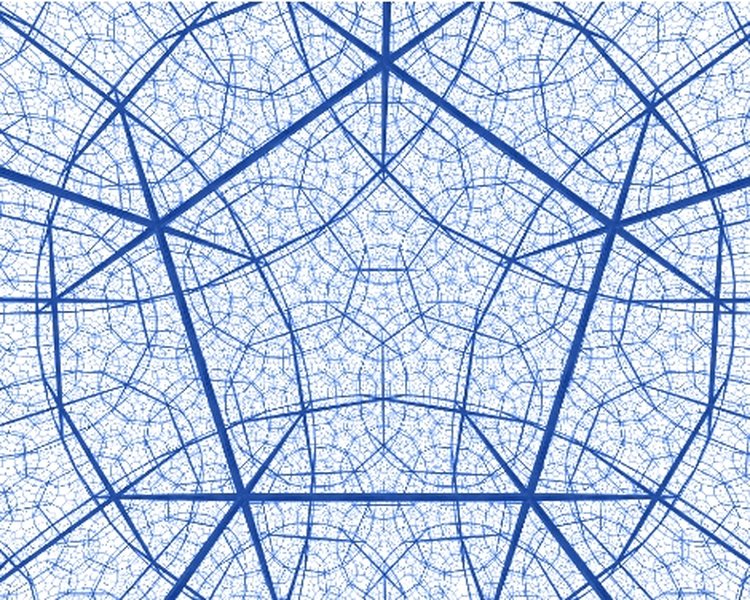
A visual representation showing the concept of the Poincaré conjecture (Source: Clay Mathematics Institute)
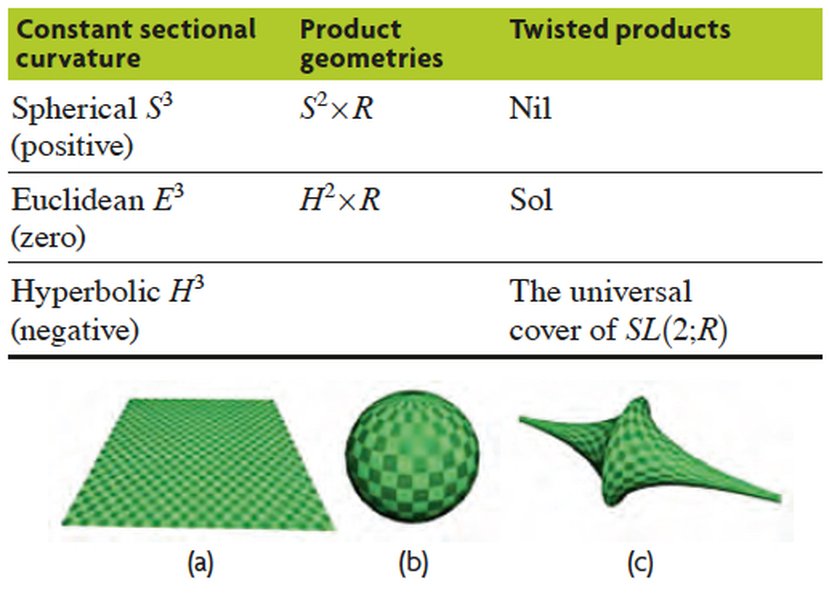
Illustration showing the difference between a sphere and a torus in topology (Source: Revista Mètode)
Frequently Asked Questions
References
- Poincaré conjecture - Wikipedia
- Poincaré Conjecture - Clay Mathematics Institute
- Poincaré conjecture - Encyclopedia Britannica
- Poincaré Conjecture - Wolfram MathWorld
- Poincaré conjecture - Everything Explained Today
- The Poincaré Conjecture - Laplacian
Recommended Searches
 laplacian.wordpress.com

Last updated April 7, 2025