
Understanding Poland's Relationship with Firearms: A Societal Perspective
Exploring Public Perceptions, Regulations, and Evolving Attitudes Towards Guns in Poland
Key Insights into Polish Society's Views on Firearms
- Low Gun Ownership Culture: Poland historically has one of the lowest rates of civilian gun ownership in Europe, with approximately 1 to 2.5 firearms per 100 citizens, reflecting a general lack of a gun ownership tradition.
- Strict Regulatory Framework: Access to firearms in Poland is governed by stringent laws, requiring applicants to undergo comprehensive medical and psychological evaluations, prove a "significant reason" for ownership (e.g., sport, hunting, self-defense under specific threat), and adhere to strict storage and carrying rules.
- Evolving Perceptions Amidst Geopolitical Shifts: While general public support for easier gun access has decreased, recent international threats, particularly the conflict in Ukraine and the border crisis with Belarus, have spurred discussions around national defense, military training, and, in some cases, a push for relaxed firearm regulations for both citizens and uniformed personnel.
The relationship between Polish society and firearms is complex, shaped by historical context, strict regulations, and evolving geopolitical realities. Unlike some nations with a deeply ingrained tradition of gun ownership, Poland has consistently maintained one of the lowest rates of civilian firearm possession in Europe. This comprehensive overview delves into the multifaceted aspects of this relationship, examining public perceptions, the legal framework, psychological impacts, and the current dynamic shifts influenced by regional security concerns.
A Historical and Cultural Context of Firearms in Poland
The Absence of a Widespread Gun Ownership Tradition
Poland's history, particularly its experience under communist rule and during World War II, has significantly influenced its approach to civilian firearm ownership. Historically, civilian access to firearms was severely restricted, and this has fostered a societal norm where gun ownership is not widespread or deeply embedded in the culture. This contrasts sharply with countries where a "right to bear arms" is a constitutional or deeply cultural concept.
Statistics consistently show a low prevalence of firearms among Polish citizens. For instance, reports indicate approximately 1 to 2.5 firearms per 100 residents, placing Poland at the lower end of European countries in this regard. This low rate is often attributed to the strict licensing procedures and the general perception that guns are not a necessity for the average citizen's daily life.
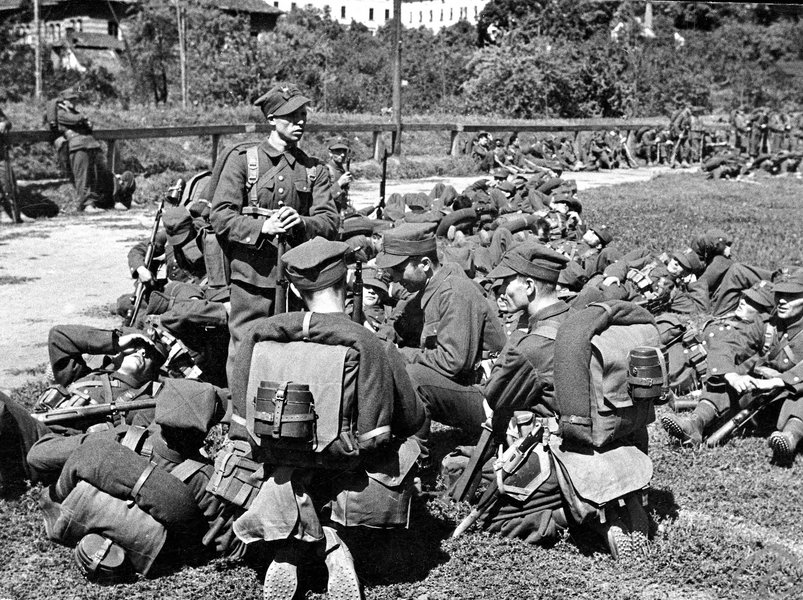
Polish troops during the September Campaign of 1939. This image reflects Poland's historical military context, where armed forces played a crucial role in national defense.
Navigating Poland's Stringent Firearm Regulations
The "Shall-Issue" Permit System and Key Requirements
Polish law operates on a "shall-issue" basis for firearm permits, meaning that if an applicant meets all specified criteria and can provide a "significant reason" for ownership, a permit should be issued. However, the criteria are extensive and rigorous, ensuring that access to firearms remains tightly controlled. The primary reasons for obtaining a firearm permit include sport shooting, hunting, historical re-enactment, collecting, inheritance, training business activity, and, under very specific conditions, self-defense.
Eligibility and Application Process
To obtain a firearms permit in Poland, an applicant must fulfill several key requirements:
- Be at least 21 years old (or 18 for sport or hunting permits with special recommendations).
- Be a permanent resident of Poland.
- Undergo comprehensive medical and psychological evaluations. These evaluations are conducted by practitioners specifically appointed by the Police and certify that the applicant has no mental disorders, significant psychophysical disabilities, psychological dysfunctions, or addictions to alcohol or psychoactive substances. For self-defense permits, these evaluations must be retaken every five years.
- Demonstrate an "important reason" for possession. For self-defense, this means proving a "constant, real and higher than average" threat to one's life, health, or property.
- Possess a proper gun safe for storage.
- Pass a reasonable physical and psychiatric inspection.
- Have no criminal record.
The administrative responsibility for issuing permits lies with the voivodeship commander of the Police. While the process is detailed and can be time-consuming, it is designed to ensure that firearms are only placed in the hands of responsible individuals who have a legitimate and verified need.
The Psychological Dimensions of Firearms in Polish Society
Public Perception and the Impact of Visible Arms
The low rate of gun ownership means that for many Poles, direct experience with firearms is limited. This lack of familiarity can contribute to a societal apprehension or even fear when firearms are visibly present, particularly in civilian settings. The perception of risk associated with guns is often influenced by factors such as past victimization or a perceived ineffectiveness of self-defense with firearms, rather than an inherent desire for personal armament.
A pertinent example of this societal reaction is the concern expressed by some individuals seeing soldiers with long guns in public, especially near the Belarusian border. This heightened visibility of armed personnel, while a response to security concerns, can evoke fear or discomfort in the general public due to a lack of understanding or direct experience with such scenarios. The fear often stems from the unknown and a lack of practical exposure to firearms in a controlled or educational context. Psychological studies suggest that the fear and trauma associated with living in communities affected by the illicit use of small arms can have long-lasting psychological effects, further contributing to negative perceptions of firearms.
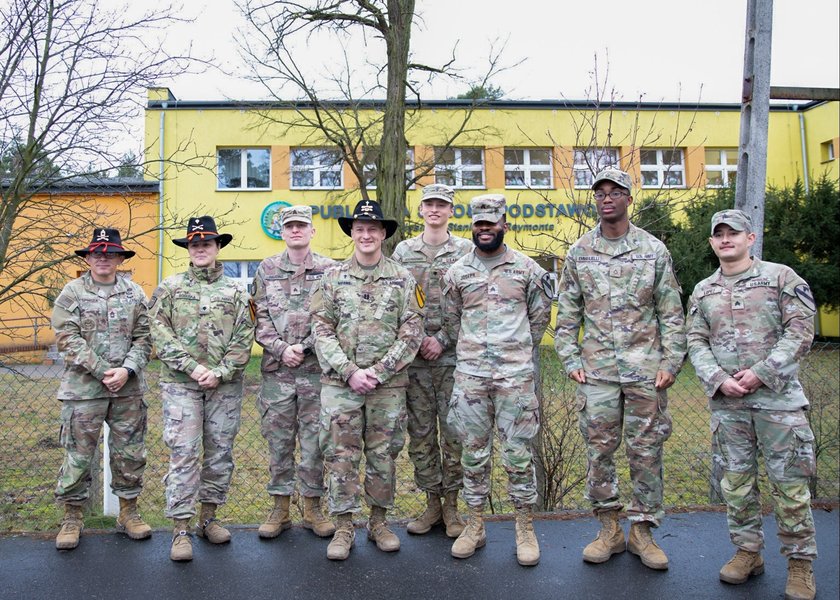
U.S. and Polish soldiers training together in Poland, reflecting increased military presence and joint exercises in the region.
Mental Health and Gun Access: A Nuanced Perspective
In Europe, including Poland, the prevention of gun violence often emphasizes mental health assessments. Poland's strict mental health evaluations for gun permit applicants align with this approach. These assessments aim to identify individuals who may pose a risk to themselves or others due to mental health conditions, severe psychophysical disabilities, or substance abuse.
However, it's crucial to acknowledge that the link between mental illness and gun violence is often misunderstood. Research indicates that gun violence committed by individuals with severe mental illness is rare, occurring in 2% or less of patients after discharge from inpatient settings. People with mental illnesses are more likely to own and carry guns for similar reasons as others, such as perceived risk or self-defense. Conflating mental illness with violence can lead to stigma and distract from other contributing factors to gun violence.
The Evolving Landscape: Geopolitical Tensions and Societal Response
Border Security and the Immunity Law for Uniformed Personnel
The ongoing security crisis at the border with Belarus, marked by an increase in attempted entries and aggression from some migrants, has led to significant policy changes regarding firearm use by uniformed personnel. Poland has passed legislation granting soldiers, border guards, and police officers immunity from criminal liability when using firearms in specific circumstances, such as repelling a direct and unlawful attack that threatens their life, health, or freedom while defending the border.
This legislative shift, while supported by a significant portion of the public (with one poll showing 86% support for allowing soldiers to use weapons to repel attacks), has raised human rights concerns among NGOs and legal experts. Critics argue that these new rules could undermine the rule of law and create a "legal grey zone" where officers might act with impunity, especially with the reintroduction of an "exclusion zone" at the border that limits public oversight.
Increased Military Preparedness and Civilian Training
In response to Russia's full-scale invasion of Ukraine and growing regional threats, Poland has significantly ramped up its defense spending and military preparedness. Prime Minister Donald Tusk has announced plans to increase the size of the Polish army to 500,000, including reservists, from the current 200,000.
Furthermore, Poland has introduced mandatory Education for Safety lessons in schools, which now include firearms training and basic first aid. In primary schools, this involves theoretical preparation on safe weapon handling, while secondary schools will conduct basic shooting training using various tools, including firearms, pneumatic weapons, and replicas. This initiative aims to prepare the younger generation for potential threats and foster a more informed approach to national defense, potentially mitigating the "fear of the unknown" that contributes to discomfort around firearms.
This radar chart visually compares the current Polish societal view on firearms with general traditional European and North American perspectives across several key dimensions. "Public Acceptance" reflects the general willingness of society to accept civilian gun ownership. "Regulatory Strictness" indicates the level of government control over firearm access. "Historical Ownership" gauges the presence of a long-standing cultural tradition of gun ownership. "Fear of Unknown" represents the degree of apprehension or discomfort associated with visible firearms due to lack of familiarity. "Military Preparedness" reflects the emphasis on national defense and military training within society. Finally, "Perceived Personal Threat" indicates the extent to which individuals feel a need for firearms due to safety concerns. The chart highlights Poland's high regulatory strictness and increasing focus on military preparedness, contrasted with a lower historical ownership tradition and a notable "Fear of Unknown" compared to some other regions, particularly North America.
Summary of Key Regulations and Societal Impact
The table below summarizes the key aspects of gun laws in Poland and their associated societal impacts and considerations:
| Aspect of Gun Law/Societal Factor | Description in Poland | Societal Impact/Consideration |
|---|---|---|
| Permit Requirement | Shall-issue basis for "important reason" (e.g., sport, hunting, self-defense under strict conditions). | Limits general civilian ownership, emphasizes specific, legitimate uses. |
| Age Requirement | Minimum 21 years old (18 for sport/hunting with recommendation). | Ensures maturity of applicants. |
| Medical & Psychological Evaluation | Mandatory, comprehensive assessments by police-appointed practitioners; periodic re-evaluation for self-defense permits. | Aims to prevent gun access for individuals with mental disorders, significant disabilities, or addictions; a cornerstone of European approach to gun violence prevention. |
| Reason for Possession | "Constant, real and higher than average" threat for self-defense; less stringent for sport/hunting. | Strictly defines conditions for self-defense ownership, reducing casual acquisition. |
| Firearm Types Allowed | Handguns, gas guns, blank-firing guns for self-defense; broader range for sport/hunting (excluding full-auto and over 12mm caliber). | Controls the types of firearms accessible to civilians based on their intended use. |
| Carrying Regulations | Concealed carry allowed for personal defense, sport, or training; open carry strictly prohibited. | Maintains a low profile for firearms in public, reducing visible armed presence. |
| Storage Requirements | Proof of owning a proper gun safe is required. | Ensures secure storage to prevent unauthorized access. |
| Civilian Ownership Rate | Among the lowest in Europe (~1-2.5 firearms per 100 citizens). | Reflects a general lack of gun ownership tradition and strict control. |
| Public Perception of Firearms | General low acceptance of widespread ownership; potential discomfort/fear of visible armed personnel due to lack of familiarity. | Shapes public discourse and resistance to significant deregulation of gun laws. |
| Military Training in Schools | Mandatory "Education for Safety" including theoretical and practical firearms training for schoolchildren. | Aims to increase national defense awareness and potentially normalize safe interaction with firearms, reducing fear of the unknown. |
| Immunity for Border Guards/Soldiers | Recent law grants immunity for use of firearms in certain border defense scenarios. | Addresses security concerns at the border but raises human rights and rule of law issues. |
The Role of Education and Experience in Shaping Perceptions
From Apprehension to Awareness: The Impact of Uniformed Schools and Training
To address the fear that stems from a lack of knowledge and experience, initiatives like uniformed schools and mandatory firearms training for schoolchildren are becoming increasingly significant in Poland. These programs aim to provide structured, safe exposure to firearms and military concepts, thereby fostering a greater understanding and potentially reducing unwarranted apprehension.
By offering practical components, such as shooting exercises with various types of weapons (including air guns, replicas, and even real firearms under strict supervision for older students), these educational efforts can demystify firearms. This controlled exposure helps to build familiarity, promote responsible handling, and illustrate that firearms are tools that can be used safely and for legitimate purposes, rather than being inherently dangerous or solely associated with violence. This proactive approach to education is crucial for a society that has historically had limited civilian exposure to guns.
Looking Ahead: Poland's Path in a Changing World
Balancing Security Needs with Societal Comfort
Poland's current trajectory indicates a strong focus on enhancing national security and defense capabilities, driven by regional geopolitical dynamics. This includes not only modernizing its armed forces but also preparing its civilian population for potential threats through educational and training initiatives. While there has been a push from some political factions to ease gun access for citizens, the broader societal sentiment still favors stringent controls.
The challenge for Poland will be to effectively balance its legitimate security needs and military preparedness with maintaining public comfort and safety, particularly as the visibility of armed personnel increases. Open dialogue, transparent communication from authorities, and continued emphasis on responsible education about firearms will be crucial in shaping a mature and informed societal relationship with weapons in the face of evolving threats.
This video highlights Poland's initiative to make firearms training mandatory for schoolchildren, showcasing how the nation is adapting its educational approach to enhance national preparedness. The clip illustrates the practical application of the new "Education for Safety" lessons, emphasizing the inclusion of shooting training to familiarize younger generations with firearms in a controlled environment. This move is a direct response to increasing fears of Russian aggression, reflecting Poland's proactive stance in preparing its society for potential threats.
Frequently Asked Questions
What are the general attitudes towards guns in Poland?
What are the main requirements to obtain a gun permit in Poland?
How have recent geopolitical events impacted Poland's gun policies?
Is concealed carry allowed in Poland?
What role do mental health checks play in Polish gun laws?
Conclusion
Poland's relationship with firearms is a carefully calibrated balance between a historical lack of civilian gun ownership tradition, strict regulatory controls, and a growing emphasis on national security in response to contemporary geopolitical challenges. The country's stringent permitting process, particularly its rigorous medical and psychological evaluations, underscores a European-centric approach to gun control that prioritizes public safety and responsible ownership. While the visible presence of armed personnel, especially near the Belarusian border, may evoke apprehension due to a lack of public familiarity with firearms, initiatives like mandatory school training aim to demystify weapons and foster a more informed societal understanding. As Poland continues to navigate an increasingly complex security landscape, its evolving policies reflect a commitment to both national defense and maintaining a society where firearms are managed with precision and prudence.
Recommended Further Exploration
- How do mental health evaluations for gun permits compare across EU countries?
- Impact of geopolitical tensions on civilian gun ownership trends in Eastern Europe
- The effectiveness of mandatory firearms training in schools on public safety
- Comparing gun violence rates and gun laws between Poland and the United States