
U.S. Politicians Opposing Donald Trump
Key insights into a bipartisan challenge against Trump’s policies
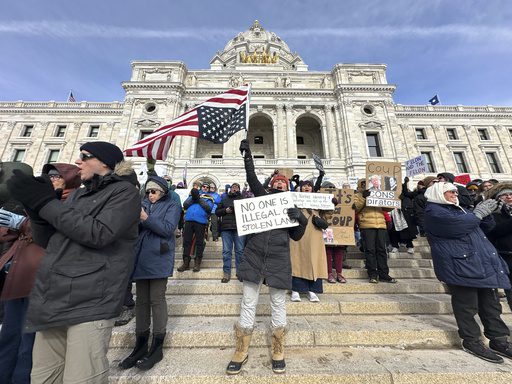
Highlights
- Bipartisan Opposition: Both Democrats and a select group of Republicans have actively opposed Trump’s policies and agenda.
- Diverse Methods: Opposition comes in various forms including legislative maneuvers, public statements, legal actions, and organized protests.
- Strategic Resistance: The resistance is not monolithic; while Democrats coordinate broad campaigns against policy changes, some Republicans leverage their internal influence to challenge Trump’s choices directly.
Understanding the Opposition
Overview of the Political Landscape
In recent years, several U.S. politicians have taken clear stances against President Donald Trump’s policies, procedures, and management of the executive branch. While the resistance originates from diverse political orientations, a significant portion is rooted in pressing concerns regarding governance, democratic values, and the preservation of federal institutions. This robust opposition is particularly evident in the methods by which these politicians have chosen to express dissent, ranging from direct legislative challenges to high-profile public condemnations.
Bipartisan Nature of the Resistance
Although it might appear that resistance is primarily the domain of the opposition party, recent developments demonstrate that dissent is not exclusive to Democrats. Both Democrats and some Republicans have taken public stances against Trump’s policies. Within the Democratic Party, the opposition has rallied around legislative resistance, legal filings, and public protests. They have focused on halting what they perceive to be harmful executive actions, including unilateral decisions that might weaken the balance of power between the branches of government.
Democratic Initiatives
Leading figures among the Democrats have not only organized protests in major cities but have also enacted strategies to counter Trump’s efforts from within the halls of Congress. Democratic governors and state attorneys general have led localized campaigns designed to nullify or mitigate Trump’s policies at the state level. These state-level actions often involve legal challenges to executive orders or budgetary moves, such as funding freezes and government shutdowns, which are seen as tactics to undermine federal institutions.
In addition to this, prominent Democratic lawmakers have been vocal during committee hearings and public forums, arguing that Trump’s approach undermines traditional checks and balances. Legislative actions have included efforts to slow or block appointments to key federal positions, thereby challenging the administration’s ability to quickly implement its agenda. These efforts are also characterized by the formation of task forces and committees specifically aimed at countering the so-called "Project 2025" initiatives, which critics claim are aimed at restructuring government agencies in ways that consolidate executive power.
Republican Dissent
On the Republican side, while a significant portion of the party remains supportive of Trump, there is a notable contingent that has diverged in recent years. High-profile figures have sometimes acted independently of the mainstream party upload, citing concerns for the future direction of the party and the nation. Some leading Republicans have publicly challenged Trump’s nominations for key positions within the federal government and have criticized policy proposals that they believe do not align with traditional Republican values.
Mike Pence, once considered a staunch ally of Trump, has emerged as one of the more prominent critics within the party. His public actions involve opposing certain policies deemed inconsistent with national interests, as well as questioning strategic decisions made during his time in the executive branch. Alongside Pence, other Republican senators, including those who have cast dissenting votes on Trump’s cabinet appointments and judicial picks, represent a faction concerned with preserving historical norms within the party. These dissenters argue that uncritical support for executive actions can lead to dangerous erosions of institutional checks.
Methods of Opposition
The methods utilized by U.S. politicians opposing Trump can be broadly grouped into several categories:
| Method | Description | Examples |
|---|---|---|
| Legislative Actions | Introducing bills, staging filibusters, and using procedural tools to block Trump’s policy initiatives. | Using budgetary restrictions, stalling confirmation votes for key appointments. |
| Legal Challenges | Filing lawsuits against executive orders and policy implementations that are viewed as unconstitutional or overreaching. | State attorneys general leading challenges in federal court. |
| Public Statements and Hearings | Voicing dissent through press conferences, congressional hearings, and interviews. | Testimonies by senior lawmakers, public debates on network media. |
| Protests and Grassroots Mobilization | Organizing and participating in public rallies and protests to showcase community dissatisfaction. | City-wide protests, social media campaigns, and coordinated demonstrations during policy announcements. |
Notable Political Figures
A range of prominent figures on both sides of the aisle have been instrumental in advocating resistance to Trump’s agenda. These include:
Key Democratic Leaders
Senior Democratic leaders have ensured that a concerted counter-response is mounted every time an executive order or policy initiative by Trump is launched. Lawmakers have capitalized on their committee roles to lobby for reversing or freezing actions that are deemed detrimental to democratic institutions. Moreover, several state-level leaders and attorneys general have leveraged their legal expertise to challenge policies that could potentially centralize power without adequate legislative oversight.
This cohesive political maneuvering has included the creation of specialized task forces tasked with opposing what many view as chaotic governance. For instance, advisory teams created in response to “Project 2025” have been pivotal in organizing coordinated defensive measures across various states.
Notable Republican Critics
On the Republican front, the dissent has generally been more limited but striking. A faction within the party recognizes that maintaining a traditional conservative approach, which naturally includes upholding principles like the separation of powers, sometimes necessitates opposition against certain presidential actions.
High-profile Republicans such as Mike Pence, who once served in a high-ranking executive role, have taken concrete stances by utilizing their influence both in formal arenas (e.g., voting against nominees) and in public rhetoric. Senators have also played a role by casting dissenting votes on controversial appointments, signaling that they prioritize institutional integrity over party unity when it comes to safeguarding democratic principles.
Cross-partisan Collaborations
One of the defining features of the current resistance against Trump is the willingness of politicians from different parties to work together on common causes. Although ideological differences certainly remain, some issues have galvanized cooperation. In cases where legal challenges are mounted or when a particular policy is perceived as overreaching, bipartisan coalitions have emerged. These coalitions are often seen as efforts to fortify the democratic system against maneuvers that might concentrate power within the executive branch.
This cross-party collaboration has also extended to public events and media appearances where officials from various backgrounds convene to express unity against policies they believe are harmful to the country’s long-term democratic stability. Such collaborations underline a critical perspective: regardless of party lines, numerous U.S. politicians view the preservation of checks and balances and respect for institutional roles as foundational to good governance.
Legislative and Procedural Resistance
Procedural Tools in Congress
One effective method of challenging the Trump administration’s agenda is the use of procedural tools and legislative actions in Congress. Democrats have repeatedly deployed tactics such as the filibuster—a procedural tactic that uses prolonged debate to delay or block legislative progress—to slow or impede measures championed by the Trump administration. These tactics reflect broader concerns about protecting the integrity of congressional processes and ensuring that executive powers are not abused.
Additionally, many Democratic lawmakers have chosen to withhold crucial funding approvals, effectively stalling the operations of certain federal initiatives. This approach creates a legislative counterbalance to executive decisions, thereby forcing dialogue and negotiation in areas of high policy conflict.
Judicial and Legal Counteractions
Beyond congressional proceedings, legal measures have also played a significant role in the resistance to Trump’s agenda. A number of state attorneys general, along with advocacy groups, have filed lawsuits challenging executive orders and agency decisions that allegedly exceed the constitutional limits of presidential authority.
These legal challenges serve not only as a check on executive power but also as a means to clarify the limits of presidential action, reinforcing the principle of separation of powers. In many cases, a federal court’s scrutiny of these measures underscores judicial deference to legislative oversight and limits the scope of unilateral executive decisions.
Public Discourse and Media Influence
Media Coverage and Public Statements
Resistance to Trump’s policies is not confined solely to the halls of government. A significant component of political opposition has been the effective use of media to amplify dissenting voices. Public statements by respected lawmakers have resonated widely, spreading awareness about perceived oversteps and shortcomings in the administration’s agenda.
Major national and local media outlets have provided extensive coverage of these oppositional moves, documenting congressional hearings, public speeches, and protest events. This media attention not only informs the public about the evolving political dynamics but also puts additional pressure on Trump and his allies by exposing the depth and breadth of opposition.
Protests and Grassroots Mobilization
In concert with formal political maneuvers, a vibrant grassroots movement has also emerged. Organized protests across large metropolitan areas have underscored the public discontent with policies perceived as undermining democratic institutions and suppressing dissent. These demonstrations frequently take place in response to new executive orders, legislative proposals, or even symbolic moments that represent a broader struggle for accountability and transparency in government.
Grassroots mobilization also plays an essential role in reinforcing the legitimacy of the political challenges mounted by elected officials. By rallying public opinion, these movements help secure a mandate for political action, ensuring that opposition to certain policies is both broad-based and well-supported.
Impact and Future Prospects
Effects on Governance and Policy
The multifaceted opposition to President Trump has had a measurable impact on governance and policy making in the United States. Legislative delays, legal disputes, and public protests have forced the administration to reconsider or modify several of its policy initiatives. For example, efforts to implement sweeping changes to federal agency operations or to instigate major shifts in funding priorities have frequently been met with obstacles that slow down implementation or even lead to reversals.
These resistance tactics are emblematic of a broader political debate about the balance of power. They highlight an ongoing struggle between those who advocate for robust executive action and those who insist on preserving the checks and balances that are integral to the American system of government.
Long-term Political Repercussions
As these political challenges continue to evolve, the future of the U.S. political landscape may be shaped significantly by the outcomes of these conflicts. The willingness of some Republican figures to stand apart from party norms in order to oppose what they view as overreach indicates potential realignments within the party. Concurrently, sustained Democratic opposition may result in further legislative or legal reforms that reinforce the democratic framework.
Overall, the interactions between opposition movements and the Trump administration have not only influenced current policy debates but may also set enduring precedents regarding executive power and partisan accountability for many years to come.
Reflections on the Ongoing Political Struggle
The Nature of Political Dissent
The dynamics of political dissent in the current era encapsulate a broader narrative about the interaction between power and accountability. While a significant number of politicians have rallied against Trump’s policies, these efforts are embedded within a complex system of ideas, interests, and institutional constraints. The resistance is as much about safeguarding democratic principles as it is about navigating the realities of partisan politics.
This situation underscores the multifaceted nature of presidential power and how such power is checked by legal, legislative, and public oversight. Politicians on both sides of the aisle are aware that the erosion of established democratic practices could have far-reaching consequences beyond the immediate policy battles.
Insights into Future Challenges
As the political climate continues to shift, several challenges and opportunities will likely arise. The ongoing tension between executive authority and legislative oversight sets the stage for future conflicts, especially as new issues emerge on the national scene. The careful balance of power, maintained by judicial, legislative, and public checkpoints, will continue to be tested by emerging policy challenges and shifting public sentiment.
In the upcoming years, it is expected that both established politicians and emerging leaders will play crucial roles in navigating this turbulent terrain. Whether it involves further legal reforms, new methods of legislative accountability, or innovative forms of public mobilization, the legacy of this period will undoubtedly influence American political norms for future generations.
Conclusion and Final Thoughts
In summary, a broad coalition of U.S. politicians has emerged to challenge various aspects of President Donald Trump’s policies and administrative strategies. The opposition is distinctly bipartisan, though more prominently enacted by Democrats who are focused on preserving federal checks and balances. Their tactics include legislative maneuvers, legal challenges, public protest, and cross-party collaborations aimed at ensuring that executive power is not allowed to override constitutional principles.
Republican dissent, while more limited in scope, is nonetheless significant. Key figures such as Mike Pence and select senators have publicly opposed aspects of Trump’s agenda, citing concerns about long-term party values and institutional integrity. Together, these efforts represent a continuing debate within American politics about the proper limits of executive authority and the necessary role of public and institutional oversight.
Ultimately, the ongoing resistance against Trump’s agenda illustrates the inherent tension in any democratic system between leadership and accountability. As this struggle evolves, it carries implications not only for current policy but also for the future shape of American governance. The interplay of legislative, judicial, and public responses will remain a critical element in understanding and preserving the delicate balance of power that defines U.S. government operations.
References
- Democrats confront powerlessness as Trump flexes authority - CNN
- Democrats Find a Voice in Opposition to Trump's Funding Halt - The New York Times
- Democrats take an aggressive stand against Trump - The Guardian
- Blue States Democrats Organize Trump Resistance - Politico
- Mike Pence emerges as one of the few Republicans challenging Trump - AP News
- Republican Dissent: Pence Challenges Trump - ABC News
- McConnell bucks Trump in the GOP - CNN
- Republican Holdouts: Murkowski challenges alignment with Trump - ADN
- Senator Collins opposes Trump nominee for FBI director - MSN
-
Protests against Trump's Project 2025 rally across U.S. cities - ABC News
Recommended Queries
Last updated February 21, 2025