
Understanding Polyaspartic Esters: Synthesis, Properties, and Applications
Exploring the Chemistry and Versatility of Polyaspartic Esters
Key Highlights of Polyaspartic Esters
- Synthesis: Polyaspartic esters are created through the aza-Michael addition reaction, typically involving the reaction of an amine with a dialkyl maleate.
- Properties: They exhibit a balance of fast curing speeds and extended pot life, making them suitable for various coating applications.
- Applications: Polyaspartic esters are widely used in coatings for concrete, metal, and other surfaces, offering durability, UV resistance, and low VOC emissions.
What are Polyaspartic Esters?
Polyaspartic esters are a type of polyurea resin developed in the 1990s to meet low volatile organic compound (VOC) requirements without compromising performance. These esters are created through a Michael addition reaction, where diamines react with maleic acid diesters, typically secondary aliphatic diamines. The resulting materials offer a unique combination of high performance and relatively moderate reactivity, making them suitable for various coating applications.
Polyaspartic esters are known for their ability to balance a relatively high curing rate with a sufficiently long pot life. This balance is achieved by using a partially blocked amine that reacts more slowly with isocyanates, resulting in a modified polyurea. The reactivity generally falls between the very fast curing of polyurea polymers and the slower reaction rate of typical polyurethanes.
Originally, polyaspartic esters were used in solvent-borne two-component polyurethane coatings. However, their advantages as a primary component in low- to zero-VOC coatings have led to their widespread adoption in various industries.
Synthesis of Polyaspartic Esters
The synthesis of polyaspartic esters involves reacting a primary amine with maleic or fumaric acid esters in an aza-Michael addition reaction. Diethyl maleate is commonly used as the maleate in this process. This reaction converts primary amines to secondary amines and introduces bulky groups, which cause steric hindrance and slow down the reaction rate, providing better control over the curing process.
Molecular structure of a polyaspartic ester.
The reaction can occur at room temperature, as demonstrated by Fourier transform infrared spectroscopy. The reaction's dynamics have been investigated using methods like mercaptan-iodine titration analysis at different temperatures to understand the reaction order between the reactants.
Key Considerations During Synthesis
Several factors must be carefully managed during the synthesis of polyaspartic esters to ensure optimal product quality:
- Residual Primary Amine Content: Reducing the amount of unreacted primary amine groups is crucial.
- Reaction Time: Shortening the reaction time is important for efficient production.
- Maleic Diester Residue: Minimizing the residual amount of maleic diester and other side reactions is necessary to prevent adverse effects on product quality.
A preparation method involving the Michael addition reaction of alicyclic primary diamine and maleic acid diester at a molar ratio greater than 1:2, followed by the addition of micromolecular aldehyde, can help address these issues by quickly consuming the maleic acid diester and residual primary amine.
Properties and Characteristics
Polyaspartic esters possess a unique combination of properties that make them valuable in coating applications:
- Curing Speed: They offer fast curing speeds, leading to increased productivity.
- Pot Life: The pot life is long enough to allow for effective application.
- VOC Content: They can be formulated with low to zero VOC content, making them environmentally friendly.
- Durability: They provide excellent durability and impact resistance, making them suitable for flooring and other demanding applications.
- UV Resistance: Many polyaspartic esters are UV resistant, ensuring long-term performance in outdoor applications.
- Adhesion: They exhibit high adhesion strength and wetting ability, ensuring a strong bond to the substrate.
The curing rate of polyaspartic ester coatings is influenced by environmental conditions, with higher temperatures and humidity accelerating the curing process. This responsiveness can be both an advantage and a challenge, requiring careful control during application.
Polyaspartic ester polyurea (PAE-PU) systems have gained prominence in the coating industry due to their superior properties, including eco-friendliness, absence of VOCs, and ease of application compared to traditional polyurea coatings.
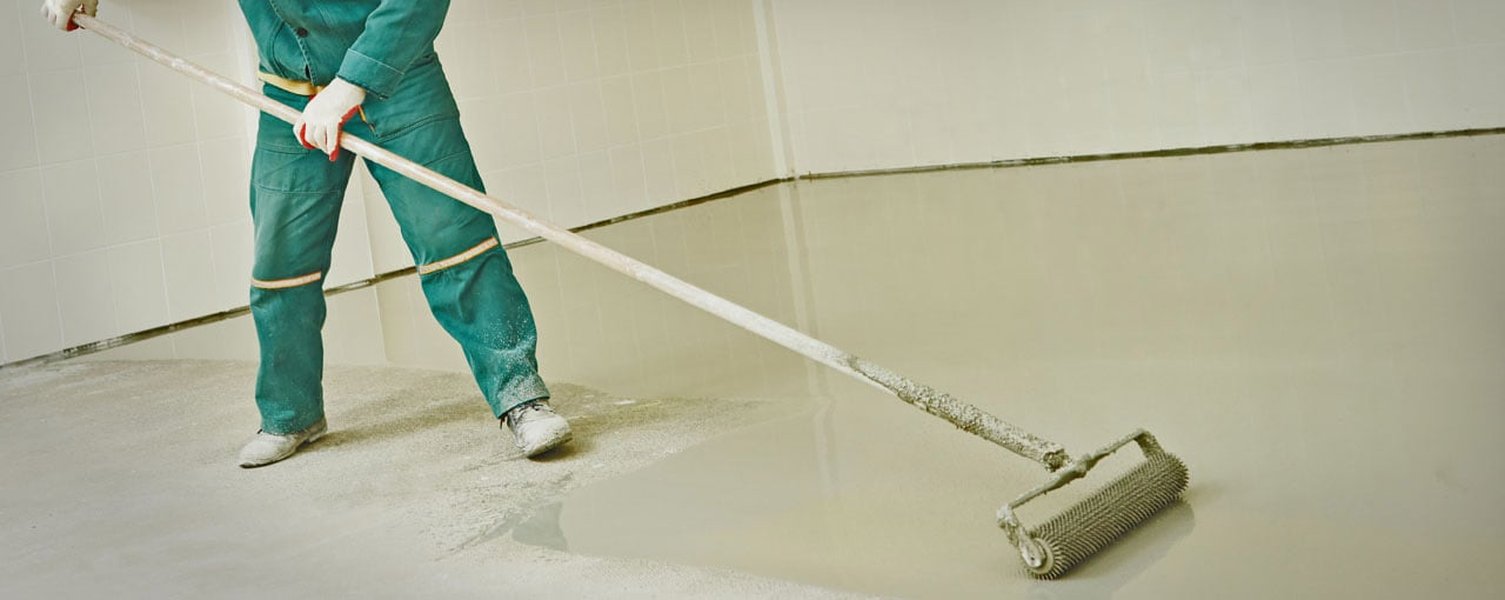
An example of a floor coated with polyaspartic ester.
The degree of steric hindrance around the nitrogen atom in the polyaspartic ester influences the curing reactivity, providing a balance between fast curing and manageable pot life. This balance is essential for achieving high-performance coatings that can be applied effectively.
Applications of Polyaspartic Esters
Polyaspartic esters are used in a wide array of applications due to their versatility and performance characteristics:
- Concrete Coatings: Ideal for concrete flooring due to their durability and aesthetic flexibility.
- Metal Coatings: Used in bridge beams, rail cars, and offshore marine applications for corrosion prevention.
- Protective Barriers: Applied to pipes to protect against corrosion, chemical attack, and abrasion.
- Adhesives, Sealants, and Elastomers: Used in various formulations due to their strong bonding and flexible properties.
Polyaspartic coatings can be applied directly to metal (DTM), eliminating the need for a primer and reducing labor time. They can also be installed in clear or pigmented form on concrete, with options for incorporating quartz, vinyl paint chips, or metallic pigments for decorative effects.
Here's a table summarizing the key applications and benefits of polyaspartic ester coatings:
| Application | Benefits |
|---|---|
| Concrete Flooring | Durability, abrasion resistance, aesthetic flexibility |
| Metal Coatings | Corrosion prevention, chemical resistance |
| Protective Barriers | Protection against corrosion, chemical attack, and abrasion |
| Adhesives, Sealants, Elastomers | Strong bonding, flexibility, durability |
Advantages Over Traditional Coatings
Polyaspartic coatings offer several advantages over traditional coating systems:
-
Faster Cure Times: Significantly reduce project turnaround time.
-
Low VOC Content: Environmentally friendly with reduced emissions.
-
Enhanced Durability: Provide long-lasting protection against wear and tear.
-
Improved Chemical Resistance: Offer superior resistance to a wide range of chemicals.
-
UV Stability: Resist yellowing and degradation from sunlight exposure.
FAQ Section
What is the primary advantage of using polyaspartic esters in coatings?
The primary advantage is the balance of fast curing speed and a long enough pot life, combined with low to zero VOC content, making them environmentally friendly and efficient to apply.
How are polyaspartic esters synthesized?
They are synthesized by reacting a primary amine with maleic or fumaric acid esters in an aza-Michael addition reaction, typically using diethyl maleate.
What are the main applications of polyaspartic ester coatings?
The main applications include concrete flooring, metal coatings for corrosion prevention, protective barriers for pipes, and use in adhesives, sealants, and elastomers.
References
Last updated April 17, 2025