
Unlocking the Potential of Polyaspartic Ester: Synthesis, Properties, and Applications
A Comprehensive Guide to Understanding Polyaspartic Ester and Its Versatile Uses
Key Highlights of Polyaspartic Ester
- Rapid Cure Times: Polyaspartic coatings offer significantly faster curing times compared to traditional coatings like epoxy, allowing for quicker return-to-service.
- UV Stability: Unlike many other coatings, polyaspartic esters exhibit excellent resistance to UV degradation, maintaining their appearance and protective properties over time.
- Versatile Applications: From floor coatings and adhesives to corrosion protection and automotive coatings, polyaspartic esters find use in a wide array of industries due to their durability, flexibility, and chemical resistance.
What is Polyaspartic Ester?
Polyaspartic esters are a unique type of coating material known for their rapid curing times, durability, and resistance to various environmental factors. These esters are derived from the reaction of amines with dialkyl maleates or fumarates, a process known as the aza-Michael reaction. This reaction results in secondary amines and bulky groups that slow down the reaction, providing a balance between reactivity and workability.
 Polyaspartic coatings are known for their durability and glossy finish.
Initially introduced in the early 1990s by Bayer in Germany and Miles Corporation in the United States, polyaspartic ester technology has since found widespread use in coatings, adhesives, sealants, and elastomers. Their ability to be manipulated for reaction rates has made them particularly valuable in low to zero volatile organic compound (VOC) coatings.
The Synthesis of Polyaspartic Ester
The synthesis of polyaspartic esters involves a chemical process known as the aza-Michael addition reaction. Here's a breakdown of the process:
- Reactants: The primary reactants are primary amines and dialkyl maleates (or fumarates). Diethyl maleate is commonly used.
- Aza-Michael Reaction: The amine reacts with the dialkyl maleate, converting primary amines into secondary amines. This reaction also introduces bulky groups, which cause steric hindrance, slowing down the overall reaction rate.
- Catalyst-Free Synthesis: In many modern methods, the synthesis is performed without catalysts, making it more environmentally friendly.
- Solventless Methods: Many syntheses are carried out without solvents to further reduce environmental impact.
The general reaction can be represented as:
\[ \text{Primary Amine} + \text{Dialkyl Maleate} \xrightarrow{\text{Aza-Michael Reaction}} \text{Polyaspartic Ester} \]This reaction is versatile, allowing for the manipulation of the polyaspartic ester's properties by varying the starting materials and reaction conditions.
Key Properties and Benefits
Polyaspartic coatings offer a range of benefits that make them suitable for diverse applications:
- Rapid Curing: Polyaspartic coatings are known for their fast cure times, allowing for a quick return to service. Some systems can be applied in one day and be ready for use the next day.
- UV Resistance: These coatings exhibit excellent UV stability, preventing yellowing and discoloration when exposed to sunlight. This makes them ideal for outdoor applications.
- Durability: Polyaspartic coatings provide superior abrasion and chemical resistance, ensuring long-lasting protection in demanding environments.
- Flexibility: They are more flexible than epoxy coatings, making them less prone to cracking, especially when applied over substrates like wood.
- Low Odor: Some polyaspartic formulations, like Poly-90, are designed to have low odor, making them suitable for use in sensitive environments where odor is a concern.
- Temperature Tolerance: Polyaspartic coatings can be applied in a wide range of temperatures, from as low as -30°F to as high as 140°F, unlike epoxy coatings.
- Adhesion: They offer superior penetration and bonding strength, ensuring strong adhesion to various substrates.
Applications of Polyaspartic Ester
The unique properties of polyaspartic esters make them suitable for a wide range of applications across various industries. Here are some key areas where polyaspartic coatings are utilized:
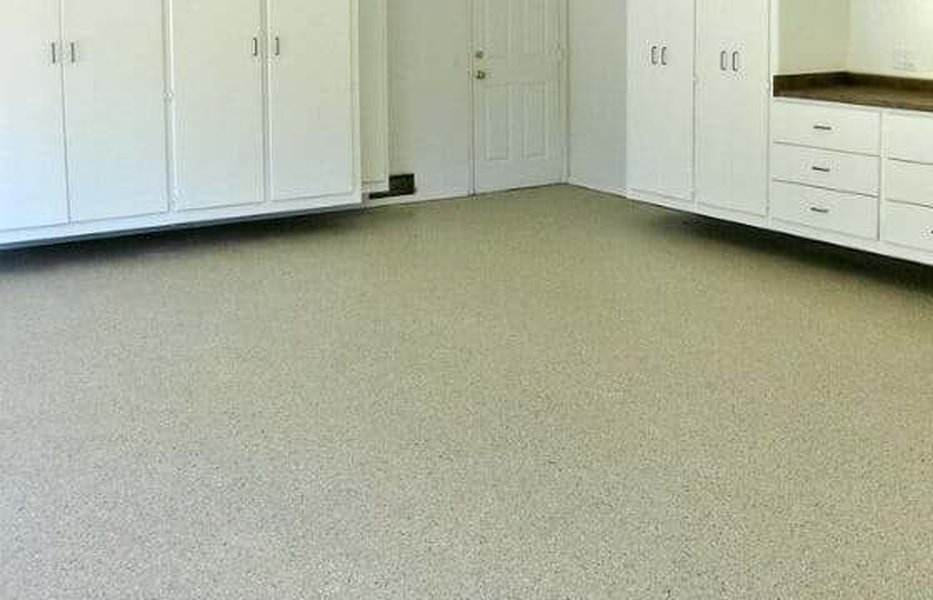 Polyaspartic coatings are commonly used for garage floors due to their durability.
Floor Coatings
Polyaspartic coatings are extensively used for concrete floor coatings in garages, workshops, high-traffic areas, schools, shop floors, and commercial spaces. They provide a tough, chemical and abrasion-resistant surface. The fast curing times and durability make them ideal for environments requiring minimal downtime.
Protective Coatings
These coatings are used as anti-corrosion protective topcoats for wind power stations, hydropower equipment, and exterior walls. Their UV stability and chemical resistance ensure long-term protection against environmental elements.
Adhesives and Sealants
Polyaspartic esters are used in adhesives and sealants due to their strong bonding properties and flexibility. They can be tailored for various applications, including automotive and construction.
Automotive Coatings
In the automotive industry, polyaspartic coatings provide durable and aesthetically pleasing finishes for vehicles. They offer resistance to scratches, chemicals, and UV radiation, maintaining the vehicle's appearance over time.
Marine Applications
Polyaspartic coatings can be used as transparent waterproof coatings for marine applications. Their resistance to water, chemicals, and UV radiation makes them suitable for protecting boats and other marine structures.
Polyaspartic vs. Polyurea
Polyaspartic and polyurea coatings are closely related, with polyaspartic being a subclass of polyurea. The key difference lies in their curing speed. Polyurea cures very rapidly, while polyaspartic has a slower, more controlled cure time due to steric hindrance from the bulky groups introduced during synthesis.
Here’s a table summarizing the key differences:
| Feature | Polyurea | Polyaspartic |
|---|---|---|
| Cure Time | Very fast (seconds to minutes) | Slower, more controlled (hours) |
| Application | Requires specialized equipment for fast application | Can be applied with standard equipment |
| UV Resistance | May require UV-stable topcoat | Generally good UV resistance |
| Flexibility | High | High |
| Cost | Generally higher | Generally lower |
Considerations and Potential Problems
While polyaspartic coatings offer numerous advantages, it's important to be aware of potential issues that may arise during application or long-term use:
-
Moisture Sensitivity: High moisture content in the concrete substrate can prevent proper bonding of the coating. It's essential to ensure the concrete is dry before application, possibly using a moisture barrier.
-
Mixing Issues: Bubbles can form in the mixture if it is mixed at too high a speed. Proper mixing techniques are crucial to avoid this.
-
Surface Preparation: Inadequate surface preparation can lead to poor adhesion and premature failure of the coating. The surface must be properly cleaned and prepared.
-
Application Errors: Incorrect application techniques can result in uneven coatings or other defects. Following the manufacturer's instructions is vital.
Frequently Asked Questions (FAQ)
What is the typical lifespan of a polyaspartic floor coating?
Polyaspartic floor coatings are highly durable and can last for many years with proper installation and maintenance. Lifespans of 10-15 years or more are common.
Can polyaspartic coatings be applied to wood surfaces?
Yes, polyaspartic coatings can be applied to wood surfaces. In fact, they are more flexible than epoxy, making them a good choice for wood substrates where some movement is expected.
Are polyaspartic coatings resistant to chemicals?
Yes, polyaspartic coatings offer excellent resistance to a wide range of chemicals, including oils, solvents, and acids, making them suitable for industrial and automotive environments.
How do I maintain a polyaspartic floor coating?
Maintaining a polyaspartic floor coating is relatively simple. Regular cleaning with mild soap and water is usually sufficient. Avoid using harsh chemicals or abrasive cleaners that could damage the surface.
Are polyaspartic coatings environmentally friendly?
Many polyaspartic coatings are formulated with low or zero VOCs, making them an environmentally friendly choice. Additionally, their long lifespan reduces the need for frequent replacements, further minimizing environmental impact.
References

Last updated April 17, 2025