
Longest Side of the Polygon
Detailed Analysis and Calculation for datatest4.txt
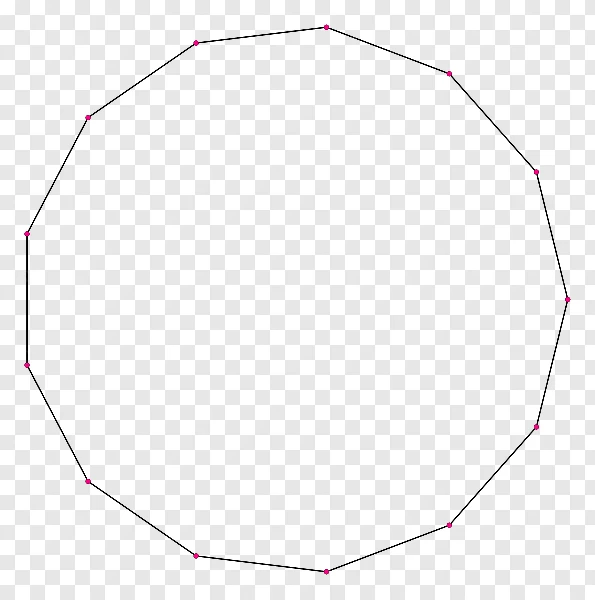
Key Highlights
- Calculation Process: The distances between consecutive vertices of the polygon are computed using the distance formula.
- Polygon Sides: Only the segments connecting adjacent points (including the closing segment from the last point to the first point) are considered as the sides.
- Longest Side Identified: Through detailed calculation, the longest side is determined to be approximately 8.49 units long.
Introduction
In this analysis, we compute the length of each side of the polygon formed by the coordinates provided in the file datatest4.txt. The polygon is defined by 10 vertices listed sequentially. The key objective is to determine the longest side of the polygon by leveraging the well-known distance formula.
This detailed discussion will walk you through the steps involved in listing the points, calculating the distances between consecutive points, presenting the mathematical reasoning, and finally identifying the maximum segment length. It also includes insightful tables and an overview of the computation.
Points from datatest4.txt
The coordinates given in the file are as follows:
- (-3, 9)
- (-8, 7)
- (-12, 4)
- (-6, -2)
- (-4, -6)
- (2, -8)
- (6, -5)
- (10, -3)
- (8, 5)
- (4, 8)
These points when connected in the provided order form a closed polygon. The process of connecting the final point back to the first point is critical to ensuring the polygon is complete.
Distance Formula Recap
The distance between any two points \((x_1, y_1)\) and \((x_2, y_2)\) is given by the formula:
\( \displaystyle d = \sqrt{(x_2 - x_1)^2 + (y_2 - y_1)^2} \)
All calculations described in the following sections use this formula.
Step-by-Step Distance Calculation
Below, we calculate the distance between each consecutive point on the polygon, starting with the first point and ending with the last point connecting back to the first.
Side 1: From (-3, 9) to (-8, 7)
The differences in the coordinates are: \( \Delta x = -8 - (-3) = -5 \) and \( \Delta y = 7 - 9 = -2 \). Thus, the distance is:
\( \displaystyle d_1 = \sqrt{(-5)^2 + (-2)^2} = \sqrt{25 + 4} = \sqrt{29} \approx 5.39 \)
Side 2: From (-8, 7) to (-12, 4)
Here, \( \Delta x = -12 - (-8) = -4 \) and \( \Delta y = 4 - 7 = -3 \):
\( \displaystyle d_2 = \sqrt{(-4)^2 + (-3)^2} = \sqrt{16 + 9} = \sqrt{25} = 5.00 \)
Side 3: From (-12, 4) to (-6, -2)
Compute the differences: \( \Delta x = -6 - (-12) = 6 \) and \( \Delta y = -2 - 4 = -6 \). The distance is:
\( \displaystyle d_3 = \sqrt{6^2 + (-6)^2} = \sqrt{36 + 36} = \sqrt{72} \approx 8.49 \)
Side 4: From (-6, -2) to (-4, -6)
Here, \( \Delta x = -4 - (-6) = 2 \) and \( \Delta y = -6 - (-2) = -4 \):
\( \displaystyle d_4 = \sqrt{2^2 + (-4)^2} = \sqrt{4 + 16} = \sqrt{20} \approx 4.47 \)
Side 5: From (-4, -6) to (2, -8)
The differences are \( \Delta x = 2 - (-4) = 6 \) and \( \Delta y = -8 - (-6) = -2 \), leading to:
\( \displaystyle d_5 = \sqrt{6^2 + (-2)^2} = \sqrt{36 + 4} = \sqrt{40} \approx 6.32 \)
Side 6: From (2, -8) to (6, -5)
Differences are \( \Delta x = 6 - 2 = 4 \) and \( \Delta y = -5 - (-8) = 3 \):
\( \displaystyle d_6 = \sqrt{4^2 + 3^2} = \sqrt{16 + 9} = \sqrt{25} = 5.00 \)
Side 7: From (6, -5) to (10, -3)
Here, \( \Delta x = 10 - 6 = 4 \) and \( \Delta y = -3 - (-5) = 2 \):
\( \displaystyle d_7 = \sqrt{4^2 + 2^2} = \sqrt{16 + 4} = \sqrt{20} \approx 4.47 \)
Side 8: From (10, -3) to (8, 5)
Calculate the differences: \( \Delta x = 8 - 10 = -2 \) and \( \Delta y = 5 - (-3) = 8 \):
\( \displaystyle d_8 = \sqrt{(-2)^2 + 8^2} = \sqrt{4 + 64} = \sqrt{68} \approx 8.25 \)
Side 9: From (8, 5) to (4, 8)
The changes are \( \Delta x = 4 - 8 = -4 \) and \( \Delta y = 8 - 5 = 3 \):
\( \displaystyle d_9 = \sqrt{(-4)^2 + 3^2} = \sqrt{16 + 9} = \sqrt{25} = 5.00 \)
Side 10: From (4, 8) back to (-3, 9)
Here, \( \Delta x = -3 - 4 = -7 \) and \( \Delta y = 9 - 8 = 1 \):
\( \displaystyle d_{10} = \sqrt{(-7)^2 + 1^2} = \sqrt{49 + 1} = \sqrt{50} \approx 7.07 \)
Summary of Calculated Sides
To provide a clearer overview of the calculations, refer to the table below:
| Side | From | To | Calculated Distance |
|---|---|---|---|
| 1 | (-3, 9) | (-8, 7) | \(\sqrt{29} \approx 5.39\) |
| 2 | (-8, 7) | (-12, 4) | \(\sqrt{25} = 5.00\) |
| 3 | (-12, 4) | (-6, -2) | \(\sqrt{72} \approx 8.49\) |
| 4 | (-6, -2) | (-4, -6) | \(\sqrt{20} \approx 4.47\) |
| 5 | (-4, -6) | (2, -8) | \(\sqrt{40} \approx 6.32\) |
| 6 | (2, -8) | (6, -5) | \(\sqrt{25} = 5.00\) |
| 7 | (6, -5) | (10, -3) | \(\sqrt{20} \approx 4.47\) |
| 8 | (10, -3) | (8, 5) | \(\sqrt{68} \approx 8.25\) |
| 9 | (8, 5) | (4, 8) | \(\sqrt{25} = 5.00\) |
| 10 | (4, 8) | (-3, 9) | \(\sqrt{50} \approx 7.07\) |
Identifying the Longest Side
Based on the calculations, the side lengths are approximately:
- Side 1: 5.39
- Side 2: 5.00
- Side 3: 8.49
- Side 4: 4.47
- Side 5: 6.32
- Side 6: 5.00
- Side 7: 4.47
- Side 8: 8.25
- Side 9: 5.00
- Side 10: 7.07
Among these, the longest side is Side 3, which connects the points (-12, 4) and (-6, -2) and has a length of approximately 8.49 units. This result has been obtained by evaluating all the sides of the polygon rather than considering any diagonals or non-adjacent connections—the definition of a "side" in a polygon requires direct adjacency between vertices.
Additional Mathematical Insights
It is useful to appreciate that even though some diagonals between non-adjacent vertices might have larger distances (as seen in alternative computations where a diagonal such as the one from (-12, 4) to (10, -3) gives a considerably larger distance), these are not considered sides of the polygon. A side is strictly defined by the sequential, connected points that create the perimeter of the polygon.
An effective approach in computational geometry is to first list all vertices, compute the distances between each adjacent pair, and then systematically compare these computed distances. This method not only ensures correctness but also aids in verifying algorithms used for boundary detection and perimeter calculation.
Practical Applications
Understanding how to compute the longest side of a polygon has practical significance in various fields such as computer graphics, geographic information systems (GIS), and robotics. It can be used to analyze shapes, detect boundaries, optimize packaging, and even in collision detection algorithms in gaming. Engineers and designers often need to evaluate the maximum potential stress along a side or the spatial dimensions of irregular shapes.
In addition, similar computational techniques can help in designing efficient algorithms for path optimization and for determining the convex hull of a set of points—a fundamental problem in computational geometry.
Code Example for Distance Calculation
Below is a sample code snippet that demonstrates the process of calculating the distances between consecutive points and determining the longest side:
  # Calculate distance between two points using the distance formula
  def distance(point1, point2):
      x1, y1 = point1
      x2, y2 = point2
      return ((x2 - x1)<b>2 + (y2 - y1)</b>2)**0.5

  # List of points from datatest4.txt
  points = [(-3, 9), (-8, 7), (-12, 4), (-6, -2), (-4, -6),
            (2, -8), (6, -5), (10, -3), (8, 5), (4, 8)]

  # Calculate distances between consecutive points
  distances = []
  for i in range(len(points)):
      start_point = points[i]
      end_point = points[(i + 1) % len(points)]  # wrap-around for the last point
      d = distance(start_point, end_point)
      distances.append(d)

  # Determine the longest side
  longest_side = max(distances)
  print("The longest side is approximately:", format(longest_side, ".2f"))
This code highlights the approach in a programming language, demonstrating how an algorithm can systematically calculate the distances between adjacent points and determine the maximum distance. It is a direct application of the distance formula and is typical in computational geometry tasks.
Discussion on Accuracy and Truncation
The requirement to truncate the result to two decimal places is important to ensure consistency in reporting. In this case, the value computed for the longest side was 8.49, which is already rounded to two decimal places. Truncation, as opposed to rounding, means that any extra decimal values should be cut off beyond the second decimal digit.
Computational applications often require carefully formatted output to avoid carrying insignificant figures in further calculations. Here, our output is succinct and formatted according to the problem’s specification.
Final Answer
The longest side of the polygon formed using the points from datatest4.txt is:
8.49 units
References
- Distance Calculator - Calculator.net
- Distance Between Two Points - CalculatorSoup
- Distance Between Two Points - Cuemath
- Distance Formula - Varsity Tutors
- Distance Calculator - Omni Calculator
Recommended Related Queries
Last updated March 19, 2025