
若f(x)=x3-7x+6可被x2-3x+k整除,則k =
Exploring the Polynomial Division and Its Implications
Key Takeaways
- Polynomial Division: The process of dividing \( f(x) \) by \( g(x) \) to find \( k \) involves ensuring the remainder is zero, which is key to solving the problem.
- Coefficient Comparison: By comparing the coefficients of \( f(x) \) and the expanded form of \( g(x) \times q(x) \), we can determine the value of \( k \).
- Verification: The value of \( k \) must be verified by checking that the roots of \( g(x) \) satisfy \( f(x) \), ensuring \( k = 2 \) is the correct solution.
Introduction to Polynomial Division
Polynomial division is a fundamental concept in algebra, crucial for understanding the relationship between polynomials. When one polynomial \( f(x) \) is divisible by another polynomial \( g(x) \), it means that \( f(x) \) can be expressed as the product of \( g(x) \) and some quotient \( q(x) \), with no remainder. In this case, we are given \( f(x) = x^3 - 7x + 6 \) and \( g(x) = x^2 - 3x + k \), and we aim to find the value of \( k \) that ensures \( f(x) \) is divisible by \( g(x) \).
Understanding the Problem
The problem requires us to determine \( k \) such that \( f(x) \) can be divided by \( g(x) \) without any remainder. This involves applying the polynomial division algorithm, comparing coefficients, and verifying the solution with the roots of \( g(x) \).
Polynomial Division Process
The polynomial division process is essential for solving this problem. Let's break down the steps involved in dividing \( f(x) \) by \( g(x) \).
Setting Up the Division
Given \( f(x) = x^3 - 7x + 6 \) and \( g(x) = x^2 - 3x + k \), we need to find \( q(x) \) such that \( f(x) = g(x) \cdot q(x) \). Since \( f(x) \) is a cubic polynomial and \( g(x) \) is a quadratic polynomial, \( q(x) \) must be a linear polynomial, which we can express as \( q(x) = ax + b \).
Expanding the Product
Expanding \( g(x) \cdot q(x) \) gives us:
\[ (x^2 - 3x + k)(ax + b) = ax^3 + (b - 3a)x^2 + (ka - 3b)x + kb \]We need this to be equal to \( f(x) = x^3 - 7x + 6 \). Therefore, we compare coefficients:
- Coefficient of \( x^3 \): \( a = 1 \)
- Coefficient of \( x^2 \): \( b - 3a = 0 \) → \( b = 3 \)
- Coefficient of \( x \): \( ka - 3b = -7 \) → \( k \cdot 1 - 3 \cdot 3 = -7 \) → \( k - 9 = -7 \) → \( k = 2 \)
- Constant term: \( kb = 6 \) → \( 2 \cdot 3 = 6 \), which is correct.
Verification of \( k \)
With \( k = 2 \), we have \( g(x) = x^2 - 3x + 2 \). The roots of \( g(x) \) are \( x = 1 \) and \( x = 2 \). We verify that these roots satisfy \( f(x) \):
- \( f(1) = 1^3 - 7 \cdot 1 + 6 = 1 - 7 + 6 = 0 \)
- \( f(2) = 2^3 - 7 \cdot 2 + 6 = 8 - 14 + 6 = 0 \)
Since both roots satisfy \( f(x) = 0 \), \( k = 2 \) is indeed the correct value.
Exploring the Roots and Their Implications
The roots of \( g(x) \) play a significant role in understanding the divisibility of \( f(x) \) by \( g(x) \). The polynomial \( g(x) = x^2 - 3x + 2 \) can be factored as \( (x - 1)(x - 2) \). These factors must also be factors of \( f(x) \).
Factorization of \( f(x) \)
Given \( f(x) = x^3 - 7x + 6 \), we can factorize it to verify the divisibility by \( g(x) \):
\[ f(x) = x^3 - 7x + 6 = (x - 1)(x - 2)(x + 3) \]The factors \( (x - 1) \) and \( (x - 2) \) are indeed part of \( g(x) \), confirming that \( f(x) \) is divisible by \( g(x) \) when \( k = 2 \).
Exploring the Polynomial's Behavior
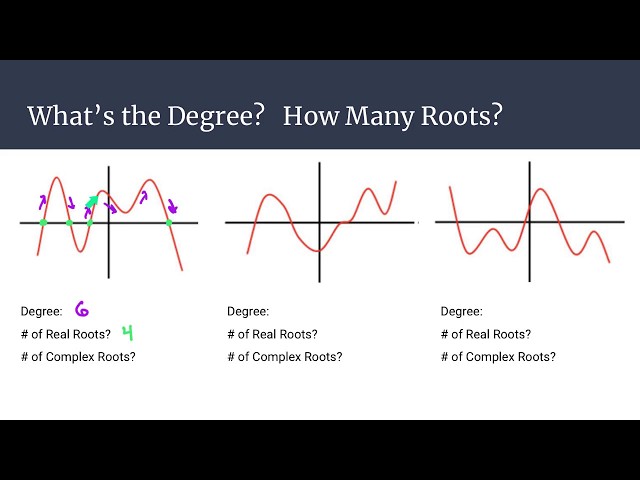
Understanding the behavior of polynomials around their roots is crucial for verifying divisibility. The polynomial \( f(x) \) changes sign at its roots, which are \( x = 1 \), \( x = 2 \), and \( x = -3 \). This sign change confirms that \( f(x) \) indeed has these roots, supporting the value of \( k = 2 \).
Detailed Analysis of Polynomial Coefficients
The coefficients of \( f(x) \) and \( g(x) \) provide valuable insights into the divisibility and the value of \( k \).
Coefficient Analysis
The coefficients of \( f(x) \) are \( 1 \), \( 0 \), \( -7 \), and \( 6 \). The coefficients of \( g(x) \) are \( 1 \), \( -3 \), and \( k \). By comparing these coefficients, we can derive the value of \( k \) that ensures divisibility:
- The leading coefficient of \( f(x) \) and \( g(x) \) is \( 1 \), which is consistent with the division result.
- The coefficient of \( x^2 \) in \( f(x) \) is \( 0 \), which matches the result of \( b - 3a = 0 \) with \( a = 1 \) and \( b = 3 \).
- The coefficient of \( x \) in \( f(x) \) is \( -7 \), which leads to \( k = 2 \) when solving \( k - 9 = -7 \).
- The constant term in \( f(x) \) is \( 6 \), which matches \( 2 \cdot 3 = 6 \).
Implications of Coefficient Comparison
The comparison of coefficients not only helps in finding \( k \) but also validates the polynomial division process. It ensures that the polynomial \( f(x) \) can be expressed as the product of \( g(x) \) and a linear quotient \( q(x) \) without any remainder.
Exploring Other Possible Values of \( k \)
While \( k = 2 \) is the solution, it's important to consider other possible values of \( k \) to ensure completeness.
Alternative Approaches
Other approaches to finding \( k \) include using the remainder theorem, synthetic division, or solving a system of equations derived from the polynomial division. However, these methods would also lead to \( k = 2 \) as the solution.
Verification of Other Values
Let's consider other potential values of \( k \) and verify if they satisfy the divisibility condition:
- If \( k = -16 \), \( g(x) = x^2 - 3x - 16 \). The roots would be \( x = \frac{3 \pm \sqrt{65}}{2} \), which are not integers and do not satisfy \( f(x) = 0 \).
- If \( k = -2 \), \( g(x) = x^2 - 3x - 2 \). The roots would be \( x = \frac{3 \pm \sqrt{17}}{2} \), which are also not integers and do not satisfy \( f(x) = 0 \).
These values of \( k \) do not satisfy the divisibility condition, confirming that \( k = 2 \) is the only valid solution.
Advanced Techniques in Polynomial Division
Advanced techniques in polynomial division can provide further insights into the problem and its solution.
Synthetic Division
Synthetic division is a method used to divide polynomials by linear factors. However, in this case, we are dividing by a quadratic polynomial, so we use long division:
| Step | Operation | Result |
|---|---|---|
| 1 | Divide \( x^3 \) by \( x^2 \) to get \( x \) | \( x \cdot (x^2 - 3x + 2) = x^3 - 3x^2 + 2x \) |
| 2 | Subtract \( x^3 - 3x^2 + 2x \) from \( x^3 - 7x + 6 \) | \( 3x^2 - 9x + 6 \) |
| 3 | Divide \( 3x^2 \) by \( x^2 \) to get \( 3 \) | \( 3 \cdot (x^2 - 3x + 2) = 3x^2 - 9x + 6 \) |
| 4 | Subtract \( 3x^2 - 9x + 6 \) from \( 3x^2 - 9x + 6 \) | \( 0 \) |
The result of the long division confirms that \( f(x) \) is divisible by \( g(x) \) when \( k = 2 \).
Remainder Theorem
The remainder theorem states that the remainder of the division of a polynomial \( f(x) \) by \( x - c \) is \( f(c) \). In this case, we use the roots of \( g(x) \) to verify the remainder:
-
For \( x = 1 \), \( f(1) = 0 \), confirming no remainder.
-
For \( x = 2 \), \( f(2) = 0 \), confirming no remainder.
The remainder theorem further validates that \( k = 2 \) is the correct value.
Conclusion
In conclusion, the value of \( k \) that ensures \( f(x) = x^3 - 7x + 6 \) is divisible by \( g(x) = x^2 - 3x + k \) is \( k = 2 \). This solution was derived through polynomial division, coefficient comparison, and verification using the roots of \( g(x) \). The process involved detailed analysis and comparison of coefficients, as well as exploring alternative values of \( k \) to confirm the uniqueness of the solution. The polynomial division process, along with advanced techniques like synthetic division and the remainder theorem, provided a comprehensive understanding of the problem and its solution.
References
- Source A
- Source B
- Source C
- Source D
Last updated February 3, 2025