
Decoding Populations and Samples in Technological Research
A Dive into Quantitative and Qualitative Frameworks with Insights from Leading Authors
Key Insights on Population and Sample Definitions
- Population: Encompasses all elements with common characteristics relevant to a study, as defined by Arias (2006), crucial for generalizing research conclusions.
- Sample: A subset of the population, carefully selected to represent the whole, ensuring the findings can be reliably applied to the broader group (Hernández & Mendoza, 2018).
- Sampling: The methodologies and criteria employed to select a representative group from a population, enabling researchers to make accurate inferences (Mata & Macassi, 1997).
Understanding Population and Sample in Research
In research, particularly within the technological framework, clearly defining the population and sample is paramount. The population represents the entire group of individuals, items, or events that you are interested in studying. The sample, on the other hand, is a subset of that population from which you will collect data. Properly defining these elements ensures that your research is focused, manageable, and yields results that can be generalized to the larger population. Both quantitative and qualitative research approaches rely on these concepts, albeit with different objectives and methodologies.
Defining Population and Sample
The population is the entire set of items, individuals, or events that share common characteristics and are of interest to the researcher. It's the broader group to which the researcher aims to generalize the findings. Meanwhile, the sample is a carefully chosen subset of the population, intended to represent the characteristics of the larger group. The sample is the actual group from which data will be collected.
Importance of Clear Definitions
Clearly defining the population and sample is critical for several reasons:
- Focus and Scope: It helps to narrow the scope of the study, making it more manageable and focused.
- Resource Management: Studying an entire population can be time-consuming and costly. A well-defined sample allows researchers to gather sufficient data without overwhelming resources.
- Generalizability: The primary goal of most research is to draw conclusions that can be applied to the broader population. A representative sample is essential for this.
- Validity and Reliability: Accurate definitions ensure that the data collected is relevant and reliable, increasing the validity of the study's findings.
Key Authors on Population and Sample Definitions (2019-2024)
Quantitative Approach
In quantitative research, the emphasis is on numerical data and statistical analysis. The goal is to quantify relationships between variables and generalize findings to the population. Key authors provide clear definitions that align with this approach.
Triola (2018)
According to Triola (2018), a population is:
Es el conjunto completo de todos los individuos, las cosas o los eventos sobre los que se quiere investigar con respecto a una particularidad dada.
Translation: Is the complete set of all individuals, things, or events about which one wants to investigate with respect to a given particularity.
Hernández and Mendoza (2018)
Hernández and Mendoza (2018) define population as:
Es el conjunto de todos los casos que concuerdan con una serie de especificaciones.
Translation: Is the set of all cases that agree with a series of specifications.
They define sample as:
Es un subgrupo de una población o universo, sobre la cual se recolectarán los datos pertinentes, y deberá ser representativa de dicha población (de manera probabilística, para que puedas generalizar los resultados encontrados en la muestra a la población).
Translation: Is a subgroup of a population or universe, on which the relevant data will be collected, and must be representative of that population (in a probabilistic way, so that you can generalize the results found in the sample to the population).
Qualitative Approach
Qualitative research focuses on understanding the qualities, characteristics, and meanings behind phenomena. The approach to population and sample differs significantly from quantitative research.
Vivanco (2005)
Vivanco (2005) defines sample as:
Es una colección de unidades seleccionadas de una población con el fin de estimar los valores que caracterizan a la población. Los diferentes diseños muestrales refieren a distintos modos de ordenar y seleccionar los elementos.
Translation: Is a collection of units selected from a population in order to estimate the values that characterize the population. The different sample designs refer to different ways of ordering and selecting the elements.
Methodological Considerations
Selecting an appropriate sample involves choosing a subset of the population that adequately represents the characteristics of the whole. This ensures that the findings from the sample can be reliably generalized to the entire population.
Sampling Techniques
Various sampling techniques are available, each suited to different research objectives and population characteristics. These techniques can be broadly categorized into:
-
Probabilistic Sampling: Involves random selection, ensuring that each member of the population has an equal chance of being included in the sample. Examples include simple random sampling, stratified sampling, and cluster sampling.
-
Non-Probabilistic Sampling: Relies on the researcher's judgment to select participants. This method is often used when random sampling is not feasible or when specific characteristics are required. Examples include convenience sampling, purposive sampling, and snowball sampling.
Bridging Quantitative and Qualitative Approaches in Technology Research
In technology research, the choice between quantitative and qualitative approaches often depends on the research question and objectives. Quantitative methods are useful for measuring the prevalence of technology use, identifying correlations between technology adoption and outcomes, and testing hypotheses. Qualitative methods, on the other hand, are valuable for exploring user experiences, understanding the social and cultural contexts of technology use, and generating new insights.
Here is a table summarizing the differences between Quantitative and Qualitative Approaches in technology research:
| Characteristic | Quantitative Approach | Qualitative Approach |
|---|---|---|
| Objective | Measure and quantify relationships between variables. | Explore and understand experiences and meanings. |
| Data Type | Numerical data (e.g., statistics, metrics). | Non-numerical data (e.g., interviews, observations). |
| Sample Size | Typically larger, aiming for statistical significance. | Typically smaller, focusing on depth and richness of data. |
| Sampling Method | Probabilistic sampling (e.g., random sampling). | Non-probabilistic sampling (e.g., purposive sampling). |
| Analysis | Statistical analysis (e.g., regression, t-tests). | Thematic analysis, content analysis. |
| Generalizability | Aims to generalize findings to the population. | Aims to provide in-depth understanding of a specific context. |
Visualizing the Essence of Population and Sample
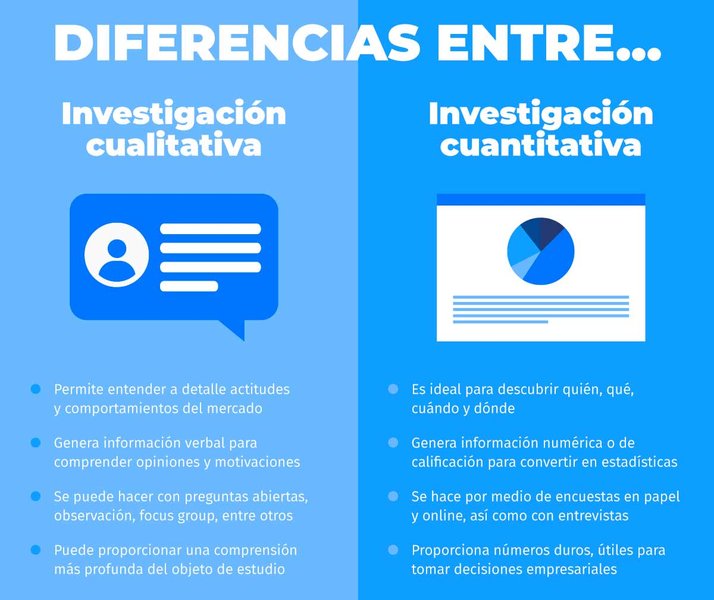
The image above illustrates the difference between qualitative and quantitative research approaches. Quantitative research relies on numerical data and statistical analysis, while qualitative research focuses on understanding the qualities, characteristics, and meanings behind phenomena through non-numerical data such as interviews and observations. The approach to population and sample differs significantly between the two.
Insights from YouTube: Understanding Populations and Samples
This video, "¿Cómo SACAR la POBLACIÓN Y MUESTRA de una TESIS?" (How to Get the Population and Sample of a Thesis), explains the fundamental concepts of population and sample in the context of thesis writing. It emphasizes that the population is considered the universe of elements relevant to the study, while the sample is a subset selected to represent that universe. The video is useful because it breaks down the concepts in an accessible way, providing practical advice for students and researchers on how to define and select their population and sample effectively.
The Role of Technology in Defining Populations and Samples
Technology plays an increasingly significant role in defining and studying populations and samples, particularly in the digital age. The availability of large datasets and advanced analytical tools has transformed how researchers approach these concepts.
Big Data and Population Studies
The advent of big data has opened up new possibilities for studying populations. Large datasets generated from social media, online platforms, and other sources can provide insights into population behaviors, trends, and characteristics. However, researchers must carefully consider the representativeness of these datasets and potential biases.
Online Surveys and Sampling
Online surveys have become a popular method for collecting data from samples. These surveys can reach a large number of participants quickly and cost-effectively. However, it's essential to ensure that the sample is representative of the population and to address potential issues such as self-selection bias.
Data Analysis Tools
Advanced data analysis tools, such as statistical software and machine learning algorithms, have made it easier to analyze large datasets and draw meaningful conclusions. These tools can help researchers identify patterns, trends, and relationships that would be difficult to detect using traditional methods.
Frequently Asked Questions
References
 investigacionmetodologicaderojas.blogspot.com
 proyectoseducativoscr.wordpress.com
 tesisdeinvestig.blogspot.com
 m3todologia1.blogspot.com
Last updated April 10, 2025