
The Curious Case of Pork: Unpacking Its Classification and Nutritional Profile
Delving into the scientific, culinary, and marketing perspectives that define pork.
Key Insights into Pork's Classification
- Scientific Consensus: From a scientific and nutritional standpoint, pork is unequivocally classified as red meat due to its higher myoglobin content compared to poultry or fish. The USDA aligns with this classification.
- Culinary Tradition vs. Marketing: While scientifically red meat, culinary traditions sometimes categorize certain cuts of pork as "white meat" due to their lighter color when cooked. This distinction was famously leveraged by the "Pork. The Other White Meat." marketing campaign in the 1980s.
- Nutritional Value: Despite its "red meat" classification, lean cuts of pork can be nutritionally comparable to white meats like chicken breast, offering high-quality protein, essential vitamins (especially B vitamins like thiamine, B6, and B12), and minerals (iron, zinc, selenium, phosphorus).
The question of whether pork is red or white meat has been a subject of considerable discussion, often leading to confusion among consumers. This ambiguity stems from a blend of scientific definitions, culinary perceptions, and impactful marketing campaigns. To truly understand pork's classification, it's essential to examine these different perspectives and their underlying reasons.
The Scientific Classification: A Matter of Myoglobin
Understanding the biochemical basis of meat color.
From a scientific and nutritional perspective, pork is consistently classified as red meat. This classification is primarily based on the concentration of a protein called myoglobin within the animal's muscle tissue. Myoglobin is responsible for the red color of meat because it stores oxygen in the muscles and turns red when exposed to air.
Animals with higher myoglobin levels, such as cows (beef), sheep (lamb), and pigs (pork), are categorized as red meat. In contrast, animals with lower myoglobin content, like chickens and fish, are classified as white meat. The United States Department of Agriculture (USDA) officially recognizes all meat from mammals, including pork, as red meat, regardless of its color after cooking. This is a consistent stance across scientific and nutritional institutions.
Even though fresh pork can appear pale pink and turns lighter when cooked, it still possesses significantly more myoglobin than poultry or fish. For instance, pork has about double the myoglobin of chicken, although it contains less than 10% of the myoglobin found in beef. This inherent myoglobin content firmly places it in the red meat category according to scientific definitions.
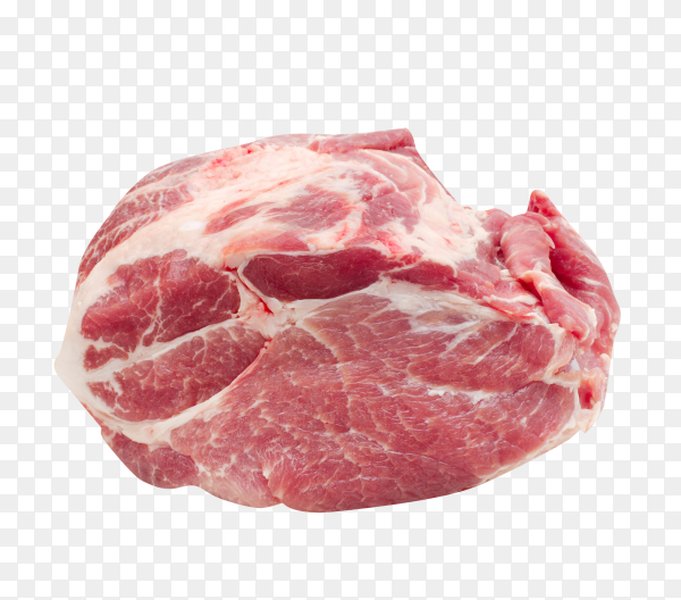
Raw pork, despite its lighter hue, contains myoglobin, classifying it as red meat.
Myoglobin's Role in Meat Color:
Myoglobin is a heme-containing protein found in muscle cells. Its primary function is to bind and store oxygen, which is essential for muscle activity. The more active a muscle, the more myoglobin it typically contains. This explains why cuts from frequently used muscles (like beef legs) are often darker than cuts from less used muscles (like pork tenderloin).
\[ \text{Meat Color} \propto \text{Myoglobin Concentration} \]This biochemical distinction is key to the scientific classification, setting it apart from subjective visual perception.
The Culinary Perception: The "Other White Meat" Campaign
Navigating historical marketing and traditional gastronomic views.
Much of the public's confusion regarding pork's classification can be traced back to a highly successful marketing campaign launched by the National Pork Board in the 1980s. This campaign famously promoted pork as "Pork. The Other White Meat." The goal was to reposition pork in the minds of health-conscious consumers who were increasingly wary of red meat due to concerns about fat and cholesterol. By associating pork with "white meat" (like chicken and fish), the campaign aimed to imply a healthier, leaner profile.
In culinary terms, the distinction between red and white meat can sometimes be less about myoglobin and more about how the meat appears when cooked, or its general gastronomic properties. White meat, in this context, often refers to meat that is pale before and after cooking, such as poultry (chicken, turkey) and sometimes veal or rabbit. Red meat, by this culinary definition, is typically dark red when raw and retains a darker color when cooked, like beef or lamb.
While pork's raw color is often a pinkish-gray, and many cuts turn white or pale when cooked, this visual characteristic diverges from its scientific classification. The marketing campaign capitalized on this visual aspect, creating a widely accepted, albeit scientifically inaccurate, perception.

Cooked pork, often appearing light, contributed to the "other white meat" perception.
The Impact of Marketing on Consumer Perception:
The "Pork. The Other White Meat." campaign was incredibly effective, successfully altering public perception for decades. Even today, many consumers instinctively refer to pork as white meat. This illustrates the powerful influence marketing can have on dietary language and beliefs, even when conflicting with scientific consensus. The campaign aimed to highlight leaner cuts and promote pork as a versatile and healthy option, similar to poultry.
Nutritional Profile of Pork
Beyond the color: A deep dive into pork's health benefits and considerations.
Regardless of its classification, pork offers a diverse nutritional profile that can contribute to a healthy diet. It is an excellent source of high-quality protein, essential for muscle growth, repair, and overall body function. A 100-gram (3.5-ounce) serving of pork can provide nearly 21 grams of protein.
Pork is also rich in a variety of vitamins and minerals. Notably, it is an exceptional source of B vitamins, including thiamine (B1), riboflavin (B2), niacin (B3), pyridoxine (B6), and cobalamin (B12). Thiamine, in particular, is more abundant in pork than in other red meats like beef and lamb. These B vitamins are crucial for energy metabolism, nerve function, and red blood cell formation.
Furthermore, pork contains vital minerals such as iron, zinc, phosphorus, and selenium. The iron in pork, specifically heme-iron, is highly bioavailable, meaning it is easily absorbed by the human digestive system. Zinc is important for immune function and brain health, while selenium acts as a powerful antioxidant.
Nutritional Comparison: Pork vs. Other Meats
While often grouped with other red meats like beef, certain lean cuts of pork, such as pork tenderloin, can be nutritionally comparable to skinless chicken breast in terms of fat content. The nutritional value can vary significantly based on the cut and preparation method. Fattier cuts like pork belly will naturally have a higher fat content compared to leaner options.
Here’s a comparative look at the nutritional aspects:
| Nutrient/Characteristic | Pork (Lean Cuts) | Beef (Lean Cuts) | Chicken Breast (Skinless) |
|---|---|---|---|
| Protein (per 100g) | ~21g | ~25g | ~23g |
| Total Fat (per 100g) | Low (e.g., tenderloin <5g) | Moderate to High | Low |
| Saturated Fat (per 100g) | Low (e.g., tenderloin <2g) | Moderate to High | Low |
| Myoglobin Content | Moderate (Red Meat) | High (Red Meat) | Low (White Meat) |
| Thiamine (Vitamin B1) | High | Moderate | Low |
| Vitamin B12 | High | High | Moderate |
| Iron (Heme) | Excellent Source | Excellent Source | Good Source |
| Zinc | Abundant | Abundant | Moderate |
Health Considerations and Dietary Recommendations:
As with all red meats, dietary guidelines often suggest limiting consumption of pork, especially processed pork products (like bacon and sausage), due to associations with increased risk of cardiovascular disease and certain cancers. However, lean, unprocessed pork can be a healthy part of a balanced diet when consumed in moderation. Experts recommend choosing the leanest cuts available and preparing them with healthy cooking methods.
A Balanced Perspective: Radar Chart Analysis
Visualizing the multifaceted characteristics of pork.
To further illustrate the complex nature of pork's classification and its overall profile, a radar chart can provide a visual summary of its various attributes across different dimensions. This chart will evaluate pork based on scientific classification, culinary perception, marketing influence, and nutritional density.
Radar chart illustrating pork's attributes across scientific, culinary, marketing, and nutritional dimensions.
The radar chart clearly illustrates that pork exhibits a high score in "Scientific 'Red Meat' Classification," reflecting its myoglobin content. Simultaneously, it shows a notable score in "Culinary 'White Meat' Perception" and "Marketing Influence," highlighting the impact of historical campaigns and visual characteristics. Its strong scores in "Protein Quality," "Vitamin & Mineral Density," and "Lean Fat Profile (selected cuts)" underscore its significant nutritional value, aligning it favorably with healthy dietary considerations often associated with both red and white meats.
Understanding Red and White Meat Classification
A deeper dive into the criteria and categories.
The classification of meat as "red" or "white" is more nuanced than simply its appearance. Beyond myoglobin content, other factors play a role in how different bodies and traditions categorize meats.
USDA and Scientific Definitions:
The USDA classifies meat based on the animal it comes from. All meats derived from mammals (beef, veal, lamb, pork, goat, venison) are considered red meats because their muscles contain significant amounts of myoglobin. Poultry (chicken, turkey) and fish are categorized separately because they have less myoglobin.
Culinary vs. Nutritional Definitions:
While scientific and nutritional studies consistently define red meat by myoglobin, culinary definitions can be more flexible, often based on traditional cooking practices, perceived texture, or visual color. This discrepancy is a primary source of public confusion.
The Case of Duck and Geese:
It's worth noting that even within poultry, there are distinctions. While chicken and turkey breast are classic examples of white meat, duck and geese, despite being fowl, are often referred to as "dark meat" due to their higher myoglobin content and richer flavor, which is a culinary rather than a strict scientific classification. They are not typically classified as red meat in the same way as mammalian meat.
For more insights on meat classification, watch this video:
This video from the Poultry Science Association discusses the differences between red and white meat, providing a broader context for meat classification.
Common Misconceptions and Clarifications
Dispelling myths surrounding pork's identity.
The persistent belief that pork is "white meat" is a significant misconception fueled by marketing. Here are some clarifications:
- Color Change During Cooking: The fact that pork turns pale or white when cooked does not change its fundamental classification as red meat. Myoglobin denatures and loses its red color upon heating, regardless of the initial concentration.
- Fat Content: While some cuts of pork are indeed lean (like tenderloin), pork as a whole is not inherently leaner than all red meats. Its fat content varies widely by cut, similar to beef. The "other white meat" campaign also played on the idea that pork was a leaner, healthier alternative.
- Health Implications: The health risks associated with red meat consumption (particularly processed red meat) apply to pork as well. While lean, unprocessed pork can be part of a healthy diet, it is not exempt from general recommendations to moderate red meat intake.
Frequently Asked Questions
What makes a meat "red" or "white" scientifically?
Why was pork marketed as "the other white meat"?
Are all cuts of pork considered red meat?
Is pork healthy to eat?
Conclusion
In conclusion, while marketing campaigns and culinary traditions have historically presented pork as "the other white meat," the overwhelming scientific and nutritional consensus classifies pork as red meat. This classification is based on its myoglobin content, which is significantly higher than that of poultry or fish. Despite its red meat status, lean cuts of pork offer substantial nutritional benefits, including high-quality protein and essential vitamins and minerals. Understanding these different perspectives helps to clarify the long-standing confusion surrounding pork's identity and allows for more informed dietary choices.
Recommended Further Exploration
- How does myoglobin content specifically determine meat classification?
- What was the full impact and legacy of the "Pork. The Other White Meat." marketing campaign?
- How do the nutritional profiles of lean pork cuts compare exactly to those of chicken breast?
- What are the distinct health implications of consuming processed pork versus fresh, unprocessed pork?