
Beyond Anarchy: Unpacking the Artful Rebellion of Post-Punk
Discover the socio-political tempests and creative explosions that forged a genre defined by its intellect, introspection, and enduring influence.
Post-punk, a multifaceted and enduringly influential music genre, emerged from the dying embers of punk rock's initial blaze in the late 1970s. More than just a chronological successor, it represented a deliberate artistic divergence. While punk was characterized by its raw, three-chord aggression and anti-establishment fury, post-punk artists sought to deconstruct and expand upon these foundations. They embraced experimentation, intellectualism, and a broader palette of sonic and thematic influences, creating music that was often darker, more atmospheric, and lyrically complex. This movement, originally sometimes referred to as "new musick," carved out a unique space that continues to resonate with artists and listeners decades later.
Essential Insights: Key Takeaways
- Post-punk was a conscious evolution from punk, rejecting its perceived simplicity and commercialization to embrace experimentation with sound, structure, and lyrical themes, incorporating influences from art rock, electronic music, funk, and dub.
- The genre's rise was inextricably linked to the turbulent socio-political climate of the late 1970s and early 1980s, particularly in the UK, marked by economic decline, high unemployment, and widespread disillusionment under "Thatcherism."
- Influential bands like Joy Division, Siouxsie and the Banshees, The Cure, and Gang of Four defined post-punk's diverse soundscapes, from atmospheric gloom and introspective melancholy to politically charged critiques and artful experimentation.
The Socio-Political Cauldron: Forging Post-Punk in an Era of Unrest
The emergence of post-punk cannot be understood without appreciating the profound socio-political upheaval of its time, primarily in the United Kingdom during the late 1970s and early 1980s. This period was a crucible of economic hardship, political polarization, and social discontent, creating a fertile ground for a new, more introspective and critical form of musical expression.
Economic Despair and Thatcher's Britain
The Shadow of Recession
The UK was grappling with severe economic challenges: high inflation, soaring unemployment rates, and industrial decline. The optimism of the post-war era had faded, replaced by a sense of instability and uncertainty, particularly impacting working-class youth. The 1973 oil crisis had lingering effects, and the nation's economic fabric felt increasingly frayed.
The Dawn of Neoliberalism
The election of Margaret Thatcher as Prime Minister in 1979 ushered in an era of neoliberal policies. "Thatcherism" emphasized supply-side economics, deregulation, privatization, and significant cuts to public services and welfare. These policies, while aimed at restructuring the economy, led to increased social inequality, community breakdown (especially in industrial areas), and widespread anger and disaffection among those who felt marginalized or left behind. The "Winter of Discontent" in 1978-79, with widespread public sector strikes, underscored the deep societal divisions.
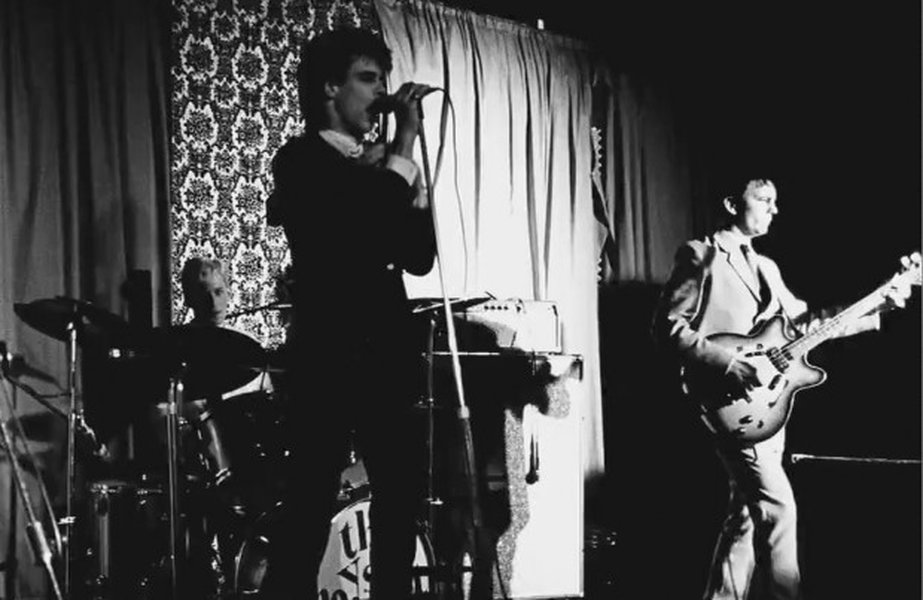
The Boys Next Door (an early incarnation of The Birthday Party featuring Nick Cave), exemplifying the nascent post-punk scene's energy.
From Punk's Ashes: A New Artistic Mandate
Punk's Fading Fire
By the late 1970s, punk rock's initial shockwave had begun to dissipate. What once felt revolutionary was, to some, becoming formulaic, clichéd, or co-opted by commercial interests. Artists like John Lydon (Johnny Rotten of the Sex Pistols), who went on to form Public Image Ltd., openly expressed disillusionment with punk's predictability. This created a vacuum and a desire for new forms of expression that retained punk's anti-establishment spirit and DIY ethos but pushed artistic boundaries further.
The DIY Spirit Reimagined
Post-punk inherited punk's crucial do-it-yourself ethic. However, instead of raw simplicity, this ethos was applied to more complex and ambitious artistic endeavors. Independent record labels flourished, fanzines provided alternative critical voices, and underground venues became hubs for these new sounds. This ecosystem allowed artists to experiment freely, unbound by major label constraints.
Intellectual and Artistic Influences
Unlike punk's often direct and visceral approach, post-punk artists frequently drew inspiration from a wider range of sources, including modernist art, literature (Kafka, Ballard, Burroughs), philosophy, avant-garde music, and world music. This intellectual curiosity was reflected in more abstract, introspective, and often politically nuanced lyrics that explored themes of alienation, existential dread, urban decay, consumerism, and the complexities of power.
Sonic Signatures and Aesthetic Dimensions
Post-punk is characterized by its sonic diversity and departure from traditional rock conventions. It was a space for exploration, resulting in a wide array of sounds and styles.
Key Musical Characteristics
- Experimental Soundscapes: Artists incorporated unconventional song structures, dissonance, and atmospheric textures. There was a willingness to use noise and space creatively.
- Instrumentation:
- Bass-Driven Melodies: The bass guitar often took a prominent, melodic role, moving beyond simple rhythm keeping to carry hooks and create a sense of brooding depth (e.g., Peter Hook of Joy Division/New Order, Simon Gallup of The Cure).
- Guitar Work: Guitars could be angular, trebly, jangly (influenced by bands like The Byrds, as seen in early R.E.M. or Orange Juice), or abrasive and textural, often eschewing traditional rock riffs for more experimental approaches.
- Electronics: Synthesizers, drum machines, and other electronic instruments became increasingly integral, adding layers of atmosphere, futuristic sounds, or cold, mechanical rhythms.
- Rhythmic Innovation: Many bands incorporated influences from funk, dub, reggae, and disco, leading to more complex and often danceable (though sometimes starkly so) rhythms.
- Vocal Styles: Vocals ranged from detached and monotone deliveries to impassioned cries, often conveying a sense of alienation or emotional intensity.
- Lyrical Depth: Lyrics moved beyond punk's slogans to explore more nuanced themes of social critique, existential crises, personal introspection, mental health, and political disillusionment. The language was often more poetic, abstract, or literary.
Visual and Cultural Aesthetics
Post-punk was not just a musical movement; it had a strong visual identity. Album artwork, fashion, and performance styles often reflected the music's mood and intellectual underpinnings. Stark monochrome imagery, surrealism, constructivist-inspired designs, and an anti-fashion sensibility were common. This visual language emphasized art school influences and a rejection of mainstream consumer culture, creating a cohesive subcultural identity.
(Energy, DIY Ethos)] id1.2["New Musick"
(Early Terminology)] id1.3[Art School Influence] id2[Socio-Political Context
(Late 1970s - Early 1980s UK)] id2.1[Economic Decline
(Recession, Unemployment)] id2.2[Thatcherism
(Neoliberal Policies, Social Cuts)] id2.3[Social Unrest
(Strikes, Disillusionment)] id2.4[Punk's Perceived Decline] id3[Musical Characteristics] id3.1[Experimentalism
(Avant-Garde, Atonality)] id3.2[Instrumentation
(Prominent Bass, Synths, Angular Guitars)] id3.3[Diverse Influences
(Funk, Dub, Electronic, Krautrock)] id3.4[Introspective & Critical Lyrics] id3.5[Atmospheric Soundscapes] id4[Key Influential Bands] id4.1[Joy Division] id4.2[The Cure] id4.3[Siouxsie and the Banshees] id4.4[Gang of Four] id4.5[Public Image Ltd. (PiL)] id4.6[Wire] id4.7[Talking Heads] id4.8[The Fall] id5[Aesthetic & Cultural Impact] id5.1[Visual Arts
(Monochrome, Surrealism)] id5.2[Independent Labels & Zines] id5.3[Fashion
(Dark, Androgynous)] id6[Legacy & Subsequent Genres] id6.1[Gothic Rock] id6.2[Indie Rock] id6.3[Alternative Rock] id6.4[No Wave] id6.5[Industrial Music] id6.6[Post-Punk Revivals]
A mindmap illustrating the interconnected elements of post-punk, from its origins and socio-political drivers to its key characteristics, influential artists, and lasting legacy.
Architects of a New Sound: Influential Post-Punk Bands
Numerous bands sculpted the diverse landscape of post-punk, each contributing unique sonic signatures and thematic concerns. The following were pivotal in defining and popularizing the genre:
This video, "A Brief History of Post Punk," offers an overview of the genre's development and key figures, providing context for the bands discussed below.
Joy Division (Manchester, UK)
The Sound of Urban Desolation
Perhaps the archetypal post-punk band, Joy Division, fronted by the iconic and tragic figure of Ian Curtis, crafted a sound that was bleak, atmospheric, and intensely emotional. Their music, characterized by Peter Hook's high-register melodic basslines, Bernard Sumner's sparse and chilling guitar, Stephen Morris's metronomic drumming, and Martin Hannett's spacious production, perfectly captured a sense of urban decay, existential dread, and personal alienation. Curtis's deeply introspective and often despairing lyrics explored themes of isolation, control, and the fragility of the human psyche. Key Albums: Unknown Pleasures (1979), Closer (1980). Following Curtis's death in 1980, the remaining members formed New Order, evolving towards a more electronic and dance-oriented sound, yet still carrying the post-punk DNA.
The Cure (Crawley, UK)
From Gloom to Gothic Pop
Led by Robert Smith, The Cure emerged with a minimalist, moody post-punk sound on their early albums. Characterized by Smith's distinctive vocals, atmospheric guitar work, and poignant lyrics often dealing with themes of love, loss, and angst, they quickly became influential. Albums like Seventeen Seconds (1980) and Faith (1981) are quintessential examples of dark, introspective post-punk. While they later achieved massive mainstream success with a more pop-inflected sound, their early work remains a cornerstone of the genre and was crucial in the development of gothic rock. Key Early Albums: Three Imaginary Boys (1979), Seventeen Seconds (1980), Faith (1981), Pornography (1982).

The enduring energy of post-punk is often captured in live performances, connecting with the genre's raw and atmospheric roots.
Siouxsie and the Banshees (London, UK)
Artistic Innovation and Gothic Sensibility
Fronted by the commanding Siouxsie Sioux, Siouxsie and the Banshees were pioneers who bridged the gap between punk and post-punk. Their sound was characterized by innovative guitar work (from a succession of influential guitarists including John McKay and John McGeoch), inventive rhythms, and Siouxsie's powerful, distinctive vocals. They explored dark, poetic themes and were instrumental in shaping the aesthetics and sound of gothic rock. Their willingness to experiment with song structure and texture made them a consistently evolving and influential force. Key Albums: The Scream (1978), Kaleidoscope (1980), Juju (1981).
Gang of Four (Leeds, UK)
Funk-Infused Political Critique
Gang of Four brought a fiercely intellectual and political edge to post-punk. Their music was a unique hybrid of punk's raw energy, angular and abrasive guitar riffs, and the rhythmic structures of funk and dub. Lyrically, they offered sharp, Marxist-influenced critiques of consumerism, capitalism, media manipulation, and sexual politics. Their debut album, Entertainment!, is considered a landmark release, showcasing their distinctive sound and incisive social commentary. Key Album: Entertainment! (1979).
Public Image Ltd (PiL) (London, UK)
Beyond Punk's Constraints
Formed by John Lydon after the dissolution of the Sex Pistols, Public Image Ltd was a deliberate move away from punk's perceived limitations. PiL embraced experimentation, incorporating elements of dub, Krautrock, and avant-garde noise. Lydon's distinctive vocals and cynical, often abstract lyrics were paired with Jah Wobble's deep, resonant basslines and Keith Levene's innovative, metallic guitar textures. Their album Metal Box (originally released as three 12-inch records in a film canister) is a seminal work of experimental post-punk. Key Album: Metal Box (1979) (also released as Second Edition).
Wire (London, UK)
Minimalist Art-Punk
Wire were known for their minimalist, conceptual, and highly influential approach. Starting with the short, sharp shocks of their debut Pink Flag, they quickly evolved into more abstract and atmospheric territories on albums like Chairs Missing and 154. Their music was characterized by concise songwriting, art-rock experimentation, and a detached, intellectual coolness, pushing the boundaries of song structure and lyrical content. Key Albums: Pink Flag (1977), Chairs Missing (1978), 154 (1979).
Talking Heads (New York, USA)
Art Pop Intellectualism
While American, Talking Heads were closely aligned with the post-punk ethos and became hugely influential on both sides of the Atlantic. Led by David Byrne, their music fused punk's nervous energy with art rock, funk, pop sensibilities, and later, African rhythms. Byrne's quirky, intelligent lyrics and the band's inventive arrangements created a sound that was both danceable and intellectually stimulating. They represented the more accessible and art-pop side of the movement. Key Albums: More Songs About Buildings and Food (1978), Fear of Music (1979), Remain in Light (1980).
The Fall (Manchester, UK)
Abrasive and Prolific Iconoclasm
Led by the enigmatic and relentlessly prolific Mark E. Smith, The Fall carved out a unique and uncompromising path. Their sound was often abrasive, repetitive, and lo-fi, characterized by Smith's caustic, cryptic, and often satirical stream-of-consciousness lyrics delivered in a distinctive Mancunian drawl. With a constantly shifting lineup (Smith being the only constant member), The Fall maintained a fiercely independent and influential presence for decades. Key Early Album: Live at the Witch Trials (1979).
This radar chart offers a comparative visualization of key post-punk bands across several defining characteristics, reflecting their diverse approaches within the genre. Scores are subjective interpretations based on their influential periods.
Comparative Overview of Influential Post-Punk Bands
The table below summarizes some key aspects of the influential bands discussed, highlighting their unique contributions to the post-punk sound and ethos.
| Band | Origin | Key Sonic Characteristics | Notable Early Album(s) | Primary Thematic Focus / Influence |
|---|---|---|---|---|
| Joy Division | Manchester, UK | Dark, atmospheric, melodic bass, sparse guitar, introspective vocals | Unknown Pleasures (1979), Closer (1980) | Existential dread, alienation, urban decay; foundational for gothic rock |
| The Cure | Crawley, UK | Moody, atmospheric guitars, melodic bass, distinctive vocals, evolving sound | Seventeen Seconds (1980), Faith (1981) | Melancholy, introspection, love, despair; influential on gothic and alternative rock |
| Siouxsie and the Banshees | London, UK | Innovative guitar work, strong rhythms, powerful female vocals, artful experimentation | The Scream (1978), Juju (1981) | Dark romanticism, artistic rebellion, identity; key to gothic rock development |
| Gang of Four | Leeds, UK | Angular guitars, funk-infused rhythms, overtly political and critical lyrics | Entertainment! (1979) | Critique of capitalism, consumerism, power structures; political post-punk |
| Public Image Ltd (PiL) | London, UK | Experimental, dub-influenced bass, avant-garde guitar, cynical vocals | Metal Box / Second Edition (1979) | Anti-establishment, artistic freedom, deconstruction of rock |
| Wire | London, UK | Minimalist, conceptual, art-rock influences, concise and evolving structures | Pink Flag (177), Chairs Missing (1978) | Intellectualism, abstraction, art-punk experimentation |
| Talking Heads | New York, USA | Art-pop, funk influences, world music rhythms, quirky intellectual lyrics | Fear of Music (1979), Remain in Light (1980) | Neuroticism, social observation, artistic fusion; bridged post-punk and new wave |
| The Fall | Manchester, UK | Abrasive, repetitive, lo-fi, distinctive spoken/sung vocals, caustic lyrics | Live at the Witch Trials (1979) | Social satire, working-class life, surrealism; uncompromisingly unique |

The visual intensity and atmospheric stage presence often associated with post-punk performances continue to inspire contemporary artists.
Legacy and Enduring Echoes
Though its initial wave crested by the mid-1980s, post-punk's influence has been profound and lasting. It laid the groundwork for numerous subsequent genres, including:
- Gothic Rock: Bands like Bauhaus, Siouxsie and the Banshees, and early The Cure were pivotal.
- Indie Rock and Alternative Rock: Many foundational indie and alternative bands of the 1980s and 1990s (e.g., R.E.M., The Smiths, Sonic Youth, Pavement) drew heavily from post-punk's aesthetics and musical innovation.
- No Wave: A more abrasive and confrontational offshoot centered in New York.
- Industrial Music: Some post-punk experimentation with electronics and noise paved the way for industrial sounds.
Moreover, post-punk has experienced several revivals, with bands in the 2000s (like Interpol, Bloc Party, Editors) and more recently (e.g., IDLES, Fontaines D.C., Black Country, New Road, Savages) explicitly citing post-punk pioneers as major influences. These contemporary artists often revisit its sonic palettes and thematic concerns, adapting them to modern anxieties and socio-political landscapes, proving the genre's enduring relevance and capacity for reinvention.
Frequently Asked Questions (FAQ)
What is the main difference between punk and post-punk?
When did post-punk peak as a genre?
Did post-punk have a specific fashion style?
Is post-punk still influential today?
Conclusion
Post-punk stands as a testament to a period of intense creativity born from socio-political turmoil and a desire to push musical boundaries. It was more than a genre; it was an artistic movement that valued intellect, introspection, and innovation. By challenging the conventions of rock music and reflecting the anxieties and critiques of its era, post-punk created a rich and diverse body of work whose echoes are still clearly heard in the music of today. Its legacy is one of artful rebellion, sonic exploration, and enduring cultural significance.
Recommended Investigations
- Explore the specific contributions of Manchester bands to the post-punk scene.
- How did post-punk influence the development of gothic rock and its subculture?
- Analyze the lyrical themes of alienation and social critique in key post-punk albums.
- Compare the post-punk movements in the UK versus the United States.