
Comprehensive Guide to Postharvest Operations in Agriculture
Enhancing Quality and Reducing Losses from Harvest to Consumer
Key Takeaways
- Minimizing Postharvest Losses: Effective postharvest operations significantly reduce losses due to spoilage and damage, ensuring higher yields reach the market.
- Quality Maintenance: Proper handling, cooling, and storage practices preserve the nutritional value and appearance of agricultural products.
- Advanced Processing Technologies: Utilizing state-of-the-art machinery enhances sorting, grading, and packaging efficiency, boosting marketability and profitability.
1. Methods, Practices, and Importance of Postharvest Operations
1.1 Overview of Postharvest Operations
Postharvest operations encompass a series of activities that begin immediately after harvesting and continue until the agricultural products reach consumers. These operations are crucial for maintaining the quality, safety, and marketability of produce. The primary steps involved include harvesting, cleaning, sorting, grading, cooling, packaging, storage, transportation, and processing.
1.2 Harvesting Techniques
Harvesting is the initial step in postharvest operations, where crops are collected from the field. The method and timing of harvesting are pivotal in determining the subsequent quality of the produce. For instance, fruits like bananas are often harvested while still green to allow for ripening during transportation, reducing spoilage rates.
1.3 Cleaning and Sorting
After harvesting, produce undergoes cleaning to remove dirt, debris, and contaminants. This can be achieved through water sprays, air blowing, or manual methods. Following cleaning, sorting differentiates between products based on size, shape, color, and the presence of defects. Sorting ensures that only produce meeting specific quality standards proceeds to the next stages.
1.4 Grading and Its Significance
Grading is a more sophisticated process compared to sorting, involving the classification of produce into different grades based on multiple quality parameters such as size, color, firmness, and sugar content. This categorization aids in pricing and marketing, allowing producers to target specific market segments and achieve better economic returns.
1.5 Cooling and Storage Practices
Rapid cooling postharvest is essential to slow down the respiration rates and microbial growth in produce. Techniques such as hydrocooling and forced-air cooling are commonly employed. Controlled atmosphere storage, which adjusts oxygen, carbon dioxide, and humidity levels, further extends the shelf life of products like apples and berries.
1.6 Packaging and Transportation
Appropriate packaging protects produce from physical damage and contamination while also maintaining optimal environmental conditions. Modified atmosphere packaging (MAP) and vacuum packing are popular methods. Transportation, especially for perishable goods, often utilizes refrigerated vehicles to ensure that the products remain fresh during transit.
1.7 Processing and Value Addition
Some agricultural products undergo further processing to enhance their value and shelf life. Processes such as drying, fermenting, canning, and juicing not only preserve the produce but also make it more versatile for different markets. Postharvest treatments like irradiation and the application of edible coatings improve safety and extend longevity.
1.8 Importance of Effective Postharvest Management
Effective postharvest management is vital for several reasons:
- Reducing Losses: Minimizes quantitative and qualitative losses, ensuring more produce reaches consumers.
- Enhancing Food Security: By preserving more food, postharvest operations contribute to better food availability and security.
- Increasing Farmer Incomes: Higher quality and reduced waste lead to better market prices and profitability for farmers.
- Supporting Export Markets: Adherence to international quality standards facilitates access to export markets.
- Improving Food Safety: Proper handling and storage reduce the risk of contamination and spoilage, ensuring safer food for consumers.
2. Differentiating Sorting from Grading
2.1 What is Sorting?
Sorting is the process of separating agricultural products based on specific, measurable physical characteristics such as size, shape, color, or the presence of defects. The primary objective of sorting is to eliminate produce that does not meet basic quality standards, thereby ensuring uniformity and consistency in the remaining batch.
Example: In an initial sorting process for apples, those that are visibly bruised or deformed are removed to enhance the overall quality of the produce.
2.2 What is Grading?
Grading goes a step further by categorizing the sorted produce into different quality classes based on multiple criteria. This systematic classification assists in determining the market value and facilitates targeted marketing strategies. Grading considers various attributes such as size, color consistency, firmness, and sugar content to assign specific grades.
Example: Apples may be graded into "premium," "standard," and "economy" categories, each corresponding to different price points and market segments.
2.3 Key Differences Between Sorting and Grading
| Aspect | Sorting | Grading |
|---|---|---|
| Purpose | Eliminate defective or substandard items | Classify acceptable produce into quality categories |
| Criteria | Single or basic criteria (e.g., size, presence of defects) | Multiple criteria (e.g., size, color, firmness, sugar content) |
| Outcome | Produce is either passed or rejected | Produce is categorized into different grades |
| Impact on Pricing | Generally does not directly affect pricing | Directly influences market price based on grade |
| Examples | Removing bruised fruits from a batch | Classifying fruits into premium and standard grades |
3. Agricultural Products/Commodities Processing Machines
3.1 Overview of Processing Machines
The processing of agricultural products involves various machines designed to clean, sort, grade, package, and preserve produce. These machines range from simple, manually operated devices to advanced, automated systems used internationally and domestically. The selection of appropriate machinery depends on the type of commodity, production scale, and specific processing requirements.
3.2 Types of Processing Machines
-
Sorting Machines: Utilize optical sensors or computer vision to categorize produce based on size, color, and defects.
-
Grading Machines: Automate the classification of produce into different grades using multiple quality parameters.
-
Harvesters: Mechanical devices that automate the harvesting process, suitable for various crops such as grains and fruits.
-
Cooling Equipment: Include hydrocoolers and forced-air coolers for rapid postharvest cooling.
-
Packaging Machines: Range from manual packaging tools to automated systems that package products under controlled atmospheres.
-
Storage Systems: Controlled atmosphere storage units and cold storage facilities designed to extend shelf life.
-
Transportation Vehicles: Refrigerated trucks and containers for maintaining product quality during transit.
-
Drying and Dehydrating Machines: Used for reducing moisture content in grains, fruits, and vegetables to prevent spoilage.
-
Peeling and Slicing Machines: Mechanically remove skins or slice produce for further processing or direct consumption.
-
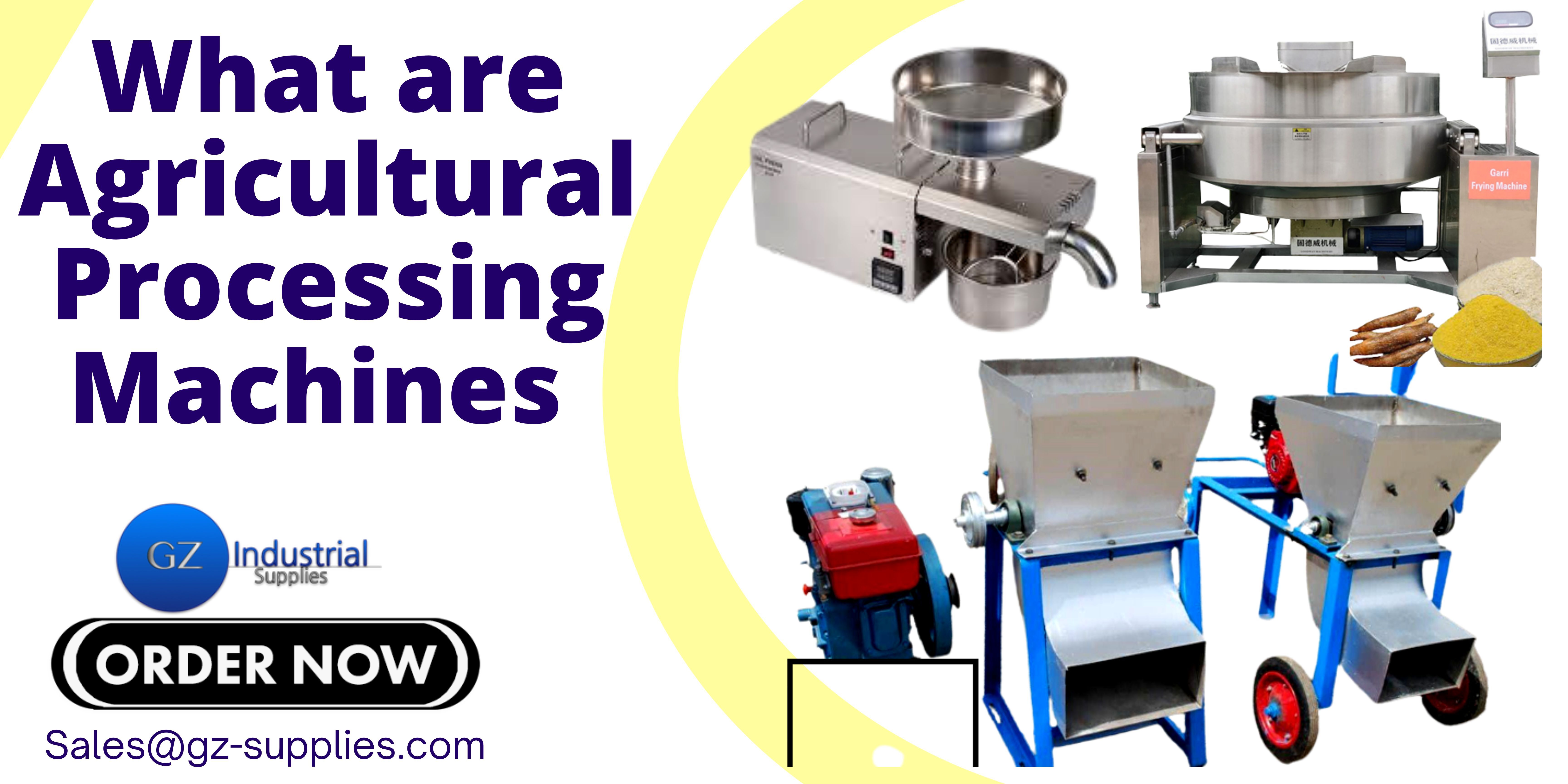
Juice Extractors and Oil Extraction Machines: Extract liquids from fruits and seeds for consumption or further processing.
3.3 Domestic and International Manufacturers
International companies such as TOMRA and Key Technology are leaders in optical sorting and grading solutions, offering advanced systems that utilize cutting-edge technologies like near-infrared sensors and machine learning algorithms. Domestically, various manufacturers provide tailored solutions suitable for local farming operations, often focusing on smaller-scale machinery that aligns with the specific needs of regional crops and production capacities.
4. Principle Operation of Each Type of Machine
4.1 Sorting Machines
Sorting machines operate primarily on the principles of optical sensing and computer vision. Equipped with high-speed cameras and advanced sensors, these machines capture detailed images of each produce item as it moves along a conveyor belt. Software algorithms analyze these images to identify defects, color variations, and size discrepancies. Once an item does not meet the predefined quality criteria, mechanical actuators or air jets remove it from the main stream, ensuring only high-quality produce advances to the next processing stage.
4.2 Grading Machines
Grading machines utilize a combination of mechanical sorting and optical scanning to assess multiple quality attributes simultaneously. These machines categorize produce into different grades based on size, color, firmness, and sometimes even sugar content. The graded produce is then directed into separate bins or conveyors corresponding to their grade. Advanced grading systems may integrate machine learning to improve classification accuracy over time.
4.3 Harvesters
Mechanical harvesters are designed to automate the collection of crops, thereby increasing efficiency and reducing labor costs. For grain crops, combine harvesters integrate cutting, threshing, and cleaning processes into a single operation. In the case of fruits and vegetables, mechanical harvesters may include features like shaking, cutting, and gentle handling to minimize damage during collection.
4.4 Cooling Equipment
Cooling systems such as hydrocoolers and forced-air coolers operate on the principles of heat transfer. Hydrocoolers immerse produce in chilled water, rapidly reducing their temperature through conduction. Forced-air coolers circulate cold air through stacks of produce, effectively lowering the temperature via convection. Both methods slow down the respiration rates of produce, thereby extending shelf life and preserving quality.
4.5 Packaging Machines
Packaging machines automate the process of enclosing produce in protective materials. These machines may use mechanical arms or conveyor systems to place items into packaging containers, seal them, and apply labels. Advanced packaging machines can operate under modified atmospheres, where oxygen levels are adjusted to further extend the shelf life of sensitive produce.
4.6 Drying and Dehydrating Machines
Drying and dehydrating machines remove moisture from agricultural products through evaporation. Conveyor dryers move produce through heated chambers where controlled air flow facilitates even drying. Batch dryers handle discrete quantities in stages, while solar dryers utilize solar energy for cost-effective drying in regions with ample sunlight. The reduction in moisture content inhibits microbial growth, thereby preventing spoilage and extending shelf life.
4.7 Peeling and Slicing Machines
Peeling machines use mechanical blades or abrasive surfaces to remove the outer skins of fruits and vegetables. Slicing machines, on the other hand, employ rotating blades or conveyors to uniformly cut produce into specified shapes and sizes. These machines enhance the aesthetic appeal of produce and prepare it for further processing or direct consumption.
4.8 Juice Extractors and Oil Extraction Machines
Juice extractors utilize mechanical pressing or centrifugation to separate liquid from solid fruit components. Oil extraction machines operate on similar principles, using mechanical pressing or solvent-based methods to extract oils from seeds and fruits. These processes are essential for producing consumable liquids and for value addition in the agricultural supply chain.
5. Conclusion
Postharvest operations play an indispensable role in the agricultural supply chain, ensuring that crops maintain their quality, safety, and marketability from the moment they are harvested until they reach consumers. The implementation of effective postharvest methods and the utilization of advanced processing machines significantly reduce losses, enhance food security, and improve farmer incomes. Differentiating between sorting and grading processes aids in precise quality control, while the adoption of both domestic and international processing technologies ensures that agricultural products meet diverse market demands. As technological advancements continue to evolve, the efficiency and effectiveness of postharvest operations are poised to further bolster the agricultural sector's contribution to global food systems.
References
Last updated February 13, 2025