
Mastering Your Flutter and DSA Interviews
A Comprehensive Guide to Acing Your Technical Rounds in 2025
Key Takeaways for Your Interview Preparation
- Understand the Interplay: While Flutter interviews focus on the framework and Dart, a foundational understanding of Data Structures and Algorithms (DSA) is often required, especially for technical rounds testing problem-solving skills.
- Structured Learning is Crucial: For both Flutter and DSA, follow a structured approach covering core concepts, practice problems, and real-world application. Don't just memorize answers; understand the underlying principles.
- Practice, Practice, Practice: Actively solve coding problems on platforms like LeetCode, GeeksforGeeks, and DartPad. Implement Flutter concepts through building projects and assignments to solidify your understanding.
Demystifying Flutter Interviews
Preparing for a Flutter interview requires a deep dive into the framework's core concepts, architecture, and best practices. Companies are looking for candidates who not only understand how to build applications with Flutter but also comprehend the "why" behind its design choices and can efficiently solve problems within the Flutter ecosystem.
Essential Flutter Concepts to Master
A strong foundation in the following areas is paramount for any Flutter developer interview:
Understanding the Flutter Framework
Be prepared to explain what Flutter is, its key features, and what differentiates it from other cross-platform frameworks. Discuss the benefits of using Flutter, such as its fast development cycle, expressive and flexible UI, and native performance.
Widgets: The Building Blocks of Flutter
Widgets are central to Flutter development. You should have a thorough understanding of:
- StatelessWidget vs. StatefulWidget: Clearly articulate the difference between these two fundamental widget types and when to use each.
- Widget Tree and Element Tree: Explain how Flutter builds and manages the UI using these tree structures.
- Key Concepts: Understand the purpose and usage of keys in Flutter, particularly for preserving state in dynamic lists or when reordering widgets.
Discussions around the widget lifecycle for StatefulWidgets are also common.
State Management
Managing state effectively is a critical aspect of building scalable Flutter applications. Be familiar with different state management approaches and their trade-offs. Common topics include:
setState- Provider
- Bloc/Cubit
- Riverpod
- GetX
Be ready to discuss scenarios where each approach might be most suitable and explain the principles behind the state management solutions you have experience with.
Navigation and Routing
Navigating between different screens in a Flutter application is a fundamental requirement. Understand the different navigation techniques available in Flutter, such as:
- Navigator 1.0 (imperative navigation)
- Navigator 2.0 (declarative navigation) and the Router widget
Discuss how to pass data between routes and manage navigation stacks.
Asynchronous Programming in Dart
Since Flutter uses Dart, a strong understanding of asynchronous programming concepts is essential. Be comfortable with:
Futureandasync/awaitStream- Handling asynchronous operations and potential errors.
Performance Optimization
Optimizing Flutter applications for performance is a sign of a skilled developer. Discuss strategies for identifying and resolving performance bottlenecks, such as:
- Using the Flutter DevTools (including the Flutter Inspector)
- Optimizing widget rebuilding
- Working with large lists (e.g., using
ListView.builder)
Testing in Flutter
Having knowledge of testing practices in Flutter demonstrates a commitment to building robust applications. Be familiar with different types of testing:
- Widget testing
- Unit testing
- Integration testing
Architecture Patterns
Discuss common architectural patterns used in Flutter development, such as MVC, MVVM, and BLoC, and be able to explain their benefits and drawbacks.
Handling Platform-Specific Code
Understand how to interact with native features and APIs using platform channels.
Showcasing Your Flutter Skills
Interviews often involve more than just theoretical questions. Be prepared to:
- Discuss Your Projects: Be ready to talk in detail about the Flutter applications you have built, the challenges you faced, and how you solved them. Highlight your role and contributions.
- Solve Coding Problems: Some interviews may include live coding challenges related to Flutter concepts, such as building a specific UI component or implementing a feature.
- Explain Code Snippets: You might be asked to review and explain existing Flutter code or debug a provided snippet.
- System Design (for experienced roles): For more senior positions, be prepared to discuss designing the architecture of a Flutter application.
Treat any take-home assignments seriously, as they are a great opportunity to showcase your practical skills.
Navigating Data Structures and Algorithms (DSA) Interviews
While Flutter interviews focus on the framework, many companies, especially larger tech companies, include a Data Structures and Algorithms (DSA) component in their technical interviews to assess problem-solving abilities and foundational computer science knowledge. The level of DSA required can vary, but a solid understanding of core concepts is beneficial.
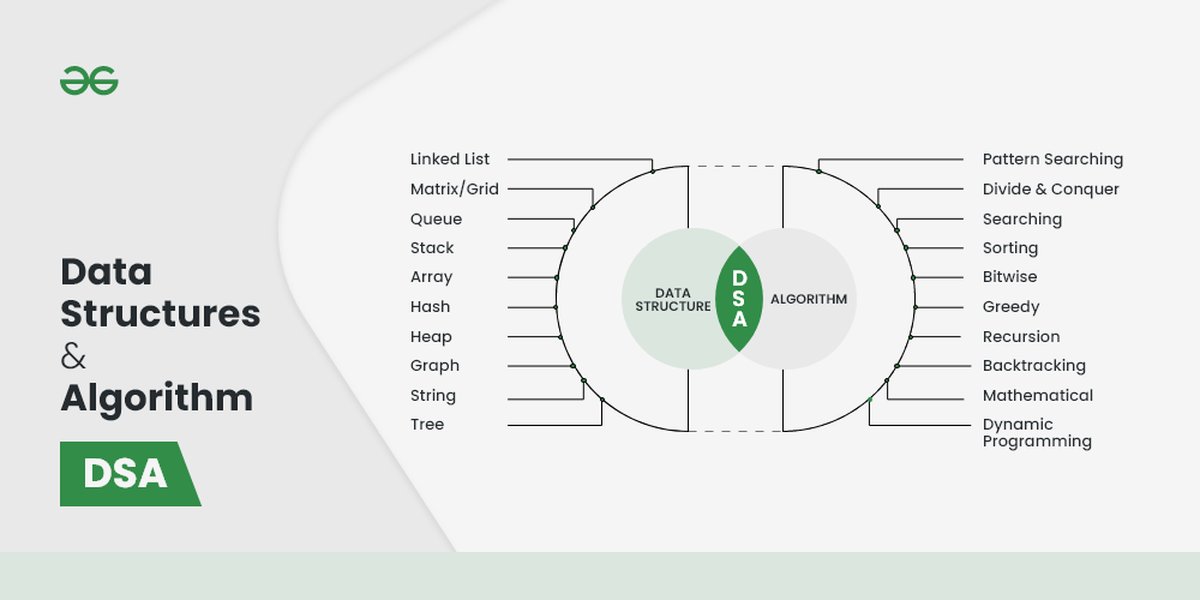
DSA concepts are fundamental to problem-solving in computer science.
Key DSA Topics for Interviews
Focus on mastering the following fundamental data structures and algorithms:
Data Structures
Understand the properties, operations, time complexity, and use cases of:
- Arrays: Including dynamic arrays and multi-dimensional arrays. Be comfortable with operations like searching, sorting, and manipulation.
- Linked Lists: Singly, doubly, and circular linked lists. Understand insertion, deletion, and traversal.
- Stacks: LIFO (Last-In, First-Out) structure and its applications.
- Queues: FIFO (First-In, First-Out) structure and its applications.
- Trees: Binary trees, binary search trees, and potentially balanced trees like AVL or Red-Black trees. Understand traversals (in-order, pre-order, post-order), insertion, and deletion.
- Graphs: Representation (adjacency matrix, adjacency list), traversals (BFS, DFS), and basic algorithms (e.g., finding connected components).
- Hash Tables/Maps: Understanding hashing, collision resolution, and their use in implementing dictionaries and sets.
Algorithms
Be familiar with common algorithmic techniques and specific algorithms:
- Searching Algorithms: Linear search, binary search. Understand when to apply binary search on sorted data.
- Sorting Algorithms: Basic sorting algorithms (bubble sort, insertion sort, selection sort) and more efficient ones (merge sort, quicksort, heap sort). Understand their time and space complexities.
- Recursion and Iteration: Be able to solve problems using both recursive and iterative approaches.
- Dynamic Programming: Understand the concept of overlapping subproblems and optimal substructure.
- Greedy Algorithms: Recognize problems that can be solved using a greedy approach.
- Graph Algorithms: BFS, DFS, Dijkstra's algorithm (for shortest path on weighted graphs), Minimum Spanning Tree algorithms (Prim's, Kruskal's).
Time and Space Complexity Analysis
A crucial part of DSA interviews is being able to analyze the efficiency of your algorithms. Understand Big O notation and how to determine the time and space complexity of your solutions. For example, the time complexity of searching for an element in a sorted array using binary search is \( O(\log n) \), where \( n \) is the number of elements in the array.
Practicing for DSA Interviews
Theoretical knowledge is not enough; you need to practice solving problems.
- Coding Platforms: Utilize platforms like LeetCode, HackerRank, and GeeksforGeeks to practice coding problems across different difficulty levels and topics.
- Problem-Solving Strategy: Develop a systematic approach to solving coding problems:
- Understand the problem thoroughly.
- Break down the problem into smaller parts.
- Think about different data structures and algorithms that could be applied.
- Consider edge cases and constraints.
- Write clean and efficient code.
- Test your code with various inputs.
- Focus on Fundamentals: While harder problems are good for practice, ensure you are comfortable with the basics first. Many interview problems are variations of standard DSA problems.
- Practice in Your Language of Choice: Since you're interviewing for a Flutter role, practice solving DSA problems using Dart, as some interviews might require coding in Dart.
Coding platforms provide numerous problems for practicing DSA.
Synergizing Flutter and DSA Preparation
While Flutter and DSA are distinct areas, there's an overlap, particularly in the problem-solving aspect.
-
Coding Rounds: Be prepared for coding rounds that might involve implementing a solution using basic data structures like Lists or Maps in Dart within a Flutter context.
-
Problem-Solving within Flutter: Sometimes, interview questions might involve optimizing a Flutter UI or logic, which could implicitly require thinking about data structures or algorithmic efficiency.
-
Understanding Underlying Mechanisms: A grasp of DSA can sometimes help you understand how Flutter's rendering engine or other internal mechanisms work, although this is usually for more advanced roles.
General Interview Preparation Tips
Beyond the technical aspects, general interview preparation is key to success.
Know the Company and Role
Research the company's products, culture, and the specific requirements of the role you're applying for. Tailor your preparation to align with their needs.
Prepare to Discuss Your Experience
Be ready to discuss your past projects, responsibilities, and technical contributions. Use the STAR method (Situation, Task, Action, Result) to structure your answers to behavioral questions.
Communication is Key
Clearly articulate your thoughts and problem-solving process during coding interviews. Don't be afraid to ask clarifying questions.
Mock Interviews
Practice with mock interviews to simulate the interview environment and get feedback on your performance.
Watching mock interviews can provide valuable insights into the interview process.
Review and Summarize
Make detailed notes and summaries of your projects and key technical concepts. This will help you recall information quickly during the interview.
Sample Interview Questions
Here's a table outlining some common types of questions you might encounter:
| Category | Sample Questions |
|---|---|
| Flutter Basics | What is Flutter and its advantages? Explain the difference between StatelessWidget and StatefulWidget. What are Keys in Flutter? |
| State Management | How do you manage state in your Flutter applications? Describe a state management solution you have used. |
| Flutter Advanced | Explain the Flutter rendering pipeline. How do you optimize performance in Flutter? How do you handle platform-specific functionality? |
| Dart Language | Explain asynchronous programming in Dart (Future, async/await). What are mixins in Dart? |
| Data Structures | Explain the difference between an array and a linked list. Describe the properties of a binary search tree. What is a hash table? |
| Algorithms | Explain binary search. Describe the steps of merge sort. What is dynamic programming? |
| Problem Solving (DSA) | Reverse a linked list. Find the second largest element in an array. Implement a function to check if a string is a palindrome. |
Frequently Asked Questions (FAQ)
How much DSA is typically required for a Flutter developer interview?
The level of DSA required can vary significantly depending on the company and the seniority of the role. For entry-level positions focusing purely on Flutter development, the DSA requirement might be minimal, perhaps focusing on basic array and string manipulation. However, for roles at larger tech companies or positions involving complex logic, a stronger DSA foundation is often expected. It's always best to have a solid understanding of fundamental data structures and algorithms to be prepared.
Should I focus more on Flutter or DSA?
If you are specifically applying for a Flutter developer role, your primary focus should be on mastering Flutter and the Dart language. However, don't neglect DSA entirely, as it's a valuable skill for any developer and can be tested in coding rounds. Aim for a balance, ensuring you are strong in Flutter while having a working knowledge of core DSA concepts.
What are the best resources for practicing Flutter interview questions?
There are many excellent resources available online, including websites like Turing, InterviewBit, GeeksforGeeks, and Medium articles specifically tailored to Flutter interview preparation. Additionally, practicing by building your own Flutter projects and contributing to open-source projects can significantly boost your understanding and provide material to discuss in interviews.
What are the best resources for practicing DSA for coding interviews?
Platforms like LeetCode, HackerRank, and GeeksforGeeks are widely used for DSA practice. They offer a vast collection of problems categorized by topic and difficulty. Studying from textbooks or online courses on data structures and algorithms is also highly recommended to build a strong theoretical foundation.
References
Last updated May 4, 2025