
Unmasking the Shadows: Understanding the Severe Illegality and Dangers of Preteen Exploitation Material
A critical examination of "preteen porn," its devastating impact, legal ramifications, reporting procedures, and essential protective measures.
Key Insights: Understanding the Gravity
- Absolute Illegality: "Preteen porn" is a term for child sexual abuse material (CSAM) involving children under 13. It is illegal worldwide, encompassing production, distribution, and possession, with no exceptions.
- Severe Consequences: Perpetrators face harsh penalties, including decades of imprisonment, substantial fines, and mandatory lifelong registration as sex offenders, profoundly impacting all aspects of their lives.
- Critical Reporting: Encountering such material necessitates immediate reporting to authorities like the Internet Crime Complaint Center (IC3) or the National Center for Missing & Exploited Children (NCMEC) – never download or share it.
Defining "Preteen Porn": A Stark Reality of Child Exploitation
What Does "Preteen Porn" Entail?
The term "preteen porn" refers to any pornographic material, including images or videos, that depicts children under the age of 13 (preteens) in a sexually explicit manner or engaged in sexual acts. Legally, this falls under the umbrella of child pornography or Child Sexual Abuse Material (CSAM). It's crucial to understand that any visual depiction of sexually explicit conduct involving a minor (defined in the U.S. as anyone under 18) is illegal. This includes content created through various means, even digitally altered images like superimposing a child's face onto an adult's sexually explicit photo, or electronically stored data that can be converted into such a visual image.
The creation, distribution, possession, or viewing of such material is not a victimless crime; it represents severe sexual exploitation and abuse of children. The age of the child, particularly if prepubescent, often leads to even more severe legal penalties for offenders due to the heightened vulnerability of younger victims.
The Devastating and Lasting Impact on Victims
Children depicted in CSAM suffer profound and enduring trauma. Each time an image or video is viewed or shared, the child is re-victimized. This ongoing exploitation can lead to severe psychological, emotional, and developmental harm, including:
- Post-Traumatic Stress Disorder (PTSD)
- Depression and anxiety
- Difficulty forming healthy relationships
- Self-harm and suicidal ideation
- Long-term struggles with trust and intimacy
The digital nature of CSAM means that these materials can circulate indefinitely online, making it incredibly difficult for victims to escape their past and heal. The societal and legal focus is therefore not only on punishing offenders but also on preventing this abuse and protecting children.
The Unwavering Stance of the Law: A Global Condemnation
The legal framework surrounding child pornography, including material involving preteens, is exceptionally strict across the globe, reflecting a universal understanding of the profound harm it inflicts.
Global Illegality and Severe Penalties
Internationally, the production, distribution, and possession of CSAM are criminalized. Treaties such as the United Nations Convention on the Rights of the Child establish a framework for countries to enact and enforce laws protecting children from sexual exploitation.
United States Federal and State Laws
In the United States, federal laws, such as those codified under 18 U.S.C., impose severe penalties. These laws make it a felony to produce, distribute, receive, or possess child pornography. Penalties vary based on the specific offense:
- Production: Can lead to decades in prison, often with mandatory minimum sentences of 15-30 years.
- Distribution/Receipt: Carries mandatory minimum sentences, typically ranging from 5 to 20 years, and can extend up to life imprisonment.
- Possession: Can result in up to 10 years in prison, with some states having even stricter penalties. For example, in Texas, possession can be a third-degree felony with punishments up to $10,000 in fines and 2-10 years imprisonment, potentially more depending on quantity and prior offenses.
State laws often mirror or supplement federal statutes, ensuring comprehensive legal coverage. The U.S. Supreme Court has consistently ruled that child pornography is not protected by First Amendment rights to free speech, underscoring its illegal status.
International Cooperation
Law enforcement agencies worldwide collaborate to combat the transnational nature of CSAM distribution. Operations often involve multiple countries to dismantle networks and rescue victims. The internet's borderless nature necessitates such international efforts.
Consequences Beyond Prison: A Lifetime of Repercussions
Conviction for offenses related to child pornography carries life-altering consequences beyond imprisonment and fines:
- Sex Offender Registration: Convicted individuals are typically required to register as sex offenders for life. This often involves public disclosure of their name, address, and offense, accessible through online registries.
- Employment and Housing Barriers: A conviction can make it extremely difficult to find employment, secure housing, or pursue educational opportunities.
- Social Stigma and Isolation: The societal condemnation of these crimes leads to significant social stigma, harassment, and strained personal relationships.
- Civil Commitments: In some jurisdictions, individuals deemed a continuing threat after serving their sentence can be subject to civil commitment.
- Restrictions on Internet Use and Contact with Minors: Probation or parole conditions often include severe restrictions on internet access and any contact with children.
These consequences underscore the legal system's extreme seriousness in addressing crimes involving the sexual exploitation of children.
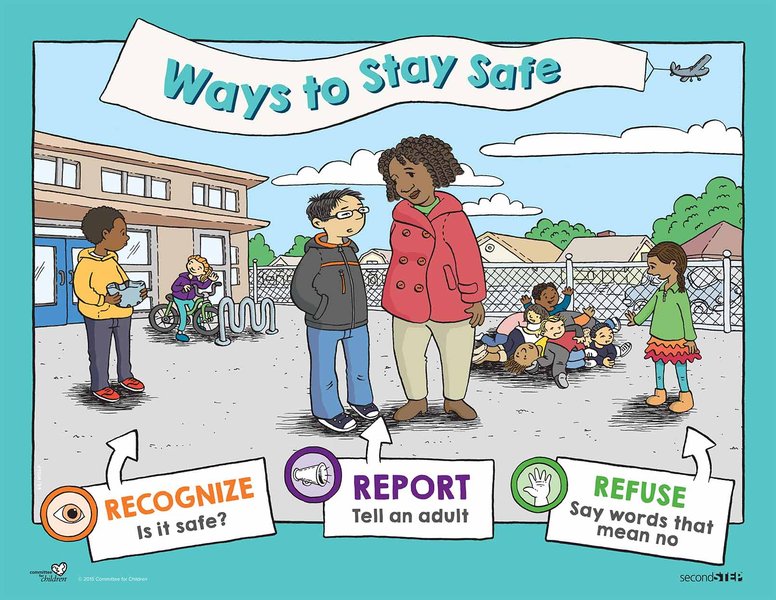
An illustrative poster highlighting key safety messages for children.
Vigilance and Action: Reporting Illegal Content
If you encounter any content that you suspect to be child sexual abuse material, it is imperative to report it to the appropriate authorities immediately. Your action can help protect children and bring perpetrators to justice.
How to Report Suspected Child Exploitation Material
There are several dedicated channels for reporting CSAM. It is crucial NOT to download, save, share, or attempt to investigate the material yourself, as this could have legal implications and further victimize the children involved.
- Internet Crime Complaint Center (IC3): A partnership between the FBI and the National White Collar Crime Center, IC3 (www.ic3.gov) is the central U.S. hub for reporting all types of cybercrime, including CSAM.
- National Center for Missing & Exploited Children (NCMEC): NCMEC operates the CyberTipline (report.cybertip.org or www.missingkids.org/gethelpnow/cybertipline), a secure system for reporting child sexual exploitation online. They work closely with law enforcement.
- Federal Trade Commission (FTC): While primarily focused on fraud, the FTC (ReportFraud.ftc.gov) also accepts reports of illegal online content, which can be routed to the correct agencies.
- Local Law Enforcement: You can report to your local police department or sheriff's office, especially if you believe there is an immediate threat to a child.
- Online Platforms: Major internet platforms (e.g., Google, Facebook, YouTube, Twitter/X) have their own reporting tools for illegal and harmful content. They are legally obligated to remove CSAM and report it to NCMEC.
Key Reporting Agencies and Their Functions
The following table summarizes the primary agencies involved in combating child sexual abuse material and how to contact them. Reporting is a critical step in protecting children and holding offenders accountable.
| Agency/Platform | Primary Role in Combating CSAM | Reporting Mechanism |
|---|---|---|
| Internet Crime Complaint Center (IC3) | Central federal hub for reporting cyber-enabled crime, including CSAM. Distributes reports to relevant law enforcement agencies. | Online via ic3.gov |
| National Center for Missing & Exploited Children (NCMEC) | Specialized non-profit organization focused on finding missing children and combating child sexual exploitation. Operates the CyberTipline. | Online via report.cybertip.org or missingkids.org/gethelpnow/cybertipline |
| Federal Trade Commission (FTC) | Collects reports on fraud, scams, and various types of illegal online content, which can include CSAM-related activities. | Online via ReportFraud.ftc.gov |
| Local Law Enforcement (Police/Sheriff) | Investigates local reports of crime, including CSAM. Can provide immediate response if a child is in danger. | Contact local non-emergency line or 911 for emergencies. |
| Online Service Providers (e.g., Google, Meta, X) | Required by law to remove CSAM from their platforms and report it to NCMEC. Provide user-friendly reporting tools. | Via built-in reporting features on each platform. |
This Mermaid mindmap visually organizes the interconnected aspects of understanding and combating preteen exploitation material, from its definition and legal status to reporting mechanisms and preventive measures. It highlights the multifaceted approach required to address this severe issue.
(Preteen generally < 13)"] id1_3["Universally Illegal & Unprotected Speech"] id2["Legal Ramifications"] id2_1["Severe Criminal Penalties"] id2_1_1["Lengthy Imprisonment (Mandatory Minimums)"] id2_1_2["Substantial Fines"] id2_2["Lifelong Consequences"] id2_2_1["Sex Offender Registration"] id2_2_2["Social, Professional, & Personal Stigma"] id2_3["U.S. Federal & State Laws (e.g., 18 U.S.C.)"] id2_4["International Treaties & Cooperation"] id3["Reporting Mechanisms: Crucial Steps"] id3_1["DO NOT Download, Save, or Share"] id3_2["Internet Crime Complaint Center (IC3)"] id3_3["National Center for Missing & Exploited Children (NCMEC CyberTipline)"] id3_4["Federal Trade Commission (FTC)"] id3_5["Local Law Enforcement Agencies"] id3_6["Platform-Specific Reporting Tools"] id4["Prevention & Online Safety: A Proactive Approach"] id4_1["Parental Guidance & Supervision"] id4_2["Implementing Parental Control Tools"] id4_3["Educating Children on Online Risks & Digital Literacy"] id4_4["Fostering Open Communication within Families"] id4_5["Utilizing Safe Search Tools & Practices"] id4_6["Monitoring Online Activities & Screen Time"] id5["Impact on Victims: Profound & Enduring Harm"] id5_1["Ongoing Re-victimization with Each Share/View"] id5_2["Severe Psychological & Emotional Trauma"] id5_3["Long-term Developmental Issues"]
A Shield of Protection: Safeguarding Children in the Digital Age
Preventing children's exposure to harmful content like CSAM and protecting them from online exploitation requires a proactive and multi-layered approach from parents, guardians, educators, and society as a whole.
The Pivotal Role of Parents and Guardians
Parents and caregivers are the first line of defense in keeping children safe online. Key strategies include:
- Open Communication: Foster an environment where children feel comfortable talking about their online experiences, including anything that makes them feel uncomfortable or scared. Regularly discuss online safety rules and potential dangers.
- Education: Teach children about online risks, including inappropriate content, cyberbullying, online predators, and the importance of not sharing personal information or intimate images.
- Parental Controls: Utilize parental control software and settings on devices, apps, and internet browsers to filter content, limit screen time, and monitor activity. However, these tools are not foolproof and should complement ongoing conversations.
- Supervision and Monitoring: Be aware of the apps, games, and websites your child uses. Keep computers and devices in common areas of the home to allow for easier supervision.
- Establish Clear Rules: Create family agreements or rules for internet use, including time limits, acceptable websites/apps, and what to do if they encounter something troubling.
- Lead by Example: Model responsible and safe online behavior.
Leveraging Safe Search Tools
Standard search engines can sometimes yield inappropriate results. Using child-friendly search engines or enabling safe search filters on mainstream search engines can significantly reduce the risk of accidental exposure to harmful content. Resources like SafeSearchKids.com offer filtered image and video searches designed specifically for children, sourcing content from educational and family-friendly websites.
Assessing Online Vulnerability Factors
The radar chart below illustrates hypothetical factors that can influence a preteen's vulnerability to online exploitation. Higher values suggest increased risk, while lower values (achievable through education, supervision, and protective measures) indicate a safer online environment. This is an illustrative model to highlight areas of concern and potential intervention.
Empowering Kids with Online Privacy Knowledge
Educating children about online privacy is paramount. The following video offers valuable insights into internet safety and security tailored for a younger audience. It emphasizes the importance of protecting personal information and navigating the digital world responsibly. Understanding these concepts can empower children to make safer choices online and recognize potential dangers.
This video provides essential tips on online privacy and safety for children.
Frequently Asked Questions (FAQ)
What exactly is "preteen porn"?
Is possessing or viewing material involving preteens illegal?
What are the penalties for offenses related to this type of material?
How should I report suspected preteen porn or CSAM if I encounter it?
How can I protect my child from encountering such material online?
Recommended Further Exploration
- What are the specific US federal statutes criminalizing child pornography?
- How do international laws address the distribution of child sexual abuse material across borders?
- What psychological support is available for victims of online child exploitation?
- How effective are parental control tools in preventing exposure to harmful online content?
References
Last updated May 18, 2025