
Stopping the Slide: Your Comprehensive Guide to Landslide Prevention
Discover proven strategies, from engineering marvels to natural solutions, for safeguarding slopes and communities against landslides.
Highlights: Key Strategies for Landslide Prevention
- Engineered Solutions: Modifying slope angles, building robust retaining walls with proper drainage, and reinforcing soil with techniques like soil nailing are critical for physical stabilization.
- Water Management is Crucial: Implementing effective surface and subsurface drainage systems to divert water away from slopes significantly reduces soil saturation, a primary landslide trigger.
- Vegetation Power: Establishing and maintaining plant cover, especially native species with strong root systems, naturally binds soil, controls erosion, and enhances slope stability.
Landslides, the downslope movement of rock, soil, and debris, pose significant threats worldwide. Triggered by factors like heavy rainfall, earthquakes, volcanic activity, erosion, and human activities such as deforestation or improper construction on slopes, they can cause devastating damage to property, infrastructure, and tragically, lead to loss of life. Understanding and implementing preventive measures is crucial for mitigating these risks, especially in vulnerable areas. Effective prevention requires a multi-faceted approach, combining engineering interventions, careful water management, strategic use of vegetation, and informed land-use planning.
Why Prevention Matters: Understanding Landslide Triggers
Prevention strategies are designed to counteract the forces that lead to slope failure. Key triggers include:
- Water Saturation: Intense or prolonged rainfall increases pore water pressure within the soil, reducing its shear strength and making it heavier and more prone to sliding.
- Slope Angle & Geology: Steeper slopes are inherently less stable. The type of soil and rock, along with geological structures like faults, also plays a significant role.
- Erosion: Natural erosion by rivers or human activities can undercut the base of a slope, removing support.
- Human Activities: Construction, excavation (especially at the slope base or adding load at the top), deforestation, irrigation, and vibrations from traffic or blasting can destabilize slopes.
- Natural Events: Earthquakes can shake loose vast amounts of material, and volcanic eruptions can generate lahars (mudflows). Wildfires destroy vegetation, leaving slopes vulnerable to erosion and subsequent landslides.
Addressing these factors through targeted prevention methods is the most effective way to reduce landslide hazards.
Engineering and Structural Solutions: Building Resilience
Direct engineering interventions provide physical barriers and reinforcement to counteract the forces driving landslides. These methods often involve significant construction but offer robust protection, particularly in high-risk zones or where development exists.
Slope Geometry Modification
Reshaping for Stability
Altering the physical shape of a slope can significantly enhance its stability. This includes:
- Regrading: Reducing the steepness of a slope decreases the gravitational pull on the soil mass. This might involve cutting back the upper slope or adding material at the base (toe berm) to provide counterweight and support.
- Excavation at the Head: Removing soil and rock from the uppermost part of a potential slide area reduces the driving forces that initiate movement.
- Terracing: Creating step-like flat sections on a slope breaks up the continuous incline, controls runoff, and provides stable platforms.
Retaining Structures
Holding Ground Firmly
Walls and barriers are constructed to hold back soil and rock, preventing downslope movement.
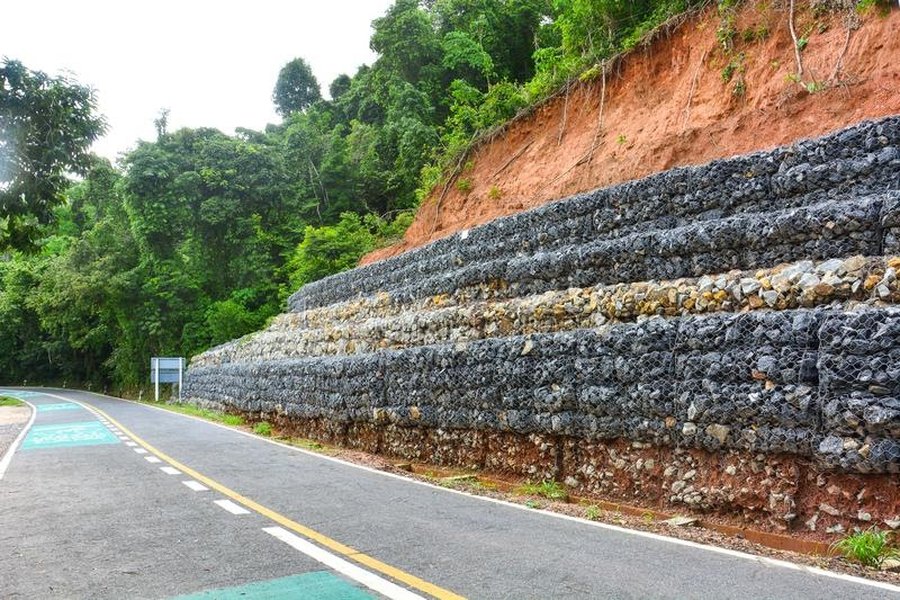
A gabion retaining wall, constructed from wire baskets filled with rocks, providing slope stability.
- Retaining Walls: These can be made from concrete, masonry, stone, timber, or steel. Crucially, they must include effective drainage systems (like weep holes or gravel backfill) behind the wall to prevent water pressure buildup, which could cause the wall itself to fail. Reinforced designs, sometimes anchored deep into bedrock, offer enhanced stability for challenging sites. Gabion walls (wire mesh baskets filled with rocks) are another common type, offering permeability and flexibility.
- Deflection Walls/Channels: These structures don't necessarily stop a landslide but are designed to redirect the flow of debris away from critical infrastructure or populated areas.
Slope Reinforcement
Strengthening from Within
These techniques improve the internal strength and cohesion of the slope material.

Engineered barrier installed on a mountainside to intercept potential rockfall or debris flow.
- Soil Nailing: Long steel bars (nails) are drilled into the slope and grouted in place, effectively pinning unstable soil layers to more stable strata beneath.
- Anchors and Piles: Similar to soil nails but often larger and designed to handle greater loads, anchors and micropiles transfer potential slide forces to deeper, more competent ground.
- Geosynthetics (Geogrids): High-strength polymer grids are layered within the soil during slope construction or repair. They provide tensile strength, reinforcing the soil mass and allowing for steeper, stable slopes.
- Chemical Agents/Grouting: Injecting cement or chemical grouts into the soil or rock can bind particles together, increasing strength and reducing permeability.
- Cellular Confinement Systems (Geocells): Three-dimensional honeycomb-like structures made from polymers are filled with soil, gravel, or vegetation, creating a stable, erosion-resistant surface layer.
Managing Water Effectively: Controlling the Main Trigger
Since water saturation is a primary catalyst for many landslides, controlling its flow on and within slopes is paramount. Effective drainage reduces soil weight and pore water pressure, maintaining slope stability.
Surface Drainage
Directing Runoff Safely
Controlling water flow across the slope surface prevents erosion and saturation.
- Channels, Ditches, and Swales: Constructed pathways designed to collect surface runoff and divert it away from vulnerable areas towards safe discharge points like stable streams or storm drains.
- Berms: Low earthen ridges built across slopes to intercept runoff and direct it towards drainage channels.
- Check Dams: Small barriers built in channels or gullies to slow down water flow, reduce erosion, and trap sediment.
Subsurface Drainage
Lowering Internal Water Pressure
Removing excess water from within the soil mass itself is crucial for stability.
- Horizontal Drains: Perforated pipes drilled horizontally or slightly inclined into a slope to intercept groundwater and drain it away.
- Drainage Trenches/Blankets: Gravel-filled trenches or layers installed on or behind structures (like retaining walls) to collect and remove seepage water.
- Interceptor Wells: Vertical wells can be used to lower the groundwater table in specific areas.
Water-Sensitive Landscaping and Practices
Working with Nature's Flow
- Contouring: Landscaping and planting along the natural contours of the slope can slow runoff and encourage infiltration in safe areas.
- Rain Gardens: Depressions designed to temporarily hold and soak in rainwater runoff from roofs, driveways, or other surfaces, reducing the amount of water flowing directly onto slopes.
- Avoiding Drainage Disruption: It's vital not to block natural drainage paths or concentrate runoff onto unstable areas through improper grading or construction.
Temporary Water Diversion
Immediate Actions
In certain situations, temporary measures are needed:
- Sandbags: Can be deployed quickly to divert surface water flow away from critical areas during heavy rain events.
- Plastic Sheeting/Tarps: Used to cover bare or disturbed slopes, especially after wildfires, to prevent rainwater from infiltrating and triggering slides or debris flows until vegetation can re-establish.
The Power of Vegetation and Bioengineering: Nature's Solution
Plants play a vital role in slope stabilization. Their roots bind soil particles together, increasing shear strength, while the canopy intercepts rainfall and transpiration helps remove water from the soil. This is often a cost-effective and environmentally friendly approach, especially suitable for moderate slopes.
Planting for Stability
Roots as Anchors
Establishing robust vegetation cover is key:
- Trees, Shrubs, and Ground Cover: Planting appropriate species, preferably native ones adapted to local conditions, provides a strong root network that anchors soil. Deep-rooted species are particularly effective.
- Maintaining Existing Vegetation: Avoiding unnecessary removal of trees and shrubs on slopes helps preserve natural stability.
Erosion Control
Protecting the Surface
Preventing surface erosion is crucial for long-term stability:
- Mulching: Applying layers of organic material (wood chips, compost, straw) or gravel helps protect bare soil from rain impact, conserves moisture for plant growth, and suppresses weeds.
- Cover Crops & Seeding: Fast-growing grasses or legumes can be planted to quickly establish cover on disturbed soil. Sometimes seeds are applied with hydro-mulch (a slurry containing seed, mulch, fertilizer, and tackifier).
- Erosion Control Blankets: Biodegradable (jute, coir) or synthetic blankets can be laid over seeded slopes to protect them from erosion while vegetation establishes.
Bioengineering Approaches
Combining Green and Gray
Bioengineering integrates living plant materials with engineered structures to create stable, ecologically sound solutions. Examples include vegetated geogrids (combining soil reinforcement with planting) or live stakes (cuttings of species like willow driven into the ground to root and grow).
Strategic Land Use Planning and Regulation: Avoiding the Risk
Perhaps the most effective long-term prevention strategy is to avoid developing in landslide-prone areas altogether. This requires careful planning and regulation based on hazard assessments.
Risk Assessment and Zoning
Mapping and Managing Hazard Zones
- Hazard Mapping: Identifying and mapping areas susceptible to landslides based on geology, slope angle, rainfall patterns, and historical occurrences.
- Zoning Regulations: Implementing land-use regulations that restrict or prohibit certain types of development in high-hazard zones.
- Site-Specific Assessments: Requiring detailed geotechnical investigations for any proposed development in potentially unstable areas to ensure appropriate design and mitigation measures are incorporated.
Avoiding Risky Practices
Minimizing Human Impact
- Responsible Construction: Avoiding deep cuts into hillsides or placing heavy fill material on steep slopes without proper engineering design.
- Sustainable Forestry and Agriculture: Implementing practices that minimize soil disturbance and maintain vegetation cover on slopes.
- Proper Waste Disposal: Not disposing of waste or debris on slopes, as this can add weight and impede drainage.
Monitoring and Early Warning Systems: Staying Ahead
While not strictly prevention, monitoring systems can detect the precursors to landslides, allowing for timely warnings and evacuations, thus preventing loss of life. These systems track key indicators:
- Ground Movement: Using instruments like extensometers, inclinometers, GPS, or satellite radar (InSAR) to detect subtle ground deformation or displacement.
- Groundwater Levels: Monitoring piezometers to track changes in pore water pressure within the slope.
- Rainfall Thresholds: Establishing critical rainfall amounts or intensities known to trigger landslides in a specific area.
- Acoustic Sensors: Detecting the sounds associated with soil or rock movement underground.
Integrating these monitoring technologies with weather forecasts and predictive models can provide valuable lead time for emergency response.
Evaluating Prevention Strategies: A Comparative Look
Different landslide prevention strategies offer varying levels of effectiveness, cost, environmental impact, and maintenance requirements. The radar chart below provides a conceptual comparison of major approaches. Scores are subjective (higher is generally 'better' or 'more significant,' except for Cost and Maintenance where lower is better) and the ideal strategy depends heavily on site-specific conditions.
This chart illustrates the trade-offs involved. Engineering solutions offer high long-term effectiveness but come at a higher initial cost and potentially lower environmental benefit compared to vegetation. Land use planning is highly effective and low maintenance but depends on foresight and regulatory power. Drainage is crucial but requires ongoing maintenance. Monitoring provides safety but doesn't stop the slide itself.
Visualizing the Interconnectedness: A Prevention Mindmap
Landslide prevention involves a web of interconnected strategies. This mindmap provides a visual overview of the primary categories and specific techniques discussed.
(Regrading, Terracing)"] id1b["Retaining Structures
(Walls, Gabions, Deflection Walls)"] id1c["Slope Reinforcement
(Soil Nails, Anchors, Geogrids)"] id1d["Chemical Stabilization"] id2["Water Management"] id2a["Surface Drainage
(Channels, Swales, Check Dams)"] id2b["Subsurface Drainage
(Horizontal Drains, Wells)"] id2c["Water-Sensitive Landscaping
(Contouring, Rain Gardens)"] id2d["Avoid Altering Natural Drainage"] id2e["Temporary Diversion
(Sandbags, Sheeting)"] id3["Vegetation & Bioengineering"] id3a["Planting
(Trees, Shrubs, Ground Cover)"] id3b["Erosion Control
(Mulch, Cover Crops, Blankets)"] id3c["Maintain Existing Vegetation"] id3d["Bioengineering Combinations"] id4["Land Use Planning & Regulation"] id4a["Hazard Mapping & Zoning"] id4b["Site Assessments"] id4c["Avoiding Risky Construction Practices"] id4d["Sustainable Land Management"] id5["Monitoring & Early Warning"] id5a["Ground Movement Sensors"] id5b["Groundwater Level Monitoring"] id5c["Rainfall Thresholds"] id5d["Community Reporting"]
This map highlights how different approaches complement each other. Often, the most robust prevention plans integrate elements from multiple categories tailored to the specific risks and conditions of a site.
Practical Advice in Action: Preventing Landslides on Your Property
While large-scale prevention often requires significant engineering and community planning, property owners can also take steps to reduce risks. This video provides practical tips and actions individuals can implement to lessen the chance of a landslide affecting their property, focusing on aspects like managing drainage and maintaining vegetation.
Key takeaways often include ensuring gutters and downspouts direct water away from foundations and slopes, avoiding undercutting steep banks, being cautious about adding excessive weight (like pools or large structures) near slope edges, and promptly addressing signs of erosion or instability by consulting with geotechnical professionals.
Comparative Overview of Key Techniques
Understanding the different methods available helps in selecting the most appropriate strategy. The table below summarizes some common landslide prevention techniques:
| Method | Mechanism | Primary Application | Advantages | Limitations |
|---|---|---|---|---|
| Retaining Walls | Provides external support to hold back soil mass. | Steep slopes, protecting structures at the base of slopes, road cuts. | Effective at containing material, can support significant loads. | Can be expensive, requires careful design (especially drainage), potential aesthetic impact. |
| Vegetation Planting | Roots bind soil, reduce erosion, absorb water. | Moderate slopes, erosion control, long-term stabilization, post-fire recovery. | Cost-effective, environmentally beneficial, improves aesthetics. | Slow to establish effectiveness, less effective on very steep or actively moving slopes, requires suitable climate/soil. |
| Drainage Systems (Surface & Subsurface) | Reduces water saturation and pore water pressure by diverting or removing water. | Areas with high rainfall, slopes with groundwater issues, behind retaining structures. | Directly addresses a primary trigger, can significantly improve stability. | Requires ongoing inspection and maintenance to prevent clogging, may require extensive excavation. |
| Slope Regrading | Reduces slope angle, decreasing gravitational driving forces. | Overly steep slopes, areas where material can be removed from top or added to base. | Fundamentally improves stability, can be permanent solution. | Requires space for reshaping, significant earthwork involved, potential disposal issues for excavated material. |
| Soil Nailing / Anchoring | Internally reinforces the soil mass by inserting tensile elements. | Stabilizing existing slopes, excavations, steep cuts. | Can stabilize steep slopes with minimal excavation compared to regrading, relatively fast installation. | Requires specialized equipment and expertise, effectiveness depends on ground conditions, potential corrosion issues. |
Choosing the right combination of these techniques, often guided by a geotechnical expert, is essential for effective and sustainable landslide prevention.
Frequently Asked Questions
What are the main triggers for landslides?
Landslides are primarily triggered by factors that increase stress or decrease the strength of slope materials. Key triggers include intense or prolonged rainfall (saturating soil), earthquakes (shaking), volcanic eruptions, rapid snowmelt, stream or coastal erosion undercutting slopes, changes in groundwater levels, and human activities like deforestation, excavation, loading slopes, poor drainage management, and vibrations from traffic or blasting.
Can landslides be completely prevented?
While it's often impossible to guarantee complete prevention, especially against large-scale natural events like major earthquakes, the risk of landslides can be significantly reduced through the methods described (engineering, water management, vegetation, planning). The goal is mitigation – reducing the likelihood and potential impact to acceptable levels. Avoiding development in the most hazardous areas remains the surest form of prevention.
Is simply planting trees enough to stop a landslide?
Vegetation, including trees, is highly beneficial for slope stability and erosion control, but it may not be sufficient on its own, especially for deep-seated potential landslides or very steep slopes. The effectiveness depends on the type of vegetation, root depth, slope characteristics, and the scale of the potential slide. It's often most effective when combined with other methods like proper drainage or bioengineering techniques.
What is generally the most effective single method of prevention?
There isn't one single "most effective" method, as the best approach depends entirely on the specific site conditions and type of landslide risk. However, effective water management (drainage) is almost always a critical component because water is such a common trigger. For existing structures or critical infrastructure, engineered solutions like retaining walls or slope reinforcement are often necessary. For long-term, large-area stability, strategic land-use planning (avoidance) combined with maintaining healthy vegetation cover is highly effective.
How important is drainage behind retaining walls?
Drainage behind retaining walls is absolutely critical. Without proper drainage (e.g., weep holes, gravel backfill connected to pipes), water can accumulate in the soil behind the wall. This increases the hydrostatic pressure pushing against the wall, which can lead to bulging, cracking, or even complete failure of the structure. Effective drainage relieves this pressure, ensuring the wall's long-term stability and effectiveness.
Recommended Reading
- Explore the mechanics of how retaining walls provide stability against landslides.
- Discover which plant species are most effective for binding soil and preventing erosion on slopes.
- Learn about the technologies used to monitor ground movement and predict potential landslides.
- Find out about the warning signs that might indicate a slope is becoming unstable.
References
Last updated May 5, 2025