
Unveiling the Necessity of Probability Theory in Everyday Life
Exploring Scenarios Where Understanding Probability is Crucial
Key Highlights of Probability Theory Applications
- Decision Making: Probability theory helps in making informed decisions when outcomes are uncertain.
- Risk Assessment: It's crucial in assessing risks in various fields like finance, insurance, and weather forecasting.
- Predictive Analysis: Probability aids in predicting future trends and behaviors in areas such as sports, medicine, and AI.
The Ubiquitous Nature of Probability Theory
Probability theory is a branch of mathematics that deals with quantifying uncertainty. It provides a framework for analyzing random events, assessing risk, and making informed decisions in situations where outcomes are not known with certainty. From predicting the weather to managing financial investments, probability theory plays a vital role in numerous aspects of our daily lives (Unknown, n.d.).
Making Informed Decisions
In many real-life scenarios, we face choices where the outcomes are uncertain. Probability theory provides tools to weigh the likelihood of different outcomes, helping us make rational decisions. For example, when deciding whether to undergo a medical procedure, patients often want to know the success rate, which is a probability-based assessment (Probability in everyday life | Probability Examples. - YouTube).
Assessing Risks and Rewards
Probability theory is essential for evaluating risks in various fields. Insurance companies use it to estimate the likelihood of events like car accidents or illnesses, determining appropriate premiums (Unknown, n.d.). In finance, probability models help investors assess the risk associated with different investment options, enabling them to make informed decisions about their portfolios (Probability Theory - Formulas, Examples, Definition, Basics - Cuemath).
Predicting Future Events
Probability theory is used to forecast future events in various domains. Weather forecasting relies heavily on probability models to predict the likelihood of rain, snow, or other weather conditions (10 Applications Of Probability In Real Life - BYJU'S FutureSchool). In sports, probability helps in predicting the outcomes of games, informing betting strategies and fan expectations (10 Examples of Using Probability in Real Life - Statology).
Specific Applications of Probability Theory
Probability theory's versatility makes it indispensable in a wide array of fields. Here are some key areas where its applications are most prominent:
Weather Forecasting
Meteorologists use probability models to predict weather conditions. These models analyze historical data and current atmospheric conditions to estimate the likelihood of various weather events. For instance, a weather forecast might state there is a 70% chance of rain, indicating the probability of precipitation based on the available data (10 Applications Of Probability In Real Life - BYJU'S FutureSchool).
Sports and Games
Probability is used to assess the likelihood of specific outcomes in sports, informing betting strategies and game analysis. In card games, understanding probability helps players make strategic decisions based on the odds of drawing certain cards. Probability theory enhances the experience and decision-making process in games of chance (10 Applications Of Probability In Real Life - BYJU'S FutureSchool).
Insurance
Insurance companies rely on probability theory to calculate the risk of insuring individuals or assets. By analyzing historical data and statistical models, they determine the probability of events like car accidents, natural disasters, or health issues. This helps them set premiums that are both profitable for the company and reasonable for the customer (What real-life situations have you solved using probability theory? - Quora).
Finance and Investing
In the financial industry, probability theory is used to model market behavior and assess investment risks. Investors use probability to predict future trends in the stock market, helping them make informed decisions about buying or selling securities. Risk management in finance heavily relies on probability to quantify potential losses and manage portfolios effectively (Probability Theory - Formulas, Examples, Definition, Basics - Cuemath).
Medical Decisions
Probability plays a crucial role in medical decision-making. Doctors use probabilities to assess the likelihood of a successful surgery, the effectiveness of a treatment, or the risk of side effects. Patients often want to know these probabilities to make informed choices about their healthcare options. This application helps in balancing potential benefits against potential risks (Probability in everyday life | Probability Examples. - YouTube).
Traffic Management
Probability theory is used in traffic management to optimize traffic flow and reduce congestion. By analyzing traffic patterns and predicting the likelihood of accidents, traffic engineers can design traffic signal systems that minimize delays and improve safety. This application of probability helps in creating more efficient and safer transportation systems (10 Applications Of Probability In Real Life - BYJU'S FutureSchool).
Artificial Intelligence and Machine Learning
Probability theory is a fundamental tool in artificial intelligence (AI) and machine learning. It is used to build models that can learn from data and make predictions. For example, Bayesian networks, a type of probabilistic graphical model, are used in AI to model complex systems and make inferences based on uncertain information. Probability is essential for creating intelligent systems that can reason and make decisions in uncertain environments (Probability in Real Life - Cuemath).
Illustrative Table: Probability in Action
The following table provides a consolidated view of how probability theory is applied across various domains, highlighting the specific uses and benefits in each area.
| Domain | Application | Benefits |
|---|---|---|
| Weather Forecasting | Predicting weather conditions | Informed planning, disaster preparedness |
| Sports and Games | Assessing game outcomes, strategic decisions | Enhanced gameplay, better betting strategies |
| Insurance | Calculating risk, setting premiums | Fair pricing, risk management |
| Finance and Investing | Modeling market behavior, assessing investment risks | Informed investment decisions, risk mitigation |
| Medical Decisions | Evaluating treatment success, assessing risks | Informed patient choices, balanced risk assessment |
| Traffic Management | Optimizing traffic flow, reducing congestion | Efficient transportation, improved safety |
| Artificial Intelligence | Building predictive models, making inferences | Intelligent systems, automated decision-making |
Visualizing Probability: Real-World Applications
Understanding probability becomes more intuitive when we see it in action. The images below illustrate some of the practical applications of probability theory in various fields.
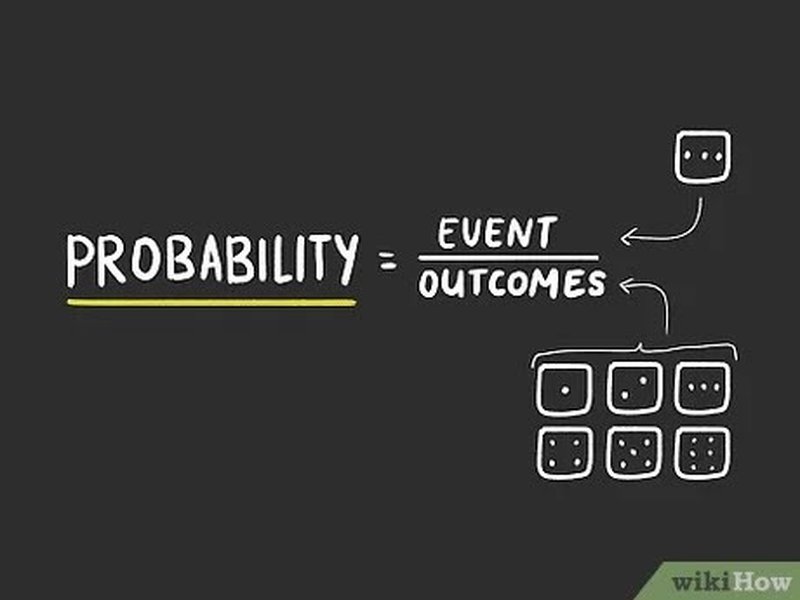
Probability in AI
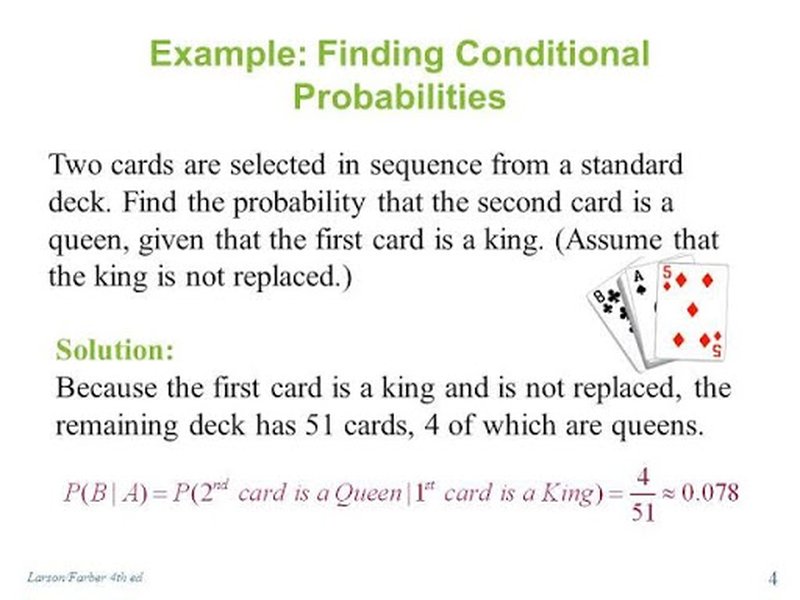
Probability in Finance
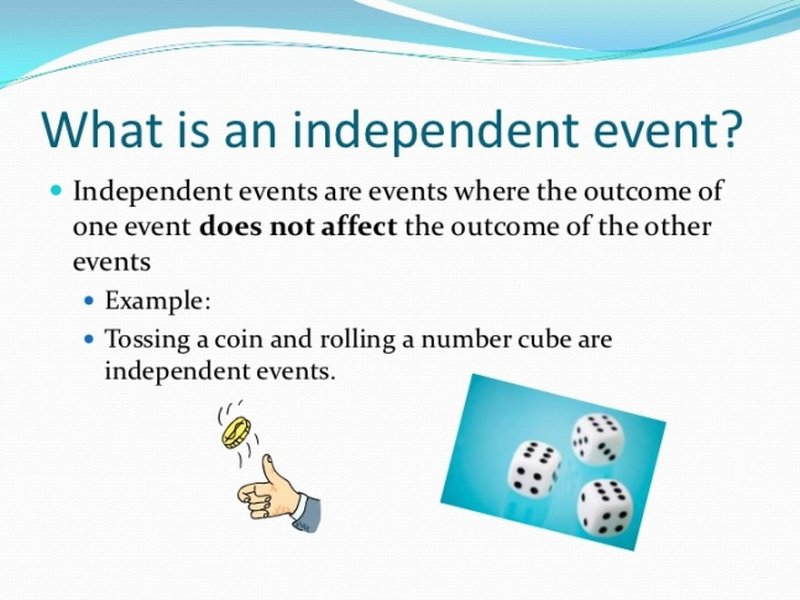
Probability of Dependent Events
Probability Explained: Why It Matters
To further illustrate the importance of probability theory, consider this video featuring Andrzej (Andy) Skrzypacz, Professor of Economics at the Stanford Graduate School of Business, who discusses the role of probability in everyday life.
This video offers valuable insights into how probability influences our decisions and understanding of the world around us. The ability to quantify uncertainty allows us to make more informed choices and better navigate complex situations.
FAQ: Frequently Asked Questions About Probability Theory
What is probability theory?
Probability theory is a branch of mathematics that deals with the study of random events. It provides a framework for quantifying uncertainty and making predictions about the likelihood of different outcomes.
Why is probability theory important in real life?
Probability theory is important because it helps us make informed decisions in situations where outcomes are uncertain. It is used in various fields, including weather forecasting, finance, medicine, and artificial intelligence, to assess risks, predict future events, and optimize strategies.
How is probability used in finance?
In finance, probability theory is used to model market behavior and assess investment risks. Investors use probability to predict future trends in the stock market, helping them make informed decisions about buying or selling securities. Risk management in finance heavily relies on probability to quantify potential losses and manage portfolios effectively.
Can you give an example of probability in medical decisions?
Doctors use probabilities to assess the likelihood of a successful surgery, the effectiveness of a treatment, or the risk of side effects. Patients often want to know these probabilities to make informed choices about their healthcare options. For example, a doctor might inform a patient that a particular surgery has a 90% success rate, helping the patient weigh the potential benefits against the risks.
How does probability theory relate to artificial intelligence?
Probability theory is a fundamental tool in artificial intelligence (AI) and machine learning. It is used to build models that can learn from data and make predictions. For example, Bayesian networks, a type of probabilistic graphical model, are used in AI to model complex systems and make inferences based on uncertain information. Probability is essential for creating intelligent systems that can reason and make decisions in uncertain environments.
References
Last updated April 11, 2025