
Understanding the Procedural Request Letter in Credit Disputes
A Comprehensive Guide to Requesting Verification Procedures from Credit Bureaus
Key Insights
- Purpose: A procedural request letter is sent to credit bureaus to obtain details about the verification process for a disputed item.
- Legal Basis: This right is granted to consumers under the Fair Credit Reporting Act (FCRA), specifically Section 611 (a) (7).
- Information Provided: The letter asks the credit bureau to provide the name, address, and phone number of the entity that verified the disputed information.
When navigating the process of correcting errors on your credit report, you might encounter situations where a disputed item is verified by the credit bureau despite your belief that it is inaccurate or incomplete. In such cases, the Fair Credit Reporting Act (FCRA) provides consumers with a powerful tool: the procedural request letter. This letter is a formal request to the credit bureau for details regarding the specific procedures they followed when verifying the disputed information. Understanding what a procedural request letter is, its legal basis, and how to use it effectively can be crucial in challenging potentially incorrect or unverifiable information on your credit report.
The Role of a Procedural Request Letter
Going Beyond the Initial Dispute
An initial credit report dispute letter is typically sent to the credit bureaus to challenge information you believe is inaccurate, incomplete, or unverifiable. The credit bureaus are required to investigate these disputes, usually within 30 days (though this can be extended to 45 days in certain circumstances, particularly if you provide additional relevant information during that period). After their investigation, they will inform you of the results, including whether the disputed item was verified, modified, or deleted.
However, if a disputed item is verified and you still believe it is incorrect or that the verification process was inadequate, a procedural request letter allows you to delve deeper. It's a way to understand *how* the credit bureau verified the information and to identify the source that provided the verification. This information can be invaluable for further challenging the item, potentially by directly contacting the furnisher of the information (the company or individual who reported the data to the credit bureau) or by pursuing legal action if necessary.
Why Send a Procedural Request Letter?
There are several key reasons why you might send a procedural request letter:
- To understand the verification process: The FCRA requires credit bureaus to follow reasonable procedures to ensure the accuracy of the information they report. A procedural request letter helps you understand if these procedures were indeed followed for your specific dispute.
- To identify the furnisher: Knowing which entity verified the information allows you to directly contact them with further evidence supporting your dispute. Sometimes, errors occur on the furnisher's end, and direct communication can resolve the issue.
- To build a case for further action: If the credit bureau cannot provide adequate details about the verification process, or if the furnisher cannot substantiate the information, this can strengthen your position in seeking the removal of the disputed item.
- To ensure FCRA compliance: Sending a procedural request letter also helps ensure that the credit bureaus are adhering to their obligations under the FCRA.
Legal Basis in the FCRA
Your Right to Know the Verification Procedure
The right to request a description of the verification procedure is explicitly granted to consumers under the Fair Credit Reporting Act (FCRA). Specifically, Section 611 (a) (7) of the FCRA outlines this right. This section mandates that if a consumer disputes the accuracy or completeness of any item of information in their file, and the consumer reporting agency reinvestigates and determines the disputed information is accurate, the agency must provide the consumer, upon request, a description of the procedure used to determine the accuracy and completeness of the information.
Furthermore, this section of the FCRA requires the credit bureau to include in this description the business name and address of any furnisher of information contacted in connection with such information, and the telephone number of such furnisher, if reasonably available. This legal requirement underscores the importance of transparency in the credit reporting ecosystem and provides consumers with the means to verify the validity of information themselves.
Key FCRA Provisions Related to Disputes:
While the procedural request letter is rooted in Section 611 (a) (7), it's helpful to understand its place within the broader FCRA dispute process. Here are some relevant sections:
- Section 611(a)(1)(A): Consumers have the right to dispute inaccurate or incomplete information in their credit files.
- Section 611(a)(1)(A): Credit bureaus must reinvestigate disputed information within a reasonable period (typically 30 days).
- Section 611(a)(5): Credit bureaus must notify the consumer of the results of the reinvestigation within 5 days of completion.
- Section 623(a)(1)(A): Furnishers of information have a duty to provide accurate information to credit bureaus.
- Section 623(a)(1)(B): Furnishers have a duty to correct and update information they furnish to credit bureaus.
Crafting an Effective Procedural Request Letter
Essential Elements to Include
To ensure your procedural request letter is effective and that the credit bureau processes it correctly, it's crucial to include specific information. While sample letters are available, tailoring your letter to your specific situation is recommended. Here are the key elements you should include:
Your Identifying Information:
- Your full legal name
- Your current address
- Your previous addresses (if applicable)
- Your date of birth
- Your Social Security number
- Any relevant account numbers related to the disputed item
Details of the Disputed Item:
Clearly identify the specific item(s) on your credit report that you are disputing and for which you are requesting the verification procedure. Be as precise as possible. Refer to the credit report you received from the bureau and, if possible, circle the disputed items on a copy.
- Name of the account or tradeline
- Account number (or as much of it as appears on your report)
- The specific inaccuracy or incompleteness you are disputing
- Date the item first appeared on your report (if known)
Request for Verification Procedure Details:
Clearly state that you are requesting a description of the procedures used to verify the disputed information, pursuant to your rights under the FCRA, specifically Section 611 (a) (7).
- Explicitly mention that you are requesting the name, address, and telephone number (if available) of the furnisher who verified the information.
- Request details on the steps taken by the credit bureau to verify the accuracy and completeness of the disputed item.
Supporting Documentation:
Although the procedural request is about the bureau's process, including copies of relevant documents can strengthen your letter and provide context. Never send original documents.
- A copy of your credit report with the disputed items circled.
- Copies of any previous dispute letters sent regarding this item.
- Copies of any responses received from the credit bureau regarding previous disputes.
- Any documents that support your claim that the information is inaccurate or incomplete (e.g., payment records, court documents, etc.).
Proper Formatting and Delivery:
Format your letter as a formal business letter. Include your contact information and the credit bureau's contact information. Send the letter by certified mail with "return receipt requested." This provides proof that the credit bureau received your letter and the date of receipt, which is important for tracking their response time.
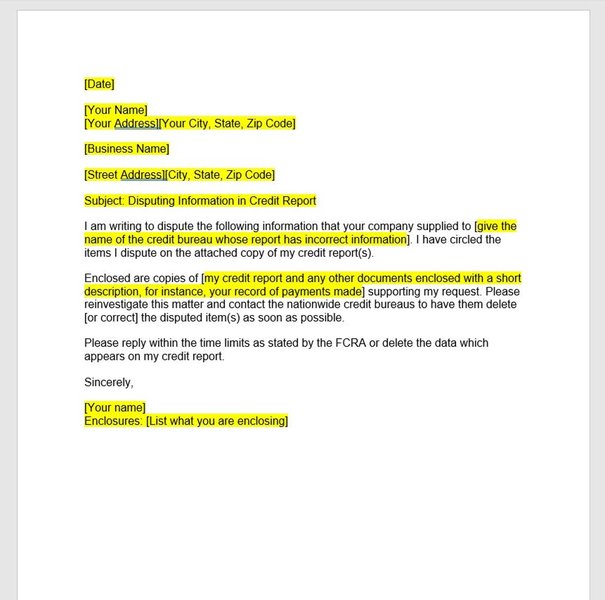
A visual representation of a credit report dispute letter template.
What to Expect After Sending the Letter
Credit Bureau Response Timeline
Under the FCRA, credit bureaus are required to provide a description of the procedure used to verify the information within 15 days of receiving your procedural request letter. If they fail to provide this information within the mandated timeframe, it could constitute a violation of the FCRA.
Potential Outcomes:
- Provision of Verification Details: The credit bureau provides you with the requested information, including the furnisher's contact details and a description of their verification steps. You can then use this information to contact the furnisher directly or evaluate if the verification process was reasonable.
- Deletion of the Disputed Item: In some cases, if the credit bureau cannot adequately describe the verification procedure or if the furnisher does not respond to their verification request, they may delete the disputed item from your credit report.
- Failure to Respond: If the credit bureau fails to respond within the 15-day timeframe, you should document this and consider sending a follow-up letter or consulting with a consumer law attorney.
Leveraging the Information Received
Next Steps After Receiving the Procedure Description
Once you receive the description of the verification procedure from the credit bureau, carefully review the information. Pay close attention to the identity of the furnisher who verified the account and the details provided about the verification steps. This information empowers you to take further action if necessary.
Contacting the Furnisher:
With the furnisher's contact information in hand, you can send a dispute letter directly to them. This letter should reiterate your dispute and provide any additional evidence you have to support your claim. The furnisher also has obligations under the FCRA to investigate disputes and correct inaccurate information.
Evaluating the Verification Procedure:
Assess whether the procedure described by the credit bureau appears reasonable and thorough. Did they contact the correct furnisher? Did they review all the documentation you provided in your initial dispute? If you have reason to believe the verification was not adequate, you can include this in further communication with the credit bureau or the furnisher.
Considering Legal Options:
If you believe the credit bureau or the furnisher has violated the FCRA by failing to conduct a proper investigation, failing to provide the requested information, or continuing to report inaccurate information, you may consider consulting with a consumer law attorney. An attorney can evaluate your case and advise you on potential legal remedies.
Comparison: Initial Dispute Letter vs. Procedural Request Letter
Understanding the Distinction
While both are crucial tools in credit repair, it's important to understand the difference between an initial dispute letter and a procedural request letter:
| Feature | Initial Dispute Letter | Procedural Request Letter |
|---|---|---|
| Purpose | To notify the credit bureau of inaccurate or incomplete information on your report and request an investigation. | To request details about the specific procedures used by the credit bureau to verify a previously disputed item. |
| Timing | Sent after reviewing your credit report and identifying errors. | Sent after the credit bureau has verified a disputed item, and you are not satisfied with the outcome or the verification process. |
| Legal Basis | FCRA Section 611(a)(1)(A) (Right to dispute) | FCRA Section 611(a)(7) (Right to request verification procedure details) |
| Information Requested | Investigation and correction/deletion of disputed items. | Name, address, and phone number of the furnisher who verified the item, and a description of the verification procedure. |
| Required Response Time (Credit Bureau) | Typically 30 days (can be extended to 45 days). | 15 days. |
Additional Considerations
Tips for Success
-
Keep copies of everything: Maintain a detailed file of all correspondence with credit bureaus and furnishers, including copies of your letters, their responses, and certified mail receipts.
-
Be clear and concise: Clearly state the purpose of your letter and the specific information you are requesting.
-
Be polite and professional: While you have a right to dispute and request information, maintaining a professional tone is always advisable.
-
Consider sending letters to all three major bureaus: If the error appears on reports from Equifax, Experian, and TransUnion, send separate dispute and procedural request letters to each bureau.
-
Stay organized: Keep track of deadlines and follow up if you do not receive a response within the legally mandated timeframe.
Frequently Asked Questions (FAQ)
Can I send a procedural request letter for any disputed item?
Yes, you can send a procedural request letter for any item you have previously disputed with a credit bureau that was subsequently verified and remains on your report.
Is there a specific format for the procedural request letter?
While there isn't a single mandatory format, it should be a formal business letter that includes your identifying information, details of the disputed item, a clear request for the verification procedure details under the FCRA, and copies of supporting documents.
What if the credit bureau doesn't respond to my procedural request letter?
If the credit bureau fails to respond within the 15-day timeframe required by the FCRA, they may be in violation of the law. You should document their failure to respond and consider sending a follow-up letter or consulting with a consumer law attorney.
Can a procedural request letter help remove accurate information?
A procedural request letter is primarily aimed at understanding the verification process for disputed information. It is not a guaranteed method for removing accurate, but negative, information from your report. However, if the credit bureau or furnisher cannot demonstrate that they properly verified the information, it may lead to its deletion.
Do I need to include copies of my identification in the letter?
Yes, it is recommended to include copies of documents that verify your identity, such as a driver's license and a utility bill, to help the credit bureau match your request to your file and prevent delays in processing.
Can I request this information online?
While credit bureaus offer online dispute processes, the FCRA specifically grants the right to request a description of the verification procedure. Sending a formal letter via certified mail provides clear documentation of your request and the date it was received.
References
 assets.equifax.com
Last updated May 5, 2025