
Productivity Levels of Stingless Bees in the Bicol Region
Analyzing the Contributions and Challenges of Meliponiculture in Southeast Luzon
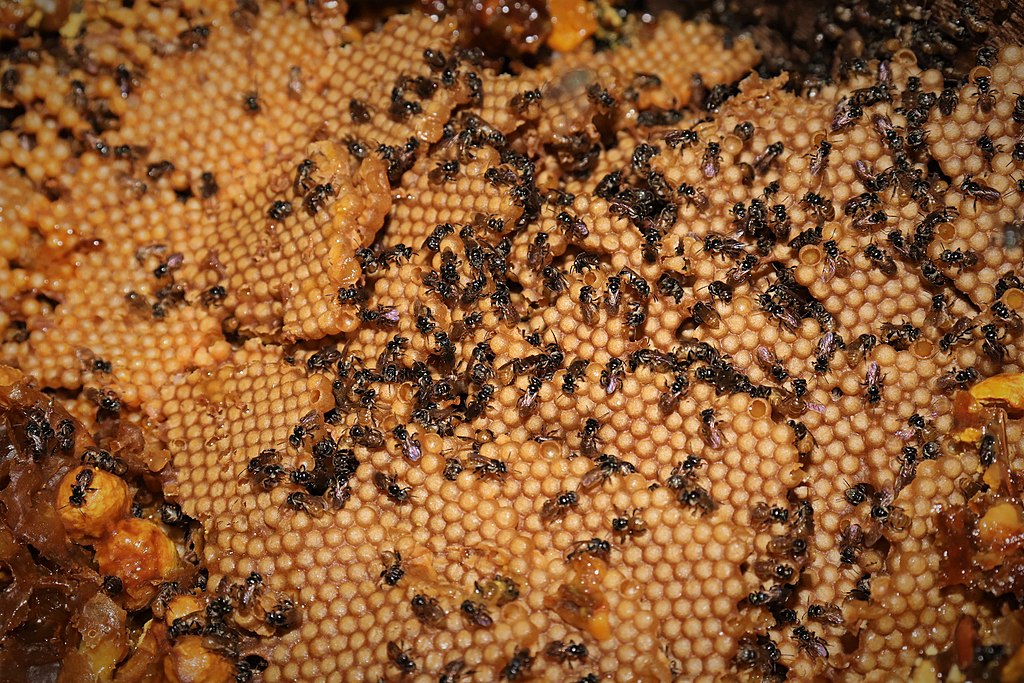
Key Takeaways
- Stingless bees (Meliponini) play a crucial role in pollination and honey production in Bicol.
- Environmental conditions and hive management practices significantly affect bee productivity.
- Meliponiculture in Bicol contributes to local economies and biodiversity conservation.
Introduction
Stingless bees, belonging to the tribe Meliponini within the family Apidae, are a diverse group of eusocial insects characterized by their inability to sting, a feature that distinguishes them from other bee species such as the common honey bee (Apis spp.). Internationally, stingless bees are recognized for their vital roles in pollination, contributing significantly to the maintenance of tropical ecosystems and the production of honey and other valuable hive products. The genus Tetragonula, particularly Tetragonula biroi, is the most prevalent species of stingless bees in the Philippines, locally referred to as "kiwot" or "lukot" bees.
In the Philippines, stingless bees hold cultural, economic, and ecological significance. Locally, they are integral to traditional apicultural practices, providing honey that is esteemed for its medicinal properties and nutritional value. The practice of meliponiculture—stingless beekeeping—has been embraced in various regions, notably in the Bicol Region, where it serves as a sustainable agricultural enterprise that enhances rural development and biodiversity conservation.
Internationally, stingless bees are found in tropical and subtropical regions across Central and South America, Africa, Australia, and Southeast Asia, with approximately 605 extant species distributed across 45 genera. These bees are celebrated not only for their ecological contributions but also for their unique honey, which differs in composition and flavor from that of the more widely known honey bees.
The Significance of Stingless Bees
Stingless bees are pivotal in maintaining the health of various ecosystems through their pollination activities. They facilitate the reproduction of numerous plant species, thereby supporting biodiversity and agricultural productivity. In regions like Bicol, stingless bees contribute to the pollination of high-value crops such as mangoes, coconuts, and pili nuts, which are essential for both local consumption and economic purposes.
Economically, the honey produced by stingless bees is a valuable commodity. Unlike honey from Apis species, stingless bee honey possesses unique medicinal properties and a distinct flavor profile, making it a sought-after product in local and niche markets. The cultivation and management of stingless bee colonies, therefore, present opportunities for income generation and economic diversification for rural communities.
Local and International Perspectives
From a local perspective, particularly in the Philippines, stingless bees are deeply embedded in indigenous knowledge systems. Traditional practices emphasize the sustainable management and conservation of these pollinators, recognizing their roles in environmental stewardship and community well-being. The integration of traditional knowledge with scientific research fosters a holistic approach to meliponiculture, enhancing both productivity and sustainability.
On an international scale, research on stingless bees has focused on their taxonomy, biology, and the optimization of meliponiculture practices to maximize productivity and honey yield. Comparative studies highlight the adaptability of stingless bees to various ecological niches, underscoring their potential in supporting global agricultural systems and biodiversity conservation efforts.
Objectives of the Study
This research aims to evaluate the productivity levels of stingless bees in the Bicol Region, assessing both honey production and pollination services. Specific objectives include:
- To assess the current productivity rates of stingless bee colonies in various barangays within Bicol.
- To identify and analyze the environmental factors influencing bee productivity, including nectar and pollen availability, climate conditions, and habitat diversity.
- To evaluate hive management practices and their impact on colony health and honey yield.
- To explore the economic and ecological contributions of meliponiculture to local communities and biodiversity conservation.
Research Questions
- What are the current productivity levels of stingless bee colonies in the Bicol Region?
- Which environmental factors most significantly influence the productivity of these bees?
- How do different hive management practices affect the health and productivity of stingless bee colonies?
- What is the economic impact of meliponiculture on local communities in Bicol?
- How does stingless beekeeping contribute to biodiversity conservation in the region?
Significance of the Study
The findings of this study are anticipated to provide valuable insights into the productivity dynamics of stingless bees in the Bicol Region. By understanding the factors that enhance or impede bee productivity, stakeholders can implement effective strategies to optimize meliponiculture practices. This, in turn, can lead to increased honey production, improved pollination services, and greater economic benefits for local communities.
Moreover, the research will contribute to the broader discourse on sustainable agricultural practices and pollinator conservation. Recognizing the indispensable roles of stingless bees in both ecological and economic contexts underscores the need for integrated approaches to their management and conservation.
Methodology
The study will employ a mixed-methods approach, combining quantitative data on honey yield and pollination rates with qualitative assessments of hive management practices and community perceptions. Data will be collected from multiple barangays across six provinces in the Bicol Region, ensuring a comprehensive analysis of regional variations in productivity.
Data Collection
-
Quantitative Data: Measurements of honey volume, number of active colonies, and pollination rates will be recorded. Environmental parameters such as temperature, humidity, and floral diversity will also be monitored.
-
Qualitative Data: Interviews and surveys with local beekeepers will provide insights into hive management practices, challenges faced, and perceived benefits of meliponiculture.
Data Analysis
Quantitative data will be analyzed using statistical methods to identify correlations between environmental factors and bee productivity. Qualitative data will be thematically analyzed to understand the socio-economic dimensions of meliponiculture and its impact on community livelihoods.
Factors Influencing Productivity
| Factor | Impact on Productivity | Mitigation/Enhancement Strategies |
|---|---|---|
| Environmental Conditions | Optimal temperature and humidity levels enhance bee activity and honey production. | Implement shade structures and moisture control measures within hives. |
| Floral Diversity | Availability of diverse nectar and pollen sources supports colony health and productivity. | Promote the cultivation of a variety of flowering plants around beekeeping sites. |
| Hive Management Practices | Proper hive maintenance and disease control are critical for colony longevity and output. | Provide training and resources for beekeepers on best management practices. |
| Human Disturbance | Minimal disturbance reduces stress on colonies, leading to higher productivity. | Educate communities on the importance of preserving natural habitats around hives. |
| Climate Change | Altered climate patterns can affect flowering seasons and bee behavior. | Develop adaptive beekeeping practices to mitigate the effects of climate variability. |
Expected Outcomes
This study anticipates revealing significant insights into the productivity levels of stingless bees in the Bicol Region. It is expected that optimal environmental conditions and effective hive management practices will correlate with higher honey yields and better colony health. Additionally, the research is likely to highlight the socio-economic benefits of meliponiculture, including enhanced income opportunities and sustainable agricultural practices that support biodiversity conservation.
Furthermore, the study aims to identify key challenges faced by local beekeepers, such as environmental threats and market limitations, and propose actionable strategies to address these issues. By fostering a deeper understanding of the factors that influence stingless bee productivity, the research seeks to contribute to the development of robust meliponiculture frameworks that can be replicated in other regions.
Conclusion
Stingless bees are indispensable to the ecological and economic fabric of the Bicol Region. This research underscores the importance of these pollinators in maintaining agricultural productivity and supporting local livelihoods through meliponiculture. By systematically evaluating the productivity levels of stingless bees and the factors influencing them, the study aims to provide comprehensive insights that can inform policy-making, optimize beekeeping practices, and promote sustainable development.
Ultimately, the productivity of stingless bees in Bicol is not merely a measure of honey production but a testament to the intricate balance between human activities and natural ecosystems. Ensuring the health and sustainability of stingless bee populations is therefore paramount for fostering resilient agricultural systems and preserving biodiversity for future generations.
References
Last updated February 13, 2025