
Mastering the Art of the Apology Email: A Guide to Rebuilding Trust
Crafting sincere and effective apologies to mend professional relationships and showcase accountability.
In the professional world, mistakes are inevitable. How we address them, however, can significantly impact relationships and reputations. A thoughtfully crafted apology email is a powerful tool for acknowledging errors, expressing genuine regret, and outlining a path forward. This guide will walk you through the essential components and considerations for writing an apology email that not only resolves issues but also reinforces trust and professionalism.
Essential Insights: Key Takeaways
- Sincerity is Paramount: A genuine expression of regret is the cornerstone of an effective apology. Avoid making excuses and focus on empathy.
- Clarity and Accountability: Clearly acknowledge the specific mistake and take full responsibility without deflecting blame.
- Action-Oriented Resolution: Outline the concrete steps you are taking to rectify the error and prevent its recurrence, demonstrating commitment to improvement.
Why a Professional Apology Email Matters
A professional apology email serves several critical functions. Firstly, it acknowledges that an error occurred, validating the recipient's potential frustration or inconvenience. Secondly, it demonstrates accountability, showing that you or your organization takes responsibility for its actions. Most importantly, a sincere and well-structured apology can help repair damaged trust, retain customers or clients, and maintain positive working relationships. In today's fast-paced digital environment, an email provides a documented record of your acknowledgment and commitment to resolution, which can be invaluable.
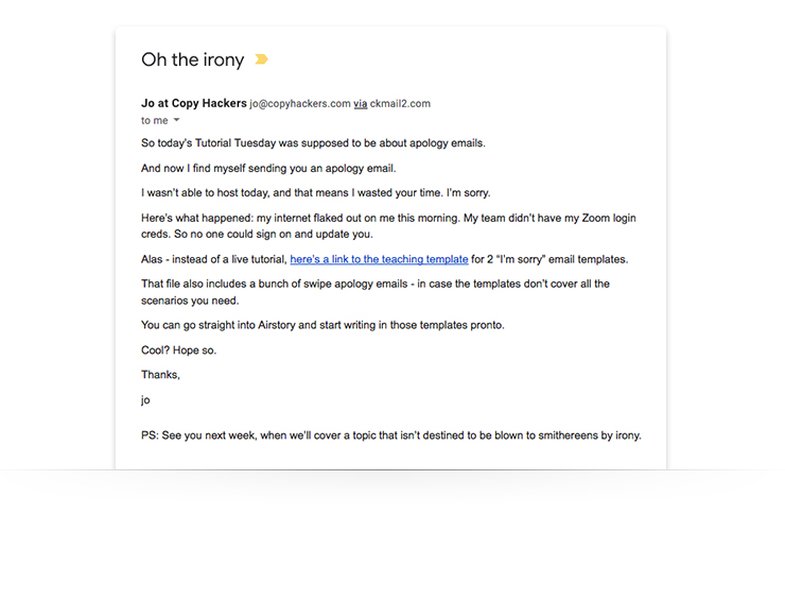
Crafting an apology email requires careful consideration of tone and content.
Core Components of an Effective Apology Email
To ensure your apology is well-received and achieves its purpose, it should incorporate several key elements. Each component plays a role in conveying sincerity, clarity, and a commitment to resolution.
1. Clear and Direct Subject Line
Setting the Right Tone from the Start
The subject line is the first thing the recipient sees. It should be unambiguous and immediately convey the email's purpose. Vague subject lines can be overlooked or misinterpreted. Phrases like "Apology Regarding [Specific Issue]," "Our Sincere Apologies for the Inconvenience," or "Regarding Our Recent Error – [Brief Description]" are effective. Including a reference number or specific detail, if applicable, can also be helpful.
2. Polite and Professional Greeting
Personalization Matters
Address the recipient personally and professionally. Use their name if known (e.g., "Dear Mr. Smith," or "Dear Sarah," depending on your existing relationship). A generic greeting can make the apology feel impersonal. If addressing a group, a collective but respectful greeting like "Dear Valued Customers," can be used.
3. Acknowledgment of the Specific Mistake
Clarity and Understanding
Clearly and concisely state the mistake for which you are apologizing. Vague apologies are ineffective. Specify what went wrong, demonstrating that you understand the issue. For example, instead of "We apologize for any trouble," say, "We apologize for the error in your recent invoice (Invoice #12345) where you were incorrectly charged for [item]."
4. Taking Full Responsibility
Ownership without Excuses
Own the mistake without attempting to shift blame or make excuses. Phrases like "We take full responsibility for this oversight" or "This was our error, and we understand its impact" are crucial. Even if external factors contributed, focus on your role and what you could have controlled.
5. Expressing Sincere Regret and Empathy
Connecting on a Human Level
This is the heart of the apology. Convey genuine remorse for the inconvenience, frustration, or negative impact the mistake caused. Show empathy by acknowledging the recipient's perspective. For example: "We understand this has caused significant inconvenience, and we are truly sorry for the disruption to your workflow."
6. Outlining Corrective Actions and Solutions
Moving Towards Resolution
Detail the specific steps you have taken, or are taking, to rectify the situation. This demonstrates a commitment to making things right. If applicable, explain what measures are being implemented to prevent the mistake from happening again. This could include a refund, a discount, expedited service, or revised procedures.
7. Offering Further Assistance or Dialogue
Keeping Communication Channels Open
Invite the recipient to contact you if they have further questions or concerns. This shows you are open to continued communication and dedicated to their satisfaction. For example: "Please don't hesitate to contact me directly at [Phone Number] or reply to this email if you have any further questions."
8. Professional Closing
Ending on a Respectful Note
End the email with a professional closing, such as "Sincerely," "Best regards," or "Respectfully," followed by your name, title, and company. Reiterate thanks for their understanding if appropriate.
Visualizing the Key Elements of an Apology Email
The following mindmap illustrates the interconnected components essential for a successful professional apology email. Each branch represents a critical aspect that contributes to the overall effectiveness of your message, from the initial subject line to the final closing remarks and follow-up actions.
Crafting Your Message: Key Considerations
Beyond the structural components, several other factors influence the effectiveness of your apology email.
Tone and Language
Maintain a humble, respectful, and professional tone throughout the email. Avoid overly casual language or, conversely, language that sounds overly legalistic or insincere. The language should reflect your genuine regret and commitment to resolving the issue.
Conciseness
While it's important to be thorough, keep the email as concise as possible. Recipients are often busy. Get straight to the point, provide the necessary information, and avoid lengthy, rambling explanations that can dilute the apology's impact.
Timeliness
Send the apology as soon as possible after the mistake is discovered or occurs. A prompt apology demonstrates that you are attentive and proactive in addressing issues. Delaying can exacerbate frustration and make the apology seem less sincere.
Proofreading
Before sending, meticulously proofread the email for any grammatical errors, typos, or awkward phrasing. An apology email with errors can undermine its sincerity and professionalism. Consider having a colleague review it if the situation is particularly sensitive.
Relative Importance of Apology Email Components
When crafting an apology email, various elements contribute to its overall effectiveness. The radar chart below provides an opinionated analysis of the relative importance of these components. While all are crucial, some may carry more weight depending on the context and the recipient. For instance, perceived sincerity and a clear offer of a solution often have a significant impact on how the apology is received. Clarity in acknowledging the mistake and the timeliness of the response are also highly valued.
This chart visualizes how different facets of an apology contribute to its success, emphasizing that a holistic approach considering all these points is generally most effective. Sincerity and a clear, actionable solution are often perceived as most critical by the recipient.
Step-by-Step Guide to Writing Your Apology Email
- Identify the Need: Recognize when an apology is necessary.
- Gather Facts: Understand exactly what happened and its impact.
- Choose a Clear Subject Line: Make it direct and informative. (e.g., "Apology for [Mistake/Occurrence]")
- Write a Polite Greeting: Personalize it if possible. (e.g., "Dear [Recipient's Name],")
- Acknowledge the Mistake Specifically: Clearly state what went wrong.
- Take Full Responsibility: Avoid excuses or blaming others.
- Express Sincere Regret and Empathy: Show you understand the impact.
- Briefly Explain (Optional): If context helps, provide a concise explanation focused on learning, not justification.
- Outline Corrective Actions: Detail what you're doing to fix it and prevent recurrence.
- Offer Further Discussion/Assistance: Show willingness to engage.
- Maintain Professional Tone: Keep language respectful.
- Keep it Concise: Be direct and to the point.
- Proofread Carefully: Check for errors before sending.
- Send Promptly: Address the issue as soon as possible.
- Use a Professional Closing: (e.g., "Sincerely," "Best regards,")
Common Scenarios & Appropriate Phrasing
Different situations call for nuanced apology emails. The table below outlines common scenarios requiring an apology, along with suggested phrases to use and phrases to avoid to ensure your message is effective and well-received.
| Scenario | Key Focus | Phrases to Use | Phrases to Avoid |
|---|---|---|---|
| Billing Error | Correction, reassurance | "We sincerely apologize for the error on your recent invoice regarding [specific detail]. We have corrected this and [explain fix, e.g., issued a refund]." | "Our system sometimes makes mistakes." "You should have checked your invoice sooner." |
| Service Downtime/Website Issue | Impact acknowledgment, update on resolution | "We apologize for the recent service disruption affecting [service] and understand the frustration this caused. We are working to restore service and [provide ETA/update]." | "These things happen." "It wasn't entirely our fault." |
| Unsatisfactory Product/Service | Empathy, offer of resolution (refund, exchange, discount) | "We are very sorry to hear that [product/service] did not meet your expectations. We value your feedback and would like to offer [solution]." | "Most customers are happy." "Perhaps you used it incorrectly." |
| Missed Deadline (Internal/External) | Accountability, revised timeline, prevention plan | "I sincerely apologize for missing the deadline for [task]. I take full responsibility and have [explain action taken and new ETA]. I am implementing [preventative measure]." | "I was too busy with other things." "It wasn't that important anyway." |
| Sending Incorrect Information | Correction, minimizing damage | "Please accept our apologies for the incorrect information sent on [date] regarding [topic]. The correct information is [provide correct info]. We regret any confusion this may have caused." | "You should have realized it was wrong." "It's not a big deal." |
| Negative Customer Support Experience | Validation of experience, commitment to improvement | "We are truly sorry that your recent interaction with our support team was unsatisfactory. This is not the standard we aim for, and we are reviewing this internally to [explain action]." | "Our support agent was just following policy." "You misunderstood." |
Versatile Apology Email Template
Here is a comprehensive and adaptable template that you can modify for various situations. Remember to fill in the bracketed placeholders with your specific details.
Subject: Apology Regarding [Specific Issue/Occurrence] - [Optional: Reference Number/Your Company Name]
Dear [Recipient's Name],
Please accept my/our sincere apologies for [clearly and briefly describe the mistake or issue, e.g., "the error in processing your recent order," "the delay in responding to your inquiry," "the inconvenience caused by our system outage on [Date]"].
I/We understand that this has likely caused [mention specific impact, e.g., "frustration," "inconvenience," "disruption to your work/plans"], and for that, I am/we are truly sorry. This is not the standard of service/conduct we aim to provide, and I/we take full responsibility for this oversight.
[Optional: Briefly explain the cause if it provides necessary context and doesn't sound like an excuse. E.g., "This occurred due to an unexpected technical issue with our [System Name] which has now been identified." Keep it concise and focused on transparency, not justification.]
To rectify this situation, we have already [describe specific corrective actions taken, e.g., "processed a full refund for the incorrect charge," "expedited the shipment of your correct order," "corrected the information and resent the document"].
Furthermore, to prevent such an issue from happening again, we are [describe preventative measures, e.g., "reviewing our internal processes," "implementing additional quality checks," "providing further training to our team"].
[Optional: Offer compensation or a goodwill gesture if appropriate for the situation. E.g., "As a token of our apology for the inconvenience, we would like to offer you a [discount/credit] on your next purchase/service."]
Your [trust/satisfaction/business] is very important to us, and we are committed to regaining your confidence. Please do not hesitate to contact me/us directly at [Your Phone Number] or by replying to this email if you have any further questions, concerns, or if there is anything else I/we can do to assist you.
Thank you for your understanding and patience in this matter.
Sincerely/Best regards,
[Your Full Name]
[Your Position/Title]
[Your Company Name]
[Your Contact Information (Email/Phone)]
Guidance on Crafting Effective Apology Emails
The following video provides practical tips and examples to help you write an apology email that reflects responsibility and sincerity, crucial elements for mending professional relationships. It delves into structuring the email, choosing the right words, and ensuring your apology is well-received.
This video discusses how to apologize effectively for mistakes at work via email. It covers common scenarios and provides actionable advice on conveying sincerity and professionalism, ensuring your message helps to repair trust rather than cause further issues. Understanding these nuances can turn a negative situation into an opportunity to strengthen professional bonds.
Frequently Asked Questions (FAQ)
Recommended Further Exploration
- How does the tone of an apology email affect its reception by different audiences?
- What are the psychological impacts of receiving a well-crafted apology versus a poor one?
- Explore examples of successful public apology emails from major companies and their outcomes.
- When should an apology be delivered in person or via phone call instead of email?
References
Last updated May 20, 2025