
Exploring the Comparative Properties of Metals and Nonmetals
A comprehensive analysis of their physical characteristics and chemical behaviors
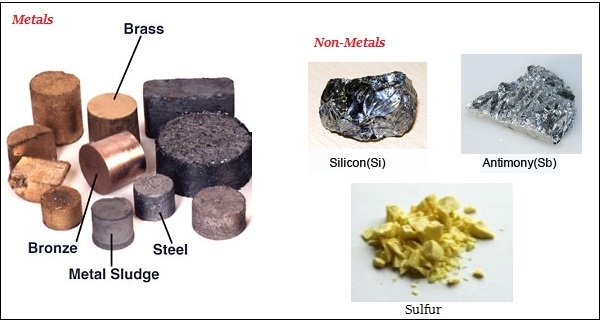
Key Highlights
- Distinct Physical Appearances: Metals exhibit shine and high malleability, while nonmetals are typically dull and brittle.
- Contrasting Conductivity: Metals excel as conductors of heat and electricity compared to the generally poor conductivity of nonmetals.
- Varied Chemical Reactions: Metals tend to lose electrons forming basic oxides whereas nonmetals gain electrons, generating acidic oxides.
Introduction
Metals and nonmetals represent two distinct categories of elements found in the periodic table. Their contrasting physical and chemical properties not only distinguish them in terms of appearance and behavior but also determine their practical applications in daily life, industries, and advanced scientific research. This comprehensive analysis utilizes comparative charts, detailed descriptions, and multiple sources to provide an in-depth understanding of these two groups of elements.
Comparative Chart: Physical Properties
The physical properties of metals and nonmetals are significant in understanding why they are used in different applications. Below is a detailed table that highlights the key physical attributes of both groups.
| Physical Property | Metals | Nonmetals |
|---|---|---|
| Appearance & Luster | Shiny and lustrous; most metals reflect light creating a bright appearance. Their metallic sheen is one of their defining features. | Generally dull and non-lustrous; most nonmetals do not possess the reflective quality of metals. Some may appear black (e.g., graphite) or brightly colored in certain allotropes. |
| State at Room Temperature | Predominantly solid at room temperature (with mercury as the notable liquid exception, and gallium melting just above room temperature). | Can exist as solids (e.g., carbon, sulfur), liquids (e.g., bromine), or gases (e.g., oxygen, nitrogen). This wide range of physical states reflects the diversity among nonmetals. |
| Malleability & Ductility | Highly malleable and ductile, enabling metals to be hammered into thin sheets or drawn into wires, facilitating extensive industrial use. | Individuals nonmetals are generally brittle; they lack flexibility and tend to fracture when subject to stress. Notable exceptions include graphite, known for its unique conductive properties. |
| Conductivity | Excellent conductors of heat and electricity due to the free flow of electrons in their crystalline structures. | Poor conductors of heat and electricity; with the exception of specific forms like graphite, most nonmetals act as insulators. |
| Density | Generally high density, which is a result of tightly packed atomic structures. Exceptions such as lithium demonstrate lower densities but the general trend for metals is toward high density. | Typically, nonmetals exhibit lower densities; however, density may vary widely depending on the form or allotrope. For instance, diamond is very dense compared to gaseous nonmetals. |
| Melting and Boiling Points | Metals usually have high melting and boiling points, contributing to their stability under high temperature. Their robust bonding requires significant energy to break. | Nonmetals tend to have lower melting and boiling points, which can be attributed to the weaker intermolecular forces. However, some nonmetals in specific forms (like diamond) have extremely high melting points. |
Comparative Chart: Chemical Properties
Chemical properties dictate how metals and nonmetals interact with other substances, influencing their roles in chemical reactions and technological innovations. The following table contrasts their chemical behaviors:
| Chemical Property | Metals | Nonmetals |
|---|---|---|
| Electron Behavior | Metals are characterized by a tendency to lose electrons during chemical reactions. This loss of electrons forms positively charged ions (cations), which is central to metallic bonding and conductivity. | Nonmetals tend to gain electrons to fill their outer electron shells. This behavior leads to the formation of negatively charged ions (anions), making them strong oxidizing agents. |
| Oxide Formation | When metals react with oxygen, they typically form basic oxides. For instance, sodium oxide (Na₂O) and calcium oxide (CaO) are common examples. | Nonmetals form acidic or neutral oxides upon reacting with oxygen. The formation of carbon dioxide (CO₂) and sulfur trioxide (SO₃) are classical illustrations of this behavior. |
| Reactivity with Water | Many metals react with water to produce metal hydroxides and release hydrogen gas. The reactivity can vary significantly from reactive metals such as sodium to relatively inert metals like copper. | Nonmetals generally do not engage in reactions with water under standard conditions, though there are exceptions. Their reactions, if any, proceed through different mechanisms. |
| Electronegativity and Ion Formation | Metals possess low electronegativity, which predisposes them to donate electrons rather than attract additional electrons. This property leads them to form cations readily. | Nonmetals exhibit higher electronegativity relative to metals, enabling them to attract electrons more effectively and form anions in chemical reactions. |
| Type of Bonding | The free-electron model of metals facilitates metallic bonding. This electron "sea" is responsible for many of their physical properties including conductivity and malleability. | Nonmetals typically participate in covalent bonding, where electrons are shared between atoms. This type of bonding contributes to their distinct molecular structures and variable properties. |
Detailed Explanations of Key Comparisons
Physical Attributes
Appearance and Luster
Metals are known for their shiny, reflective surfaces, known scientifically as metallic luster. This property originates from the ability of metal atoms to maintain free electrons that reflect light effectively. In contrast, nonmetals typically lack this electronic structure, leading to a matte, often non-reflective appearance. However, certain nonmetals like iodine may exhibit a slight sheen in specific conditions, but the overall trend remains that metallic elements are preferred where a lustrous appearance is desired for both aesthetic and functional metallic coatings.
State and Structural Variations
At room temperature, nearly all metals are found in the solid state except for a few exceptions such as mercury. The robustness of the metallic crystal lattice accounts for their rigidity and high melting points. Conversely, nonmetals present a fascinating diversity: nitrogen and oxygen exist in gaseous forms, bromine is one of the few liquid nonmetals, and several like carbon (in the form of graphite or diamond) exist as solids. This variety in physical state lends nonmetals to unique applications, from breathable atmospheric gases to the hard surfaces of minerals.
Mechanical Properties: Malleability and Ductility
Metals' Adaptability
Metals embody flexibility in physical form. Their ability to be stretched or hammered into various shapes without breaking is crucial in manufacturing industries. The characteristic malleability and ductility arise from the delocalized electrons in the metallic bond, allowing layers of metal atoms to slide over one another without fracturing. This property not only facilitates the production of wires and thin sheets but also enhances the design flexibility in constructing various machinery and structures.
Fragility of Nonmetals
In contrast, nonmetals tend to be brittle. Their covalent bonds, which are strongly directional, limit atomic movement when stress is applied. This directional nature means that a force applied in one direction can easily disrupt the bonding, leading nonmetals to fracture rather than deform. The brittleness is particularly evident in solid nonmetals like sulfur or phosphorus, although some allotropes of carbon may behave differently based on their crystal structure.
Conductivity and Thermal Properties
Electron Mobility in Metals
One of the most celebrated properties of metals is their ability to conduct heat and electricity with remarkable efficiency. The phenomenon is credited to the "sea of electrons" that can move freely throughout the metal lattice. This mobility is not just critical in everyday electrical wiring but also in advanced technological applications such as heat sinks and electromagnetic devices. The underlying physics is often explained using theories of electron delocalization and band structure, making metals indispensable in both high-tech and everyday applications.
Insulating Nature of Nonmetals
Nonmetals, lacking an abundance of free-moving charged particles, often serve as insulators. Their electron configurations restrict the flow of electrons, thereby limiting thermal and electrical conductivity. Despite this general trend, variations exist within nonmetals; for example, graphite deviates by offering good conductivity due to its layered structure, demonstrating that even within a classification, property variability can offer exceptions that lead to innovative applications in electronics and materials science.
Chemical Behaviors and Reactivity
Electron Exchange and Ion Formation in Metals
Metals typically engage in chemical reactions through the loss of electrons, enabling the formation of positive ions. This behavior is essential in scenarios such as redox reactions where metals act as reducing agents. Their reactivity with oxygen in the air, leading to the formation of basic oxides, exemplifies their tendency to donate electrons. In many cases, this property is exploited in industrial scenarios such as the production of alloys or rust prevention technologies.
Electron Affinity in Nonmetals
Nonmetals, on the other hand, frequently attract electrons during chemical interactions. This gain of electrons results in the formation of anions which are pivotal in creating ionic compounds, especially salts. Their inherent electronegativity drives the formation of acidic oxides when combined with oxygen. This pronounced electron affinity makes them suitable for use in chemical compounds that require a stable electron configuration, a concept that is central to modern chemical synthesis and material engineering.
Extended Comparative Insights
Beyond the summarized tables and brief descriptions provided above, understanding the behavior of metals and nonmetals extends into various branches of science and engineering. In materials science, for example, the ductility of metals allows for the manufacturing of complex components in automotive and aerospace applications, while the insulating properties of many nonmetals make them excellent candidates for electronic packaging and thermal resistance. The predictive power of the periodic table also helps scientists anticipate the reactivity and interaction of these elements in novel compounds.
Consider the unique case of elements like carbon: while carbon is a nonmetal, its allotropes such as diamond, graphite, and graphene display radically different properties due to differences in atomic arrangement. Diamond exhibits extreme hardness and high thermal conductivity, whereas graphite shows good electrical conductivity due to its layered structure. Such nuances underpin the importance of context when comparing physical and chemical properties, illustrating that categorization can sometimes merge with the concept of molecular diversity.
Additionally, the heat capacity, thermal expansion, and elasticity of metals are important in structural engineering. For instance, the high melting points and structural integrity of metals ensure stability in construction materials, whereas the variability in nonmetal chemical properties finds applications in fields such as pharmaceuticals and agricultural chemicals. Researchers continue to explore these differences to engineer novel materials with enhanced properties for specific applications.
Summary Table of Comparative Concepts
| Category | Metals | Nonmetals |
|---|---|---|
| State at Room Temperature | Mostly solid (with mercury as a liquid exception) | Can be solid, liquid, or gas (e.g., oxygen gas, bromine liquid) |
| Appearance | Shiny and lustrous | Dull and non-lustrous |
| Malleability & Ductility | High, making them adaptable for various shapes | Brittle, primarily fracturing under stress |
| Conductivity | Excellent thermal and electrical conductors | Poor conductors, except in special structures like graphite |
| Density | Tends to be high | Typically lower, with significant variability |
| Melting Point | Generally high | Generally low, though some forms like diamond peak high |
| Chemical Behavior | Loses electrons to form cations, acts as reducing agents | Gains electrons to form anions, acts as oxidizing agents |
| Oxide Types | Forms basic oxides | Generates acidic or neutral oxides |
References
- Properties of Metals and Nonmetals - Vedantu
- Chemistry Revision: Metals vs Nonmetals - BBC Bitesize
- Difference Between Metals and Non-metals - Key Differences
- Metals Versus Nonmetals - ThoughtCo
- Physical Properties of Metals and Nonmetals - Toppr
Recommended Related Queries
Last updated March 25, 2025