
Unlocking the Timeline: How Long Does Tissue Healing Take After Prostate IMRT?
Discover the typical recovery phases and long-term tissue response following advanced radiation therapy for prostate cancer.
Highlights: Your Quick Guide to Post-IMRT Healing
- Acute Side Effects Improve Quickly: Most immediate effects like urinary and bowel irritation often start resolving within 3-6 weeks after treatment ends.
- Significant Recovery Takes Months: The majority of tissue healing and symptom normalization typically occurs within 3 to 6 months post-IMRT.
- Long-Term Changes Possible: While many recover well, some tissue changes like fibrosis (scarring) can develop or stabilize over 1 to 2 years or more, requiring ongoing monitoring.
Understanding IMRT and Tissue Response
Intensity-Modulated Radiation Therapy (IMRT) represents a significant advancement in treating prostate cancer. It uses sophisticated computer-controlled linear accelerators to deliver precise radiation doses conforming to the shape of the tumor, while minimizing exposure to surrounding healthy tissues like the bladder and rectum. Despite this precision, the high-energy radiation inevitably affects nearby cells and tissues, triggering a healing response once treatment concludes.
The healing process isn't instantaneous. It involves the body repairing radiation-induced inflammation and cellular damage. This timeline varies considerably among individuals, influenced by the total radiation dose received, the specific tissues involved, the patient's overall health, and other factors. Understanding the typical phases of healing can help set realistic expectations for recovery.
The Healing Journey: Acute vs. Late Effects
Phase 1: Acute Tissue Reactions (During and Immediately After IMRT)
During the course of IMRT, typically delivered five days a week for several weeks (ranging from 4 to 9 weeks depending on the protocol), the tissues within the radiation field react to the treatment. This leads to acute side effects, which are generally temporary inflammatory responses.
Common Acute Effects Include:
- Urinary Symptoms: Increased frequency, urgency, or a burning sensation during urination (urethritis). This is very common and reflects irritation of the bladder and urethra lining.
- Bowel Changes: Rectal irritation leading to more frequent bowel movements, diarrhea, urgency, or mild discomfort.
- Fatigue: A general feeling of tiredness that often peaks towards the end of the treatment course.
These acute effects usually peak near the end of the radiation schedule or in the first few weeks immediately following its completion. The body's initial healing mechanisms kick in quickly, starting the process of resolving this inflammation. For many, noticeable improvement begins within days or weeks after the final IMRT session.
For instance, the uncomfortable burning sensation during urination often subsides gradually, potentially lasting up to two months post-treatment before fully resolving in most cases.
Phase 2: The Path to Long-Term Recovery (Months to Years)
While acute inflammation settles relatively quickly, the deeper process of tissue repair and remodeling takes longer. This phase involves restoring tissue structure and function more completely.
Key Aspects of Long-Term Healing:
- Significant Symptom Resolution (3-6 Months): This timeframe is crucial for recovery. Most patients find that their acute urinary and bowel symptoms largely normalize during this period. Tissues regain much of their pre-treatment function as inflammation resolves and cellular repair progresses.
- Tissue Remodeling and Late Effects (6 Months - 2+ Years): Radiation can cause subtle, long-term changes in tissues. This can include fibrosis, which is the development of scar tissue, making tissues less flexible. It can also affect blood vessels (reduced vascularity) and nerves. These changes develop slowly and may stabilize over one to two years, or sometimes continue subtly beyond that.
- Potential for Late Complications: While IMRT aims to minimize these, late effects can still occur months or years after treatment. Examples include persistent urinary or bowel dysfunction, erectile dysfunction (due to nerve effects), urethral strictures (narrowing of the urethra due to scarring), or radiation proctitis (chronic rectal inflammation). Fibrosis, for example, is often formally assessed around 24 months post-IMRT in clinical studies.
- Impaired Wound Healing: An important long-term consideration is that irradiated tissues may not heal as efficiently if subsequent surgery or injury occurs in the treated area. This is due to changes in blood supply and cellular activity.
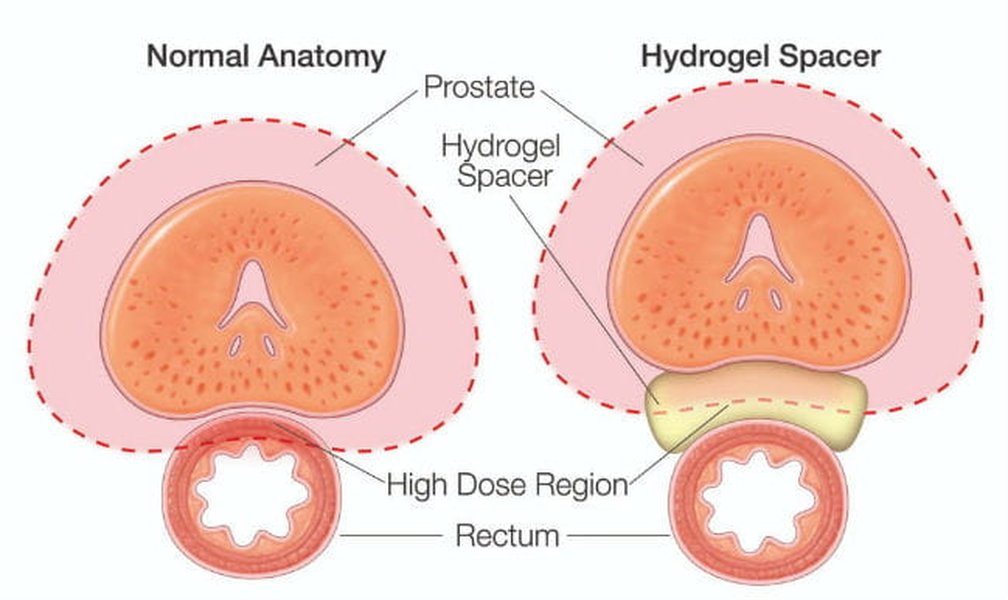
Techniques like hydrogel spacers (shown above) help create space between the prostate and rectum, reducing radiation dose to the rectum and potentially minimizing long-term bowel side effects.
Detailed Healing Timeline Post-Prostate IMRT
Here's a more detailed breakdown of what to expect during the healing process:
Weeks 1-6 Post-Treatment: The Initial Resolution Phase
This period is characterized by the gradual decline of acute side effects. The inflammation caused by radiation starts to subside significantly. You might notice:
- Less frequent urination and reduced urgency.
- Decreasing burning sensation during urination (though it might take up to 2 months to vanish completely).
- Bowel movements becoming more regular and less urgent.
- Fatigue levels beginning to improve.
While improvement starts here, some symptoms may linger as tissues continue their initial repair.
Months 1-6: Significant Recovery and Adaptation
This is the timeframe where most men experience the most substantial recovery. By the end of six months:
- The majority of acute urinary and bowel side effects should be resolved or significantly improved for most patients.
- Tissue function in the bladder and rectum often returns close to baseline.
- Energy levels typically return to normal.
This period reflects the body's effective short-to-medium term repair mechanisms completing their work on the initial radiation-induced damage.
6 Months to 2+ Years: Tissue Remodeling and Late Effects Monitoring
Healing continues on a microscopic level even after acute symptoms resolve. This longer phase involves:
- Fibrosis Development/Stabilization: Scar tissue formation (fibrosis) can occur during this time. It might affect tissue flexibility in the bladder, rectum, or surrounding structures. The extent of fibrosis often stabilizes within 1-2 years.
- Vascular and Nerve Recovery/Changes: Blood vessels and nerves affected by radiation may slowly recover or undergo permanent changes. This can influence long-term functions like erections.
- Monitoring for Late Complications: Regular follow-up appointments are crucial during this period and beyond to detect and manage any late-emerging issues like strictures or chronic proctitis.
While many men have minimal long-term issues after IMRT, understanding this extended timeline is important for ongoing health management.
Tissue Healing Timelines at a Glance
The following table summarizes the general healing timelines for different symptoms and tissues affected by prostate IMRT. Keep in mind these are typical ranges, and individual experiences can vary.
| Tissue / Symptom | Initial Improvement Starts | Significant Resolution / Normalization | Potential Long-Term Effects / Stabilization |
|---|---|---|---|
| Urinary Frequency/Urgency | Within 1-4 weeks post-treatment | Typically within 2-6 months | Persistent symptoms possible but less common; late strictures rare |
| Urethritis (Burning Urination) | Within weeks post-treatment | Often resolves within 2 months | Usually fully resolves |
| Bowel Irritation (Diarrhea, Urgency) | Within 1-4 weeks post-treatment | Typically within 2-6 months | Chronic proctitis possible but less common with IMRT |
| Fatigue | Within 1-4 weeks post-treatment | Often within 1-3 months | Usually fully resolves |
| Soft Tissue Fibrosis | N/A (Develops later) | N/A (Develops later) | Develops/stabilizes over 6 months - 2+ years |
| Sexual Function (Erections) | Variable (Can decline gradually) | Variable (Recovery possible but may be incomplete) | Effects can emerge months to years later due to nerve/vascular changes |
Visualizing the Healing Phases
This mindmap illustrates the progression of tissue healing after prostate IMRT, from the immediate aftermath through long-term adaptation.
(Weeks 0-6 Post-Treatment)"] id1a["Inflammation Peaks"] id1b["Urinary & Bowel Irritation"] id1c["Fatigue"] id1d["Initial Symptom Improvement Begins"] id2["Phase 2: Significant Recovery
(Months 1-6 Post-Treatment)"] id2a["Resolution of Most Acute Symptoms"] id2b["Return Towards Baseline Function (Bladder/Bowel)"] id2c["Energy Levels Normalize"] id2d["Cellular Repair Ongoing"] id3["Phase 3: Long-Term Remodeling
& Monitoring (Months 6 - Years 2+)"] id3a["Fibrosis Development/Stabilization"] id3b["Vascular Changes"] id3c["Nerve Effects (e.g., ED)"] id3d["Potential Late Complications (Strictures, Proctitis)"] id3e["Ongoing Follow-Up Essential"] id4["Influencing Factors"] id4a["Radiation Dose"] id4b["Patient Health/Age"] id4c["Treatment Area"] id4d["Adjunctive Therapies"]
Relative Healing Potential of Different Tissues
Different tissues respond to and recover from radiation differently. This radar chart provides a conceptual overview of the relative healing potential and susceptibility to long-term changes for various tissues involved in or near the prostate IMRT field. Higher scores suggest faster/more complete acute healing but may also indicate sensitivity leading to potential late effects if thresholds are crossed. Lower scores indicate slower healing or higher propensity for persistent changes like fibrosis.
Note: This chart is illustrative, representing general tendencies rather than precise quantitative data. Individual results vary significantly.
Expert Insights on Post-Radiation Expectations
Understanding what to expect after radiation therapy is crucial for patients. This video features Dr. Michael Steinberg from UCLA discussing common experiences and recovery patterns following radiation treatment for prostate cancer, offering valuable clinical perspectives that align with the healing timelines discussed.
Dr. Steinberg elaborates on the typical side effects and their resolution, reinforcing the idea that while some effects are immediate, the body continues to heal and adapt for months afterwards. This expert view helps contextualize the timelines and emphasizes the importance of communication with the oncology team throughout the recovery process.
Factors Influencing Healing Time
The speed and completeness of tissue healing after IMRT aren't uniform. Several factors play a role:
- Total Radiation Dose & Fractionation: Higher total doses or different fractionation schedules (how the dose is divided over time) can influence tissue response and healing.
- Volume of Tissue Irradiated: Although IMRT is precise, the volume of healthy tissue receiving some dose impacts recovery. Techniques like hydrogel spacers aim to reduce this volume for organs like the rectum.
- Individual Patient Factors: Age, overall health status, presence of comorbidities (like diabetes or vascular disease), smoking status, and genetic factors can all affect the body's ability to repair tissues.
- Concurrent Treatments: Undergoing other treatments like hormone therapy (Androgen Deprivation Therapy - ADT) alongside or after IMRT can sometimes influence side effect profiles and recovery.
- Baseline Function: Pre-existing urinary, bowel, or sexual function issues can impact the experience and perception of recovery post-IMRT.

Advanced radiation techniques like IMRT (a type of photon therapy) or Proton Therapy aim for greater precision to spare healthy tissue, influencing the healing process.
Managing Expectations and Follow-Up Care
Recovery from prostate IMRT is a process, not an event. It requires patience and open communication with your healthcare team.
- Be Patient: Understand that full recovery, especially regarding subtle tissue changes, takes time – often months or longer.
- Communicate Symptoms: Report any new or persistent symptoms to your doctor. Early management can prevent complications.
- Attend Follow-Up Appointments: Regular check-ups are essential for monitoring treatment effectiveness (e.g., PSA levels) and detecting any late side effects.
- Discuss Management Options: If side effects persist, discuss potential interventions. These might include medications (for urinary or bowel issues), pelvic floor physical therapy, treatments for erectile dysfunction, or, in rare cases of severe late effects like radiation cystitis or proctitis, procedures like hyperbaric oxygen therapy (HBOT).
Frequently Asked Questions (FAQ)
When will my acute side effects completely disappear?
Most acute side effects, like urinary burning or frequency and mild bowel changes, significantly improve within the first few weeks to months after finishing IMRT. Many patients see near-complete resolution within 3 to 6 months. However, minor effects might linger slightly longer for some, and complete return to pre-treatment baseline isn't guaranteed for everyone, though it's the goal and common outcome.
Can tissues fully heal back to normal after radiation?
Many tissues, especially mucosal linings of the bladder and rectum, have excellent healing capacity and can return to near-normal function within 3-6 months. However, radiation can cause permanent changes at a cellular level, potentially leading to some degree of long-term fibrosis (scarring) or changes in blood supply or nerve function. While function often recovers well, the tissue may not be identical to its pre-radiation state microscopically. The goal of IMRT is to minimize these permanent changes.
What are the warning signs of late complications I should watch for?
Late complications are uncommon but possible months or years after IMRT. Signs to report to your doctor include: significant worsening of urinary symptoms (difficulty urinating, pain, blood in urine - could indicate stricture or cystitis), persistent rectal bleeding or pain (could indicate proctitis), or a progressive decline in sexual function. Regular follow-up helps monitor for these potential issues.
References
- IMRT and You - Prostate Cancer - UCLA Health
- What to Expect After Radiation Treatment for Prostate Cancer - BuzzRx
-
Radiation-Induced Fibrosis: Mechanisms and Opportunities to Mitigate... - PMC NCBI
- Long-term Results of the IMRiS Trial... - Red Journal
- What Every Man Should Know about Radiation Therapy for Prostate Cancer - MSKCC
- Side Effects of Radiation Therapy - American Cancer Society
- Intensity-modulated radiation therapy (IMRT) - Mayo Clinic
Recommended
Last updated April 26, 2025