
Why the PRV Engine is Exceptional
An in-depth look at the PRV V6 engine’s design, performance, and legacy
Key Takeaways
- Versatility and Adaptability: The PRV engine was designed to meet a broad range of applications, making it suitable for sports cars, sedans, and even endurance vehicles.
- Durability and Reliability: Its robust construction, smooth V6 configuration, and continuous evolutionary improvements ensured a long lifespan and dependable performance.
- Modern Engineering and Tunability: The engine featured advanced materials and design techniques for its era, along with high states of tuneability, which allowed enthusiasts to extract significant performance gains.
Overview of the PRV Engine
The PRV engine, developed as a joint venture by three renowned automotive manufacturers, represents a landmark in collaborative engineering and innovation. Originally conceptualized in the early 1970s, the engine’s design was born out of a need to accommodate a new era in automotive efficiency and performance. While its early conception was intended for a V8 configuration, external factors such as the global energy crisis led to the adaptation of the design into a V6 – a decision that would ultimately prove to be both prescient and remarkably successful.
Spanning production years from 1974 to 1998, the PRV engine experienced numerous evolutions and improvements. Its ability to adapt over decades demonstrates not only a solid foundation in its initial design but also a forward-looking approach toward performance adaptability and reliability. Beyond mere longevity, this engine has earned a place in automotive history by powering iconic vehicles across multiple brands and vehicle segments.
Technical Design and Engineering Innovations
Collaborative Engineering
The PRV engine was the product of three major automotive companies pooling their expertise and resources. This collaboration fostered a design philosophy that emphasized both balanced performance and robust reliability. Combining the diverse engineering traditions of these manufacturers led to a hybrid design that harnessed the best practices of each contributing partner. As a result, the engine was not only balanced in its performance character but also versatile enough to cater to a range of vehicular needs.
Material Selection and Construction
A standout characteristic of the PRV engine is its use of advanced materials for the time. The lightweight aluminum alloy block and cylinder heads were crucial for reducing the overall weight of the engine while simultaneously increasing heat dissipation efficiency. This choice of material contributed directly to improved fuel efficiency and better thermal management during prolonged operations.
The engine's construction was tailored towards durability. Its parts were designed to withstand continuous stress without compromising performance – a feature that made it especially attractive for a variety of applications, from everyday commuting to high-performance racing scenarios. Moreover, the engine was available in several displacement configurations ranging from 2.5L to 3.0L, tailored to meet varying power and torque requirements.
Engine Architecture and Firing Order
One of the technical innovations of the PRV engine was its 90-degree V6 configuration. This particular design was somewhat unorthodox, as it introduced unique challenges related to rotational balance and even firing order. Despite initial criticism regarding uneven firing and rough running in early prototypes, continued refinements and engineering iterations successfully remedied these issues. The end result was a smooth-running engine that offered a refined power delivery – a trait that was critical for passenger comfort and vehicle performance.
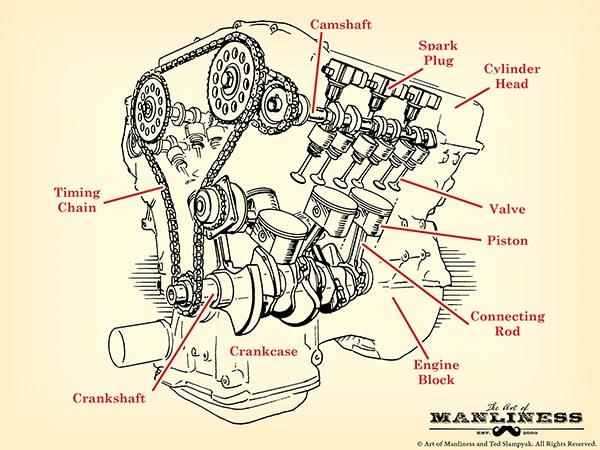
The engine featured both single overhead camshaft (SOHC) and dual overhead camshaft (DOHC) configurations in its various versions. These configurations allowed for a balance between performance and efficiency, with the DOHC variants typically offering improved control over valve timing and better fuel efficiency.
Fuel Delivery Systems and Performance Evolution
Initially equipped with carburetors, the PRV engine underwent significant evolution as fuel injection systems replaced carburetion. This transition not only allowed for more precise fuel metering and combustion control but also improved the engine’s overall performance, emissions profile, and efficiency. The evolution from carburetion to fuel injection can be viewed as a microcosm of the broader automotive industry’s move toward more sustainable and engine-optimized technologies.
Despite being designed in an era when high-revving performance was not the primary focus, the PRV engine was capable of delivering impressive power outputs. Its adaptability in terms of displacement and tuning meant that enthusiasts could, and often did, modify the engine to extract additional horsepower. Turbocharged variants and racing modifications have pushed the engine block to deliver outputs far exceeding original specifications, sometimes reaching over 900 horsepower under optimized conditions.
Versatility Across Different Applications
Range of Vehicle Integration
One of the most lauded features of the PRV engine is its versatility. It was used in a variety of vehicles spanning several segments – from luxury saloons and family vehicles to performance sports cars and even experimental vehicles. This broad application base underscores the engine’s adaptability. Manufacturers could use a single engine platform to address various power requirements by simply adjusting its configuration, displacement, and tuning methods.
For instance, the engine powered vehicles designed for both daily driving and competitive motorsports. Its ability to be installed in different positions – whether longitudinally, transversely, or centrally – allowed car designers to maximize the engine bay layout without compromising the overall vehicle dynamics. Such flexibility proved critical in ensuring that the PRV engine could cater to a diverse automotive market.
Configurative Flexibility
The PRV engine was manufactured in several variants, each optimized for specific performance metrics or vehicle requirements. Available in multiple displacements ranging primarily between 2.5L and 3.0L, the engine could be configured as either a two-valve or a four-valve per cylinder system. This configurative flexibility was further enhanced by choices between SOHC and DOHC arrangements, ensuring that whether the priority was fuel efficiency, performance, or durability, there was a variant that could meet the need.
This versatility is summarized effectively in the table below, which outlines the primary configurations and their associated benefits.
| Configuration | Displacement Range | Valve System | Key Benefits |
|---|---|---|---|
| Entry-Level | 2.5L | 2-Valve / SOHC | Fuel efficiency, reliability, and low-end torque |
| Performance Variant | 3.0L | 4-Valve / DOHC | Enhanced power output, improved valve control, and smoother operation |
| Turbocharged Variant | Varied (typically 3.0L base) | Dependent on tuning | High horsepower outputs (potentially over 900 hp in tuned applications) |
This flexibility allowed certain models to cater not only to everyday driving needs but also to niches such as motorsports and high-performance tuning communities. The ease with which the engine could be modified or updated with new technology further cemented its reputation among both manufacturers and automotive enthusiasts.
Performance and Endurance
Smoothness and Power Delivery
The PRV engine is celebrated for its smooth V6 performance. The V6 configuration inherently balances power delivery and minimizes vibrations compared to inline engines. The even and refined power output, a key attribute of the PRV, made it particularly attractive for vehicles intended for long-distance drives and everyday use. This characteristic also contributed positively to the interior noise levels and overall driving comfort.
In performance iterations, especially those tuned for motorsport applications, the engine demonstrated impressive dynamism and responsiveness. Despite early criticisms regarding its firing order and occasional roughness in original versions, subsequent iterations and refinements effectively addressed these issues, culminating in an engine that delivered both smoothness and power without compromise.
Longevity and Reliability in Real-World Applications
A fundamental reason behind the engine’s exceptional reputation is its durability. Engineered for long-term operation, the robust construction of the PRV engine not only allowed it to serve reliably in everyday passenger cars but also in harsh racing conditions. Its mechanical longevity is evidenced by the fact that many vehicles powered by the PRV engine continued to run smoothly even past their intended service lifespans. This reputation for reliability has made the engine a favorite amongst restorers and vintage car enthusiasts.
Over nearly three decades of production, the PRV engine was refined and re-engineered multiple times. These improvements addressed initial issues such as cam wear and oil consumption, ensuring that the engine could provide sustainable performance throughout its lifecycle. Its endurance became particularly evident in racing circles, where modified versions proved capable of withstanding rigorous demands.
High Performance and Tunability
One of the most compelling aspects of the PRV engine is its potential for performance enhancement. Although its standard configurations provided ample power for most applications, the engine’s design allowed for significant modifications. Enthusiasts and performance tuners have exploited the engine’s capacity by incorporating turbocharging and other performance-enhancing technologies, sometimes achieving power outputs that far exceed the original design specifications.
This tunability has not only ensured the engine’s viability in high-performance racing applications but has also contributed to a thriving aftermarket and enthusiast community. Motorsports teams and tuning experts have experimented with various modifications—ranging from adjustments to fuel delivery systems to comprehensive performance rebuilds—demonstrating that the PRV engine can be transformed into a high-output powerhouse while still retaining its fundamental durability and reliability.
Legacy and Impact on the Automotive Industry
Influence on Engine Development
The legacy of the PRV engine extends well beyond its individual technical merits. Its development signaled a new era in collaborative engineering among major European car manufacturers. By pooling their expertise and resources, the partners were able to produce an engine that not only met the technical and performance demands of the time but also set the stage for future innovations in engine design.
The lessons learned during the development and continuous evolution of the PRV engine have informed subsequent engine projects, both within the companies involved and across the broader automotive sector. Its innovative use of aluminum alloys, implementation of advanced camshaft configurations, and move towards more refined fuel management systems have all influenced later engine designs. Thus, the PRV engine is remembered not only for its practical success but also for its role in advancing automotive engineering.
Cultural and Enthusiast Recognition
In addition to its technical and performance attributes, the PRV engine has attained a status of cult admiration among automotive enthusiasts. Vintage car restorers, tuners, and performance hobbyists often praise the engine for its modifiability and enduring charm. Its presence in iconic vehicles—from luxury sedans to unique sports cars—has ensured that it remains a symbol of European automotive ingenuity and collaboration.
Collectors and enthusiasts appreciate the PRV engine not only for its mechanical robustness but also for the narrative of innovation it represents. It stands as a testament to an era where engineers took bold steps to meet global challenges, such as the energy crisis, by rethinking conventional designs. Through its adoption in diverse vehicle models and continued success in various tuning applications, the PRV engine has earned a permanent place in automotive lore.
Comparison with Other Engine Designs
Differentiation in Performance and Application
When compared with contemporaneous engine designs, the PRV engine distinguished itself through its balanced combination of versatility, reliability, and performance. Unlike many engines that were either purely performance-focused or primarily built for fuel efficiency, the PRV engine managed to straddle both realms effectively. This dual capability allowed it to power vehicles that needed to operate in high-performance scenarios while still providing the longevity expected from a daily driver.
For example, many inline-four or inline-six engines of the era were limited either by their inherent mechanical balance or the scalability of their design. The V6 configuration of the PRV not only provided an excellent compromise in terms of size and weight but also optimized the spatial efficiency within modern engine bays. This allowed for innovative vehicle designs where engine placement and compartmentalization were crucial considerations.
Performance Metrics and Efficiency
The PRV engine’s performance metrics, particularly when seen in its high-performance or turbocharged configurations, underscored its engineering excellence. Its design allowed for significant power outputs where needed, while refinements in the fuel injection systems and camshaft configurations contributed to superior fuel economy in less demanding applications. The engine offered a level of adaptability that was rare during its production period, marking it as a versatile solution for a wide range of engineering challenges.
Such adaptability meant that whether the engine was used in a luxury vehicle for comfortable long-distance cruising or as a racing engine in endurance competitions, it maintained a high degree of operational reliability—an achievement that directly contributed to its widespread adoption.
Economic and Production Considerations
Economies of Scale in Production
The collaborative effort behind the PRV engine led to several economic benefits. By pooling production resources, the manufacturing partners were able to achieve economies of scale that allowed for robust quality control along with cost-effective production. This meant that a single engine family could meet the demands of multiple car models across different brands, minimizing the need for disparate engine designs and reducing production complexity.
Over its production span, nearly one million units of the PRV engine were produced and installed in various vehicles. This high production volume is indicative of not just the engine's technical reliability and popularity but also its economic viability. The wide adoption of the engine reduced manufacturing redundancies and provided a unified platform that could be flexibly engineered for different applications, further underscoring its versatility.
Aftermarket and Tuning Culture
The aftermarket tuning culture surrounding the PRV engine further illustrates its broad appeal. Its robust construction and ease of modification made it a favorite among performance enthusiasts looking to boost power or improve efficiency in customized builds. Accessories, performance parts, and tuning kits proliferated around this engine, creating a vibrant ecosystem of innovation and restoration.
Custom builds and high-performance tuning projects have validated the engine’s potential, allowing modified versions to push the boundaries of horsepower and efficiency while still relying on the original engine’s durable block. This continued trend in the tuning community highlights the engine’s capacity to meet modern performance demands even decades after its initial development.
Conclusion
In conclusion, the PRV engine stands out as an exceptional piece of automotive engineering due to its versatile design, long-lasting durability, and impressive tunability. Developed through an unprecedented collaboration among major manufacturers, it managed to balance the diverse requirements of various vehicle types—from everyday sedans to high-performance race cars. Its innovative engineering, including the use of aluminum alloy components, refined camshaft configurations, and adaptable displacement options, has ensured that the engine remains celebrated in automotive history.
The engine’s legacy is not only evident in its historical importance and continued appreciation among enthusiasts but also in its influence on subsequent engine designs. With nearly one million units produced and extensive modifications adapted over time, the PRV engine serves as a benchmark for durability, performance, and versatility in engine design.
References
- V6 PRV Engine - Wikipedia
- V6 PRV Engine - Alchetron
- PRV Engine - Motor-Car.net
- Renault Club Engines Family - Renault Club
- V6 PRV: The Best French Engine - Alepoc
More
Last updated February 19, 2025