
Psoriasis Unveiled: Understanding This Chronic Skin Condition and Its Management Pathways
Delve into what psoriasis is, its autoimmune nature, and the array of treatments available to manage its symptoms, as a cure remains elusive.
Key Insights into Psoriasis
- Psoriasis is a chronic autoimmune condition: It's characterized by an overactive immune system causing rapid skin cell production, leading to inflamed, scaly patches.
- Currently, there is no cure for psoriasis: However, a variety of effective treatments can manage symptoms, reduce flare-ups, and significantly improve quality of life.
- Treatment is highly individualized: Management strategies depend on the type, severity, location of psoriasis, and the patient's overall health and response to therapies.
Defining Psoriasis: More Than Just a Skin Condition
Psoriasis is a complex, long-lasting (chronic) inflammatory disease that primarily affects the skin. It's an autoimmune disorder, meaning the body's immune system mistakenly attacks healthy skin cells. This erroneous attack triggers an accelerated life cycle for skin cells. Normally, skin cells grow deep in the skin and slowly rise to the surface, eventually falling off, over about a month. In individuals with psoriasis, this process can occur in just a few days. Because the body can't shed these excess skin cells quickly enough, they pile up on the surface of the skin, forming characteristic lesions.
These lesions, known as plaques, are typically raised, red or discolored patches of skin covered with silvery-white or grey scales. They can be itchy, sore, or even painful, and may crack and bleed. While psoriasis can appear anywhere on the body, it most commonly affects the elbows, knees, scalp, lower back, face, palms of the hands, and soles of the feet. It can also affect fingernails and toenails, causing pitting, discoloration, and separation from the nail bed. It's crucial to understand that psoriasis is not contagious; you cannot "catch" it from someone else.
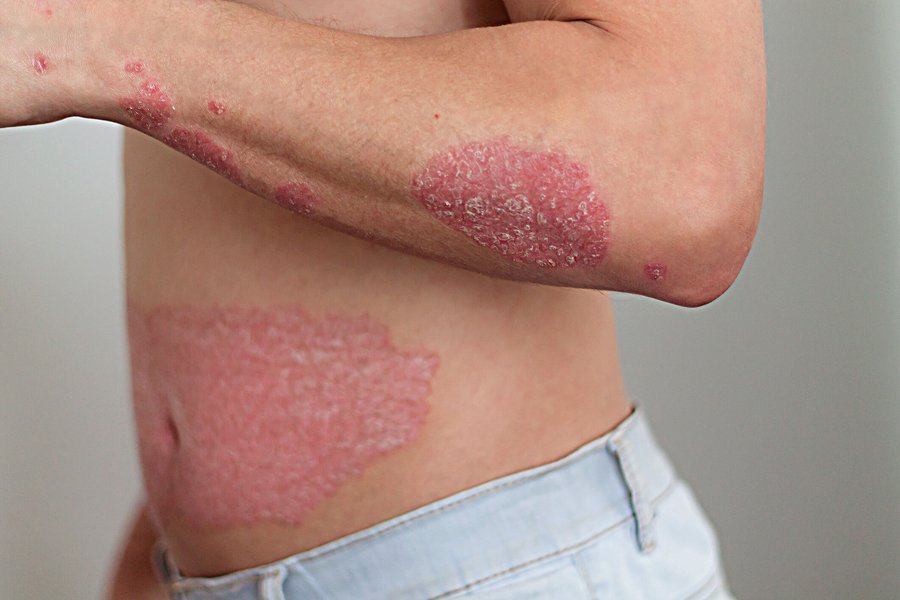
Psoriatic plaques typically appear as raised, red, and scaly patches.
The Underlying Cause: An Immune System Misfire
While the precise cause of psoriasis isn't fully understood, it's known to involve a combination of genetic predisposition and environmental factors. The immune system, particularly T-cells (a type of white blood cell), plays a central role. In psoriasis, these T-cells mistakenly identify healthy skin cells as foreign invaders (like bacteria or viruses) and initiate an inflammatory response. This inflammation leads to the rapid production of skin cells and the formation of plaques.
Common Triggers
Certain factors can trigger psoriasis flare-ups or worsen existing symptoms. These can vary from person to person but often include:
- Stress: High stress levels are a well-known trigger.
- Skin Injury: Cuts, scrapes, bug bites, sunburn (Koebner phenomenon).
- Infections: Particularly streptococcal infections (like strep throat), which are often linked to guttate psoriasis.
- Medications: Some drugs, including lithium, beta-blockers, antimalarials, and iodides, can trigger or aggravate psoriasis.
- Weather: Cold, dry weather can worsen symptoms, while warm, sunny weather may improve them for some.
- Smoking and Alcohol Consumption: Both have been linked to an increased risk and severity of psoriasis.
The Quest for a Cure: Current Status
One of the most common questions regarding psoriasis is whether it can be cured. As of 2025, there is no known cure for psoriasis. Because it's an autoimmune condition rooted in the body's own immune response, completely eliminating it has proven challenging. However, this does not mean that individuals with psoriasis cannot lead full and comfortable lives. The focus of medical intervention is on managing the symptoms, controlling flare-ups, reducing inflammation, clearing the skin, and improving overall quality of life. Research is ongoing, continuously bringing new insights and more targeted therapies, offering hope for even better management strategies in the future.
Navigating Treatment Options for Psoriasis
Treatment for psoriasis is highly personalized and depends on several factors, including the type of psoriasis, its severity (how much of the body is affected and how bothersome the symptoms are), the location of the plaques, and the individual's overall health and preferences. Dermatologists often use a stepladder approach, starting with milder treatments and progressing to stronger ones if necessary. Many people require a combination of treatments for optimal results.

Effective treatments can significantly reduce the appearance of psoriasis plaques, as shown in this before and after comparison.
Topical Treatments
Applied directly to the skin, topical treatments are often the first line of defense, especially for mild to moderate psoriasis. They aim to reduce inflammation, itching, and scaling, and to slow down excessive skin cell production.
- Corticosteroids: These are anti-inflammatory medications available in various strengths and formulations (creams, ointments, lotions, foams, sprays, shampoos). They are effective but long-term use or use of potent steroids can lead to side effects like skin thinning.
- Vitamin D Analogues: Synthetic forms of vitamin D (e.g., calcipotriene, calcitriol) slow skin cell growth and reduce inflammation. They can be used alone or in combination with corticosteroids.
- Topical Retinoids: Tazarotene is a vitamin A derivative that helps normalize skin cell growth. It can cause skin irritation and sensitivity to sunlight.
- Calcineurin Inhibitors: Tacrolimus ointment and pimecrolimus cream can be effective for psoriasis in sensitive areas like the face or skin folds, where steroids might be problematic.
- Salicylic Acid: Helps to lift and soften scales, making it easier for other topical medications to penetrate the skin. Often found in shampoos for scalp psoriasis.
- Coal Tar: One of the oldest treatments for psoriasis, coal tar can reduce scaling, itching, and inflammation. It can be messy and has a strong odor.
- Moisturizers (Emollients): While not treating the underlying cause, heavy creams and ointments help to reduce dryness, scaling, and itching by keeping the skin hydrated.
Phototherapy (Light Therapy)
Phototherapy involves exposing the skin to specific wavelengths of ultraviolet (UV) light under medical supervision. It's used for moderate to severe psoriasis or psoriasis that hasn't responded to topical treatments.
- UVB Phototherapy:
- Broadband UVB: Uses a wider range of UVB light.
- Narrowband UVB: Uses a smaller, more specific part of the UVB spectrum and is generally more effective and preferred over broadband UVB.
- PUVA (Psoralen plus Ultraviolet A): This treatment combines a light-sensitizing medication called psoralen (taken orally or applied topically) with UVA light exposure. It's very effective but has more potential short-term (nausea, itching) and long-term (increased skin cancer risk) side effects.
- Excimer Laser: This laser delivers high-intensity UVB light to targeted small areas of psoriasis, sparing healthy skin. It's suitable for localized, stubborn plaques.
Systemic Medications
For moderate to severe psoriasis, or when topical treatments and phototherapy are insufficient, doctors may prescribe systemic medications. These drugs work throughout the body and are administered orally or by injection/infusion.
Traditional Systemic Drugs
- Methotrexate: An immunosuppressant that slows down skin cell production and reduces inflammation. It requires regular blood test monitoring due to potential liver and bone marrow side effects.
- Cyclosporine: A potent immunosuppressant used for severe psoriasis. It can work quickly but also requires careful monitoring due to risks of kidney problems and high blood pressure.
- Acitretin: An oral retinoid (related to vitamin A) that helps control skin cell multiplication. It's often used for severe, hard-to-treat psoriasis but can cause significant side effects, including birth defects, so it's not suitable for women who are pregnant or planning pregnancy.
- Apremilast: An oral medication that works by inhibiting an enzyme called phosphodiesterase 4 (PDE4) involved in the inflammation process. It generally has fewer serious side effects than methotrexate or cyclosporine.
Biologic Drugs
Biologics are a newer class of systemic medications derived from living organisms. They target very specific parts of the immune system involved in psoriasis. They are typically administered by injection or intravenous (IV) infusion and are generally reserved for moderate to severe psoriasis that hasn't responded to other treatments or for patients with psoriatic arthritis.
- TNF-alpha inhibitors: (e.g., adalimumab, etanercept, infliximab, certolizumab pegol)
- IL-12/23 inhibitors: (e.g., ustekinumab)
- IL-17 inhibitors: (e.g., secukinumab, ixekizumab, brodalumab)
- IL-23 inhibitors: (e.g., guselkumab, risankizumab, tildrakizumab)
Biologics can be very effective but also carry risks, including an increased chance of infections, and require careful screening and monitoring by a dermatologist.
Lifestyle Adjustments and Home Remedies
While not cures, certain lifestyle changes and home care strategies can help manage psoriasis symptoms and reduce flare-ups:
- Stress Management: Techniques like meditation, yoga, or regular exercise.
- Healthy Diet: Maintaining a balanced diet and a healthy weight. Some find that avoiding inflammatory foods helps.
- Avoiding Triggers: Identifying and avoiding personal psoriasis triggers.
- Gentle Skin Care: Using mild, fragrance-free soaps and moisturizers; lukewarm baths with oatmeal or Epsom salts.
- Adequate Sleep: Ensuring sufficient rest can support overall immune health.
- Limiting Alcohol and Quitting Smoking: Both can worsen psoriasis.
Visualizing Psoriasis Management Approaches
To better understand how different treatment modalities are typically applied based on psoriasis characteristics, the following chart provides an illustrative overview. This is a generalized representation; actual treatment decisions are highly individualized by a healthcare professional.
This radar chart illustrates the perceived suitability of various treatment categories for different aspects and severities of psoriasis. For instance, 'Topical Treatments' score high for 'Mild Cases' and 'Plaque Psoriasis', while 'Biologics' are shown as more prominent for 'Severe Cases'. 'Lifestyle & Self-Care' plays a supportive role across the board. This visualization emphasizes that treatment strategies are multifaceted and tailored.
Understanding Psoriasis: A Mindmap Overview
Psoriasis is a multifaceted condition. This mindmap provides a simplified visual summary of its key aspects, from its definition and lack of a cure to its triggers and broad treatment categories, helping to conceptualize the condition at a glance.
This mindmap highlights the core elements of psoriasis: its autoimmune nature leading to rapid cell growth, the fact it's manageable but not curable, common factors that can exacerbate it, and the diverse range of treatments available. It also touches upon some of the more common forms the condition can take.
Comparative Overview of Psoriasis Treatment Categories
The following table summarizes the main categories of psoriasis treatments, offering insights into their descriptions, common examples, typical applications, and key considerations for patients and healthcare providers.
| Treatment Category | Description | Common Examples | Typically Used For | Key Considerations |
|---|---|---|---|---|
| Topical Treatments | Medications applied directly to the skin. | Corticosteroids (creams, ointments), Vitamin D analogues (calcipotriene), Retinoids (tazarotene), Salicylic acid, Coal tar, Moisturizers. | Mild to moderate psoriasis; often first-line treatment; can be used in combination for more severe cases. | Localized side effects (skin thinning with steroids, irritation); patient adherence (can be messy or time-consuming). |
| Phototherapy | Exposure to specific wavelengths of UV light under medical supervision. | Narrowband UVB, Broadband UVB, PUVA (Psoralen + UVA), Excimer laser. | Moderate to severe psoriasis; widespread psoriasis; cases unresponsive to topicals. | Requires multiple sessions per week at a clinic (or home unit); potential for sunburn, skin aging, increased skin cancer risk (especially PUVA). |
| Traditional Systemic Medications | Oral or injected medications that work throughout the body to suppress the immune system or slow cell growth. | Methotrexate, Cyclosporine, Acitretin, Apremilast. | Moderate to severe psoriasis; psoriatic arthritis; cases unresponsive to topicals/phototherapy. | Potential for significant systemic side effects (e.g., liver, kidney, bone marrow issues); requires regular monitoring (blood tests). Acitretin is teratogenic. |
| Biologic Drugs | Protein-based drugs derived from living cells, targeting specific parts of the immune system involved in psoriasis. Administered by injection or infusion. | TNF-alpha inhibitors (e.g., adalimumab), IL-17 inhibitors (e.g., secukinumab), IL-12/23 inhibitors (e.g., ustekinumab), IL-23 inhibitors (e.g., risankizumab). | Moderate to severe psoriasis; psoriatic arthritis; cases unresponsive or intolerant to other systemic treatments. | Generally effective with fewer daily side effects than traditional systemics for some, but can increase risk of infections; expensive; requires screening for TB and other conditions. |
| Lifestyle and Self-Care | Non-medical approaches to manage symptoms and triggers. | Stress management, healthy diet, avoiding known triggers (e.g., alcohol, smoking), gentle skin care, regular moisturizing. | All types and severities of psoriasis, as adjunctive support to medical treatments. | Can improve overall well-being and reduce flare frequency/severity; requires ongoing effort and self-awareness. Does not replace medical treatment for active disease. |
This table provides a general comparison. The choice of treatment is a collaborative decision between the patient and their dermatologist, considering individual circumstances, the extent and type of psoriasis, and potential benefits versus risks of each option.
Expert Insights on Psoriasis
Understanding psoriasis from a medical perspective can be very helpful. The following video features Dr. Alina Bridges from Mayo Clinic, discussing what psoriasis is and how it is treated. This provides valuable context on the nature of this chronic skin condition and the approaches to its management.
In the video, Dr. Bridges explains that psoriasis is a long-term skin condition characterized by red, scaly patches. She emphasizes the autoimmune component and the rapid cell turnover. The discussion also covers various treatment modalities, reinforcing that while there isn't a cure, effective management strategies are available to control symptoms and improve the lives of those affected.
Frequently Asked Questions (FAQ) about Psoriasis
Is psoriasis contagious?
No, psoriasis is not contagious. It is an autoimmune condition, meaning it is caused by an overactive immune system, not by an infection. You cannot catch psoriasis from another person by touching them or through any other form of contact.
What typically causes psoriasis flare-ups?
Psoriasis flare-ups can be triggered by a variety of factors, which can differ from person to person. Common triggers include stress, injury to the skin (cuts, scrapes, sunburns - known as the Koebner phenomenon), infections (especially strep throat), certain medications (like lithium, beta-blockers), cold and dry weather, smoking, and heavy alcohol consumption.
Can diet affect psoriasis?
While there's no specific "psoriasis diet" proven to cure the condition, some individuals find that certain foods can worsen or improve their symptoms. Maintaining a healthy, balanced diet rich in anti-inflammatory foods (like fruits, vegetables, and omega-3 fatty acids) and maintaining a healthy weight may help manage psoriasis. Some people report improvement when avoiding processed foods, red meat, dairy, or gluten, but this is highly individual. It's best to discuss dietary changes with a doctor or dietitian.
How is psoriasis diagnosed?
Psoriasis is typically diagnosed by a dermatologist or primary care physician based on a physical examination of the skin, scalp, and nails, along with a review of the patient's medical history. In some cases, a skin biopsy (a small sample of skin is removed and examined under a microscope) may be performed to confirm the diagnosis and rule out other conditions with similar appearances.
Is psoriasis hereditary?
There is a genetic component to psoriasis, meaning it can run in families. If you have a close relative with psoriasis, your risk of developing it is higher. However, not everyone with a genetic predisposition will develop psoriasis. Environmental triggers also play a significant role in whether the condition manifests.
Recommended Further Exploration
- What are the different types of psoriasis and their specific symptoms?
- How do biologic treatments for psoriasis work and what are their side effects?
- Can lifestyle changes significantly impact the severity of psoriasis?
- What is psoriatic arthritis and how is it related to psoriasis?
References
Last updated May 7, 2025