
Purifying Unit and Its Sub Chambers in Sulphuric Acid Production
A detailed overview of industrial purification steps in sulfuric acid manufacturing
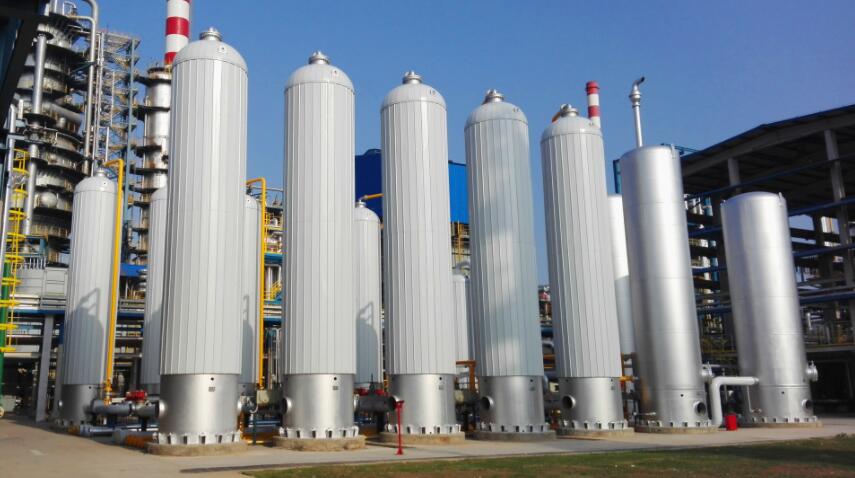
Key Highlights
- Integrated Multi-Chamber Process: Each sub chamber performs a specific function to systematically remove impurities.
- Maintaining Catalyst Integrity: Ensuring gas purity protects the catalysts in the conversion to sulfur trioxide.
- Optimized Gas Conditioning: Cooling, washing, drying, and pre-heating steps are meticulously engineered for efficient gas processing.
Overview of the Purifying Unit
In the industrial production of sulfuric acid, the purified sulfur dioxide (SO₂) gas is a cornerstone for achieving high quality and efficiency in the conversion process. The purifying unit is engineered to systematically remove particulate matter, moisture, soluble contaminants, and trace impurities from the gas stream. This is critical to safeguard the catalytic converter from poisoning and to ensure the preferred reaction conditions during the oxidation to sulfur trioxide (SO₃). The process is subdivided into several sub chambers, each addressing a specific category of contaminant removal. Below we discuss these sub chambers in depth, explaining their purpose and function in the overall process.
Detailed Description of Sub-Chambers
1. Dust Chamber
Function
The dust chamber is the initial stage where the removal of solid particles such as dust is prioritized. Given that the raw sulfur dioxide gas often carries particulate impurities, a preliminary separation step is essential. Typically, steam is injected into the chamber. The interaction of steam with the gas stream causes dust particles to agglomerate and settle out of the flow. This ensures that the subsequent process stages receive a cleaner gas, free from particulate contaminants that might otherwise cause erosion or blocking in downstream equipment.
Industrial Relevance
In the context of sulfuric acid production, even minute amounts of dust can adversely affect the life and performance of catalysts in the contact chamber. The removal of dust not only protects the catalytic surfaces but also assures that the gas maintains consistent quality for subsequent chemical reactions.
2. Cooling Pipes
Function
Once the gas has passed through the dust chamber, its temperature is usually higher than desired for further treatment steps. Cooling pipes serve as the next phase in the purification sequence. These pipes facilitate the reduction in gas temperature, typically down to around 373 K (100°C). The cooling process is vital as it promotes the condensation of moisture and the stabilization of the gas, making it easier to remove additional impurities in later chambers.
Industrial Relevance
Temperature control is critical in preventing the decomposition or unwanted reactions of impurities. Furthermore, cooling the gas aids in controlling reaction kinetics in the wash and drying stages. This gradual thermal management ensures that the gas is in an optimal state for maximal absorption of impurities in the following units.
3. Washing Tower (Scrubber)
Function
The washing tower, also known as the scrubber, is a critical component wherein the gas is brought into contact with a scrubbing liquid, usually water or a dilute sulfuric acid solution. The tower is typically packed with quartz or other inert materials which enhance the contact surface area. As the gas ascends through this packed bed, water is sprayed from the top down. This allows water-soluble impurities such as soluble salts and aerosols to be dissolved and removed.
Industrial Relevance
In sulfuric acid production, ensuring that the gas is free from water-soluble contaminants is crucial. Impurities remaining in the gas stream may lead to inefficiencies during the catalytic oxidation process by either deactivating the catalyst or forming unwanted by-products. The washing tower thus plays a decisive role in stripping away such impurities, preparing the gas for further drying.
4. Drying Tower
Function
Following the washing step, the gas inevitably retains some residual moisture. The drying tower is designed to address this by removing any excess water vapor. This is often accomplished by spraying concentrated sulfuric acid into the gas stream. The acid acts as a hygroscopic agent, absorbing the remaining water and thus drying the gas. It is critical to maintain minimal moisture content to prevent dilution of the final sulfuric acid product.
Industrial Relevance
Drying the gas is a fundamental step in preserving the efficiency of subsequent catalytic reactions. Moisture can adversely affect the equilibrium and reaction kinetics during the oxidation of SO₂ to SO₃. By ensuring the gas is dry, the process significantly enhances the overall purity and stability of the chemicals involved.
5. Arsenic Purifier
Function
Although trace contaminants like arsenic may be present in the sulfur feedstock or sourced from ambient impurities, their presence can be highly detrimental to the catalyst used in sulfuric acid production. The arsenic purifier specifically removes arsenic compounds (often in the form of arsenous oxide, As₂O₃) using specialized absorbents such as shelves laden with gelatinous ferric hydroxide [\( \text{\(Fe(OH)_3\)} \)]. The chemical reaction involved binds the arsenic, trapping it in the purifier.
Industrial Relevance
The removal of arsenic is not just a measure for ensuring high purity in the acid; it is essential for prolonging the lifespan of catalysts. Catalysts utilized in the contact process are sensitive to poisoning. Even small quantities of arsenic can have pronounced effects, leading to higher maintenance costs and operational downtime. Therefore, the arsenic purifier plays a preventative role.
6. Pre-Heating Chamber
Function
Pre-heating is an operational step introduced after the gas has been cleaned and dried. In the pre-heating chamber, the purified gas is warmed to an optimal temperature typically in the range of 723 to 823 K. This warming is crucial to prepare the gas for the subsequent catalytic oxidation stage. The pre-heating ensures that the reaction temperature is reached quickly and that the oxidation of SO₂ to SO₃ is efficient.
Industrial Relevance
The contact process relies heavily on maintaining precise thermal conditions. By pre-heating the gas, the system minimizes energy losses and helps in attaining a rapid and complete conversion. This step is essential in preventing fluctuations in reaction conditions which could result in lower yields or even catalyst deactivation.
7. Testing Box
Function
The final stage in the purifying unit is the testing box, which acts as a quality control checkpoint. In this box, a strong beam of light is used to assess the purity of the gas. If impurities remain, they cause scattering of the light and leave a visible path. When impurity levels exceed predetermined thresholds, the gas is cycled back into the purification loop for additional processing.
Industrial Relevance
Continuous monitoring is mandatory in an industrial setup. The testing box not only validates the success of the preceding stages, but it also ensures that gas entering the catalytic converter meets the rigorous standards required to avoid process inefficiencies or equipment corrosion. This stage acts as a fail-safe mechanism, safeguarding the entire production line from potential disruptions.
Integration in Sulfuric Acid Production
The purified SO₂ gas produced through the purifying unit plays a vital role in the widely implemented contact process for sulfuric acid production. This process is typically divided into three main phases:
-
Combustion
Sulfur or sulfur-containing compounds are burned in a combustion chamber, thereby producing sulfur dioxide gas. The quality of this gas is critical because any impurities present initially are compounded in later stages. The use of the purification unit, therefore, becomes essential before the gas is used in the subsequent stages.
-
Catalytic Oxidation (Contact Process)
The cleaned and pre-heated gas is then passed over a catalyst, generally vanadium pentoxide (V₂O₅), in a catalytic converter where the critical oxidation reaction occurs. Here, SO₂ is oxidized to sulfur trioxide (SO₃). Since catalysts are susceptible to poisoning by impurities (like arsenic or particulate matter), prior purification is indispensable.
-
Absorption
Finally, the produced SO₃ is absorbed into water to form sulfuric acid. The absorption towers, often designed with multiple absorption stages (Double Contact Double Absorption - DCDA process), require that the SO₃ is free of impurities that might otherwise interfere with the acid’s concentration or quality. Only through a comprehensive purification can the efficiency of the contact process be maintained, ensuring a high-purity final product.
Process Flow and Sub Chamber Summary Table
| Sub Chamber | Purpose | Operating Conditions | Impact on Process |
|---|---|---|---|
| Dust Chamber | Removes particulates using steam | Ambient to moderately high temperature | Prevents catalyst fouling |
| Cooling Pipes | Lowers gas temperature | Approximately 373 K | Facilitates moisture condensation |
| Washing Tower | Removes water-soluble impurities | Near ambient, with controlled water flow | Enhances gas purity for further processing |
| Drying Tower | Removes residual moisture using acid spray | Controlled to minimize humidity | Prevents dilution of sulfuric acid |
| Arsenic Purifier | Eliminates trace arsenic compounds | Operates with absorbents like \( \text{\(Fe(OH)_3\)} \) | Protects catalyst efficiency |
| Pre-Heating Chamber | Warms the purified gas | 723-823 K | Optimizes reaction conditions in the catalytic converter |
| Testing Box | Quality control of gas purity | Operates at process temperature and pressure | Ensures only pure gas advances |
Relation to Overall Industrial Production
Enhanced Process Efficiency
The systematic design of the purifying unit guarantees that the gas stream introduced to the contact process is as free from contaminants as possible. Industrial operators benefit from:
-
Consistent Product Quality:
With impurities minimized, the downstream catalytic oxidation can occur under controlled conditions, yielding high-quality sulfur trioxide for absorption into water. This consistency is critical, especially in applications where deviation in acid concentration can result in significant process inefficiencies or product discrepancies.
-
Extended Catalyst Life:
The removal of arsenic and particulate contaminants protects the catalyst from rapid deactivation. Catalyst poisoning is a costly issue in industrial systems; hence, pre-treatment through the purifying unit significantly reduces maintenance frequency and operational downtime.
-
Operational Safety and Environmental Compliance:
Thorough gas purification minimizes the emission of hazardous waste and contaminants. A well-calibrated purification system helps factories meet environmental regulations while ensuring that the physical integrity of plant equipment is maintained.
Energy Integration and Thermal Management
The role of temperature management through the cooling and pre-heating stages cannot be overstated. By effectively controlling the thermal profile of the gas stream, production facilities maximize energy efficiency. In practice, heat recovery from the cooling pipes can be used in other parts of the plant, contributing to overall process sustainability. Additionally, the pre-heating chamber not only sets the stage for the optimum catalytic reaction but also reduces the energy required to reach the desired reaction temperature.
Quality Assurance via the Testing Box
Quality control is an integral aspect of industrial chemical production. The testing box fulfills that role by ensuring that the gas entering the catalytic converter is completely purified. Its method of identifying impurities through the interaction of light with residual contaminants is a simple yet effective diagnostic tool. If any anomalies are detected, the system can automatically reroute the gas back through the purification sequence, thereby preventing substandard product formation.
References
Below are some critical references that provide further detailed insights into the purification process, the functioning of individual sub chambers, and related chemical reactions in sulfuric acid production:
- Contact Process - Wikipedia
- Sulphuric Acid Manufacturing - Chemical Note
- Sulphuric Acid - Class Notes
- Sulfuric Acid Treatment - De Dietrich Process Systems
-
Sulphuric Acid - TET Success Key
Recommended Related Queries
Last updated March 19, 2025