
Influence of PVOH Molecular Weight on Detergent Sheets
Understanding How Polymer Weight Shapes Performance and Environmental Impact
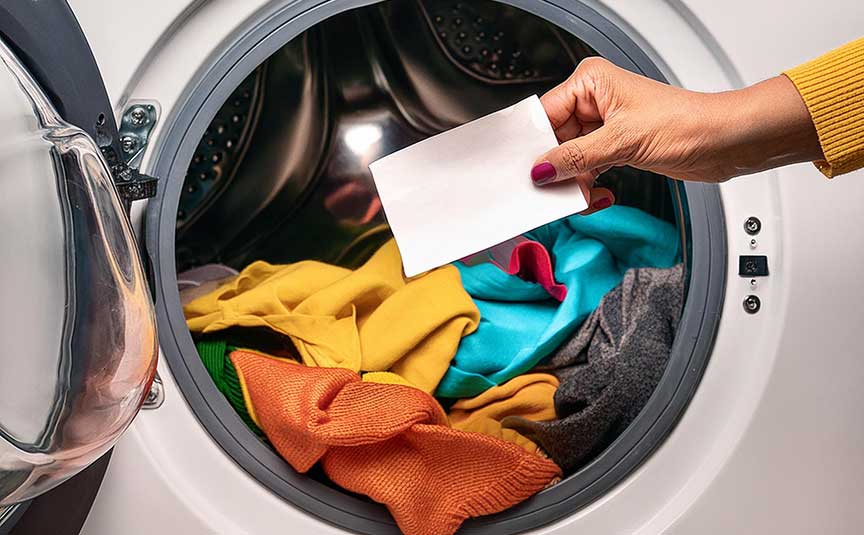
Key Highlights
- Mechanical Strength and Integrity: Higher molecular weight PVOH enhances tensile strength and film-forming capacity.
- Dissolution and Solubility: Lower molecular weight PVOH dissolves more readily, ensuring quick detergent release.
- Biodegradability and Environmental Safety: The molecule’s weight and solubility balance directly affect degradation rates and environmental compatibility.
Overview
Polyvinyl alcohol (PVOH) plays a crucial role in the formulation of detergent sheets, acting as a binder that holds together powdered or liquid detergent components. The molecular weight of PVOH is a fundamental parameter that can dictate key properties of detergent sheets, including mechanical strength, solubility, biodegradability, processing viscosity, and overall user performance. Understanding these relationships is essential for formulating detergent sheets that balance durability with ease of use and environmental safety.
Mechanical Properties
Tensile Strength and Film Formation
The mechanical integrity of detergent sheets is critical during both manufacturing and end-use scenarios. PVOH with a higher molecular weight is known to enhance mechanical properties due to the increased chain length and entanglement of polymer molecules. These longer chains can form stronger inter-chain bonds, leading to improved tensile strength, which is the ability of the film to withstand stretching forces. In practical terms, detergent sheets incorporating higher molecular weight PVOH are less prone to tearing or deformation during handling, packaging, and transport.
Enhanced Film-Forming Capacity
Higher molecular weight grades contribute positively to the film-forming process. The improved cohesion between polymer chains results in a uniform, continuous film that not only improves the structural integrity of the sheet but also ensures that the detergent particles are evenly distributed. This uniformity is crucial during the washing process, as it helps control the rate of detergent dispersion, ensuring efficient cleaning.
Viscosity and Processing Challenges
While high molecular weight PVOH offers mechanical advantages, it also increases the viscosity of the polymer solution used to manufacture detergent sheets. Elevated viscosity can complicate processing techniques such as extrusion, casting, or molding. Manufacturers must find a balance between achieving the necessary mechanical strength and maintaining manageable processability. Advanced blending techniques and controlled processing conditions are often employed in industrial applications to optimize the molecular weight distribution and viscosity levels.
Dissolution and Solubility
Rate of Dissolution in Water
The dissolution property of detergent sheets is a crucial performance attribute, as the sheet must disintegrate rapidly in water to release the cleaning agents effectively. PVOH’s water solubility is largely determined by its molecular weight. Lower molecular weight PVOH dissolves more quickly due to shorter polymer chains and lower entanglement density, which results in a less resistant structure to water penetration.
Balancing Performance and Durability
It is important to strike a balance because while lower molecular weight enhances solubility and ensures rapid dissolution in the washing machine, it may compromise structural integrity during handling. Conversely, while higher molecular weight offers durability and controlled film formation, it dissolves more slowly. In detergent sheet applications, the choice of molecular weight must be carefully tuned to ensure that the sheet remains stable until use but dissolves completely and promptly when needed.
Influence of Humidity
Environmental factors such as ambient humidity also play a significant role in the behavior of PVOH-based films. High humidity can lead to absorption of moisture by the film, effectively acting as a plasticizer. This moisture uptake can reduce tensile strength while simultaneously increasing elongation and tear resistance. Therefore, the interplay of molecular weight and environmental conditions further complicates the formulation process, demanding robust testing and validation during product development.
Biodegradability and Environmental Impact
Biodegradability Linked to Molecular Weight
In today’s environmentally conscious market, the biodegradability of detergent sheets is a major factor. PVOH is inherently biodegradable, but the rate at which it degrades in natural environments is affected by its molecular weight. Lower molecular weight polymers tend to be more water-soluble, which increases their exposure to microbial action and therefore accelerates biodegradation. This rapid degradation is beneficial in reducing the residual environmental impact following use.
Controlled Degradation for Environmental Safety
While faster dissolution and degradation are generally advantageous, it is essential that the degradation process is controlled. Excessively rapid degradation could lead to premature breakdown of detergent sheets during storage or handling, potentially compromising product efficacy. As such, careful formulation is required to achieve a balance where the sheet is sufficiently robust during storage and transport, yet degrades effectively after use.
Role in Wastewater Treatment
The environmental impact of detergent sheets extends to waste management and wastewater treatment. The molecular weight of PVOH influences how the residues behave in treatment facilities. Lower molecular weight, with faster water solubility, tends to break down more readily once introduced into the wastewater system, potentially reducing the load on treatment processes. This relationship helps manufacturers meet increasingly stringent regulatory requirements for biodegradability and environmental sustainability.
Comparative Analysis with a Detailed Table
The table below summarizes key differences in properties influenced by the molecular weight of PVOH in detergent sheets:
| Property | Low Molecular Weight PVOH | High Molecular Weight PVOH |
|---|---|---|
| Mechanical Strength | Lower tensile strength, potentially fragile | Higher tensile strength, robust films |
| Dissolution Rate | Rapid dissolution, quick detergent release | Slower dissolution, controlled release |
| Film Formation | May produce thinner, less coherent films | Produces thicker, more uniform films |
| Viscosity and Processing | Lower viscosity, easier processing | Higher viscosity, requires precise control |
| Biodegradability | Enhanced biodegradability due to higher solubility | May resist biodegradation slightly due to slower dissolution |
Industrial Considerations
Optimizing Physical Properties for Market Needs
The ideal detergent sheet must maintain a balance between mechanical durability during handling and processing, as well as effective dissolution when used. The choice of PVOH molecular weight is therefore not a one-size-fits-all decision but rather a nuanced challenge that involves considering the following:
- Processing Technology: The extrusion and molding processes must accommodate variations in viscosity that accompany different molecular weights.
- User Experience: Rapid dissolution is key to consumer satisfaction in laundry applications, ensuring that detergent sheets dissolve completely in various water temperatures.
- Sustainability: Biodegradability is increasingly important in product lifecycle management. Lower molecular weights enhance environmental performance, which resonates with eco-conscious consumers.
- Balancing Act: Manufacturers often use blends or adjust other formulation parameters to mitigate any adverse effects stemming from the extreme ends of the molecular weight spectrum. This might include the use of additives to modify viscosity or mechanical properties to achieve the desired balance.
Applications in Detergent Sheet Technology
Different consumer markets may have varying requirements. For example, in regions with colder climates where water temperatures are lower, faster dissolution facilitated by lower molecular weight PVOH might be prioritized. Conversely, regions that demand enhanced packaging resilience and extended shelf-life must address the trade-offs associated with higher molecular weight PVOH.
Advanced Research and Development Insights
Innovative Approaches in Formulation
Researchers and industrial technologists are exploring novel ways to tailor PVOH properties through controlled synthesis processes. Adjustments in the degree of hydrolysis and the incorporation of specific additives are among the most prominent methods under investigation. By altering the degree to which the hydroxyl groups are replaced with acetate groups, engineers can modify both the water solubility and the biodegradation rate of PVOH-based films.
Degree of Hydrolysis and Additives
The degree of hydrolysis is critically examined as it relates to the interaction of PVOH with water and other substances. A fully hydrolyzed polymer, while more water-soluble, may not offer the same tensile strength as a partially hydrolyzed counterpart. Additives, such as plasticizers and cross-linking agents, are often introduced to fine-tune these properties. This allows manufacturers to create detergent sheets that not only meet the functional criteria required during use but also maintain superior performance during processing and storage.
Impact of Environmental Factors
Environmental testing is a key part of product validation. Laboratory simulations that replicate various environmental conditions (such as humidity, temperature fluctuations, and pH variations) help determine how different PVOH molecular weights behave over time. The goal is to ensure that the detergent sheets perform consistently regardless of regional climatic differences, thereby extending product applicability and consumer trust.
Summary and Strategy for Manufacturers
Selection Criteria for Optimal Performance
In summary, the molecular weight of PVOH is a decisive factor in the performance of detergent sheets. Manufacturers need to consider the following balanced parameters:
- Mechanical Strength: Prioritizing higher molecular weight enhances durability and film formation.
- Dissolution Rate: Lower molecular weight ensures that detergent sheets disintegrate rapidly in water to deliver active ingredients efficiently.
- Biodegradability: A more water-soluble (lower molecular weight) PVOH can lead to faster biodegradation, aiding in environmental sustainability.
- Processability: Managing solution viscosity is essential, requiring careful adjustments during production to balance durability and dissolution.
- Environmental Conditions: Consideration of humidity and temperature is necessary for ensuring consistent performance during different usage scenarios.
Manufacturers often run comprehensive tests to optimize these factors, including pilot plant trials and accelerated aging tests. By understanding the strengths and trade-offs inherent in different molecular weights of PVOH, the industry is able to innovate detergent sheets that are not only effective but also eco-friendly and suited for diverse market needs.
References
- Laundry Detergent Sheets - Kuraray Poval
-
Impact of Molecular Weight on PVOH Films - ScienceDirect
- Research on PVOH Films - ResearchGate
- Polyvinyl Alcohol - Wikipedia
- Effects of PVOH Molecular Weight - De Gruyter
Recommended Related Queries
Last updated March 12, 2025