
Unlock Python's Power: Effortlessly Count Even & Odd Numbers in Any List!
Discover simple yet effective Python functions to categorize numbers and return precise counts in a handy dictionary format.
Counting the occurrences of even and odd numbers within a list is a common task in programming, often used for data analysis, filtering, or algorithmic challenges. Python offers several elegant ways to achieve this. This guide explores various methods, providing clear code examples and explanations to help you master this fundamental skill.
Key Insights at a Glance
Essential Takeaways
- Modulo Operator Magic: The core logic relies on the modulo operator (
%). A number is even ifnum % 2 == 0, otherwise it's odd. - Dictionary Convenience: Returning the counts in a dictionary (e.g.,
{'even': 4, 'odd': 3}) provides a structured and easily accessible result. - Multiple Efficient Paths: Python offers flexibility. You can use simple loops for clarity, list comprehensions for conciseness, or even functional approaches with
filter.
The Foundational Approach: Using a For Loop
Clear, Step-by-Step Counting
One of the most straightforward and readable ways to count even and odd numbers is by iterating through the list using a for loop. This method is easy to understand, especially for beginners, and is efficient for lists of various sizes.
def count_even_odd_loop(numbers):
  """
  Counts the number of even and odd integers in a list using a for loop.

  Args:
    numbers: A list of integers.

  Returns:
    A dictionary with keys 'even' and 'odd' and their respective counts.
    Returns {'even': 0, 'odd': 0} if the list is empty.
  """
  # Initialize counters
  even_count = 0
  odd_count = 0

  # Iterate through each number in the input list
  for num in numbers:
    # Check if the number is an integer (optional but good practice)
    if isinstance(num, int):
      # Check if the number is divisible by 2 with no remainder
      if num % 2 == 0:
        even_count += 1  # Increment the even counter
      else:
        odd_count += 1   # Increment the odd counter
    # else: # Optional: handle non-integer elements if needed
      # print(f"Skipping non-integer value: {num}")
      # pass # Or raise an error: raise TypeError("List contains non-integers")

  # Return the counts in a dictionary
  return {'even': even_count, 'odd': odd_count}

# Example usage:
my_list = [1, 2, 3, 4, 5, 6, 7, 8, 9, 10, -2, 0]
counts = count_even_odd_loop(my_list)
print(f"Using for loop: {counts}")
# Expected Output: Using for loop: {'even': 6, 'odd': 5}

empty_list = []
counts_empty = count_even_odd_loop(empty_list)
print(f"Using for loop with empty list: {counts_empty}")
# Expected Output: Using for loop with empty list: {'even': 0, 'odd': 0}
How It Works:
- Initialization: Two variables,
even_countandodd_count, are initialized to zero. These will store the tallies. - Iteration: The
forloop goes through each element (num) in the providednumberslist. - Type Check (Optional): An optional
isinstance(num, int)check ensures we only process integers, preventing errors if the list contains other data types like strings or floats. - Condition Check: Inside the loop, the modulo operator (
%) checks the remainder whennumis divided by 2.- If the remainder is 0 (
num % 2 == 0), the number is even, andeven_countis incremented. - Otherwise, the number is odd, and
odd_countis incremented.
- If the remainder is 0 (
- Return Value: After the loop finishes processing all numbers, the function returns a dictionary containing the final counts for 'even' and 'odd' keys.
Pythonic Alternatives: Comprehensions and Functional Style
Concise and Elegant Solutions
Python is known for its expressive syntax. You can achieve the same result more concisely using generator expressions combined with the sum() function or by employing list comprehensions.
Using sum() with Generator Expressions
This approach generates a sequence of 1s for each number satisfying the condition (even or odd) and then sums them up. It's often considered highly "Pythonic" due to its readability and conciseness.
def count_even_odd_sum(numbers):
  """
  Counts even and odd integers using sum() and generator expressions.

  Args:
    numbers: A list of integers.

  Returns:
    A dictionary with counts of even and odd numbers.
  """
  # Filter for integers before counting (important!)
  integers = [num for num in numbers if isinstance(num, int)]

  even_count = sum(1 for num in integers if num % 2 == 0)
  odd_count = sum(1 for num in integers if num % 2 != 0)
  # Alternatively: odd_count = len(integers) - even_count

  return {'even': even_count, 'odd': odd_count}

# Example usage:
my_list = [10, 23, 45, 66, 72, 89, 90, "hello", 3.14]
counts = count_even_odd_sum(my_list)
print(f"Using sum(): {counts}")
# Expected Output: Using sum(): {'even': 4, 'odd': 3} (non-integers ignored)
Using List Comprehensions
Similar to the sum() method, list comprehensions can create lists of even and odd numbers first, and then you find their lengths. While slightly less memory-efficient for very large lists (as it creates intermediate lists), it's also very readable.
def count_even_odd_comprehension(numbers):
  """
  Counts even and odd integers using list comprehensions.

  Args:
    numbers: A list of integers.

  Returns:
    A dictionary with counts of even and odd numbers.
  """
  # Filter for integers first
  integers = [num for num in numbers if isinstance(num, int)]

  even_numbers = [num for num in integers if num % 2 == 0]
  odd_numbers = [num for num in integers if num % 2 != 0]

  return {'even': len(even_numbers), 'odd': len(odd_numbers)}

# Example usage:
my_list = [1, 2, 3, 4, 5]
counts = count_even_odd_comprehension(my_list)
print(f"Using list comprehension: {counts}")
# Expected Output: Using list comprehension: {'even': 2, 'odd': 3}
Using filter() and lambda
For those who prefer a functional programming style, Python's filter() function combined with lambda expressions offers another way. filter() creates an iterator yielding items from the list that satisfy the lambda function's condition.
def count_even_odd_lambda(numbers):
  """
  Counts even and odd integers using filter() and lambda functions.

  Args:
    numbers: A list of integers.

  Returns:
    A dictionary with counts of even and odd numbers.
  """
  # Filter for integers first
  integers = [num for num in numbers if isinstance(num, int)]

  even_count = len(list(filter(lambda x: x % 2 == 0, integers)))
  odd_count = len(list(filter(lambda x: x % 2 != 0, integers)))
  # Alternatively: odd_count = len(integers) - even_count

  return {'even': even_count, 'odd': odd_count}

# Example usage:
my_list = [-1, -2, -3, 0, 1, 2, 3]
counts = count_even_odd_lambda(my_list)
print(f"Using filter() and lambda: {counts}")
# Expected Output: Using filter() and lambda: {'even': 3, 'odd': 4}
Visualizing the Approaches
Understanding the Methods at a Glance
Mindmap of Counting Techniques
This mindmap illustrates the core concept and the different Python techniques discussed for counting even and odd numbers.
% 2)"]
id1b1a["Remainder == 0 -> Even"]
id1b1b["Remainder != 0 -> Odd"]
id1c["Increment Counters"]
id1d["Return Dictionary {'even': count, 'odd': count}"]
id2["Implementation Methods"]
id2a["For Loop"]
id2a1["Clear & Explicit"]
id2a2["Good for Beginners"]
id2a3["Memory Efficient"]
id2b["Sum() + Generator Expr"]
id2b1["Concise & Pythonic"]
id2b2["Memory Efficient"]
id2c["List Comprehension + len()"]
id2c1["Readable & Concise"]
id2c2["Creates Intermediate Lists"]
id2d["Filter() + Lambda"]
id2d1["Functional Style"]
id2d2["Requires list() conversion"]
id3["Considerations"]
id3a["Handle Non-Integers"]
id3b["Empty List Case"]
id3c["Zero is Even"]
id3d["Negative Numbers"]
Comparing Method Characteristics
The radar chart below provides a conceptual comparison of the primary methods based on common software development criteria. Scores are relative and based on general perception (higher is generally better, except perhaps for verbosity).
Quick Comparison: Loop vs. Comprehension/Sum
Choosing the Right Tool
Here's a table summarizing the key differences between the most common approaches:
| Feature | For Loop Method | Sum() + Generator / List Comprehension |
|---|---|---|
| Readability | Very high, explicit steps. | High, concise syntax (can be slightly less obvious for beginners). |
| Conciseness | More verbose. | Very concise, often one-liners for the counting part. |
| Performance | Generally efficient, single pass. | Typically very efficient (sum+generator is often slightly better than list comp). Performance differences are usually negligible for most list sizes. |
| Memory Usage | Minimal overhead (only counters). | sum+generator is very memory efficient. List comprehension creates intermediate lists, using more memory for very large inputs. |
| "Pythonic" Style | Standard imperative style. | Often considered more idiomatic or "Pythonic". |
Visual Learning: Counting Even/Odd in Action
Python Example Video Tutorial
Watching someone code the solution can be very helpful. This video demonstrates how to count even and odd numbers in a list using Python, reinforcing the concepts discussed above with a practical example.
Video demonstrating counting even and odd numbers in a Python list.
Handling Edge Cases and Best Practices
Ensuring Robust Code
When writing functions, it's important to consider potential edge cases and follow best practices:
- Empty Lists: Your function should handle empty lists gracefully. All the methods shown correctly return
{'even': 0, 'odd': 0}for an empty input list ([]). - Zero: The number 0 is considered even (since
0 % 2 == 0). The provided functions correctly count 0 as an even number. - Negative Numbers: The modulo operator works as expected with negative integers (e.g.,
-2 % 2 == 0,-3 % 2 == -1). Negative even numbers are counted as even, and negative odd numbers are counted as odd. - Non-Integer Elements: If your list might contain non-integer values (like strings, floats, or
None), attempting the modulo operation (%) will raise aTypeError. It's good practice to:- Filter out non-integers before processing (using
isinstance(num, int)as shown in some examples). - Or, include error handling (e.g., a
try-exceptblock) if you need to specifically manage these cases.
- Filter out non-integers before processing (using
- Clarity vs. Conciseness: While concise code (like comprehensions) is often preferred in Python, prioritize clarity, especially if the code needs to be maintained by others or if the logic is complex. The simple
forloop is often the clearest for this specific task.
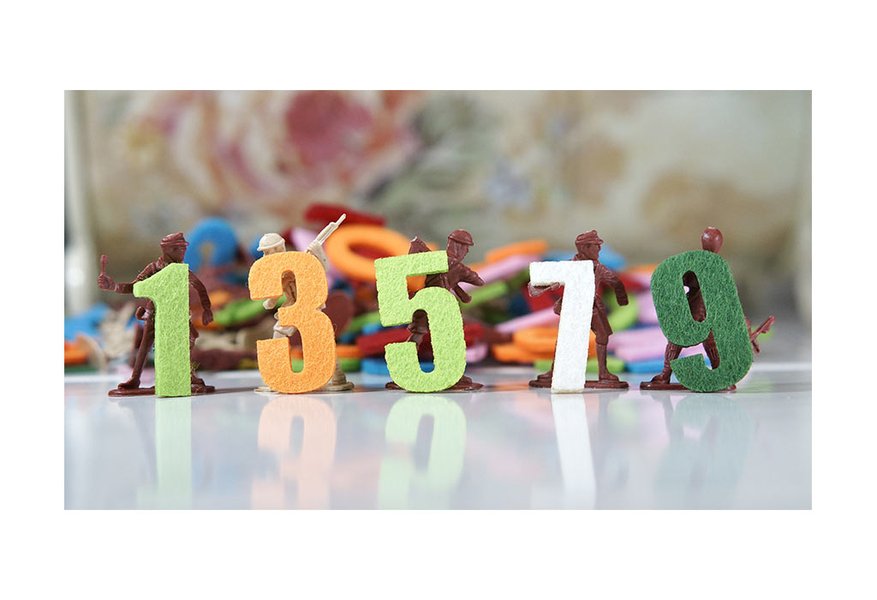
Understanding the basic concept of odd and even numbers is the foundation for coding the logic.
Frequently Asked Questions (FAQ)
Quick Answers to Common Doubts
How exactly does the modulo operator (%) work for even/odd checks?
The modulo operator (%) returns the remainder of a division. When you calculate number % 2:
- If the number is perfectly divisible by 2 (like 4, 8, -2, 0), the remainder is 0. We classify these numbers as even.
- If the number is not perfectly divisible by 2 (like 3, 7, -5), the remainder is 1 (or -1 in Python for negative odds, but it's non-zero). We classify these numbers as odd.
So, the condition num % 2 == 0 is a direct and efficient way to test for evenness.
What happens if I pass an empty list `[]` to the function?
All the provided function variations handle empty lists correctly.
- In the loop method, the loop simply doesn't run, and the initial counts (0 for even, 0 for odd) are returned.
- In the comprehension/sum/filter methods, the operations are performed on an empty sequence, resulting in counts of 0.
The output for an empty list input will always be {'even': 0, 'odd': 0}.
Is the number zero (0) considered even or odd?
Zero (0) is considered an even number.
This is because it meets the definition of an even number: an integer that is divisible by 2 with no remainder. Mathematically, 0 / 2 = 0 with a remainder of 0. Therefore, 0 % 2 == 0 evaluates to True, and the functions correctly count 0 in the 'even' category.
Which method is the most "Pythonic"?
"Pythonic" often refers to code that is concise, readable, and leverages Python's features effectively. In this context:
- The
sum()with generator expressions method is frequently considered very Pythonic due to its conciseness and efficiency without creating intermediate lists. - List comprehensions are also highly Pythonic and readable.
- The
forloop, while slightly more verbose, is perfectly acceptable and often preferred for its explicitness, especially in educational contexts or simpler scripts.
Ultimately, the "best" choice depends on the context, performance needs, and team coding style preferences.
How should I handle lists that might contain non-integer values?
If your input list might contain non-integers (e.g., "text", 3.14, None), applying the % operator directly will cause a TypeError.
You have a few options:
- Filter First: Use
isinstance(num, int)to check if an element is an integer before attempting the modulo operation. This is shown in the example code for the loop and comprehension methods. Non-integers are simply ignored. - Raise an Error: If non-integers represent invalid input, you can explicitly check for them and raise a
ValueErrororTypeErrorto signal the problem to the caller. - Try-Except Block: Wrap the modulo operation inside a
try-except TypeErrorblock within the loop. This allows you to handle or skip non-integers gracefully.
Filtering with isinstance() is often the cleanest approach if you simply want to count the integers present and ignore others.
Recommended Further Exploration
Dive Deeper into Related Concepts
- How can I filter elements from a Python list based on specific conditions?
- Can you provide a tutorial on Python list comprehensions with practical examples?
- What are the performance differences between using loops and comprehensions in Python?
- How can Python dictionaries be effectively used for storing counts or frequencies of items?
References
Sources and Further Reading
Last updated May 4, 2025