
Implementing a Factorial Function in Python Without Recursion
Efficient and Iterative Approach Simplified
Key Takeaways
- Iterative Methods Enhance Efficiency: Iterative approaches to computing factorials are generally more memory-efficient than their recursive counterparts.
- Robust Input Validation is Crucial: Ensuring that inputs are valid integers and non-negative prevents runtime errors and logical inconsistencies.
- Handling Base Cases Ensures Correctness: Properly managing base cases like 0! and 1! guarantees accurate results across all valid inputs.
1. Introduction to Factorial
The factorial of a non-negative integer n, denoted as n!, is the product of all positive integers less than or equal to n. Mathematically, it is defined as:
$$ n! = \begin{cases} 1 & \text{if } n = 0 \text{ or } n = 1, \\ n \times (n-1)! & \text{if } n > 1. \end{cases} $$
Factorials are fundamental in various fields such as mathematics, statistics, and computer science, particularly in combinatorial computations like permutations and combinations.
2. Importance of Iterative Approach
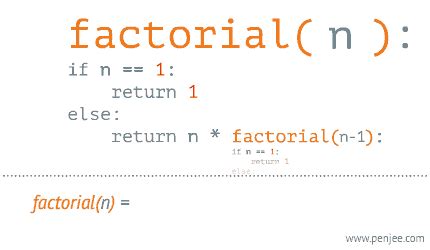
While recursive solutions elegantly express the mathematical definition of the factorial, they come with drawbacks such as increased memory usage and the risk of stack overflow for large n. Iterative methods mitigate these issues by using loops, which are generally more efficient and easier to manage in terms of memory consumption.
3. Input Validation
Ensuring that the input to the factorial function is valid is paramount. Invalid inputs can lead to unexpected behaviors or runtime errors. The following validations should be considered:
- Non-Negative Integers: Factorials are undefined for negative numbers. The function should check if the input is a non-negative integer.
- Integer Type: The function should verify that the input is of integer type, as factorials for non-integer values are not defined.
Implementing these checks prevents the function from processing invalid inputs and provides clear error messages to the user.
4. Handling Base Cases
Base cases are essential to prevent infinite loops and to provide immediate results for specific inputs. For the factorial function:
- 0! and 1!: Both
0!and1!are defined as 1. - Edge Cases: Inputs such as 0 and 1 should be handled explicitly to return correct results without unnecessary computations.
5. Iterative Implementation Using For Loop
An iterative approach using a for loop is straightforward and efficient. Below is a Python function that calculates the factorial of a number without recursion:
def factorial(n):
    """
    Calculate the factorial of a non-negative integer n without using recursion.

    Parameters:
    n (int): The number for which to calculate the factorial.

    Returns:
    int: The factorial of n.

    Raises:
    ValueError: If n is negative.
    TypeError: If n is not an integer.
    """
    # Input Validation
    if not isinstance(n, int):
        raise TypeError("Factorial is only defined for integers.")
    if n < 0:
        raise ValueError("Factorial is not defined for negative numbers.")

    # Handle base cases
    if n == 0 or n == 1:
        return 1

    # Iterative calculation
    result = 1
    for i in range(2, n + 1):
        result *= i
    return result
Explanation:
- Docstring Documentation: Provides clarity on the function's purpose, parameters, return values, and possible exceptions.
- Input Validation:
- Checks if
nis an integer. If not, raises aTypeError. - Checks if
nis non-negative. If negative, raises aValueError.
- Checks if
- Base Case Handling: Immediately returns 1 if
nis 0 or 1, avoiding unnecessary computations. - Iterative Calculation: Uses a
forloop starting from 2 up to and includingn. In each iteration, it multiplies the currentresultby the loop variablei. - Return Statement: After completing the loop, the function returns the final
result, which is the factorial ofn.
6. Alternative Implementation with While Loop
While for loops are commonly used for their clarity and straightforwardness, while loops offer an alternative iterative approach. Below is a Python function implementing the factorial calculation using a while loop:
def factorial_while(n):
    """
    Calculate the factorial of a non-negative integer n without using recursion, using a while loop.

    Parameters:
    n (int): The number for which to calculate the factorial.

    Returns:
    int: The factorial of n.

    Raises:
    ValueError: If n is negative.
    TypeError: If n is not an integer.
    """
    # Input Validation
    if not isinstance(n, int):
        raise TypeError("Factorial is only defined for integers.")
    if n < 0:
        raise ValueError("Factorial is not defined for negative numbers.")

    # Handle base cases
    if n == 0 or n == 1:
        return 1

    # Iterative calculation using while loop
    result = 1
    while n > 1:
        result *= n
        n -= 1
    return result
Explanation:
- Docstring Documentation: Similar to the
forloop implementation, it provides detailed information about the function. - Input Validation:
- Ensures that
nis an integer. RaisesTypeErrorotherwise. - Checks for non-negative values of
n. RaisesValueErrorifnis negative.
- Ensures that
- Base Case Handling: Returns 1 immediately if
nis 0 or 1. - Iterative Calculation: Initializes
resultto 1. Uses awhileloop to multiplyresultbynand then decrementnby 1 in each iteration untilnis no longer greater than 1. - Return Statement: Returns the final
resultafter the loop concludes.
7. Efficiency and Complexity Analysis
Understanding the efficiency of an algorithm is crucial for optimizing performance, especially for large input values. The iterative factorial implementations have the following characteristics:
| Aspect | For Loop Implementation | While Loop Implementation |
|---|---|---|
| Time Complexity | O(n) | O(n) |
| Space Complexity | O(1) | O(1) |
| Memory Usage | Constant | Constant |
| Risk of Stack Overflow | None | None |
| Ease of Understanding | High | Medium |
Both implementations exhibit linear time complexity, meaning the execution time increases proportionally with the input size. However, they maintain constant space complexity, making them memory-efficient. Unlike recursive methods, they do not risk stack overflow errors, making them suitable for large values of n.
8. Practical Example and Usage
To demonstrate the factorial function's utility, consider calculating the number of ways to arrange a set of distinct objects. For instance, the number of ways to arrange 5 distinct books on a shelf is 5! (120).
Example Usage:
# Using the for loop implementation
def factorial(n):
    if not isinstance(n, int):
        raise TypeError("Factorial is only defined for integers.")
    if n < 0:
        raise ValueError("Factorial is not defined for negative numbers.")
    if n == 0 or n == 1:
        return 1
    result = 1
    for i in range(2, n + 1):
        result *= i
    return result

# Example Calls
print(factorial(5))  # Output: 120
print(factorial(0))  # Output: 1
print(factorial(1))  # Output: 1
Output:
factorial(5)returns120factorial(0)returns1factorial(1)returns1
9. Error Handling and Edge Cases
Robust error handling ensures that the function behaves predictably under unexpected conditions. Key considerations include:
- Negative Inputs: As factorials for negative numbers are undefined, the function should raise a
ValueErrorwhen encountering such inputs. - Non-Integer Inputs: Factorials are only defined for integers. Therefore, the function should raise a
TypeErrorif the input is not an integer. - Large Inputs: While the iterative approach handles larger inputs better than recursion, extremely large values of
ncan still lead to performance issues or integer overflow in other programming languages. In Python, integer overflow is not a concern, but the computation time can become significant.
10. Best Practices in Writing Factorial Functions
Adhering to best practices ensures that the factorial function is efficient, maintainable, and user-friendly:
- Clear Documentation: Use docstrings to explain the function's purpose, parameters, return values, and potential exceptions.
- Input Validation: Always validate inputs to prevent unexpected behaviors.
- Efficient Algorithms: Choose iterative methods over recursive ones to enhance performance and reduce memory usage.
- Handling Base Cases: Properly manage base cases to ensure correctness and efficiency.
- Consistent Naming Conventions: Use descriptive and consistent variable and function names for readability.
- Modular Code: Keep the function modular to facilitate testing and reuse.
11. Comparing Iterative and Recursive Approaches
Both iterative and recursive methods can compute factorials, but they differ in implementation, efficiency, and practical considerations:
| Aspect | Iterative Approach | Recursive Approach |
|---|---|---|
| Time Complexity | O(n) | O(n) |
| Space Complexity | O(1) | O(n) |
| Memory Usage | Constant | Increases with n due to call stack |
| Risk of Stack Overflow | None | High for large n |
| Code Readability | Moderate | High |
| Ease of Understanding | Easy | May be difficult for beginners |
Advantages of Iterative Approach:
- More memory-efficient due to constant space usage.
- Avoids the risk of stack overflow errors.
- Generally faster for large inputs.
Advantages of Recursive Approach:
-
Provides a direct translation of the mathematical definition.
-
Can be more intuitive and easier to implement for those familiar with recursion.
While recursive methods may be more elegant, iterative methods are often preferred in practice for their efficiency and reliability, especially when dealing with large input sizes.
12. Conclusion
Implementing a factorial function in Python without recursion is both practical and efficient using iterative methods. By leveraging for or while loops, developers can compute factorials reliably while maintaining optimal performance. Proper input validation and handling of base cases are essential to ensure the function's correctness and robustness. While recursion offers a more direct expression of the factorial's mathematical definition, iterative approaches are generally more suitable for real-world applications where efficiency and scalability are paramount.
References
Last updated January 18, 2025