
Unlock Forex Signals: Can Python Master the Inner Circle Trader Strategy?
Exploring the feasibility of building an automated ICT analysis tool for pairs like EUR/USD using Python.
Highlights
- Feasibility Confirmed: It is entirely possible to create a Python script that implements Inner Circle Trader (ICT) concepts to analyze currency pairs like EUR/USD and generate buy/sell signals based on user input.
- Core Components: Building such a script involves fetching market data, identifying key ICT patterns (like order blocks, liquidity sweeps, and market structure shifts), applying defined logic, and outputting actionable signals.
- Resources Available: Numerous open-source Python libraries (e.g., pandas, yfinance, ta-lib) and community-driven projects (like specific GitHub repositories) provide foundations and examples for implementing ICT strategies programmatically.
Understanding the Inner Circle Trader (ICT) Strategy
The Inner Circle Trader (ICT) methodology, developed by Michael J. Huddleston, is a complex but popular approach in the forex trading community. It moves beyond simple indicators, focusing instead on understanding institutional order flow, market structure, liquidity dynamics, and precise price action analysis. Key concepts include:
- Market Structure: Identifying swing highs and lows, breaks of structure (BoS), and changes of character (CHoCH) to gauge the market's directional bias.
- Liquidity: Recognizing areas where stop-loss orders likely accumulate (liquidity pools) and anticipating price movements (liquidity grabs or sweeps) towards these zones.
- Order Blocks (OB): Pinpointing specific candlestick patterns (often the last down-close candle before an up-move, or vice versa) where large institutions are believed to have placed significant orders.
- Fair Value Gaps (FVG) / Imbalances: Identifying price inefficiencies or gaps between candles where buying or selling pressure was dominant, often acting as magnets for future price action.
- Premium vs. Discount: Analyzing price ranges to determine if the market is trading at expensive (premium) or cheap (discount) levels, often using Fibonacci tools.
- Time & Price Theory: Considering specific times of day (e.g., London or New York sessions) and key price levels for high-probability setups.
Because ICT relies on identifiable patterns and rule-based concepts (despite some discretionary elements), it lends itself well to algorithmic interpretation and implementation using programming languages like Python.
Python: The Ideal Tool for Algorithmic ICT Analysis
Why Choose Python?
Python stands out as an excellent choice for developing an ICT-based trading signal generator for several reasons:
- Rich Ecosystem: Access to powerful libraries for data manipulation (
pandas,numpy), financial data acquisition (yfinance, specialized broker APIs), technical analysis (ta-lib,pandas_ta), and visualization (matplotlib,plotly). - Readability and Ease of Use: Python's clear syntax makes it easier to translate complex trading logic into code compared to lower-level languages.
- Community Support: A large and active community means abundant resources, tutorials, and pre-built packages (like those specifically for smart money concepts) are available.
- Integration Capabilities: Python scripts can be integrated with various platforms, data feeds, and even broker APIs for potential automation (though generating signals is distinct from automated execution).
- Backtesting Frameworks: Libraries like
BacktraderandZiplineallow for rigorous testing of the developed strategy on historical data before any live application.
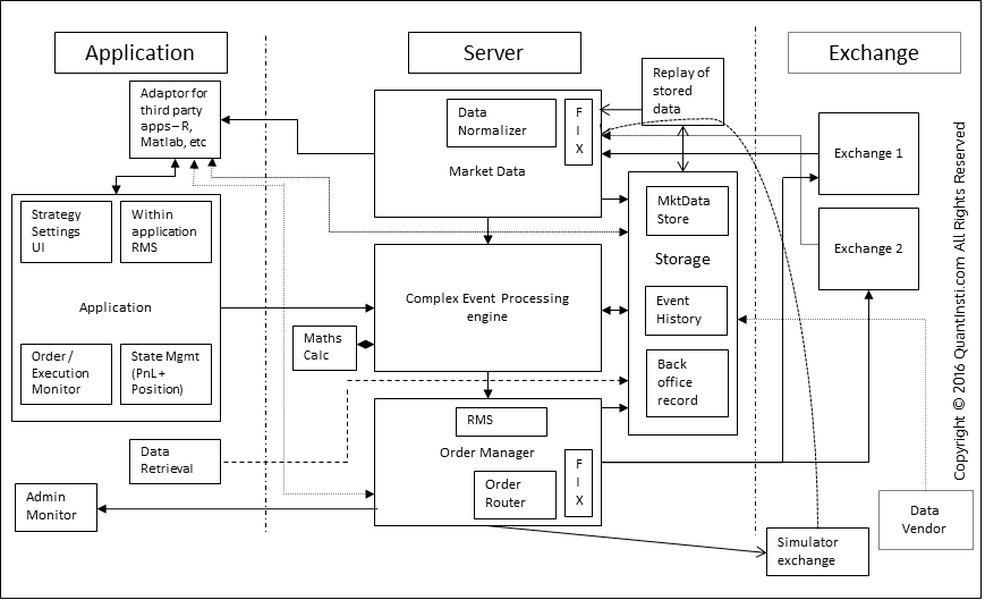
Conceptual overview of components in an algorithmic trading system, adaptable for ICT strategies.
Building Your ICT Signal Generator: A Step-by-Step Approach
Creating a Python script to generate ICT signals for EUR/USD involves several key stages:
1. Handling User Input
The script needs to accept the target currency pair (e.g., "EUR/USD") and potentially other parameters like the timeframe (e.g., "15Min", "1H", "4H") from the user. Python's `argparse` library is suitable for handling command-line arguments smoothly.
# Example using argparse
import argparse

parser = argparse.ArgumentParser(description='ICT Signal Generator')
parser.add_argument('--pair', type=str, required=True, help='Currency pair (e.g., EURUSD=X for yfinance)')
parser.add_argument('--timeframe', type=str, default='1h', help='Timeframe (e.g., 15m, 1h, 4h)')
args = parser.parse_args()

print(f"Analyzing {args.pair} on the {args.timeframe} timeframe...")
2. Data Acquisition and Preparation
Fetch historical and potentially near real-time price data (Open, High, Low, Close, Volume - OHLCV) for the specified pair and timeframe. Libraries like `yfinance` can provide easy access to data, although dedicated Forex broker APIs (like OANDA, IG, Interactive Brokers) offer more reliable and granular real-time data.
import yfinance as yf
import pandas as pd

# Fetch data using yfinance (adjust period/interval as needed)
try:
    data = yf.download(tickers=args.pair, period="3mo", interval=args.timeframe)
    if data.empty:
        print(f"Error: No data found for {args.pair} on timeframe {args.timeframe}. Check ticker/timeframe.")
        exit()
    # Ensure data is sorted and index is datetime
    data.sort_index(inplace=True)
    print(f"Successfully fetched {len(data)} data points.")
except Exception as e:
    print(f"Error fetching data: {e}")
    exit()
Data cleaning and preprocessing might involve handling missing values or converting timezones if necessary.
3. Implementing ICT Logic
This is the core of the script, translating ICT concepts into programmable rules:
Identifying Market Structure
Detect swing highs/lows, Break of Structure (BoS), and Change of Character (CHoCH). This typically involves comparing recent highs and lows to previous ones over a defined lookback period.
Detecting Liquidity Zones
Identify potential liquidity pools above old highs and below old lows. Code logic to check if price has "swept" these levels.
Finding Order Blocks
Scan for specific candle patterns that fit the definition of bullish or bearish order blocks (e.g., the last down candle before a strong up move). This might involve analyzing candle body size, wicks, and volume.
Locating Fair Value Gaps (FVGs)
Identify gaps between the high of one candle and the low of the candle two periods later (or vice versa for bearish FVGs). These zones can act as targets or entry areas.
Implementing these requires careful logic, often using libraries like `pandas` for rolling calculations and comparisons. Several GitHub repositories, such as `joshyattridge/smart-money-concepts` or `sailoo121/ss_smc`, offer pre-built functions for some of these concepts.
4. Generating Buy/Sell Signals
Define specific conditions under which a buy or sell signal is generated. This involves combining the identified ICT elements. For example:
- Buy Signal: Price sweeps a key low (liquidity grab), shows a Change of Character (CHoCH) to the upside on a lower timeframe (or confirmation on the current TF), and reacts positively to a bullish Order Block or fills a Fair Value Gap in a discount zone.
- Sell Signal: Price sweeps a key high, shows a bearish CHoCH, and rejects from a bearish Order Block or FVG in a premium zone.
The script should output these signals clearly, potentially including the reason and the price level at the time of signal generation.
5. Incorporating Risk Management
While the primary goal is signal generation, a robust script could also incorporate basic risk management principles inspired by ICT, such as suggesting potential stop-loss placements (e.g., below the low of an order block) or calculating risk-reward ratios based on potential targets (like the next liquidity pool or FVG). The `LesterALeong/ICT-Risk-Management` GitHub repository provides examples of implementing risk filtering in Python.
Visualizing the ICT Script Components
A mindmap helps illustrate the interconnected parts of building an ICT signal generator script in Python:
This mindmap outlines the flow from user input through data processing and analysis to the final signal output, highlighting the core ICT components involved.
Evaluating Key ICT Concepts for Scripting
Not all ICT concepts are equally straightforward to implement algorithmically. This radar chart provides a conceptual assessment of several core ICT elements based on their typical implementation complexity versus their potential impact on generating high-probability signals within a Python script. Higher scores indicate greater complexity or impact.
This chart suggests that concepts like Market Structure, Order Blocks, and Liquidity Sweeps generally have a high impact on signal quality but can also be complex to code accurately. FVGs and Premium/Discount zones might be slightly simpler to implement while still providing significant value. Multi-timeframe analysis adds considerable complexity but also potentially enhances signal reliability.
Essential Python Libraries for ICT Scripting
Leveraging the right Python libraries is crucial for efficient development. Here's a table outlining some key libraries and their roles in building an ICT signal generator:
| Library | Purpose | Relevance to ICT Scripting |
|---|---|---|
pandas |
Data manipulation and analysis | Core library for handling OHLCV data (DataFrames), time-series analysis, calculating indicators, and structuring results. |
numpy |
Numerical computing | Foundation for pandas and used for numerical operations, array manipulation, and mathematical functions. |
yfinance |
Yahoo Finance data downloader | Easy way to fetch historical stock and forex data for backtesting or analysis (may have limitations for real-time Forex). |
Broker-Specific APIs (e.g., oandapyV20, ib_insync) |
Direct data feed and execution | Provide reliable, real-time Forex data and potentially integrate order execution (more advanced). |
ta-lib / pandas_ta |
Technical Analysis indicators | Calculate standard indicators (RSI, MACD, MAs) that can be used as confirmation tools alongside ICT concepts. |
matplotlib / plotly |
Data visualization | Useful for plotting charts with price data, identified ICT structures (OBs, FVGs), and buy/sell signals for visual verification. |
argparse |
Command-line argument parsing | Allows users to easily specify parameters like the currency pair and timeframe when running the script. |
Backtrader / Zipline |
Backtesting frameworks | Essential for testing the strategy's historical performance before considering live application. |
Choosing the right combination of these libraries will depend on the specific requirements, data source, and complexity of the ICT rules being implemented.
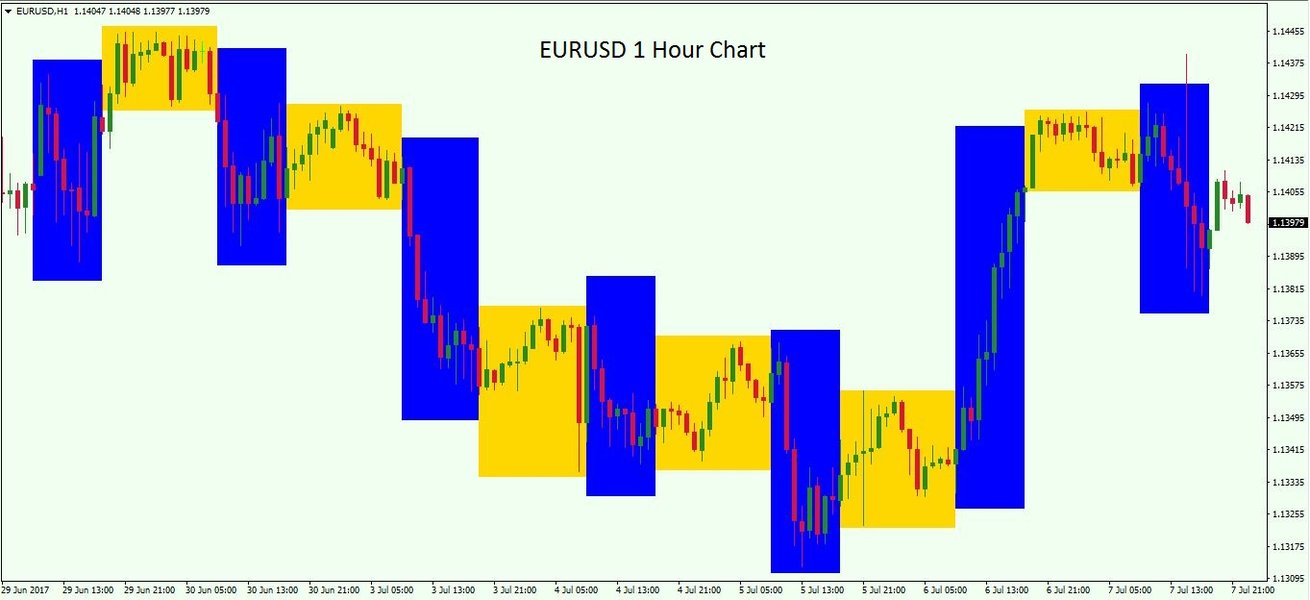
Example of a EUR/USD chart, the type of data your Python script would analyze.
Understanding ICT Strategy Further
For a deeper dive into the core concepts of the Inner Circle Trader strategy, which you would need to translate into Python code, the following video provides a foundational overview. Understanding these principles is crucial before attempting to automate them.
Beginner's guide to learning core ICT concepts (Source: YouTube).
This video serves as a good starting point for grasping the foundational elements like market structure, order blocks, and liquidity that form the basis of ICT analysis, which you'd then aim to replicate logically within your Python script.
Challenges and Considerations
While creating an ICT signal generator in Python is feasible, be aware of these challenges:
- Subjectivity and Discretion: Some ICT concepts, like identifying the "right" order block or interpreting price action reactions, involve trader discretion. Translating this nuance perfectly into objective code rules can be difficult and may require simplification or threshold-based logic.
- Data Quality and Latency: Real-time forex trading requires high-quality, low-latency data. Free sources like `yfinance` might not be sufficient for live signals; reliable broker APIs are often necessary.
- Complexity of Concepts: Implementing advanced ICT patterns like multi-timeframe analysis or specific entry models (e.g., "2022 Mentorship Model") requires sophisticated programming logic.
- Overfitting: When backtesting, it's easy to create rules that work perfectly on historical data but fail in live markets. Rigorous testing across different market conditions is vital.
- No Guarantees: No trading strategy, automated or manual, guarantees profits. ICT concepts aim to identify high-probability setups, but losses are inherent in trading. Any script should be used as a tool, ideally alongside manual confirmation and robust risk management. Educational resources often emphasize that such tools are not standalone trading solutions.
- Backtesting is Crucial: Thoroughly backtest any implemented strategy on historical data for the specific pair (e.g., EUR/USD) to evaluate its potential effectiveness (win rate, drawdown, profitability) before relying on its signals.
Frequently Asked Questions (FAQ)
Can the Python script provide real-time signals?
Yes, but it requires a reliable real-time data feed, typically via a broker's API (like OANDA, Interactive Brokers) or a paid data provider. Using libraries like `yfinance` might introduce delays not suitable for fast-paced intraday trading. The script would need to run continuously or periodically, fetching new data and re-evaluating conditions.
How accurate will the signals be?
The accuracy depends heavily on how well the ICT concepts are translated into code, the quality of the data, the specific rules defined, and the market conditions. ICT involves nuanced interpretation, so a purely algorithmic version might differ from a discretionary trader's analysis. Extensive backtesting is essential to estimate potential accuracy and profitability, but past performance doesn't guarantee future results.
Do I need advanced programming skills?
Basic to intermediate Python skills are needed, particularly familiarity with `pandas` for data manipulation. Implementing the more complex ICT patterns accurately requires stronger programming logic and algorithmic thinking. Starting with simpler concepts (like basic market structure breaks or FVG identification) and leveraging existing libraries (like `pandas_ta` or specific SMC packages found on GitHub) can lower the entry barrier.
Can this script automatically trade for me?
The focus here is on generating signals (analysis output). Building a fully automated trading bot involves additional complexity: integrating with a broker's execution API, handling orders, managing positions, real-time error handling, and robust risk management. While possible, it's a significant step beyond just signal generation and carries substantial risks.
Recommended
- How can I effectively backtest an ICT trading strategy using Python frameworks like Backtrader?
- Which specific Python libraries or functions are best for accurately detecting Order Blocks and Fair Value Gaps?
- Is it possible to integrate signals from a Python ICT script with platforms like MetaTrader 4/5 or TradingView?
- What are the most reliable real-time Forex data sources compatible with Python for developing trading algorithms?
References
Last updated May 5, 2025