
Unlock Your Future: The Definitive Python & Machine Learning Study Roadmap for 2025
Your comprehensive, step-by-step guide to mastering Python programming and pioneering machine learning applications.
Embarking on a journey to learn Python programming and machine learning (ML) can be transformative. This ultimate study plan, updated for May 06, 2025, synthesizes expert advice and proven strategies to guide you from foundational concepts to advanced applications. Whether you're a beginner or looking to structure your learning, this roadmap provides a clear path to proficiency.
Key Highlights of Your Learning Journey
Essential Insights for Success
- Build a Strong Python Foundation First: Mastery of Python's core concepts, data structures, and libraries like NumPy and Pandas is crucial before diving into complex machine learning algorithms.
- Embrace Mathematical Principles: A solid understanding of linear algebra, calculus, probability, and statistics forms the backbone of machine learning, enabling deeper comprehension and model tuning.
- Prioritize Hands-On Practice: Theoretical knowledge must be complemented by consistent practical application through coding exercises, projects, and real-world problem-solving to solidify skills.
Phase 1: Mastering Python Programming Fundamentals
Building Your Coding Bedrock (Approx. Weeks 1-8)
Before venturing into machine learning, a robust understanding of Python is non-negotiable. Python's readability and extensive libraries make it the preferred language for ML practitioners.

A well-organized workspace can significantly enhance your learning productivity.
Weeks 1-2: Python Basics – Getting Started
Begin with the absolute essentials of Python. Focus on understanding the syntax and fundamental building blocks.
- Topics: Python syntax, variables, various data types (strings, integers, floats, Booleans), operators.
- Practice: Write simple scripts, perform basic calculations, and familiarize yourself with the Python interpreter.
Weeks 3-4: Control Flow and Data Structures
Learn how to control the flow of your programs and how to store and organize data efficiently.
- Topics: Conditional statements (if, elif, else), loops (for, while), and core data structures (lists, tuples, dictionaries, sets).
- Practice: Develop programs that make decisions and iterate through data. Manipulate different data structures to solve problems.
Weeks 5-6: Functions, Modules, and File Handling
Understand how to write reusable code and interact with the file system.
- Topics: Defining and calling functions, understanding scope, lambda functions, importing and using modules/libraries, reading from and writing to files.
- Practice: Create modular code with functions. Write scripts that process data from files.
Weeks 7-8: Object-Oriented Programming (OOP) and Essential Libraries Introduction
Grasp the principles of OOP and get introduced to libraries vital for data science.
- Topics: Classes, objects, inheritance, polymorphism, an introduction to NumPy for numerical operations and Pandas for data manipulation.
- Practice: Design simple classes. Start performing basic array operations with NumPy and data frame manipulations with Pandas. Also, learn about virtual environments (e.g., venv, conda) and package management (pip).
Below is a helpful introductory video to get you started with Python programming fundamentals quickly.
This video provides a concise introduction to Python for beginners.
Phase 2: Essential Mathematical Foundations for Machine Learning
Understanding the Language of Data (Approx. Weeks 9-12)
Machine learning is deeply rooted in mathematics. A grasp of these concepts will empower you to understand how algorithms work, why they perform a certain way, and how to improve them.
Linear Algebra
The bedrock for representing data and model parameters.
- Key Concepts: Vectors, matrices, matrix multiplication, dot products, transformations, eigenvalues, and eigenvectors.
- Relevance: Used in dimensionality reduction (PCA), data representation, and the internal workings of many ML algorithms.
Calculus
Essential for optimization, which is at the heart of training ML models.
- Key Concepts: Derivatives, partial derivatives, gradients, chain rule.
- Relevance: Fundamental to understanding gradient descent and backpropagation in neural networks.
Probability and Statistics
Crucial for making sense of data, quantifying uncertainty, and evaluating model performance.
- Key Concepts: Basic probability theory, random variables, probability distributions (e.g., Gaussian), mean, median, mode, variance, standard deviation, hypothesis testing, Bayes' theorem, p-values.
- Relevance: Used in data analysis, model evaluation, and algorithms like Naive Bayes.
Optimization Theory
The study of finding the best solution from a set of available alternatives.
- Key Concepts: Cost functions, objective functions, gradient descent and its variants (stochastic, mini-batch), convex optimization.
- Relevance: Core to training most machine learning models by minimizing error.
Phase 3: Introduction to Machine Learning Concepts
Grasping Core ML Principles (Approx. Weeks 13-16)
This phase introduces the fundamental concepts, terminology, and workflow of machine learning.
What is Machine Learning?
- Understanding the difference between AI, ML, and Deep Learning.
- ML vs. traditional programming.
- The general ML workflow: data collection, preprocessing, model training, evaluation, and deployment.
Types of Machine Learning
- Supervised Learning: Learning from labeled data.
- Regression (predicting continuous values): Linear Regression, Polynomial Regression.
- Classification (predicting discrete categories): Logistic Regression, k-Nearest Neighbors (KNN), Support Vector Machines (SVMs), Decision Trees, Random Forests.
- Unsupervised Learning: Finding patterns in unlabeled data.
- Clustering: K-Means, Hierarchical Clustering.
- Dimensionality Reduction: Principal Component Analysis (PCA).
- Association Rule Learning: Apriori.
- Reinforcement Learning: Learning through trial and error with rewards and penalties (introduction to concepts).
Model Evaluation and Validation
- Metrics:
- For Regression: Mean Absolute Error (MAE), Mean Squared Error (MSE), R-squared.
- For Classification: Accuracy, Precision, Recall, F1-score, Confusion Matrix, ROC Curve, AUC.
- Techniques: Train-test split, cross-validation (k-fold).
- Understanding Bias and Variance: The bias-variance tradeoff, overfitting, and underfitting. Regularization techniques (L1, L2).
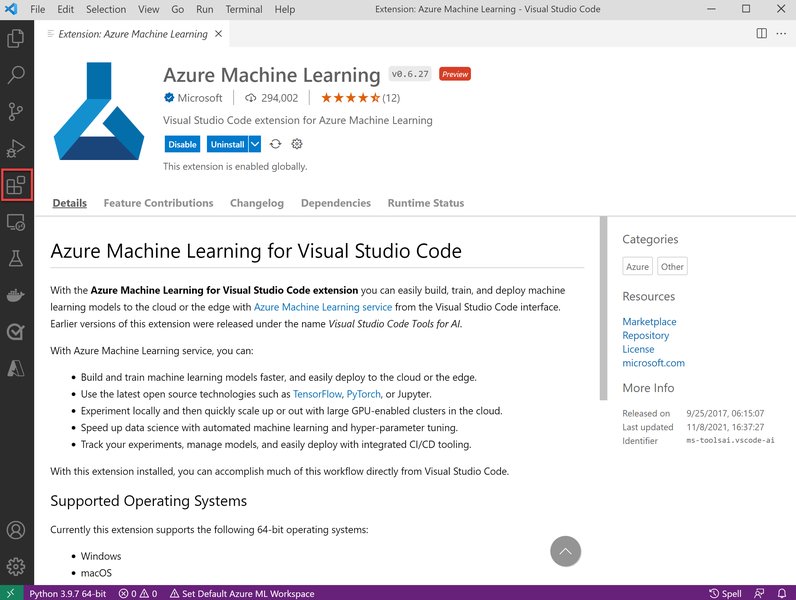
Modern IDEs often integrate tools for machine learning development and deployment.
Phase 4: Practical Machine Learning with Python
Applying Knowledge with Python Libraries (Approx. Weeks 17-24)
This is where you combine your Python skills and ML knowledge to build and evaluate models using powerful Python libraries.
Essential Python Libraries for ML
- NumPy: For efficient numerical computations, especially array and matrix operations.
- Pandas: For data manipulation and analysis (DataFrames, data cleaning, loading data from various sources).
- Matplotlib & Seaborn: For data visualization (creating plots, charts, histograms to understand data distributions and relationships).
- Scikit-learn (sklearn): The go-to library for most classical ML algorithms. It provides tools for:
- Data preprocessing (scaling, encoding categorical variables).
- Model selection and implementation (regression, classification, clustering algorithms).
- Model evaluation and hyperparameter tuning (GridSearchCV, RandomizedSearchCV).
- Pipelines for streamlining workflows.
Hands-on Implementation
- Data Preprocessing: Handling missing values, feature scaling, encoding categorical data, feature engineering (creating new features from existing ones).
- Model Training: Implementing various supervised and unsupervised models using Scikit-learn on different datasets.
- Model Evaluation & Tuning: Assessing model performance using appropriate metrics, performing cross-validation, and tuning hyperparameters to improve results.
- Building ML Pipelines: Using Scikit-learn's
Pipelineto chain preprocessing steps and model training for efficient and reproducible workflows.
Comparative Effort and Impact of Learning Areas
Visualizing Your Learning Investment
The journey to mastering Python and Machine Learning involves various components, each requiring different levels of effort and offering distinct impacts on your overall proficiency. This radar chart provides an opinionated perspective on these aspects. "Time Investment" reflects the relative time you might spend, "Conceptual Difficulty" indicates the complexity of grasping the core ideas, and "Career Impact" suggests its importance for professional development.
This chart illustrates that while foundational elements like Python syntax are less conceptually difficult, areas like deep learning and the mathematical underpinnings require more significant time and intellectual effort. However, practical projects and library proficiency often yield high career impact by demonstrating applicable skills.
Phase 5: Delving into Deep Learning and Advanced Topics
Exploring Neural Networks and Beyond (Approx. Weeks 25-32+)
Once comfortable with classical ML, you can explore deep learning, a subfield that has powered many recent AI breakthroughs.
Introduction to Neural Networks
- Core Concepts: Neurons, layers, activation functions (Sigmoid, ReLU, Tanh), backpropagation, loss functions, optimizers (Adam, SGD).
- Frameworks: Introduction to TensorFlow and/or PyTorch for building and training neural networks.
Convolutional Neural Networks (CNNs)
- Architecture: Convolutional layers, pooling layers, fully connected layers.
- Applications: Image recognition, computer vision tasks.
Recurrent Neural Networks (RNNs)
- Architecture: Handling sequential data, LSTMs (Long Short-Term Memory), GRUs (Gated Recurrent Units).
- Applications: Natural Language Processing (NLP), time series analysis.
Advanced Topics
- Transfer Learning: Using pre-trained models (e.g., from ImageNet) and fine-tuning them for specific tasks.
- Reinforcement Learning (Deeper Dive): Q-learning, Deep Q-Networks (DQN).
- MLOps (Machine Learning Operations): Introduction to deploying, monitoring, and maintaining ML models in production.
- Ethics and Fairness in ML: Understanding and mitigating bias in data and models, ensuring responsible AI development.
Phase 6: Real-World Projects and Portfolio Building
Applying Skills and Showcasing Expertise (Ongoing)
Theoretical knowledge and isolated exercises are not enough. Building tangible projects is crucial for solidifying understanding and creating a portfolio to demonstrate your skills.
Project Ideas
- Start with classic datasets: Iris flower classification, Titanic survival prediction, MNIST handwritten digit recognition.
- Participate in Kaggle competitions to work on diverse and challenging problems.
- Develop end-to-end projects: From data collection and cleaning to model deployment. Examples:
- Sentiment analysis of product reviews.
- Spam email detection.
- House price prediction.
- Image classifier for a custom dataset.
- Explore deploying models using frameworks like Flask/Django for web applications or tools like TensorFlow Serving, ONNX.
Building Your Portfolio
- Use GitHub to host your project code and document your work clearly with README files.
- Write blog posts or articles explaining your projects, methodologies, and findings.
- Contribute to open-source ML projects if possible.
Visualizing Your Learning Path: A Mindmap Overview
Connecting the Dots in Your Python & ML Journey
This mindmap provides a bird's-eye view of the entire study plan, illustrating the interconnected phases and key learning areas. It helps to visualize how foundational Python skills lead into mathematical prerequisites, core ML concepts, practical application, advanced topics, and finally, real-world project development. Use this to keep track of your progress and understand how each piece fits into the larger puzzle of becoming proficient in Python and Machine Learning.
Each branch of this mindmap represents a significant stage or component of your learning. Refer back to it to see how different topics connect and build upon one another.
Summary Table: Study Plan Phases and Resources
A Quick Reference Guide
This table summarizes the key phases of your study plan, highlighting the focus areas and suggesting some valuable resources to aid your learning. Many of these resources are free and offer comprehensive materials.
| Phase | Focus Area | Key Topics & Skills | Example Resources |
|---|---|---|---|
| 1: Python Fundamentals | Core Python Programming | Syntax, data types, control flow, functions, data structures, OOP basics, NumPy/Pandas intro | Python.org (Official Docs), Real Python, W3Schools Python, 30 Days of Python (GitHub) |
| 2: Essential Math | Mathematical Prerequisites for ML | Linear algebra, calculus, probability, statistics, optimization basics | Khan Academy (Math sections), Math tutorials within ML courses |
| 3: ML Concepts | Foundational Machine Learning Theory | Types of ML, common algorithms (regression, classification, clustering), evaluation metrics, overfitting/underfitting | Google's Machine Learning Crash Course, GeeksforGeeks ML Tutorials, Andrew Ng's Coursera course (audited) |
| 4: Practical ML with Python | Implementing ML with Python Libraries | Data preprocessing, visualization (Matplotlib/Seaborn), Scikit-learn for model building & evaluation, feature engineering | Python Engineer’s ML Study Guide, TensorFlow Learn ML, Machine Learning Mastery |
| 5: Deep Learning & Advanced | Neural Networks and Specialized Topics | Neural network concepts, CNNs, RNNs, transfer learning, ML ethics, MLOps intro | TensorFlow/PyTorch official tutorials, fast.ai courses, Google ML Crash Course (advanced modules) |
| 6: Projects & Portfolio | Application and Demonstration of Skills | End-to-end ML projects, Kaggle competitions, GitHub portfolio development | Kaggle, UCI Machine Learning Repository, Personal project ideas |
Frequently Asked Questions (FAQ)
Answers to Common Queries on Your Learning Path
How long will this entire study plan take to complete? ▼
The timeline is approximate and highly dependent on your prior experience, learning pace, and the amount of time you dedicate daily/weekly. The phased plan suggests around 32+ weeks if you consistently study. However, mastery is an ongoing process. Focus on understanding concepts thoroughly rather than rushing through them. Some learners might take 6-12 months for a solid grasp, while others might take longer, especially when balancing with other commitments.
What level of mathematical background is truly necessary for machine learning? ▼
A foundational understanding of linear algebra (vectors, matrices), calculus (derivatives, gradients), and probability/statistics (mean, variance, distributions) is crucial for deeply understanding ML algorithms and how they work. While many libraries abstract away the complex math, knowing these concepts helps in model selection, hyperparameter tuning, and troubleshooting. You don't need to be a math expert initially, but be prepared to learn or refresh these topics as you progress.
Can I learn machine learning without strong Python skills first? ▼
It's highly recommended to build a solid Python foundation before diving deep into machine learning. ML involves extensive data manipulation, algorithm implementation, and working with libraries, all of which require proficiency in Python. Trying to learn both simultaneously can be overwhelming and less effective. Phase 1 of this plan is dedicated to building those essential Python skills.
Which Python libraries are the most important to master for machine learning? ▼
Several libraries are fundamental:
- NumPy: For numerical computing and array manipulation.
- Pandas: For data analysis and manipulation (working with DataFrames).
- Matplotlib & Seaborn: For data visualization.
- Scikit-learn: For classical machine learning algorithms, preprocessing, and model evaluation.
- TensorFlow & PyTorch: For deep learning and building neural networks.
Start with NumPy, Pandas, Matplotlib/Seaborn, and Scikit-learn, then move to TensorFlow or PyTorch as you advance to deep learning.
Recommended Further Exploration
Deepen Your Understanding with These Queries
- How to choose the right machine learning algorithm for a specific problem?
- What are the best practices for data preprocessing in machine learning projects?
- Can you explain the concepts of MLOps and deploying machine learning models to production?
- What are common ethical considerations and bias mitigation techniques in AI and machine learning?
References
Valuable Resources for Your Learning Journey
Last updated May 6, 2025