
Unlocking Python OOP: A Paradigm Shift for Subroutine-Minded Programmers
Bridging the gap from procedural subroutines to powerful object-oriented design in Python.
Key Insights into Python OOP for Procedural Programmers
- Classes are Blueprints, Objects are Instances: Instead of a standalone subroutine, think of a class as a comprehensive blueprint for data (attributes) and associated operations (methods). An object is a living, breathing entity created from that blueprint, capable of performing its own actions using its encapsulated data.
- Methods are Subroutines with Context: Your familiar subroutines evolve into "methods" within OOP. These methods are functions intimately tied to an object, meaning they operate on that object's specific data, enhancing modularity and preventing unintended global state changes.
- Encapsulation and Inheritance Drive Modularity: OOP promotes bundling data and methods together (encapsulation) and reusing code through hierarchical relationships (inheritance). This offers a structured approach to code organization, making large projects more manageable, scalable, and easier to debug than traditional procedural approaches.
As an experienced programmer accustomed to the procedural paradigm of calling subroutines, transitioning to Object-Oriented Programming (OOP) in Python might initially seem like a significant conceptual leap. However, at its core, OOP is a powerful way to structure and organize code by modeling real-world entities and their interactions. Python, being a multi-paradigm language, supports OOP elegantly, allowing you to gradually adopt its principles while leveraging your existing programming instincts.
In procedural programming, your focus is typically on creating discrete blocks of code (subroutines or functions) that perform specific tasks, often operating on data passed as arguments or global variables. Data and the logic that manipulates it are frequently kept separate. OOP, in contrast, fundamentally shifts this perspective by bundling data and the functions that operate on that data into single, self-contained units called "objects."
From Subroutines to Methods: The Core Transformation
Understanding Python's approach to functions and objects
In Python, the term "subroutine" is often synonymous with "function." A function is a named block of code that performs a specific task, can accept arguments, and can return values. For example:
def calculate_area(length, width):
    return length * width

# Calling the subroutine
area = calculate_area(10, 5)
print(f"Calculated area: {area}")
In OOP, these subroutines don't disappear; they evolve into what are called "methods." A method is essentially a function that "belongs" to an object or a class. When you call a method, it implicitly operates on the data associated with the object it's called upon. This contextual binding is a fundamental difference.
Classes: The Blueprints of Behavior
The foundation of OOP is the concept of a class. Think of a class as a blueprint, a template, or a schema that defines the structure and behavior for a type of object. Just as you might define a subroutine to perform a specific action, a class defines a set of attributes (data) and methods (functions) that objects of that class will possess. It's like defining the specifications for a car (e.g., it has a color, a speed, and it can accelerate or brake).
class Car:  # This is the blueprint (class)
    def __init__(self, color, speed=0): # This is a special method (constructor)
        self.color = color # These are attributes (data)
        self.speed = speed

    def accelerate(self): # This is a method (a subroutine bound to the Car object)
        self.speed += 10
        print(f"The {self.color} car accelerated to {self.speed} km/h.")

    def brake(self): # Another method
        self.speed = max(0, self.speed - 5)
        print(f"The {self.color} car braked to {self.speed} km/h.")
Objects: Instances from the Blueprint
An object is a concrete instance created from a class. If Car is the blueprint, then my_audi and your_volvo are specific objects (instances) of the Car class. Each object has its own set of data (e.g., my_audi might be 'red' with a speed of 0, while your_volvo might be 'blue' with a speed of 20), but they both share the same methods (accelerate(), brake()) defined in the Car class.
# Creating objects (instances) from the Car class
my_audi = Car("red")
your_volvo = Car("blue", 20)

# Calling methods on specific objects
my_audi.accelerate()    # Invokes accelerate() on my_audi, affecting its speed
your_volvo.accelerate() # Invokes accelerate() on your_volvo, affecting its speed
my_audi.brake()
Notice how my_audi.accelerate() directly modifies my_audi's speed attribute without explicitly passing my_audi's state as an argument. This is because the method is intrinsically linked to the object.
The Pillars of Object-Oriented Programming
Fundamental principles that enhance code quality and management.
OOP is often described by its four foundational principles, each offering distinct advantages over a purely procedural approach:
Encapsulation: Bundling Data and Behavior
Encapsulation refers to the practice of bundling an object's data (attributes) and the methods that operate on that data into a single unit, keeping the internal details hidden from the outside world. In procedural programming, you might have global variables that multiple subroutines can directly access and modify, potentially leading to hard-to-trace bugs. With encapsulation, an object's internal state is protected, and interactions are controlled through its defined methods.
For example, a BankAccount object would encapsulate its balance and provide deposit() and withdraw() methods to modify it, preventing direct, uncontrolled access to the balance itself. This enhances security and makes the code more robust.
Encapsulation: Data and methods bundled within an object, with controlled external access.
Inheritance: Reusing and Extending Code
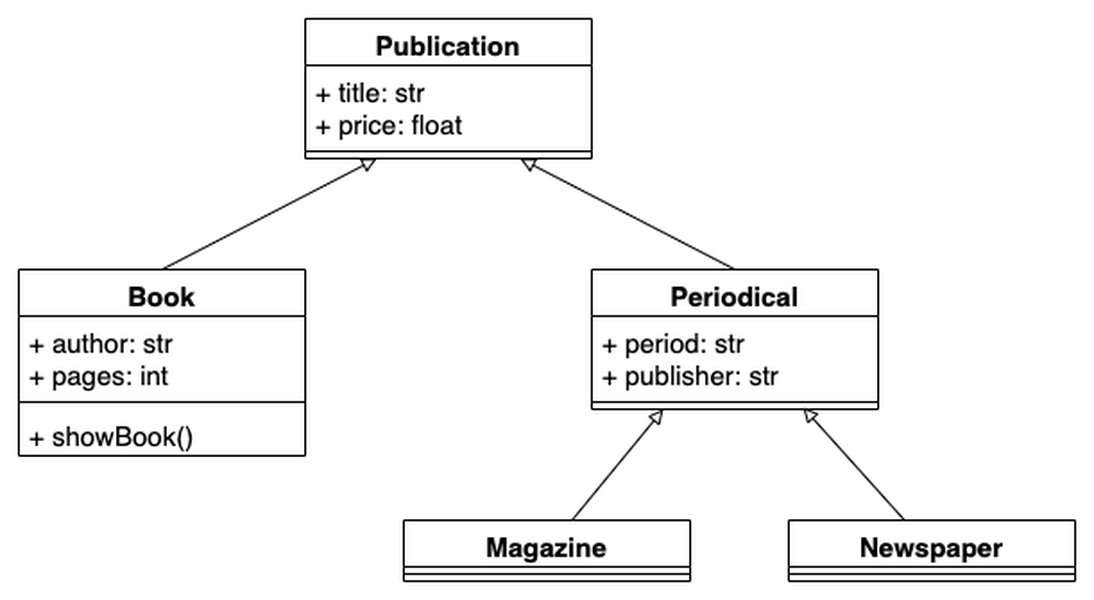
Inheritance allows a new class (a "child" or "subclass") to acquire the attributes and methods of an existing class (a "parent" or "superclass"). This mechanism promotes code reuse and helps establish a natural hierarchy among related classes. If you're used to copying and slightly modifying subroutines for similar functionalities, inheritance provides a much cleaner and more maintainable way to achieve this.
Consider a general `Animal` class with a `speak()` method. Specific animals like `Dog` and `Cat` can inherit from `Animal` and provide their own unique implementation of `speak()`, demonstrating polymorphism while reusing the base structure.
class Animal:
    def __init__(self, name):
        self.name = name

    def speak(self):
        # This is a placeholder method to be overridden by subclasses
        raise NotImplementedError("Subclass must implement abstract method")

class Dog(Animal):
    def speak(self):
        return f"{self.name} says Woof!"

class Cat(Animal):
    def speak(self):
        return f"{self.name} says Meow!"

my_dog = Dog("Buddy")
my_cat = Cat("Whiskers")

print(my_dog.speak())
print(my_cat.speak())
Polymorphism: Different Behaviors for Same Action
Polymorphism (meaning "many forms") allows objects of different classes to be treated as objects of a common superclass. This means that a single method call can produce different results depending on the type of object it's invoked on. This is akin to having subroutines with the same name that perform different tasks based on the input type, but in OOP, the behavior is determined by the object itself.
Using the `Animal` example above, both `my_dog.speak()` and `my_cat.speak()` use the same method name (`speak()`), but because `Dog` and `Cat` are different types of `Animal` objects, they exhibit different behaviors.
Abstraction: Hiding Complexity
Abstraction involves hiding the complex implementation details of an object and exposing only the necessary features or interfaces. It focuses on "what" an object does rather than "how" it does it. This is similar to how you use a complex subroutine without needing to understand its internal workings; you only need to know its input and output. In OOP, abstraction is achieved through abstract classes and methods, which define a common interface that subclasses must implement.
Comparing Paradigms: Procedural vs. Object-Oriented
A side-by-side view for a clearer understanding.
To further solidify your understanding, let's compare the traditional subroutine-based approach with the OOP approach using a common scenario:
| Feature | Procedural Approach (Subroutines) | Object-Oriented Approach (OOP) |
|---|---|---|
| Organization | Functions operate on data, often global or passed. Flow is sequential. | Data and behaviors (methods) are encapsulated within objects. Structured around real-world entities. |
| Data Handling | Data and logic are separate. Data often passed explicitly to functions. | Data (attributes) is bundled with the methods that operate on it. Methods implicitly access object's own data. |
| Reusability | Functions are reusable; code can be copied/imported. | Classes are reusable blueprints; inheritance enables extending existing code. |
| Modularity | Functions are modular units, but data dependencies can be complex. | Objects are self-contained, independent units; easier to develop and test in isolation. |
| Scalability | Can become "spaghetti code" for large, complex systems. | Easier to manage complexity, extend, and scale applications due to clear structure. |
| Maintainability | Changes in one function might impact many others due to shared data. | Changes are localized within objects, reducing side effects and simplifying debugging. |
The Power of Objects: A Mindmap of OOP Benefits
Visualizing the advantages of an object-centric design.
The transition to OOP can greatly improve the organization and maintainability of your Python projects. This mindmap illustrates the key benefits that OOP brings to software development, contrasting them with the limitations often faced in purely procedural paradigms.
Understanding Object-Oriented Performance Characteristics
Assessing OOP's impact on key development and runtime aspects.
While OOP offers significant advantages in code organization and maintainability, it's also useful to consider its characteristics across various performance and development dimensions. The radar chart below provides a qualitative assessment, illustrating how OOP might fare compared to a purely procedural approach, from the perspective of an experienced programmer. These are generalized observations and actual performance can vary based on specific implementation and problem domain.
This radar chart visually depicts a qualitative comparison between OOP and traditional procedural programming across several important dimensions. For instance, OOP generally scores higher on "Code Reusability" and "Maintainability" due to its structured nature and concepts like inheritance, while procedural programming might have a lower "Initial Learning Curve" for simple tasks. Both approaches can achieve high "Runtime Performance," though OOP might introduce a slight overhead due to object instantiation and method dispatch. "Debugging Complexity" often depends on project size; for large-scale applications, OOP's modularity can simplify debugging compared to procedural "spaghetti code."
Visualizing Python OOP in Action
Exploring practical examples and paradigm shifts.
To further illustrate the practical implications of adopting OOP in Python, consider this video that explains how a simple function can be transformed into an object-oriented structure. It directly addresses the transition from a "function" (subroutine) mindset to an "object" mindset, making it highly relevant to your query.
This video demonstrates the practical steps of transforming a traditional function into an object-oriented class in Python, highlighting the benefits of encapsulation and structured design.
The video provides a concrete example of how you can refactor existing procedural code into an object-oriented design. It showcases how data that might have been passed explicitly to a function can instead become attributes of an object, with the function's logic becoming a method. This process of converting a standalone subroutine into a method within a class is a crucial step in understanding and adopting OOP principles. It visually reinforces the idea that objects bundle both data and the operations that apply to that data, making your code more cohesive and manageable.
Frequently Asked Questions about Python OOP
What is the main difference between a function and a method in Python?
my_object.my_method()), and it implicitly has access to the object's attributes via the self parameter.Why should an experienced procedural programmer switch to OOP?
Are there any downsides to using OOP in Python?
Can I mix procedural and OOP styles in Python?
Conclusion: Embracing a New Structure for Growth
For an experienced programmer rooted in subroutine-based thinking, the transition to Object-Oriented Programming in Python is less about abandoning your existing skills and more about adopting a new, more structured way to organize your code and data. What you know as "subroutines" become "methods" – functions that are now intimately tied to data within "objects." "Classes" serve as blueprints for these objects, allowing you to define reusable structures that encapsulate both data and behavior. The core principles of encapsulation, inheritance, polymorphism, and abstraction provide powerful tools for creating modular, reusable, and maintainable software systems. By embracing these concepts, you'll find that Python OOP empowers you to build more complex, scalable, and intuitive applications, making your code not only more efficient but also significantly easier to manage and extend in the long run.
Recommended Further Exploration
- How do Python's special "dunder" methods enhance object behavior?
- What are common design patterns used in Python Object-Oriented Programming?
- How do inheritance and polymorphism fundamentally change code structure and reusability?
- When is it most appropriate to choose Object-Oriented Programming over procedural approaches in Python?
