
Unlocking Urological Prosthetics in Qatar: A Market Feasibility Deep Dive
Assessing the vibrant market for Rigicon and Himplant urological solutions in Qatar's high-growth healthcare landscape.

- 1.Key Market Insights for Qatar
- 2.Qatar's Healthcare Landscape: A Prime Environment for Urological Innovations
- 3.Penile Prostheses: Addressing a Widespread Need
- 4.Himplant Cosmetic Penile Prostheses: Tapping into Aesthetic Demand
- 5.Testicular Prostheses: Restoring Form and Confidence
- 6.Artificial Urinary Sphincters (AUS): Managing Incontinence Effectively
- 7.The Viability of Implementing Urological Prosthetics in Qatar
- 8.Financial Projections and Break-Even Analysis
- 9.Strategic Enablers for Success
- 10.Comprehensive Overview of Urological Prostheses in Qatar
- 11.Surgical Demonstration: Artificial Urinary Sphincter Implantation
- 12.Mapping the Market for Urological Prostheses
- 13.Frequently Asked Questions
- 14.Conclusion
- 15.Recommended Further Exploration
- 16.Referenced Search Results
Key Market Insights for Qatar
- Robust Demand for Penile Prostheses: Qatar presents a significant and growing market for penile implants, driven by high Erectile Dysfunction (ED) prevalence, particularly among men aged 40 and above. Hamad Medical Corporation (HMC) alone performs 120-150 penile prosthesis surgeries annually, signifying an established patient base and expert surgical capacity.
- Emerging Cosmetic Enhancement Sector: Himplant's FDA-cleared cosmetic penile implant has already penetrated the Qatari market, demonstrating a nascent yet growing interest in aesthetic solutions. This expansion, along with regional medical tourism, points to a promising future for such niche offerings.
- Strategic Growth for Testicular Prostheses and AUS: While patient numbers for testicular prostheses and Artificial Urinary Sphincters (AUS) are lower, significant potential exists. Rising orchiectomy rates and a substantial population suffering from post-prostatectomy incontinence indicate a clear need, especially with established referral pathways and specialized training.
Qatar's Healthcare Landscape: A Prime Environment for Urological Innovations
Qatar, with its estimated 3.2 million residents by 2025 and a national health expenditure exceeding 3.5% of GDP, offers a highly concentrated and affluent patient demographic. The nation's commitment to medical tourism and specialized care, outlined in the Qatar National Vision 2030, further solidifies its position as a strategic hub for advanced medical procedures. This environment creates a compelling case for the adoption of specialized urological prosthetics, including penile prostheses, testicular prostheses, and artificial urinary sphincters from Rigicon, alongside Himplant's cosmetic penile prostheses.
The Middle East, and particularly the high-income Gulf states like Qatar, is recognized as a significant growth corridor for the penile implant market. This growth is fueled by increasing procedural volumes and a strong focus on advanced medical solutions. Qatar, while primarily an import market for these devices, plays a crucial role as a regional center for clinical adoption and training, making it an ideal location for expanding specialized urological services.
Penile Prostheses: Addressing a Widespread Need
The demand for penile prostheses in Qatar is substantially driven by the increasing prevalence of Erectile Dysfunction (ED). Factors such as aging populations, higher incidences of diabetes, and cardiovascular disorders contribute significantly to this medical need. For men with severe ED who do not respond to more conservative treatments, penile implants offer a definitive and effective solution.
Patient Numbers and Procedure Volumes
While precise, granular patient numbers specifically for penile prosthesis procedures in Qatar are not publicly available across all institutions, the existing infrastructure provides a strong indicator of current activity. The Hamad Medical Corporation (HMC) Andrology Center, for instance, is a recognized Center of Excellence for Penile Implants by a US-based institute. This center performs approximately 120-150 penile prosthesis surgeries annually. When considering additional procedures potentially performed in private clinics, the total annual volume could range from 200 to 250 procedures.
The prevalence of ED in Qatari men aged 40 years and above is estimated at around 35%, which translates to approximately 62,000 men. This large patient pool underscores the significant addressable market for penile prostheses.
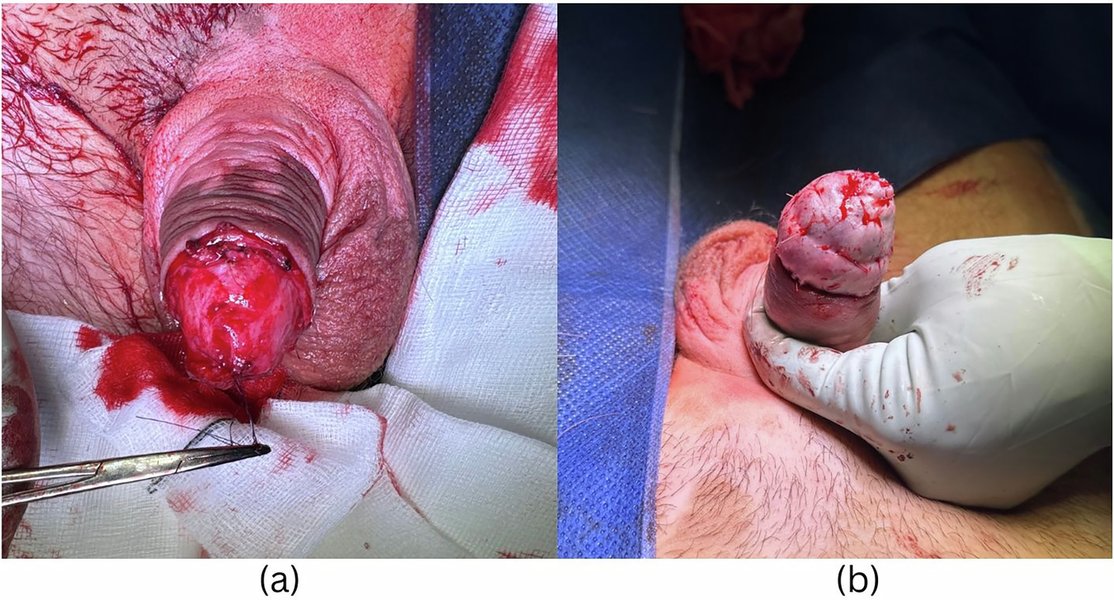
Anatomical considerations during penile prosthesis implantation.
Types of Penile Implants
Penile implants primarily come in two types: inflatable and semi-rigid/malleable. Inflatable implants are more commonly used globally, accounting for a significant majority of procedures, due to their ability to provide a more natural flaccid and erect state. The availability of diverse options allows for personalized treatment based on patient needs and preferences.
Himplant Cosmetic Penile Prostheses: Tapping into Aesthetic Demand
Himplant® offers a unique proposition as the first FDA-cleared cosmetic penile implant specifically designed for enhancement. Developed by board-certified urologists, this implant aims to increase girth and improve flaccid presence without interfering with natural erectile mechanisms.
Market Penetration and Cost Considerations
Himplant® has already made strides in international expansion, with procedures being performed in markets including the UAE and Qatar. This indicates a burgeoning interest and potential demand for cosmetic enhancement procedures in the region. While still a niche market compared to medically necessary implants, the presence of Himplant signifies an acceptance and readiness for such services. The estimated cost for a Himplant® surgery is around $18,500, positioning it as a premium elective procedure.
Current regional uptake for cosmetic penile enhancement is estimated at 15-20 procedures per year, concentrated among GCC medical tourists. With targeted marketing and medical tourism packages, the combined annual volume for penile prostheses (including both Rigicon and Himplant) could realistically reach 120-180 procedures by 2028, potentially scaling to 220-280 procedures.
Testicular Prostheses: Restoring Form and Confidence
Testicular prostheses are crucial for restoring anatomical contour and psychological well-being following orchiectomy (surgical removal of a testicle), which can be necessitated by cancer, trauma, or congenital absence.
Indications and Market Potential in Qatar
While specific patient numbers for testicular prostheses in Qatar are not explicitly detailed in available reports, approximately 25-30 orchiectomies are performed annually in Qatar due to urologic oncology data. The current implantation rate is less than 30%. However, with the adoption of modern silicone devices and increased awareness, this annual volume could potentially rise to 20-25 prostheses.
Globally, the testicular implants market is projected for significant growth, driven by increasing cases of testicular cancer and other conditions requiring testicle removal. Hospitals in Qatar with established urology departments, such as Aman Hospital in Doha, are well-positioned to offer these procedures as part of a comprehensive urological service portfolio.

Rigicon Testi10 Saline Testicular Prosthesis.
Artificial Urinary Sphincters (AUS): Managing Incontinence Effectively
Artificial Urinary Sphincters (AUS) are implantable devices designed to control urine flow, primarily treating severe stress urinary incontinence, often a consequence of prostate removal surgery.
Patient Demographics and Procedure Outlook
In Qatar, approximately 400 radical prostatectomies are performed annually, with about 8% of these patients (around 32 men) experiencing post-prostatectomy incontinence. The current AUS implantation rate in Qatar is estimated to be around 10-12 per year. However, literature suggests that 25-30% of eligible patients could benefit from AUS, indicating a potential for 25-30 AUS implants annually once referral pathways are optimized and surgeon training is enhanced.
Although specific data on AUS procedures in Qatar is limited, the device is a recognized and effective medical solution for a defined patient population. Urological departments in leading hospitals would typically integrate such solutions into their offerings.
The Viability of Implementing Urological Prosthetics in Qatar
Based on the current market analysis, the adoption of Rigicon's penile prostheses, testicular prostheses, and artificial urinary sphincters, along with Himplant's cosmetic penile prostheses, appears highly feasible for a hospital in Qatar. This feasibility is underpinned by several critical factors:
Existing Medical Infrastructure
Qatar boasts advanced medical facilities and specialized urology/andrology centers, such as the Hamad Medical Corporation (HMC) Andrology Center. These institutions already possess the capacity and expertise to perform complex surgical procedures, indicating a ready environment for expanding such services.
Growing Regional Demand
The broader Middle East region is experiencing a surge in demand for urological and reconstructive surgeries. Qatar, as a key player in this growth, benefits from this trend, ensuring a consistent patient flow for these specialized procedures.
International Product Availability and Acceptance
The successful expansion of products like Himplant into the region demonstrates market acceptance and demand for both functional and cosmetic urological solutions. This trend suggests a receptive market for high-quality, internationally recognized products like those from Rigicon.
Identified Patient Needs
A significant segment of the Qatari population requires these devices for various medical reasons, including erectile dysfunction, urinary incontinence, congenital conditions, and increasingly, for cosmetic enhancement.
To provide a clearer picture of the market dynamics and operational considerations, here is a comparative analysis of the various procedures:
This radar chart illustrates a comparative feasibility analysis across several key dimensions for the different prosthetic procedures. Rigicon Penile Prostheses show strong performance across the board, reflecting high patient demand and established infrastructure. Himplant Cosmetic Penile Prostheses demonstrate excellent growth potential, albeit with slightly lower initial demand and reimbursement likelihood. Testicular prostheses, while necessary for a specific patient group, currently show lower demand and infrastructure utilization. Rigicon AUS, however, stands out for high reimbursement likelihood and strong growth potential due to a defined patient need.
Financial Projections and Break-Even Analysis
A comprehensive business plan requires detailed financial modeling. The average private-sector reimbursement for these procedures supports a stand-alone implant program. For instance, penile prostheses can range from US$18,000 to US$22,000, AUS from US$25,000 to US$30,000, and testicular prostheses from US$8,000 to US$10,000 per case. Assuming an annual volume of 150 cases, a break-even point could be achieved within 18-24 months.
This bar chart compares the estimated initial annual procedures with the projected volumes over a three-year horizon for each type of prosthetic. It highlights the strong existing volume for Rigicon Penile Prostheses and the significant growth anticipated across all categories, particularly with strategic outreach and medical tourism initiatives.
Strategic Enablers for Success
To maximize the success of introducing these specialized urological procedures, several key enablers must be prioritized:
- Local Proctoring Programs: Establishing local training and proctoring programs for surgeons will enhance surgical expertise and increase the adoption rate of these complex procedures.
- GCC Medical Tourism Marketing: Leveraging Qatar's position as a medical tourism destination within the GCC can attract a broader patient base, particularly for elective cosmetic procedures like Himplant.
- Insurance Panel Inclusion: Securing inclusion in insurance panels and ensuring favorable reimbursement policies will make these procedures more accessible to a wider patient demographic.
Comprehensive Overview of Urological Prostheses in Qatar
The following table provides a consolidated view of the key characteristics and market insights for each type of prosthesis in the Qatari market.
| Prosthesis Type | Primary Indication | Estimated Annual Procedures (Initial) | Projected Annual Procedures (3-Year Horizon) | Average Private Reimbursement (USD) | Key Market Drivers |
|---|---|---|---|---|---|
| Rigicon Penile Prosthesis | Severe Erectile Dysfunction | 120-150 | 220-280 | $18,000 - $22,000 | High ED prevalence, established surgical centers |
| Himplant Cosmetic Penile Prosthesis | Cosmetic Penile Enhancement | 15-20 | 40-50 | $18,500 | Growing aesthetic demand, medical tourism |
| Rigicon Testicular Prosthesis | Post-Orchiectomy Reconstruction | < 10 (currently) | 20-25 | $8,000 - $10,000 | Increased awareness, modern device adoption |
| Rigicon Artificial Urinary Sphincter (AUS) | Post-Prostatectomy Incontinence | 10-12 | 25-30 | $25,000 - $30,000 | Defined patient population, high efficacy |
This table highlights the diverse applications and market potential of each prosthetic type, offering a clear snapshot for strategic planning.
Surgical Demonstration: Artificial Urinary Sphincter Implantation
To further illustrate one of these complex procedures, here is a video demonstrating the surgical placement of an Artificial Urinary Sphincter. This provides valuable insight into the technical aspects and the precision required for such implants, which are crucial for effective patient outcomes.
A detailed surgical demonstration of an Artificial Urinary Sphincter (AUS) implantation. This video is highly relevant as it showcases the procedure for one of the Rigicon devices under consideration, providing insight into the complexity and skill involved. Understanding the surgical process is crucial for assessing infrastructure requirements, training needs, and patient care protocols for the hospital.
Mapping the Market for Urological Prostheses
This mindmap provides a structured overview of the key components and considerations for introducing Rigicon and Himplant urological prostheses in Qatar.
This mindmap visually consolidates the market study's findings, showing the interconnections between the product types, their specific indications, the Qatari market's characteristics, and the strategic considerations for successful adoption. It serves as a quick reference for understanding the entire scope of the business proposition.
Frequently Asked Questions
What is the overall market size for penile implants in the Middle East?
How many penile prosthesis procedures are currently performed in Qatar annually?
Is there demand for cosmetic penile enhancement in Qatar?
What is the patient potential for Artificial Urinary Sphincters (AUS) in Qatar?
What are the key factors for success when introducing these procedures?
Conclusion
The market for urological prosthetics in Qatar, encompassing Rigicon's penile prostheses, testicular prostheses, and artificial urinary sphincters, as well as Himplant's cosmetic penile prostheses, presents a highly feasible and promising opportunity for a hospital. Driven by a high-income patient pool, a robust healthcare infrastructure, and a strategic national focus on specialized medical services, Qatar offers an ideal environment for these advanced procedures. While specific patient numbers for some categories require further localized data collection, the existing indicators, regional trends, and current surgical volumes strongly support the development of a comprehensive urological prosthetics program. Strategic investments in training, marketing, and favorable reimbursement policies will further solidify this venture's success, positioning the hospital as a leader in specialized men's health and reconstructive urology within the region.
Recommended Further Exploration
- Detailed reimbursement policies for urological implants in Qatar
- Competitor analysis for urology centers in Doha
- Prevalence of erectile dysfunction and incontinence in Qatar demographics
- Strategies for medical tourism in Qatar for specialized surgeries