
Elevating Customer Experience Through Rapid Chat Responses
Unlocking the Power of Speed, Efficiency, and Positive Interactions in Live Chat Support
In today's fast-paced digital landscape, customer expectations for immediate and effective support are higher than ever. Within the realm of customer service, live chat has emerged as a crucial channel, directly influencing overall customer experience and the perception of agent performance. The speed at which a business responds to customer inquiries via chat, often referred to as "response time" or "first reply time," is not merely a metric; it's a cornerstone of customer satisfaction, loyalty, and brand reputation.
Key Insights into Rapid Chat Responses
- Enhanced Customer Satisfaction: Quick response times in live chat directly correlate with higher customer satisfaction, as customers value immediate assistance and timely resolution of their issues.
- Improved Agent Performance Metrics: Efficient response strategies, such as canned responses, AI chatbots, and streamlined workflows, empower agents to handle multiple chats effectively, leading to better performance and positive survey feedback.
- Stronger Brand Loyalty and Trust: Consistently fast and helpful chat support builds customer trust and fosters loyalty, transforming satisfied customers into brand advocates.
The Crucial Role of Response Time in Customer Experience
Response time in customer service is the elapsed time between a customer's inquiry and the business's reply. This metric is especially vital for live chat, where the expectation is near-instantaneous interaction. A quick response demonstrates that a business values its customers' time and prioritizes their needs, leading to a significantly more positive experience.
This radar chart illustrates the stark contrast in various customer service dimensions when comparing quick response times versus slow response times. Quick responses significantly boost customer satisfaction, agent efficiency, brand loyalty, and issue resolution speed, while reducing customer frustration and fostering positive word-of-mouth. Conversely, slow responses lead to diminished performance across all these critical areas, highlighting the imperative of speed in live chat customer service.
Meeting Customer Expectations
Customers today expect immediate gratification, especially when engaging with live chat. Research indicates that for live chat, the response time should ideally be under five minutes, with some benchmarks suggesting as low as 40 seconds for the first reply. Delays can quickly lead to frustration, abandonment of purchases, and customers seeking assistance through other, more resource-intensive channels like phone calls, or worse, switching to a competitor.
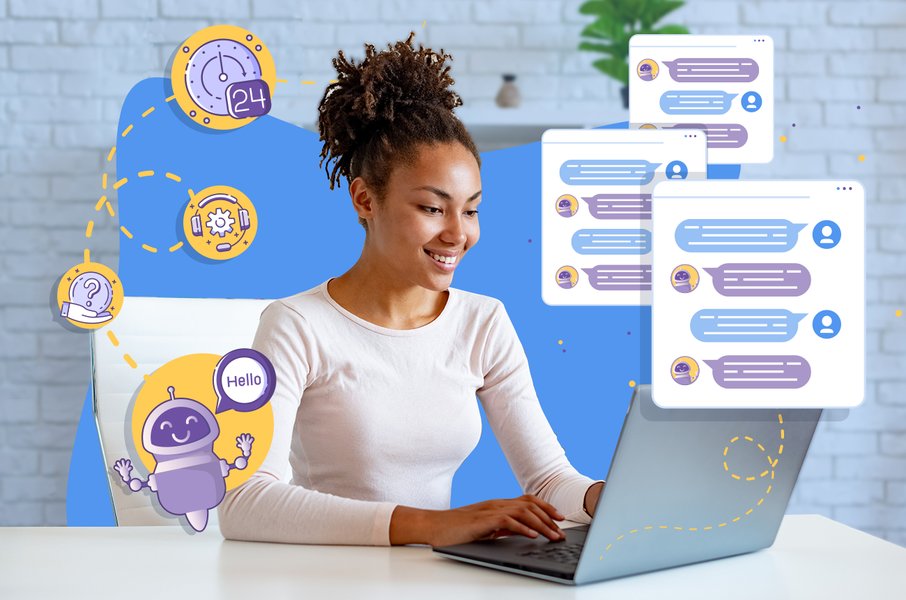
Chatbots play a significant role in achieving rapid response times and 24/7 availability.
Impact on Customer Satisfaction (CSAT)
The direct correlation between quick response times and customer satisfaction is well-documented. When customers receive prompt answers, their issues are resolved faster, leading to a feeling of being valued and heard. This positive interaction is a major driver of customer satisfaction. Surveys often show that a fast response is one of the most important attributes of good customer service. Conversely, prolonged waits can escalate minor issues into significant frustrations, damaging the customer's perception of the brand.
Building Trust and Loyalty
Beyond immediate satisfaction, consistent quick responses build trust and foster long-term customer loyalty. A reliable and responsive support system assures customers that their concerns will always be addressed efficiently. This reliability encourages repeat business and transforms customers into advocates who are likely to recommend the brand to others, contributing to positive word-of-mouth and enhanced brand reputation.
Optimizing Agent Performance Through Swift Responses
The benefits of quick response times extend significantly to agent performance and operational efficiency within customer service teams. Strategies aimed at reducing response times often empower agents and improve their ability to deliver exceptional support.
Empowering Agents with Efficient Tools
Providing agents with the right tools is paramount. This includes robust live chat software that allows agents to handle multiple chats simultaneously, access customer history, and integrate with CRM or knowledge base systems. Such integrations allow agents to quickly retrieve relevant information and provide tailored solutions without asking customers to repeat themselves.
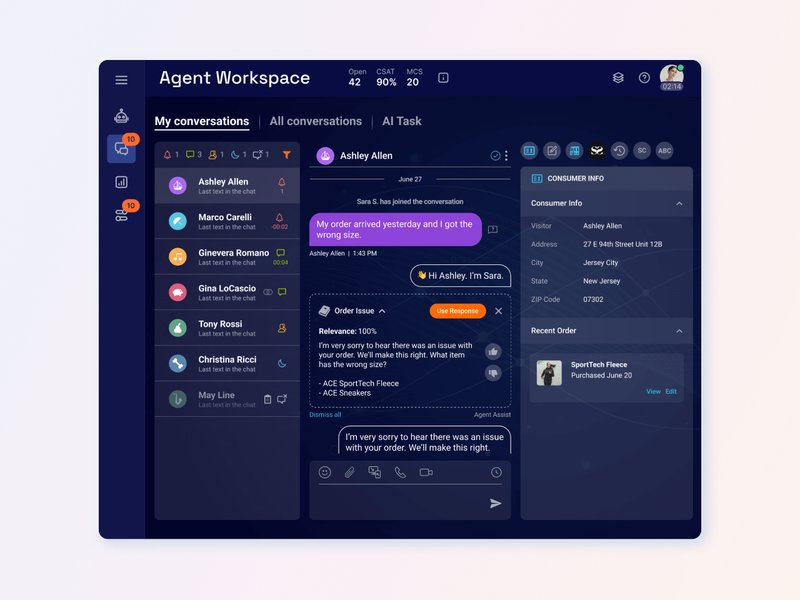
Modern agent workspaces facilitate efficient handling of multiple customer interactions.
Leveraging Canned Responses and Automation
One of the most effective strategies for reducing response time is the use of canned responses or quick replies. These are pre-written templates for frequently asked questions or common scenarios. While speed is key, it's crucial to ensure these responses remain personalized and genuine. Furthermore, AI-powered chatbots can handle routine inquiries and frequently asked questions (FAQs) automatically, deflecting a significant portion of tickets from live agents. This frees up human agents to focus on more complex issues, thereby improving overall response times and agent productivity.
Training and Skill Development for Agents
Well-trained agents are crucial for quick and effective responses. Training should focus on critical customer service skills such as clear communication, empathy, problem-solving, and multitasking. Agents need to be empowered to make quick decisions, potentially even having a discretionary spending limit to resolve customer issues without needing supervisor approval, much like the Ritz Carlton model.
Positive Feedback and Agent Motivation
Positive customer feedback on surveys directly impacts agent morale and motivation. When agents receive recognition for their quick and helpful responses, it reinforces their commitment to delivering exceptional service. Many companies implement "Positive Recognition Rooms" in Google Chat or similar systems to acknowledge top-rated feedback in real-time, fostering a positive work environment and enhancing employee retention.
| Strategy | Description | Impact on Response Time | Impact on Agent Performance |
|---|---|---|---|
| Implement Chatbots & AI Assistants | Automate responses for FAQs and routine queries, providing 24/7 support. | Significantly reduces first response time. | Frees agents to handle complex issues, reducing workload and stress. |
| Utilize Canned Responses/Quick Replies | Pre-written templates for common questions, ensuring consistency and speed. | Minimizes typing time, leading to faster replies. | Improves efficiency and consistency in agent communication. |
| Integrate Live Chat with CRM/Knowledge Base | Allows agents quick access to customer history and relevant information. | Enables agents to provide accurate and timely solutions. | Reduces research time, enhances personalization, and boosts confidence. |
| Optimize Agent Workflows & Routing | Directs customer inquiries to the most appropriate agent or department. | Prevents delays due to misrouting or re-assignments. | Ensures agents handle relevant queries, improving resolution rates. |
| Provide Comprehensive Agent Training | Focus on communication, empathy, multitasking, and problem-solving skills. | Empowers agents to resolve issues quickly and confidently. | Enhances agent skill set, leading to higher job satisfaction and better performance. |
| Set Clear Response Time Targets | Establish specific benchmarks for first response and resolution times. | Drives agents to prioritize speed and efficiency. | Increases accountability and provides clear performance goals. |
| Offer Self-Service Options | Develop a robust knowledge base or FAQ section for customers. | Deflects simple inquiries, reducing overall chat volume. | Allows agents to focus on issues that require human intervention. |
Measuring and Improving Response Times
To continuously enhance customer experience and agent performance, businesses must diligently measure and work on improving their live chat response times.
Key Metrics and Analytics
Beyond first response time, other crucial metrics include average handling time (AHT), which measures the total time an agent spends on an interaction, and resolution time. Monitoring these metrics helps identify bottlenecks and areas for improvement. Modern live chat software provides detailed reports that help businesses make data-driven decisions.
Collecting Customer Feedback through Surveys
Post-chat surveys are invaluable tools for gathering direct feedback on response times and overall agent performance. These conversational surveys, administered immediately after a chat, allow customers to rate their experience, provide comments, and indicate whether their issue was resolved. This real-time feedback is critical for identifying strengths and weaknesses in support operations. Analyzing sentiment from these surveys can also help pinpoint specific agent actions that impact customer sentiment positively or negatively.
Continuous Improvement Cycles
The process of improving response times is continuous. It involves analyzing survey data, identifying common queries that cause delays, refining agent training, optimizing workflows, and regularly updating knowledge bases and chatbot capabilities. The goal is to create a seamless customer journey where quick, accurate, and empathetic support is the standard, not the exception.
The Human Element in a Rapid Response Environment
While technology and efficiency are crucial, the human element remains irreplaceable, especially in complex or sensitive customer interactions. Even as AI chatbots become more sophisticated, the value of a truly great human interaction, characterized by empathy, expertise, and real conversation, is paramount.
This video on "Chat Handling Fundamentals" emphasizes delivering the best possible customer experience in chat interactions, highlighting the importance of agent skills and effective communication, even within a rapid response framework.
This video provides essential tips and techniques for chat support, focusing on the human aspects that elevate customer service beyond mere speed. It delves into how agents can deliver the best possible experience, balancing quick responses with quality interactions and understanding customer needs. Even with rapid response targets, the nuances of human connection—empathy, clarity, and genuine problem-solving—are vital for true customer satisfaction and positive survey outcomes.
Companies like Klarna, which initially heavily invested in AI chatbots, are now re-investing in human talent, recognizing that while chatbots can handle a large volume of inquiries and improve initial response times, complex issues often require human nuance. The combination of efficient automation for speed and highly skilled human agents for complex, empathetic interactions creates the most effective chat support model.
FAQ: Quick Responses in Chat Customer Service
What is "first reply time" in live chat?
Why is quick response time so important in chat customer service?
What is an ideal response time for live chat?
How do chatbots contribute to quick response times?
How does quick response time impact agent performance and surveys?
Conclusion
The impact of quick response time in chat customer service on overall customer experience and positive agent surveys cannot be overstated. It is a fundamental driver of customer satisfaction, fostering loyalty and positive brand perception. By prioritizing rapid, yet high-quality, interactions through strategic use of technology, efficient workflows, continuous training, and robust feedback mechanisms, businesses can elevate their customer service, empower their agents, and ultimately achieve sustained success in a competitive market.
Recommended Further Exploration
- What are the best practices for training live chat agents to ensure both speed and quality?
- How can integrating CRM systems with live chat further enhance customer experience and agent efficiency?
- What are effective methods for analyzing post-chat survey data to drive continuous improvement in customer support?
- How will the collaboration between AI and human agents evolve to optimize customer service in the coming years?