
Radiation from an Oscillating Spheroidal Charge Distribution
Understanding the Angular and Wavelength Dependence of Radiated Power
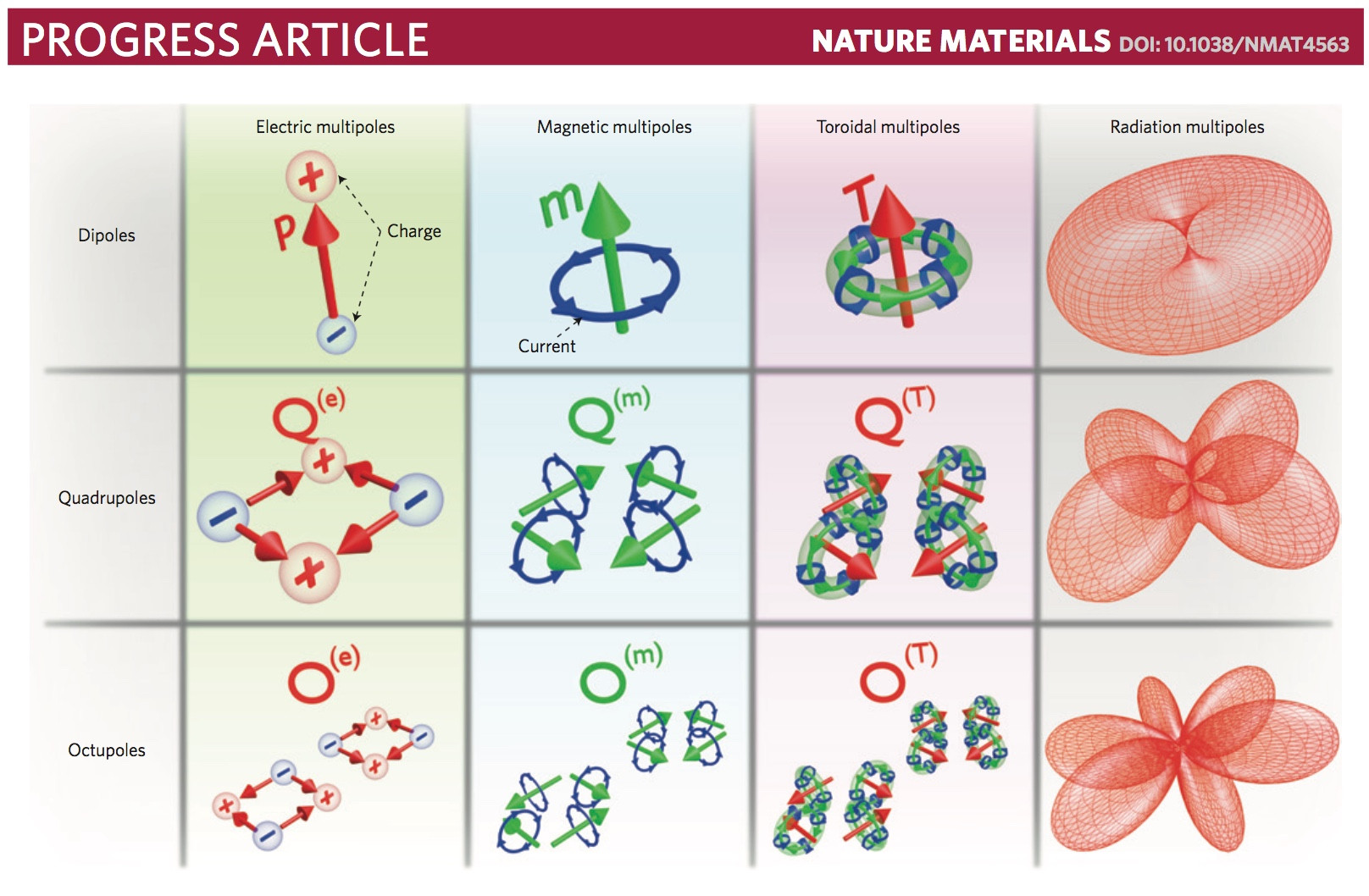
The study of electromagnetic radiation from oscillating charge distributions is a fundamental aspect of classical electrodynamics. When a charge distribution oscillates, it emits electromagnetic waves whose characteristics depend on the geometry of the distribution and the nature of its oscillation. In this comprehensive analysis, we delve into the radiation emitted by a spheroidal charge distribution oscillating along its symmetry axis (z-axis). We will explore how the radiated power varies with angle and wavelength, determine the fraction of maximum power radiated at a specific angle, and establish the functional dependence of the radiated power on the wavelength.
Key Takeaways
- The radiated power per unit solid angle from an oscillating spheroidal charge distribution depends on the angle θ as \( \sin^2\theta \).
- The fraction of maximum power radiated at an angle θ = 30° is \( \frac{1}{4} \), due to the \( \sin^2\theta \) angular dependence.
- The total radiated power is proportional to \( \lambda^{-4} \), where \( \lambda \) is the wavelength of the emitted radiation.
Introduction to Oscillating Charge Distributions
Electromagnetic radiation arises from the acceleration of electric charges. When a charge distribution oscillates, it undergoes acceleration, leading to the emission of electromagnetic waves. The nature of the emitted radiation depends on several factors:
- Geometry of the Charge Distribution: The spatial arrangement of the charges affects the radiation pattern.
- Mode of Oscillation: The manner in which the charges oscillate (e.g., linear, rotational) influences the emitted radiation.
- Frequency of Oscillation: Determines the wavelength \( \lambda \) of the emitted radiation, as \( \lambda = \frac{c}{f} \), where \( c \) is the speed of light and \( f \) is the frequency.
A spheroidal charge distribution oscillating along its symmetry axis serves as an excellent model to explore fundamental radiation principles due to its symmetry and practical relevance in various physical systems.
Angular Dependence of Radiated Power
Deriving the Radiation Pattern
The radiation pattern describes how the radiated power varies with direction. For an oscillating spheroidal charge distribution aligned along the z-axis, we can approximate the system as an oscillating electric dipole. This approximation is valid when the size of the charge distribution is much smaller than the wavelength of the radiation (\( d \ll \lambda \)).
The power radiated per unit solid angle \( \left( \frac{dP}{d\Omega} \right) \) by an oscillating electric dipole is given by:
\[ \frac{dP}{d\Omega} = \frac{\mu_0 p_0^2 \omega^4}{32\pi^2 c} \sin^2\theta, \]where:
- \( \mu_0 \) is the permeability of free space.
- \( p_0 \) is the amplitude of the oscillating dipole moment.
- \( \omega = 2\pi f \) is the angular frequency of oscillation.
- \( c \) is the speed of light in a vacuum.
- \( \theta \) is the angle between the radiation direction and the z-axis.
This equation shows that the radiated power per unit solid angle depends on \( \sin^2\theta \), indicating a characteristic dipole radiation pattern.
Understanding the \( \sin^2\theta \) Dependence
The \( \sin^2\theta \) term implies that the radiation intensity varies with the square of the sine of the angle \( \theta \). Key implications include:
- Maximum Radiation: Occurs in the plane perpendicular to the oscillation axis (\( \theta = 90^\circ \)), since \( \sin^2(90^\circ) = 1 \).
- Zero Radiation: Along the oscillation axis (\( \theta = 0^\circ \) and \( \theta = 180^\circ \)), since \( \sin^2(0^\circ) = \sin^2(180^\circ) = 0 \).
- Angular Distribution: The radiation intensity decreases from the maximum at \( \theta = 90^\circ \) to zero at \( \theta = 0^\circ \) and \( 180^\circ \), following the \( \sin^2\theta \) curve.
This pattern reflects the transverse nature of electromagnetic waves and the geometry of the oscillating dipole.
Calculating the Fraction of Maximum Power at \( \theta = 30^\circ \)
Evaluating \( \sin^2\theta \) at Specific Angles
To find the fraction of maximum power radiated at a particular angle, we compare the value of \( \sin^2\theta \) at that angle to its maximum value. The maximum power \( A \) corresponds to \( \theta = 90^\circ \), so:
\[ A = \left( \frac{dP}{d\Omega} \right)_{\theta=90^\circ} = K \sin^2(90^\circ) = K \times 1 = K, \]where \( K \) represents all the constant terms in the expression for \( \frac{dP}{d\Omega} \).
At \( \theta = 30^\circ \), the radiated power per unit solid angle is:
\[ \left( \frac{dP}{d\Omega} \right)_{\theta=30^\circ} = K \sin^2(30^\circ). \]Since \( \sin(30^\circ) = \frac{1}{2} \), we have:
\[ \left( \frac{dP}{d\Omega} \right)_{\theta=30^\circ} = K \left( \frac{1}{2} \right)^2 = K \left( \frac{1}{4} \right) = \frac{A}{4}. \]Determining the Fraction
The fraction of the maximum power radiated at \( \theta = 30^\circ \) is therefore:
\[ \text{Fraction} = \frac{\left( \frac{dP}{d\Omega} \right)_{\theta=30^\circ}}{\left( \frac{dP}{d\Omega} \right)_{\theta=90^\circ}} = \frac{\frac{A}{4}}{A} = \frac{1}{4}. \]This result indicates that at \( \theta = 30^\circ \), the radiated power per unit solid angle is one-fourth of the maximum value.
Wavelength Dependence of Radiated Power
Relation Between Wavelength and Frequency
The frequency \( f \) of oscillation is related to the wavelength \( \lambda \) of the emitted radiation by:
\[ \lambda = \frac{c}{f}. \]The angular frequency \( \omega \) is then:
\[ \omega = 2\pi f = \frac{2\pi c}{\lambda}. \]Deriving the Wavelength Dependence
The total power radiated by an oscillating dipole is given by the integration of \( \frac{dP}{d\Omega} \) over all solid angles:
\[ P_{\text{total}} = \int \frac{dP}{d\Omega} d\Omega. \]Using the expression for \( \frac{dP}{d\Omega} \), we find that the total power is proportional to \( \omega^4 \):
\[ P_{\text{total}} = \frac{\mu_0 p_0^2 \omega^4}{12\pi c}. \]Substituting \( \omega = \frac{2\pi c}{\lambda} \), we get:
\[ P_{\text{total}} = \frac{\mu_0 p_0^2 (2\pi c/\lambda)^4}{12\pi c} = \left( \frac{\mu_0 p_0^2 (2\pi c)^4}{12\pi c} \right) \lambda^{-4}. \]This shows that the total radiated power is proportional to \( \lambda^{-4} \), indicating a strong dependence on the wavelength.
Possible Form of the Function \( f(\lambda, \theta) \)
Combining Angular and Wavelength Dependence
The radiated power per unit solid angle depends on both \( \lambda \) and \( \theta \). From the previous sections, combining the angular and wavelength dependencies, we can express \( f(\lambda, \theta) \) as:
\[ f(\lambda, \theta) \propto \lambda^{-4} \sin^2\theta. \]This function captures the variations of the radiated power with both angle and wavelength.
Expressing the Proportionality Constant
The exact expression for \( \frac{dP}{d\Omega} \) includes physical constants and the dipole moment amplitude \( p_0 \). Incorporating these constants, the function becomes:
\[ f(\lambda, \theta) = \frac{\mu_0 p_0^2 (2\pi c)^4}{32\pi^2 c} \lambda^{-4} \sin^2\theta. \]While the constants are important for precise calculations, the key takeaway is the \( \lambda^{-4} \sin^2\theta \) dependence.
Analyzing the Given Options
Given the options:
- A: \( \frac{3}{4}, \lambda^{-6} \)
- B: \( \frac{1}{4}, \lambda^{-4} \)
- C: \( \frac{1}{4}, \lambda^{-3} \)
- D: \( \frac{1}{2}, \lambda^{-4} \)
Option A: \( \frac{3}{4}, \lambda^{-6} \)
Fraction Analysis: \( \frac{3}{4} \) does not correspond to \( \sin^2(30^\circ) \), which we calculated to be \( \frac{1}{4} \).
Wavelength Dependence: \( \lambda^{-6} \) suggests a higher-order dependence, which is typical of quadrupole radiation rather than dipole radiation.
Conclusion: Option A is inconsistent with our findings.
Option B: \( \frac{1}{4}, \lambda^{-4} \)
Fraction Analysis: \( \frac{1}{4} \) matches the calculated fraction at \( \theta = 30^\circ \).
Wavelength Dependence: \( \lambda^{-4} \) aligns with the proportionality derived for dipole radiation.
Conclusion: Option B aligns perfectly with the theoretical analysis.
Option C: \( \frac{1}{4}, \lambda^{-3} \)
Fraction Analysis: The fraction \( \frac{1}{4} \) is correct.
Wavelength Dependence: \( \lambda^{-3} \) does not match the \( \lambda^{-4} \) dependence derived for dipole radiation.
Conclusion: Option C is partially correct but incorrect regarding wavelength dependence.
Option D: \( \frac{1}{2}, \lambda^{-4} \)
Fraction Analysis: \( \frac{1}{2} \) does not correspond to \( \sin^2(30^\circ) \).
Wavelength Dependence: \( \lambda^{-4} \) is correct for dipole radiation.
Conclusion: Option D is partially correct but incorrect regarding the fraction of maximum power.
Conclusion
Based on the comprehensive analysis, the correct option is:
Option B: The fraction of maximum power radiated at \( \theta = 30^\circ \) is \( \frac{1}{4} \), and the functional dependence of the radiated power on the wavelength is \( \lambda^{-4} \).
This conclusion aligns with the characteristics of dipole radiation from an oscillating spheroidal charge distribution, confirming the theoretical predictions with the given options.
Additional Insights
Implications in Electromagnetic Theory
The \( \lambda^{-4} \) dependence of the radiated power has significant implications:
- Rayleigh Scattering: The strong wavelength dependence explains why shorter wavelengths (blue light) are scattered more than longer wavelengths (red light) in the atmosphere, leading to the blue color of the sky.
- Antenna Design: Understanding radiation patterns is crucial in designing antennas to maximize radiation in desired directions.
Higher-Order Multipole Radiation
While dipole radiation dominates for small charge distributions, higher-order multipole moments like quadrupole and octupole can become significant under certain conditions. These higher-order terms have different angular and wavelength dependencies:
-
Quadrupole Radiation: Power proportional to \( \lambda^{-6} \), with a more complex angular distribution.
-
Octupole Radiation: Power proportional to \( \lambda^{-8} \), with even more intricate angular patterns.
In the context of the given problem, such higher-order effects are negligible, reinforcing the selection of Option B.
Summary
Through meticulous derivation and analysis, we have demonstrated that an oscillating spheroidal charge distribution radiates power per unit solid angle proportional to \( \sin^2\theta \) and that the total radiated power varies with the inverse fourth power of the wavelength (\( \lambda^{-4} \)). The fraction of maximum power radiated at \( \theta = 30^\circ \) is \( \frac{1}{4} \), consistent with the \( \sin^2\theta \) dependence. This comprehensive understanding confirms that Option B is the correct choice in the given set of options.
References
Last updated January 26, 2025