

Key Insights into Organizational Transformation
- Strategic Alignment is Paramount: Successful radical change hinges on a clear, comprehensive strategy that defines not only what needs to change but also how it will be implemented, linking directly to business goals.
- Resistance is Inevitable but Manageable: Fear of the unknown, mistrust, and comfort with the status quo are common sources of resistance. Proactive strategies involving transparent communication, employee involvement, and fostering psychological safety are crucial for mitigation.
- Transformational Leadership is Key: Leaders who inspire, motivate, and intellectually stimulate employees, while actively promoting trust and open dialogue, are most effective in guiding organizations through radical shifts and embedding new cultural norms.
The Imperative for Change: What Organizations Must Adapt and Overcome
Organizations embarking on strategic renewal face the fundamental task of defining precisely what needs to change and, equally important, how to execute these changes effectively. This often involves a re-evaluation of structures, processes, and the prevailing organizational culture to align with new strategic objectives. The challenges encountered during this process are multifaceted, ranging from the conceptual to the behavioral.
Defining the Scope of Change
A primary hurdle is the clarity and completeness of the change strategy itself. Vague objectives or incomplete blueprints for transformation can lead to wasted resources and a failure to meet desired outcomes. The change must be clearly articulated and aligned with overarching business goals to provide a compelling direction for the entire organization.
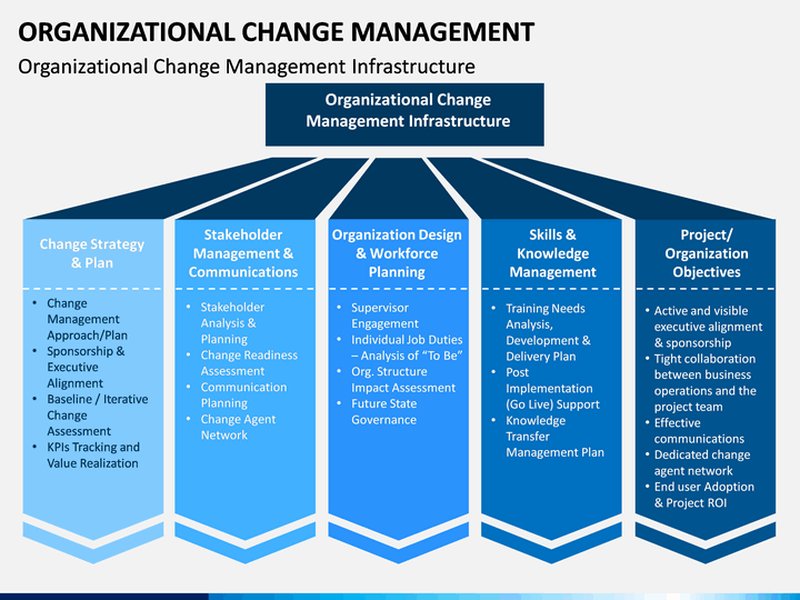
An illustrative diagram highlighting the interconnected elements of organizational change management.
Navigating Challenges in the Change Process
Implementing change is rarely a smooth process. Organizations commonly grapple with:
- Resistance from Employees: This is often rooted in fear of the unknown, job insecurity, perceived loss of control, or simply a habitual comfort with existing routines.
- Lack of Engagement and Psychological Safety: Without an environment where employees feel safe to voice concerns, offer feedback, and participate genuinely, buy-in diminishes, and critical insights may be suppressed.
- Communication Breakdowns: Poor, inconsistent, or insufficient communication can lead to misunderstanding, mistrust, and a lack of clarity regarding the change's rationale and benefits.
- Insufficient Leadership Support: When leaders are not fully committed, visible, or actively involved, change initiatives often falter, as employees look to senior management for cues and validation.
- Strategic Misalignment: If the change is not perceived as directly supporting the organization's strategic goals, or if the goals themselves are unclear, the initiative may lack purpose and widespread adoption.
External Catalysts for Organizational Evolution
Radical organizational change is frequently a response to powerful external forces that reshape the operational landscape. These forces create an urgent need for transformation to maintain competitiveness, ensure viability, and capitalize on new opportunities.

A visual metaphor of organizational change navigating a dynamic external environment.
Key External Drivers Include:
- Intensified Market Competition: Increased competition often necessitates strategic shifts, such as adopting new business models, enhancing efficiency, or developing innovative products and services.
- Technological Advancements: Rapid technological innovation can disrupt existing processes, create new industries, and demand the adoption of new tools and systems to remain relevant.
- Regulatory and Legal Changes: New government regulations or policy shifts can mandate significant adaptations in operational procedures, compliance frameworks, and business practices.
- Shifts in Customer Preferences: Evolving customer demands and expectations require organizations to adapt their value propositions, product offerings, and service delivery methods.
- Economic Pressures: Fluctuations in global markets, changes in capital availability, or economic downturns can impact profitability, forcing organizations to re-evaluate cost structures and operational models.
Unmasking the Sources of Resistance to Change
Resistance is a natural human response to change and often serves as a signal that important concerns need to be addressed. Understanding the root causes of resistance is critical for effective change management.
Common Drivers of Resistance:
- Fear of the Unknown: Uncertainty about how the change will impact job security, roles, or daily routines is a potent source of anxiety and resistance.
- Loss of Control or Status: Employees may fear losing their current influence, expertise, or position within the organization.
- Habit and Comfort with the Status Quo: People naturally prefer what is familiar and predictable. Changing established habits requires significant effort and can be met with inertia.
- Mistrust in Leadership or the Change Rationale: If employees do not trust the intentions of leaders or question the necessity and logic behind the change, resistance will be amplified.
- Lack of Involvement: When employees feel excluded from the change planning process, they are less likely to buy into the initiative.
- Poor Communication: Insufficient clarity on why the change is happening, what its benefits are, and how it will be implemented can lead to misunderstanding and opposition.
- Perceived Negative Personal Impact: If individuals believe the change will negatively affect their workload, resources, or work-life balance, they are likely to resist.
- Cultural Barriers: Deeply ingrained organizational norms and values can actively resist changes that contradict long-standing beliefs and practices.
Evaluating Change Implementation Strategies
Effective change implementation relies on a systematic approach that anticipates challenges and proactively engages stakeholders. While specific organizational details are not provided, general theories of change management offer a robust framework for evaluation.
Hallmarks of Effective Implementation:
- Comprehensive Change Management Strategy: Designing a clear blueprint that includes timelines, risk management, and predefined steps for managing resistance.
- Clear Vision and Guiding Coalition: Establishing a compelling vision for the change and building a strong, unified coalition of leaders and influencers to champion the effort.
- Transparent and Consistent Communication: Regularly communicating the "why" and "how" of the change, its benefits, and its progress to all employees.
- Employee Engagement and Empowerment: Actively involving employees in the change process, soliciting their input, and empowering them to contribute to solutions.
- Leadership Visibility and Support: Senior leaders being highly visible, personally involved, and consistently supportive throughout the change journey.
- Addressing Resistance Proactively: Understanding the root causes of resistance and implementing strategies to mitigate it, such as providing reassurance, training, and open communication channels.
- Generating Short-Term Wins: Celebrating early successes to build momentum and demonstrate the positive impact of the change.
- Reinforcement and Sustainment: Implementing ongoing support, coaching, and recognition to embed new behaviors and ensure the change is sustained over time.
If an organization neglected crucial aspects like transparent communication, robust employee engagement, or failed to adequately address resistance, it likely missed critical success factors. Conversely, if it adopted a staged approach, adapting leadership styles to different phases (planning, enabling, launching, catalyzing, and maintaining), it would align with highly effective change theories.
Cultivating Psychological Safety: A Leader's Imperative
Psychological safety is the belief that one will not be punished or humiliated for speaking up with ideas, questions, concerns, or mistakes. In the context of performance conversations and radical change, it is paramount for fostering genuine engagement and honest feedback.
How Leaders Nurture a Safe Environment:
- Active Solicitation of Input: Leaders must proactively ask for employee perspectives, especially on performance issues and potential challenges, demonstrating that their opinions are valued.
- Empathetic Listening and Validation: Beyond just hearing, leaders should genuinely listen to concerns, acknowledge emotions, and validate employees' experiences, even if they disagree with the content.
- Demonstrating Vulnerability: Leaders who are open about their own challenges, learning curves, and even mistakes during the change process can normalize imperfection and encourage others to be transparent.
- Consistent Support and Positive Reinforcement: Providing continuous encouragement and acknowledging efforts, especially when employees step out of their comfort zones to embrace new behaviors or offer critical feedback.
- Transparency and Clear Communication: Being upfront about the reasons for change, potential impacts, and the decision-making process helps build trust and reduces anxiety.
- Establishing Clear Boundaries and Consequences: While fostering openness, leaders also need to ensure that disruptive or disrespectful behaviors are addressed, reinforcing that safety does not mean a lack of accountability.
Empowering Performance Plus Teams for Strategic Delivery
To ensure specialized teams like "Performance Plus" effectively deliver on the needed strategy, leaders must create an environment that maximizes their potential and aligns their efforts with organizational goals.
Essential Steps for Leaders:
- Clear Articulation of Strategic Goals: The team must have an unequivocal understanding of the overarching strategic objectives and how their specific work contributes to these goals.
- Provision of Adequate Resources and Authority: Teams need the necessary tools, information, training, and the autonomy to make decisions relevant to their mandate.
- Establishment of Clear Metrics and Feedback Loops: Define measurable targets and implement regular feedback mechanisms to monitor progress, identify deviations, and make timely adjustments.
- Fostering Collaboration and Accountability: Encourage seamless collaboration within the team and with other departments, while holding members accountable for their contributions to collective goals.
- Recognition and Reward Systems: Implement formal and informal recognition for behaviors and outcomes that align with strategic objectives, reinforcing positive contributions.
- Coaching and Development: Provide ongoing coaching and opportunities for skill development to ensure the team has the capabilities to meet evolving strategic demands.
Shaping Behavior and Cultivating a New Culture
Changing employee behaviors and embedding a new organizational culture are central to successful strategic renewal. This requires a multi-faceted approach that addresses individual actions and collective norms.
Methods for Behavioral Transformation:
- Continuous Communication: Regularly communicating the "why" and "how" behind the desired behavioral changes, emphasizing their alignment with the new strategy and vision.
- Leadership Modeling: Leaders must exemplify the new behaviors themselves, acting as visible role models and demonstrating genuine commitment to the change.
- Training and Skill Development: Providing necessary training and development opportunities to equip employees with the new skills and knowledge required for the desired behaviors.
- Removal of Obstacles: Identifying and removing systemic or procedural barriers that hinder the adoption of new behaviors.
- Celebrating Early Adopters and Successes: Recognizing and rewarding individuals or teams who demonstrate the new behaviors, which builds momentum and encourages others.
- Embedding New Practices: Integrating the new behaviors into daily routines, processes, and performance management systems to make them part of the organizational fabric.
- Coaching and Support: Offering ongoing coaching and support during the transition phase to help employees navigate challenges and reinforce learning.
Reinforcing Behaviors and Integrating Culture:
Reinforcement is critical for sustaining new behaviors and embedding them into the organizational culture. This involves a combination of formal systems and informal practices:
- Performance Management Systems: Aligning performance reviews, objectives, and key results (OKRs) with the new behaviors and strategic priorities.
- Rewards and Recognition: Designing compensation structures, bonuses, and recognition programs that explicitly reward desired behaviors and contributions to the new strategy.
- Cultural Rituals, Symbols, and Stories: Creating new rituals, symbols, and narratives that celebrate success, acknowledge challenges, and reinforce the values of the new culture. These can make abstract concepts tangible and memorable.
The New Culture: Attributes of Strategic Renewal
The new culture integrated with strategic renewal typically emphasizes:
- Agility and Adaptability: A willingness to quickly respond to market changes, embrace new ideas, and pivot when necessary.
- Openness to Feedback and Continuous Improvement: Fostering an environment where constructive criticism is welcomed, and there is a constant drive to learn and evolve.
- Strategic Alignment: Ensuring that all actions, decisions, and processes are directly linked to and supportive of the overarching strategic objectives.
- Innovation and Experimentation: Encouraging creativity, risk-taking, and learning from both successes and failures.
- Collaboration and Cross-Functional Work: Breaking down silos and promoting teamwork across different departments to achieve shared goals.
This mindmap illustrates the interconnectedness of cultivating a new culture and changing employee behaviors within a radical organizational change. It highlights various aspects of cultural integration, behavior reinforcement, and the key strategies for behavioral transformation, showing how each component contributes to a successful transition.
Analyzing Leadership Style in Radical Change
The success or failure of radical organizational change is inextricably linked to the leadership style employed. During profound transformations, certain leadership approaches are far more effective than others.
Transformational Leadership: The Cornerstone of Radical Change
The most effective leadership style for navigating radical change is typically Transformational Leadership. This style is characterized by leaders who:
- Inspire and Motivate: They articulate a compelling vision for the future, inspiring employees to move beyond self-interest for the greater good of the organization.
- Intellectually Stimulate: They encourage employees to question assumptions, challenge the status quo, and approach problems with innovation and critical thinking.
- Show Individualized Consideration: They pay attention to the individual needs of employees, acting as coaches and mentors to support their development and adaptation to change.
- Foster Trust and Open Communication: They build strong relationships based on trust, promoting an environment where employees feel safe to engage in open, honest dialogue without fear of reprisal.
- Demonstrate Adaptability: While visionary, they are also flexible, adapting their approach to the different stages of change (e.g., commanding during initial planning, supportive during implementation).
Conversely, a rigid, transactional, or authoritarian leadership style is often detrimental during radical change. Such styles may overlook the emotional and cultural dimensions of transformation, leading to increased resistance, disengagement, and ultimately, failure.
Real-World Examples of Radical Change: Success and Failure
While the query requested specific organizational details, a general analysis from available theories points to broader patterns in successful and failed radical change initiatives:
| Aspect | Conditions for Success (General) | Conditions for Failure (General) |
|---|---|---|
| Strategic Planning | Clear, comprehensive strategy; agile adaptation; defined objectives. | Vague or incomplete strategy; delayed response to external shifts; lack of clarity. |
| Leadership Role | Transformational, visible, and supportive; fosters trust and psychological safety; promotes innovation. | Transactional or authoritarian; lack of buy-in; overlooks emotional/cultural aspects. |
| Resistance Management | Proactive identification and mitigation; transparent communication; employee involvement. | Ignored or poorly addressed resistance; communication breakdowns; fear and uncertainty. |
| Cultural Integration | New behaviors embedded through systems & rituals; emphasis on agility & learning. | Failure to change existing norms; misalignment between new strategy and old culture. |
| Employee Engagement | Active participation; empowerment; continuous feedback and support. | Lack of involvement; inadequate training; disengagement due to uncertainty. |
This table outlines general conditions leading to success and failure in radical organizational change, based on common patterns observed in change management theories.
For example, a historically cited success story is IBM's transformation under Lou Gerstner in the 1990s. IBM, facing obsolescence, underwent a radical shift from a product-centric culture to a customer-focused, services-oriented company. This success was attributed to strong leadership alignment, clear communication, fostering a collaborative culture, and a ruthless focus on implementation. The leadership ensured that the strategic changes were backed by operational and cultural shifts, effectively managing resistance by demonstrating clear benefits and providing necessary support.
Conversely, Kodak's failure to fully transition from film to digital serves as a cautionary tale. Despite inventing the digital camera, Kodak struggled with radical change due to strategic shortcomings, deep-seated cultural resistance to abandoning its highly profitable film business, and delayed responses by leadership to rapidly accelerating technological changes. The ingrained comfort with their existing successful model prevented the decisive shift needed, illustrating how resistance at multiple levels and a lack of adaptive leadership can doom even pioneering organizations.
This video, titled "Radical Transformational Leadership: Strategic… by Monica…," delves into the concepts of radical transformational leadership. It is relevant as it explores how leaders can guide significant paradigm shifts and generate equitable and sustainable change, which is crucial for organizations undertaking radical transformations as discussed in the main text.
Frequently Asked Questions (FAQ)
What is the primary reason radical organizational changes often fail?
How can leaders effectively mitigate employee resistance to change?
What is psychological safety, and why is it important during organizational change?
What characterizes a transformational leadership style in the context of radical change?
Conclusion
Radical organizational change is a complex, multi-dimensional undertaking driven by both internal dynamics and external pressures. Success hinges on a clear, comprehensive strategy, robust communication, and a proactive approach to managing resistance. The pivotal role of leadership, particularly a transformational and adaptive style, cannot be overstated. Leaders must cultivate psychological safety, empower teams, and diligently reinforce new behaviors to embed them into a supportive and agile organizational culture. While challenges are inherent, understanding the common pitfalls and applying established change management principles significantly enhances the likelihood of a successful transformation, enabling organizations to adapt, innovate, and thrive in dynamic environments.
Recommended Further Exploration
- Understanding common reasons for organizational change failure
- Strategies for building psychological safety in teams
- Impact of adaptive leadership on organizational transformation
- How to sustain new behaviors in a changing organizational culture