
Understanding Rainfall Runoff Models
A comprehensive exploration of hydrological modeling for simulating rainfall-induced runoff
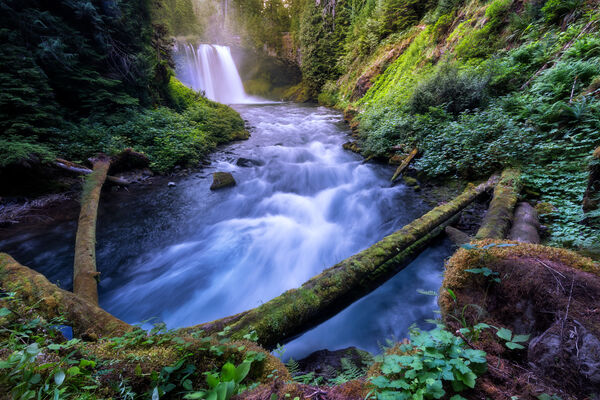
Key Insights
- Hydrological Functionality: Rainfall runoff models transform precipitation data into runoff predictions, crucial for water resource management and flood forecasting.
- Model Types: Various model structures, including empirical, conceptual, and physical models, address different levels of complexity and input requirements.
- Practical Applications: These models are used widely in environmental management, flood prediction, and water quality analysis through both event-specific and continuous simulation approaches.
Introduction to Rainfall Runoff Models
Rainfall runoff models are sophisticated tools used by hydrologists and engineers to simulate how precipitation is converted into runoff within a catchment, watershed, or drainage basin. These models rely on mathematical and computational techniques to represent hydrological processes that govern the transformation of rainfall into streamflow. The primary objective of these models is to accurately predict the timing and volume of runoff, which is vital for effective water resource management, flood forecasting, and environmental monitoring. By harnessing principles such as the conservation of mass, energy, and momentum, these models offer insights on how water behaves as it moves through different landscape components.
Fundamental Components of Rainfall Runoff Models
Input Data
At the heart of rainfall runoff modeling is quality input data. These inputs include:
- Rainfall Data: Typically recorded as time series or hyetographs showing the intensity and duration of precipitation events.
- Catchment Attributes: Characteristics of the watershed, such as land use, soil type, topography, and vegetation, which significantly influence infiltration rates and runoff generation.
- Other Environmental Data: Temperature, evaporation rates, and antecedent moisture conditions can further refine model predictions by accounting for evaporation and soil moisture levels.
Model Structure and Principles
Rainfall runoff models are built around key principles rooted in hydrological science. This involves representing various hydrological processes, including:
- Infiltration: The process by which water penetrates the soil surface.
- Surface Runoff: Water that flows over land surfaces when infiltration capacity is exceeded.
- Evapotranspiration: Water loss through evaporation from surfaces and transpiration from plants.
- Storage: Representations of water retention in soil or man-made reservoirs, which can delay and moderate runoff.
These models implement conservation laws, such as the conservation of mass, to ensure that the water entering a system is appropriately partitioned into infiltration, storage, evaporation, and runoff over a given period.
Classification of Rainfall Runoff Models
Empirical Models
Empirical models are developed based on statistical relationships derived from historical observations. They utilize regression analysis and probability distributions to establish a direct link between recorded rainfall and observed runoff. While these models are simpler in design and require less detailed catchment information, they are most useful in regions with ample historical data and well-documented hydrological behavior.
Conceptual Models
Conceptual models use simplified representations to express the complex physical processes that occur in a watershed. They partition the hydrological system into interconnected components (such as reservoirs or layers), each characterized by distinct parameters. This approach strikes a balance between simulation complexity and practical usability. Conceptual models often employ curve number methods, linear and non-linear reservoir concepts, and unit hydrograph techniques to model runoff dynamics effectively.
Physical (Process-Based) Models
Physical models, also known as process-based models, rely on detailed representations of the physical laws governing hydrology. They incorporate comprehensive data on catchment geometry, land cover characteristics, soil properties, precipitation dynamics, and more. These models simulate water movement on the basis of Newtonian mechanics and thermodynamic principles, providing a more realistic portrayal of the hydrological cycle. Although they require significant data and computational resources, their accuracy makes them indispensable for in-depth hydrological research and large-scale water management projects.
Additional Modeling Approaches
Beyond the three primary classifications, rainfall runoff models can also be subdivided based on the simulation framework:
- Event-Based Models: Designed to simulate response to individual storm events, these models focus on capturing the dynamics of short-duration rainfall events. They are useful for stormwater analysis and localized flood prediction.
- Continuous Simulation Models: Operate over extended time periods to account for long-term hydrological behavior including seasonal variations, land-use changes, and climate effects. They are particularly useful in planning water resources and assessing cumulative impacts on river flows.
Exploring the Model Types with a Summary Table
| Model Type | Characteristics | Typical Applications |
|---|---|---|
| Empirical | Based on statistical relationships and historical data. Simpler design. | Short-term runoff prediction, regions with rich historical data. |
| Conceptual | Simplifies physical processes into manageable components. Uses curve number and reservoir concepts. | Flood forecasting, water resource management, urban drainage design. |
| Physical (Process-Based) | Detailed simulation based on physical laws. Demands comprehensive data. | Large scale hydrological research, climate change assessments, regional water planning. |
| Event-Based | Focused on single storm events. Short-duration, high-resolution analysis. | Urban stormwater management, design of drainage systems. |
| Continuous Simulation | Operates over extended periods capturing seasonal trends. | Long-term water resource planning, climate impact studies. |
Working Principles of Rainfall Runoff Models
Conservation Laws
At the core of hydrological modeling is the application of conservation laws, which ensure that the water balance in a system is maintained. This means that the total amount of water entering a catchment through precipitation must equal the sum of water lost through processes like infiltration, evaporation, and surface runoff. Mathematically, this can be expressed using conservation of mass as:
\( \text{\( \int_{0}^{T} \text{Precipitation} \, dt = \text{Infiltration} + \text{Evapotranspiration} + \text{Runoff} + \text{Storage Change} \)} \)
Dynamic System Representation
Many rainfall runoff models simulate the catchment as a dynamic system where parameters such as storage and outflow change over time. For example, linear and non-linear reservoir models approximate the catchment by treating it as a series of reservoirs, each with its own characteristic response time. The Nash model, a common approach in this category, simulates runoff using multiple linear reservoirs in cascade, which helps in capturing time delays and attenuation effects seen in natural systems.
Spatial Aggregation and Distribution
How a catchment is spatially represented has a significant impact on model performance. Models can be “lumped,” where the entire basin is considered as one single unit, or “distributed,” where variations within different parts of the catchment are considered. Semi-distributed models offer a compromise by dividing the basin into several homogeneous areas, improving accuracy without the complexities associated with fully distributed models.
Technological and Methodological Advances
Integration of GIS and Remote Sensing
The advent of Geographic Information Systems (GIS) and remote sensing technology has greatly enhanced the capabilities of rainfall runoff models. High-resolution spatial data on land use, soil characteristics, and topography are now more readily available, leading to more accurate and realistic simulations. Satellite-derived precipitation measurements, along with radar rainfall data, provide near real-time inputs that improve the reliability of event-based models and enhance continuous simulation models.
Advancements in Computational Techniques
Recent developments in computational hydrology have enabled the use of advanced numerical methods and machine learning algorithms in rainfall runoff modeling. Both deterministic and stochastic methods are leveraged to handle uncertainties and variability in input data. Hybrid approaches that combine traditional physical models with neural network-based models, such as Long Short-Term Memory (LSTM) networks, are emerging as powerful tools to improve prediction accuracy under complex environmental conditions.
Software and Applications
A variety of specialized software platforms exist for conducting rainfall runoff simulations. Some of the widely used applications include:
- Vflo: Often used for flood forecasting and water resource management.
- WEAP (Water Evaluation And Planning System): Provides integrated assessments of water resources and environmental scenarios.
- RS MINERVE: Supports both event-based and continuous simulation studies to optimize reservoir operations.
These software platforms are equipped with tools that allow practitioners to calibrate model parameters, validate outputs against observed data, and simulate various scenarios pertinent to climate change, urbanization, and other anthropogenic impacts.
Practical Applications of Rainfall Runoff Models
Flood Forecasting and Mitigation
One of the most critical applications of rainfall runoff models is the prediction of flood events. By simulating how rainfall converts into runoff in antecedent conditions, hydrologists can forecast peak flows and generate flood hydrographs. Such predictions are imperative for designing effective flood management strategies, mitigating damage to infrastructure, and issuing timely warnings. In regions prone to flooding, accurate modeling informs decisions about emergency preparedness and evacuation plans, thus saving lives and protecting property.
Water Resource Management
Effective management of a region's water resources requires predicting variations in streamflow and storage volumes. Rainfall runoff models contribute to this by providing estimates of river discharge, groundwater recharge, and reservoir inflows. Water managers can use these predictions to regulate water supplies, plan for droughts, and balance the needs of agricultural, industrial, and urban sectors. Continuous simulation models, in particular, are useful for long-term planning as they account for seasonal flow patterns and the cumulative impact of land use changes or climate variability.
Environmental and Ecological Assessments
Beyond their role in flood prevention and water management, rainfall runoff models are integral to environmental impact studies. They help identify how land use changes, deforestation, and urban sprawl alter the natural hydrological cycle. By assessing runoff responses to various environmental stressors, these models aid in designing sustainable land management practices and preserving water quality. Additionally, they are often employed in assessing the impacts of climate change on watershed hydrology, providing valuable insights for ecological conservation efforts.
Challenges and Future Directions
Data Quality and Parameterization
Despite the significant advancements in rainfall runoff modeling, challenges remain, particularly in the realms of data collection and model calibration. Accurate prediction hinges on the availability of high-quality data, which can sometimes be scarce or inconsistent in remote regions. In many cases, calibrating model parameters to reflect the true behavior of complex hydrological processes is an ongoing challenge that requires iterative refinement and cross-validation with observed data. Researchers continue to explore ways to integrate diverse data sources—from ground measurements to remote sensing—to enhance model performance.
Computational Complexity and Uncertainty
As models increase in complexity, so too does the computational demand. High-resolution, distributed models that account for fine-scale spatial variability can be computationally intensive and require advanced hardware or cloud-based resources. Additionally, uncertainty due to variability in precipitation data, land cover changes, and climate projections poses inherent challenges. Researchers are actively developing hybrid models and uncertainty quantification techniques to manage these challenges, ensuring that models remain both robust and adaptable in the face of ever-changing environmental conditions.
Emerging Technologies and Hybrid Approaches
The future of rainfall runoff modeling lies at the intersection of traditional hydrology and emerging technologies. Integrating artificial intelligence, machine learning, and big data analytics with classical physical models is paving the way for more adaptive and precise hydrological predictions. These hybrid approaches can better account for nonlinear responses and complex interactions within watershed systems. With continuous improvements in remote sensing, data assimilation techniques, and high-performance computing, the accuracy and reliability of rainfall runoff models are expected to increase, enhancing their utility in both research and applied contexts.
Summary of Modeling Approaches and Their Applications
Table Summary of Rainfall Runoff Model Types
| Model Approach | Key Features | Primary Applications |
|---|---|---|
| Empirical | Relies on statistical relationships Simple calibration |
Short-term runoff prediction, Flood estimation |
| Conceptual | Simplified reservoirs and flow concepts Balance between complexity and usability |
Flood forecasting, Water resource management |
| Physical (Process-Based) | Detailed representation of physical laws High data requirements |
Large-scale hydrological assessment, Climate change impact studies |
| Event-Based | Focuses on individual storm events High-resolution temporal analysis |
Urban drainage design, Stormwater management |
| Continuous Simulation | Models long-term trends Seasonal and cumulative effects |
Regional water planning, Environmental impact assessments |
References
- Runoff Model (Reservoir) - Wikipedia
-
Rainfall-Runoff Modeling - ScienceDirect Topics
- Advancements in Rainfall-Runoff Modelling - MDPI
- Precipitation Runoff Modeling System (PRMS) - USGS.gov
- Rainfall-Runoff Modeling - Alberto Montanari
Recommended Related Queries
Last updated March 7, 2025