
Exploring the Meaning of "Rashab"
A Comprehensive Analysis of its Cultural and Historical Significance
Key Takeaways
- Dual Cultural Significance: "Rashab" is recognized in both Jewish and Indian contexts, embodying distinct yet influential meanings.
- Jewish Hasidic Influence: In the Chabad-Lubavitch community, it is an acronym referring to Rabbi Sholom Dovber Schneersohn, the revered fifth rebbe.
- Sanskrit and Indian Heritage: It may also have connections to Sanskrit origins associated with qualities like strength and leadership, symbolized by the bull.
Historical and Cultural Background
The term "Rashab" holds a rich and layered significance that spans across different cultures and historical periods. Its primary recognition within the Jewish world, especially among the Hasidic communities, is as an acronym for an influential religious leader. In parallel, in the Indian context, "Rashab" finds roots in Sanskrit traditions where associations with strength, power, and a resonating symbolic meaning are evident.
Jewish Hasidic Context
Rabbi Sholom Dovber Schneersohn: The Rebbe Rashab
In the Jewish Hasidic tradition, the name "Rashab" is most widely recognized as an acronym for Rabbi Sholom Dovber Schneersohn, who lived from 1860 to 1920. He was the fifth Rebbe in the Chabad-Lubavitch movement, a branch of Hasidic Judaism known for its esoteric teachings, spiritual discipline, and systematic approach to mystical studies. His life and work are celebrated within the community, and his teachings continue to inspire generations.
As the "Rebbe Rashab," he was not only a spiritual leader but also a prolific writer and educator. His extensive discourses—over 1,500 in number—have been compiled into more than 50 published volumes, offering deep insights into Jewish mysticism and ethics. His systematic approach earned him the moniker comparable to other famed classical scholars. His work has been influential in shaping modern Hasidic thought, promoting values of intellectual rigor combined with deep spirituality.
Rabbi Sholom Dovber's leadership spanned a period of significant change for Russian Jewry, and his role in establishing numerous yeshivas, including the Tomchei Temimim network, was pivotal in maintaining and revitalizing Jewish learning and practice during challenging times. His influence also extended to scholarly contributions in Jewish law and philosophical interpretations of Hasidic teachings.
Indian and Sanskrit Heritage
Symbolism of the Bull
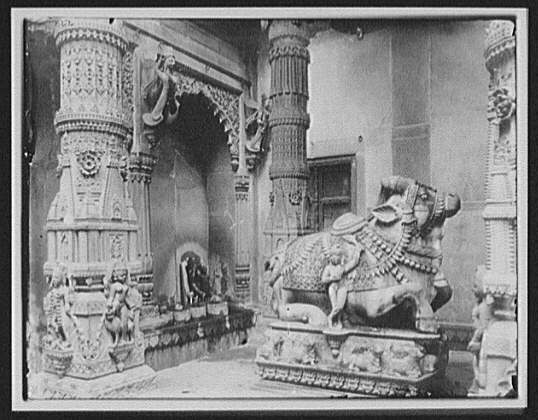
In various Indian cultural contexts, the root of the name “Rashab” resonates with the imagery associated with the bull. In Sanskrit, the bull is a potent symbol that is frequently linked to strength, power, and fertility. This cultural symbolism is embedded within many traditions and is emblematic of qualities like robustness, determination, and natural leadership. The symbolism of the bull has been celebrated in many ancient texts and traditions throughout India.
Specifically, the bull is revered in different religious settings due to its association with perseverance and the steady progression of life. In these traditions, names derived from elements associated with the bull are often chosen deliberately to evoke these attributes in an individual. Thus, for many, "Rashab" in this context may be perceived as a token of strength and leadership, celebrating a lineage or personal character reflective of these qualities.
Rishabha and Jain Tradition
In Indian Jain tradition, a name closely related to “Rashab” is “Rishabha.” Rishabhanatha, the first Tirthankara (spiritual teacher) in Jainism, embodies the ideals of self-realization and universal compassion. Although the name takes on a slightly different form, the underlying association with strength and spiritual excellence persists. The contributions of Rishabhanatha to religious thought in Jainism mark a significant period in the cultural and spiritual history of the region.
The reverence for Rishabha in Jain texts stresses moral fortitude and the importance of living a life guided by ethical principles—qualities that the term "Rashab" in its broader interpretations in various Indian contexts might also invoke. Thus, for communities influenced by these traditions, the name carries an inherent promise of balance between physical strength and spiritual insight.
Cross-Cultural Interpretations and Linguistic Nuances
The journey of the term “Rashab” through different cultures underscores the dynamic nature of language and how names can evolve and take on multiple layers of significance. It is not uncommon for names to cross linguistic and cultural boundaries, where they assimilate elements from various traditions. With "Rashab," one must consider both the historical context of its use within the Chabad-Lubavitch Jewish community and the symbolic imagery it evokes in Sanskrit-based and Islamic cultural narratives.
Additionally, the mention of an Islamic interpretation suggesting that "Rashab" might mean “Paradise fountain” reflects the adaptive ways in which cultural exchanges shape name meanings. While this interpretation is less documented and not widely recognized in mainstream Islamic texts or traditions, it illustrates the fluidity of language and how similar-sounding names might be interpreted differently in another cultural or religious milieu.
Linguistic Variations and Adaptations
Spelling and Pronunciation
The term "Rashab" can also appear with slight variations, such as "Rushab." Such differences are generally a result of transliteration from non-Latin alphabets into English. These variations often occur when names are adopted into different cultural and linguistic frameworks. In the context of the Chabad-Lubavitch tradition, the use of "Rashab" as a respectful title remains firmly established despite these variations.
Similarly, in the Indian context, linguistic adaptations of names are common due to regional dialects and the historical intermingling of languages such as Sanskrit, Hindi, and others. This process of adaptation not only preserves the phonetic essence of the name but also enriches its cultural narrative by tying it to traditional symbols like the bull—a creature that has maintained its relevance across centuries.
Numerological and Symbolic Associations
Numerology sometimes plays a role in the interpretation of names. For instance, in some traditions associated with the use of the name "Rashab," the number 4 has been highlighted. This numeral is often linked with themes of productivity, focus, and stability, attributes that resonate with the physical strength and stoicism symbolized by the bull. Whether in a mystical or practical sense, such numerological associations add another layer to how a name is understood and valued.
The use of numerology, while more prevalent in personal name analysis and cultural symbolism, brings out a holistic perspective on how names reflect a person’s potential traits. Thus, when integrated with the teachings and legacy of figures such as Rabbi Sholom Dovber Schneersohn or the spiritual symbolism of the bull, "Rashab" emerges as a name rich in both literal and figurative imagery.
Comparative Overview Through a Structured Lens
To illustrate the distinct yet interconnected elements of the term "Rashab," the following table provides a comparative overview of its primary interpretations and associated attributes. This structuring is aimed at offering clarity on how "Rashab" is simultaneously a revered acronym in the Jewish tradition and a symbol of strength in Indian heritage.
| Aspect | Jewish Hasidic Tradition | Indian/Sanskrit Tradition |
|---|---|---|
| Origin | Acronym for Rabbi Sholom Dovber Schneersohn | Derived from Sanskrit roots, often associated with the bull |
| Time Period | Late 19th to early 20th century, significant for Russian Jewry | Ancient traditions with modern cultural adaptations |
| Symbolism | Spiritual leadership, education, and mysticism | Strength, leadership, and fertility through bull symbolism |
| Cultural Relevance | Central to Chabad-Lubavitch teachings and Hasidic scholarship | Embodying robust qualities in various Indian and Jain traditions |
| Numerological Associations | Often not numerologically analyzed in religious texts | Linked with the numeral 4, suggesting productivity and focus |
In-Depth Analysis of Interpretations
Jewish Perspective on "Rashab"
Legacy and Teachings
The legacy of Rabbi Sholom Dovber Schneersohn—as celebrated under the title "Rashab"—is deeply interwoven with the evolution of Hasidic pedagogy and spiritual guidance. His teachings were methodical and intended to demystify complex theological and mystical concepts without losing the depth or integrity of the messages he conveyed. His commitment to education led to the establishment of structured yeshivas that continue to shape Jewish scholarship.
Many within the Chabad community revere him as a "Rambam of Chassidus," a title that underscores his systematic approach to religious teachings. His works incorporate detailed exegeses and commentaries on Jewish law, mysticism, and ethical living, making his written legacy a foundational resource for those pursuing both academic and spiritual studies in Judaism.
Importantly, the acronym "Rashab" is not merely a title but a symbol of continuity—a link between past traditions and contemporary spiritual practice within the community. His influence extends beyond his lifetime, serving as a beacon of resilience and scholarly dedication during times of persecution and hardship.
Indian and Sanskrit Interpretations
Cultural Symbolism and Mythological Resonance
Within the broader Indian cultural context, the term derived from “Rashab” is imbued with rich symbolic meaning. The bull is a recurrent motif in ancient texts and art, emblematic of not just brute strength but also fertility, perseverance, and a primeval connection to nature. Under this interpretation, individuals bearing names related to the bull are often hoped to display similar traits—steadfastness, virility, and an innate ability to lead.
Furthermore, the resonance of such a term in Indian traditions is accentuated by its mythological relevance. Many deities and ancient heroes are symbolized by, or have associations with, the power of the bull as a creature that is both nurturing and fiercely protective. The alignment of a name like "Rashab" with these attributes creates a multi-dimensional identity that goes beyond mere nomenclature; it becomes a cultural emblem.
In addition to the bull’s physical symbolism, the way the name adapts to local languages and dialects speaks volumes about the enduring nature of these cultural narratives. The strength imbued in the name offers an aspirational quality, suggesting that such a name may predispose an individual towards leadership roles or acts of resilience in the face of adversity.
Intercultural Exchange and Evolving Meanings
While the distinctly Jewish interpretation centers around a historical figure and his scholarly contributions, the Indian context provides a counterpoint through mythological and natural symbolism. This dual interpretation is a testament to how ancient names can traverse boundaries, adapting and enriching the cultural narratives of different communities.
Furthermore, there exists an instance of an alternative perspective, often mentioned in informal discussions, where "Rashab" has been interpreted within Islamic cultural contexts as meaning “Paradise fountain.” Although this interpretation is not widely documented in canonical texts, its emergence illustrates the fluid nature of language as it migrates between communities and takes on nuanced meanings, reflective of local values and imagery.
Synthesis and Broader Implications
In synthesizing the various interpretations associated with "Rashab," it is important to recognize that names are living entities—a reflection of history, culture, and the aspirations imbued by societies. In the Jewish Hasidic tradition, the name is inextricably tied to the life and teachings of an influential spiritual leader whose intellectual legacy continues to guide religious practice. On the other hand, its Sanskrit roots in the Indian tradition evoke images of strength and vitality, symbolized by the revered bull.
These dual narratives demonstrate the fascinating ways in which a single name can serve as a crossroads of cultural exchange. The significance attached to "Rashab" is not limited to its literal semantic content but extends to its ability to inspire qualities of determination, resilience, and leadership in those who identify with it. This multifaceted nature embodies an intersection where religion, language, and cultural symbolism converge, offering insights into both individual identity and broader community narratives.
Detailed Comparative Analysis Through Visual Data
The following table provides a detailed comparative analysis, summarizing the main attributes and historical contexts related to "Rashab." This structured representation offers a quick reference guide to understanding the diverse aspects of the term while linking them to specific cultural and historical trends.
| Category | Jewish Hasidic Context | Indian/Sanskrit Context |
|---|---|---|
| Historical Figure | Rabbi Sholom Dovber Schneersohn, known as the Rebbe Rashab, whose scholarly and spiritual leadership shaped Chabad-Lubavitch teachings. | Not tied to a single historical figure; instead, it resonates with mythological and symbolic narratives of strength and resilience, often represented by the bull. |
| Core Symbolism | Spiritual leadership, mystical teachings, educational reforms, and resilience in times of cultural challenges. | Strength, power, fertility, and leadership; the bull is a symbol of natural vigor and determination in various ancient traditions. |
| Cultural Impact | Highly influential in Jewish thought and education; continues to inspire contemporary Hasidic teachings and religious scholarship. | Reflects broader ideals of physical and spiritual robustness; encapsulates the aspirational qualities of leadership, nurturance, and vitality in a cultural and mythological framework. |
| Linguistic Nuances | Established acronym with historical roots and scholarly significance, often used with reverence and respect. | A name that adapts through various languages and regional dialects, embodying a rich set of symbolisms ranging from numerology to mythological narratives. |
Integrating Perspectives and Further Reflections
When evaluating the term "Rashab," it is essential to approach its meaning as an interplay of historical narrative and cultural symbolism rather than a monolithic definition. The rich tapestry of interpretations highlights how societies imbue names with aspirations and ideals. On one hand, its association with Rabbi Sholom Dovber Schneersohn symbolizes a legacy of intellectual rigor, scholarly devotion, and spiritual perseverance; on the other, its Sanskrit connotations evoke imagery of strength and natural power.
This duality not only underscores the adaptability of language across different cultures but also invites a broader reflection on how names become vessels for collective memory and identity. Each cultural lens provides unique insights that deepen our understanding of the values embedded within a name. In this sense, "Rashab" embodies a symbolic bridge connecting diverse traditions—each lending an additional layer of meaning that enriches its overall narrative.
Conclusion
In conclusion, "Rashab" is a name that encapsulates a wealth of historical, cultural, and symbolic significance. Within the Jewish Hasidic sphere, it is an esteemed title honoring Rabbi Sholom Dovber Schneersohn—a figure celebrated for his profound spiritual leadership and intellectual contributions. In parallel, its possible origins in Sanskrit and related cultural traditions underscore qualities associated with the revered bull, such as strength, resilience, and leadership. Each interpretation contributes to a multidimensional understanding of the term, reflecting the dynamic ways in which names serve as cultural touchstones. Ultimately, "Rashab" stands as a compelling example of how a single name can traverse cultural boundaries and embody a rich legacy of spiritual and societal values.
References
- Biography of Rabbi Sholom Dovber Schneersohn, the Rebbe Rashab - Chabad.org
- The Rebbe Rashab: The Greatness of Being Small - Inner.org
- What Does The Name Rashab Mean? - Names.org
- Sholom Dovber Schneersohn - Wikipedia
- Rashab Surname Origin, Meaning & Last Name History - Forebears
More
Last updated February 19, 2025