
Unraveling the Raspberry: More 'R's Than You Might Think?
Exploring the spelling, pronunciation, and surprising history of this familiar fruit's name.
The word "raspberry" might seem simple, but its spelling holds a few quirks that often trip people up. Let's delve into its structure and uncover exactly how many 'r's it contains, along with other interesting linguistic details.
Quick Insights: Raspberry Spelling Essentials
- The 'R' Count: The word "raspberry" correctly contains three instances of the letter 'r'.
- Correct Spelling: The standard English spelling is R-A-S-P-B-E-R-R-Y.
- The Silent Culprit: A common source of confusion is the silent 'p', which often leads to misspellings like "rasberry."
Breaking Down the Word: Where Are the 'R's?
To be absolutely clear, let's pinpoint the locations of the three 'r's within the nine-letter word "raspberry":
- The first 'r' is the very first letter of the word.
- The second 'r' appears after the letter 'e'.
- The third 'r' immediately follows the second 'r', forming a double 'rr' cluster.
Here's the word spelled out, highlighting the 'r's:
R - A - S - P - B - E - R - R - Y
So, despite how it might sometimes sound when spoken, the standard spelling unequivocally includes three 'r's.
A basket brimming with fresh raspberries.
The Notorious Silent 'P'
One of the biggest hurdles in spelling "raspberry" correctly is the silent 'p'. Although present in the spelling right before the 'b', this 'p' is typically not pronounced in standard English. This phonetic absence leads many people to mistakenly omit it when writing, resulting in the very common error "rasberry."
Pronunciation Quirks
Beyond the silent 'p', the pronunciation can further obscure the spelling. In many accents, the 's' sound is voiced, making it sound more like a 'z' (e.g., "RAZ-berry"). While this reflects common speech patterns (like /ˈræz.bɛr.i/ in American English or /ˈrɑːz.bər.i/ in British English), it doesn't change the official spelling, which retains the 's'. These pronunciation factors, combined with the silent 'p', make "raspberry" a word whose spelling isn't perfectly intuitive from its sound alone.
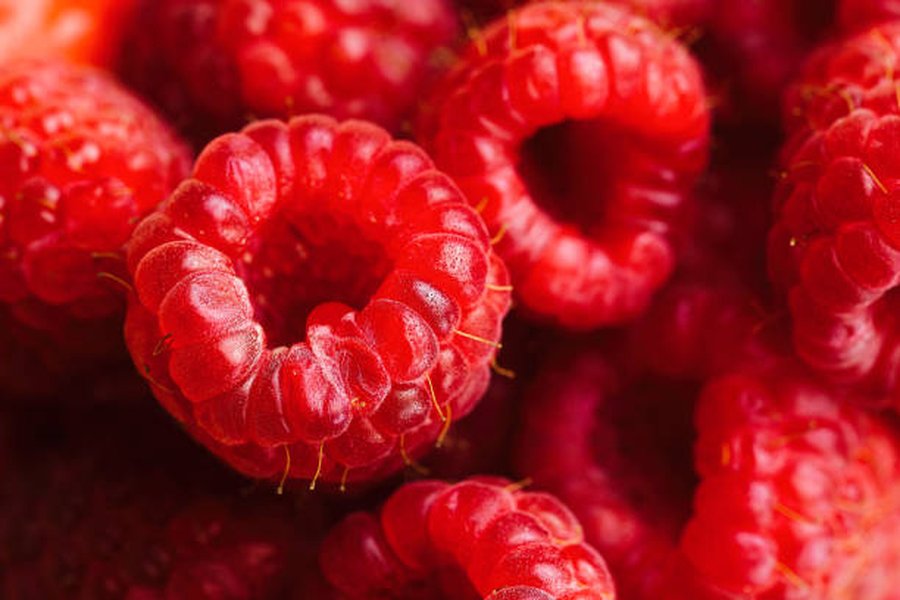
A close-up view reveals the unique texture of raspberries.
Common Misspellings Explained
The silent 'p' and pronunciation variations are primary drivers of common misspellings. Understanding these helps solidify the correct form:
- "Rasberry": The most frequent error, directly resulting from omitting the unpronounced 'p'.
- "Rasbery": A less common variant, perhaps influenced by haste or overlooking the double 'r'.
- "Razzberry": An informal spelling sometimes seen, reflecting the 'z' sound often heard in pronunciation.
Remembering that the fruit's bumpy surface might evoke the idea of a "rasp" (a rough file) can be a helpful mnemonic device to recall the presence of the 'p'.
Visualizing Spelling Challenges
Why is "raspberry" sometimes tricky to spell? Several factors contribute to its difficulty. This chart visualizes an assessment of these challenges, highlighting the silent 'p' and pronunciation ambiguity as major factors.
As the chart suggests, the silent 'p' is perceived as the most significant barrier to spelling "raspberry" correctly, followed closely by the common misspellings it generates and the ambiguous 's' sound. The double 'r' and word length are considered lesser factors.
A Look Back: The Origins of "Raspberry"
The history of the word "raspberry" offers clues about its structure. Its exact origin is uncertain, but several theories exist:
- Raspis Wine: One theory traces it to "raspis," a term from the mid-15th century for a sweet, rose-colored wine (Anglo-Latin *vinum raspeys*). The fruit might have been named after the wine made from it.
- Thicket Connection: Another possibility links it to "raspoie," meaning "thicket," of Germanic origin, referring to the raspberry plant's growth habit.
- Rough Texture: The name might have been influenced by the fruit's slightly rough or bumpy surface, connecting it to the word "rasp" (meaning a coarse file) or "rough berry." Early forms like "raspis berry" existed.
- Proto-Germanic Roots: Some etymologists trace it back further to Old English "ræsbere" or even Proto-Germanic "*hrausaberja."
This mindmap illustrates the potential etymological pathways contributing to the modern word "raspberry."
(Sweet Rose Wine)"] id1a1["Anglo-Latin
vinum raspeys"] id1b["Raspoie
(Thicket - Germanic Origin)"] id2["Influence from Texture"] id2a["Rasp
(Rough Surface/File)"] id2a1["Rough Berry"] id2a2["Raspys Berys (1530s)"] id3["Older Linguistic Roots"] id3a["Old English
ræsbere"] id3a1["Proto-Germanic
*hrausaberja"] id3b["Latin
raspacia (Tart Wine?)"] id4["Evolution to Modern Spelling"] id4a["Raspberry (Standardized)"] id4a1["Silent 'p'"] id4a2["Double 'r'"]
Regardless of the precise path, the historical forms consistently included 'r' sounds, which were preserved, resulting in the three 'r's found in the modern spelling.
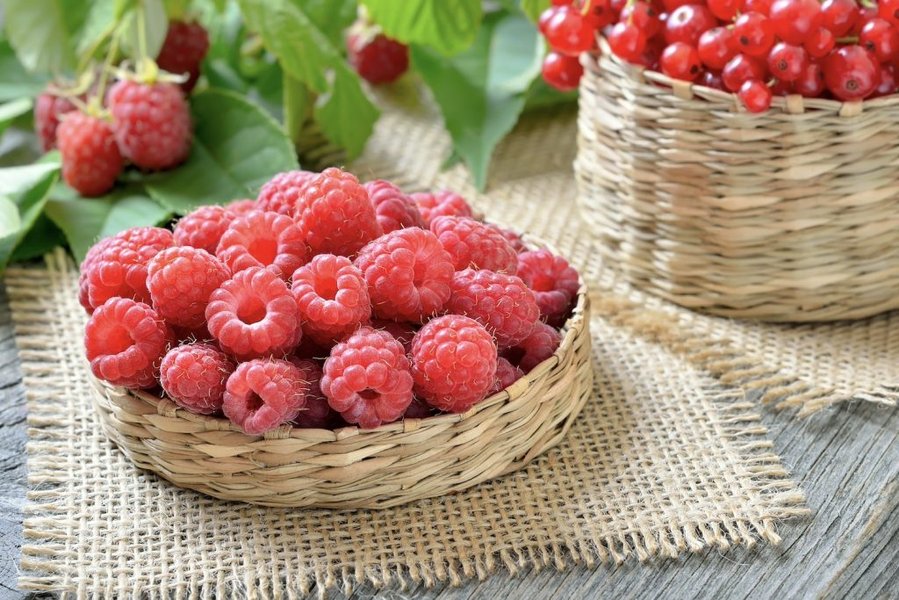
Proper storage helps maintain the freshness of raspberries.
Beyond the Fruit: The Other "Raspberry"
Interestingly, "raspberry" has a secondary, informal meaning: a rude noise made by vibrating the lips and tongue while exhaling, often used to express derision or contempt. This usage comes from Cockney rhyming slang, where "raspberry tart" rhymes with "fart." Over time, "raspberry" was shortened to refer directly to the sound itself.
Raspberry Word Profile
This table summarizes key linguistic features of the word "raspberry":
| Feature | Description |
|---|---|
| Letter Count | 9 (R-A-S-P-B-E-R-R-Y) |
| Number of 'R's | 3 |
| Syllables | Typically 2 or 3 depending on pronunciation (e.g., rasp-ber-ry or ras-berry) |
| Key Spelling Challenge | Silent 'p' |
| Common Pronunciation Quirk | 's' often sounds like 'z' |
| Parts of Speech | Noun (fruit, plant, sound), Adjective (raspberry color/flavor) |
| Primary Meaning | Edible aggregate fruit from the *Rubus* genus |
| Secondary Meaning (Informal) | A sound of derision ("blowing a raspberry") |
Hear It Said: Pronunciation Guide
Listening to the pronunciation can help understand why the spelling might seem tricky. This video demonstrates common ways to pronounce "raspberry" in English.
The video highlights variations in pronunciation, including how the 's' can sound like a 'z' and the 'p' remains silent, reinforcing the points discussed earlier about the disconnect between sound and spelling for this word.
Frequently Asked Questions (FAQ)
+ Is the 'p' in raspberry really silent?
+ Why is "raspberry" considered hard to spell?
+ What does "raspberry" mean besides the fruit?
+ How old is the word "raspberry"?
References
- Raspberry Definition & Meaning - Merriam-Webster
- Raspberry - Wikipedia
- raspberry | Etymology, origin and meaning of raspberry by etymonline - Online Etymology Dictionary
- How Do You Spell Raspberry? The Correct Spelling Guide - wordsuperb.com
- Raspberry, Rasberry or Rasbery – Which is correct? - Ginger Software
- Rasberry or Raspberry: Which Is Correct? - Engram
Recommended
 thisisjustinisaiahdwyersblog.wordpress.com
Last updated April 20, 2025