
Beyond the Score: Why Major Rating Sites Can Be Deceptively Unreliable
Unpacking the biases, manipulations, and structural flaws plaguing Rotten Tomatoes, IMDb, and Metacritic.
Rotten Tomatoes, IMDb, and Metacritic are go-to resources for millions seeking guidance on movies, TV shows, and games. However, beneath the surface of seemingly objective scores lie significant issues that can make these platforms unreliable, misleading, and sometimes even "terrible" indicators of true quality. Understanding these flaws is crucial for discerning consumers. This analysis synthesizes common criticisms and validated concerns regarding their reliability, based on available information up to Monday, 2025-05-05.
Highlights: Key Reliability Concerns
- Susceptibility to Manipulation: All three platforms are vulnerable to review bombing, paid reviews, studio influence, and other forms of score manipulation, skewing perceived consensus.
- Oversimplification and Lack of Nuance: Aggregate scores often flatten complex opinions into a single number or binary (Fresh/Rotten), masking the actual range and depth of critical or audience reception.
- Inherent Biases: Demographic skews, recency bias, genre preferences, and non-transparent weighting algorithms introduce significant biases, meaning scores may not reflect general public opinion or objective quality.
Rotten Tomatoes: The Trouble with Tomatoes
More Than Just Fresh or Rotten?
Rotten Tomatoes is perhaps best known for its "Tomatometer" score, representing the percentage of professional critics who gave a positive review. However, this very system is a primary source of its unreliability.
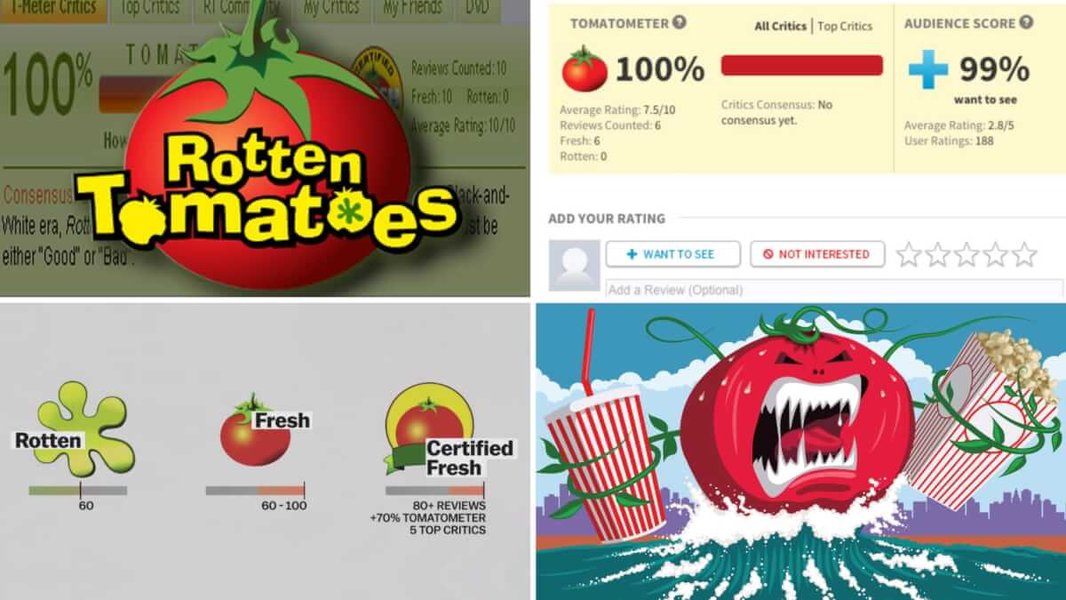
The familiar "Fresh" and "Rotten" icons symbolize Rotten Tomatoes' binary rating approach.
The Binary Blight: Fresh vs. Rotten Oversimplification
The core issue is the reduction of nuanced reviews into a simple "Fresh" (positive) or "Rotten" (negative) classification. A critic might rate a film 6/10, finding it barely recommendable, but this still counts as "Fresh." Consequently, a film receiving many lukewarm positive reviews (e.g., 6/10) can achieve a high Tomatometer score (e.g., 90%), potentially appearing equivalent to a universally acclaimed masterpiece that received mostly 9/10 or 10/10 ratings. This binary system masks the *degree* of positivity or negativity, leading to misleadingly high or low aggregate scores.
Vulnerability to Manipulation and Conflicts of Interest
Investigations have revealed troubling evidence of score manipulation. Publicity companies have allegedly paid lesser-known critics or bloggers for positive reviews, particularly for films struggling to find an audience. This practice artificially inflates scores. Furthermore, Rotten Tomatoes is owned by Fandango, a company that sells movie tickets. This creates a potential conflict of interest, as Fandango benefits financially from promoting films with high scores, raising questions about the platform's impartiality and the integrity of its curation process.
Other Structural Flaws
- Small Sample Sizes: Initial Tomatometer scores can be based on as few as five reviews. These early scores can heavily influence public perception before a broader critical consensus emerges.
- Audience Score Issues: The audience score is highly susceptible to "review bombing" – coordinated efforts by groups to flood the site with negative (or sometimes positive) ratings for reasons unrelated to the film's quality, often driven by ideological disagreements or fan campaigns.
- Bias Factors: Genre bias (certain genres being treated more harshly), selection bias (which critics are included), and time bias (how scores evolve) can further distort the reliability of the data over time.
IMDb: User Ratings Under Scrutiny
When Popularity Doesn't Equal Quality
IMDb (Internet Movie Database) relies primarily on user ratings, offering a 1-10 scale average. While seemingly democratic, this approach introduces its own set of significant reliability problems.
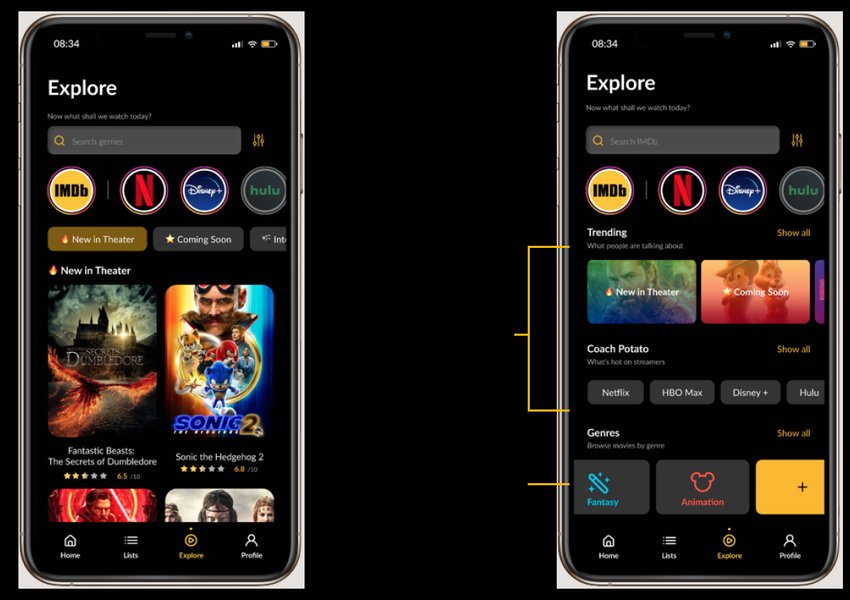
IMDb's user rating system is central to its platform but faces criticism for bias.
Demographic and Volunteer Bias
IMDb's user base is not necessarily representative of the general movie-watching public. Ratings are often skewed by the demographics and preferences of its most active users, reported to be predominantly younger males and specific genre enthusiasts. This means ratings for certain types of films (e.g., action, sci-fi) might be inflated, while others are underrated, simply because the pool of raters isn't diverse. Women, for instance, are often underrepresented among active raters.
Review Bombing and Sabotage
Like Rotten Tomatoes' audience score, IMDb is notoriously vulnerable to review bombing. Groups can easily organize to artificially lower (or inflate) a film's score due to political disagreements, social controversies surrounding the cast or creators, or simple fan wars. High-profile examples abound where films caught in cultural debates see their IMDb scores plummet due to targeted campaigns, making the final score unreliable as a measure of quality.
Transparency and Context Issues
- Lack of Transparency: IMDb has faced criticism for removing features like the detailed rating breakdown (e.g., votes by "top 1000 voters"), which previously offered some insight into potential rating manipulation or demographic skew. This reduction in transparency makes it harder for users to assess the reliability of a score.
- Recency Bias: Newer films often receive higher initial ratings due to enthusiasm from early viewers and fans. This temporal bias means scores might not hold up over time or offer fair comparisons with older films.
- Subjectivity vs. Expertise: Relying solely on user votes means ratings reflect popular sentiment, which can be highly subjective and influenced by factors beyond cinematic quality, rather than potentially more informed critical analysis.
- Content Moderation Controversies: Incidents involving the removal or handling of content based on internal complaints or alleged biases raise concerns about the platform's neutrality.
Metacritic: The Weight of Aggregation
Can Weighted Scores Be Trusted?
Metacritic aggregates reviews from professional critics (Metascore) and users (User Score) for movies, games, TV shows, and music, assigning numerical scores and using a weighted average for critics.
Weighted Averages and Transparency
Metacritic applies a proprietary weighting system to critic scores, giving more influence to certain publications or critics deemed to have higher "stature." This process lacks transparency, and critics argue it can create bias by favoring established or "elite" voices over potentially diverse or equally valid perspectives from smaller outlets. The normalization process used can also artificially inflate high scores and depress low ones, potentially distorting the overall critical picture.
User Score Extremism and Manipulation
Metacritic's User Scores suffer significantly from polarization and manipulation. Reviews often cluster at the extremes (0/10 or 10/10), driven by passionate fans or detractors rather than balanced assessments. This makes the average User Score a poor indicator of nuanced public opinion. Like IMDb and RT, Metacritic is a frequent target for review bombing campaigns, especially in the gaming sphere, where users might target a game or publisher for reasons unrelated to gameplay quality (e.g., business practices, platform exclusivity).
Critic vs. User Divide and Potential Censorship
- Critic Elitism Concerns: The focus on professional critics can sometimes lead to scores that feel disconnected from general audience enjoyment or preferences.
- Censorship Allegations: Users have reported instances where Metacritic allegedly censored or removed user reviews discussing controversial topics or criticizing certain aspects of a product, raising concerns about free expression and the platform's agenda. Reports suggest a potential shift towards favoring paid critics over user feedback.
- Arbitrary Thresholds: Particularly in gaming, the industry often treats Metascores below a certain threshold (e.g., 80) as failures, an arbitrary standard that doesn't necessarily reflect a game's inherent quality or enjoyability for specific audiences.
Visualizing the Flaws: Platform Reliability Comparison
A Radar Chart Perspective
To better illustrate the relative strengths and weaknesses discussed, the following radar chart offers an opinionated comparison of Rotten Tomatoes (Critics Score), IMDb (User Score), and Metacritic (Metascore) across key reliability factors. Scores are on a scale where higher values indicate *more* of that characteristic (e.g., higher "Susceptibility to Manipulation" is worse). Note: This is an analytical interpretation, not based on precise data.
This chart suggests that all three platforms struggle significantly with manipulation and bias. Rotten Tomatoes' primary weakness lies in its lack of nuance due to the binary system, while IMDb suffers heavily from demographic bias and review bombing. Metacritic faces challenges related to the transparency of its weighting and potential suppression of user voices.
Mapping the Problems: A Mindmap Overview
Key Issues at a Glance
This mindmap provides a hierarchical overview of the core reliability issues discussed for each platform, helping to visualize the interconnected problems.
The mindmap highlights that while the specific mechanisms differ (binary vs. user average vs. weighted critic), common threads like manipulation, bias, and lack of transparency undermine the reliability of all three major platforms.
Comparative Summary: Scoring and Criticisms
Key Differences and Shared Flaws
This table summarizes the core rating mechanisms and primary criticisms for each platform, offering a quick comparison.
| Platform | Primary Scoring Mechanism | Key Criticisms & Unreliability Factors |
|---|---|---|
| Rotten Tomatoes | Tomatometer: Percentage of critics giving a positive ("Fresh") review. Audience Score: Percentage of users giving a positive rating. |
|
| IMDb | User Ratings: Average score (1-10) based on registered user votes. |
|
| Metacritic | Metascore: Weighted average of scores from selected professional critics. User Score: Average score (0-10) from user reviews. |
|
Video Insight: The Rotten Tomatoes Manipulation Problem
Exploring Allegations of Fake Reviews
Concerns about manipulation aren't just theoretical. This video delves into specific allegations and evidence suggesting that Rotten Tomatoes' scores have been artificially inflated through questionable practices, including potentially paid-for positive reviews. It highlights how easily the system can apparently be gamed, further undermining trust in the platform's scores as objective measures of quality. Understanding these manipulation tactics is key to critically evaluating the scores presented.
Frequently Asked Questions (FAQ)
Addressing Common Queries
▶ Is any one platform more reliable than the others?
It's difficult to definitively say one is "more" reliable overall, as they suffer from different types of flaws. Rotten Tomatoes' binary system is fundamentally simplistic. IMDb is heavily skewed by user demographics and bombing. Metacritic's weighting is opaque, and user scores are polarized. Reliability often depends on what information you seek and how aware you are of each platform's specific weaknesses. Many find using them *in combination*, along with reading individual reviews, is the best approach.
▶ What is "review bombing"?
Review bombing is a coordinated effort by a large number of people to submit negative user reviews/ratings for a product (like a movie, game, or show) in order to harm its aggregate score. This is often done for reasons unrelated to the product's actual quality, such as disagreement with its political themes, social messages, casting choices, developer/studio practices, or simply as a form of online protest or trolling. It heavily impacts platforms relying on user scores, like IMDb and the audience/user scores on Rotten Tomatoes and Metacritic.
▶ Should I ignore these rating sites completely?
Not necessarily. While the aggregate scores should be taken with a large grain of salt due to the issues discussed, these platforms can still be useful tools. They provide vast databases of information (especially IMDb), access to a wide range of *individual* critic and user reviews (which can be more insightful than the score), and a general (if flawed) sense of initial buzz or controversy. The key is critical consumption: understand the limitations, look beyond the main score, read multiple reviews, and consider the source.
▶ Are there better alternatives for finding good movies/games?
Many people find more value in following specific critics whose tastes align with their own, reading reviews from diverse sources (niche blogs, specialized publications, academic journals), seeking recommendations from friends or curated communities (like specific subreddits or forums), or using platforms that focus on personalized recommendations based on viewing history (like Letterboxd for film). There's no single perfect source; a multi-faceted approach is often best.
Recommended
Further Exploration
- How does Rotten Tomatoes' binary rating system affect film perception?
- What are documented cases of review bombing on IMDb or Metacritic?
- Explain the conflict of interest between Rotten Tomatoes and Fandango.
- Are there more transparent alternatives to major movie rating sites?
References
Sources Used
 cinemacure.wordpress.com
Last updated May 5, 2025