
Unlocking the $2 Trillion Real Estate Facility Services Opportunity: A Strategic Blueprint
Navigating market growth, technological innovation, and sustainability trends in the evolving facility services landscape
Key Insights at a Glance
- Exponential Growth: The global facility management market is projected to expand from $1.28 trillion in 2023 to $2.28 trillion by 2032, representing an 8.2% CAGR.
- Technology Revolution: Smart building technologies, IoT sensors, and AI-powered solutions are rapidly transforming service delivery and operational efficiency.
- Sustainability Imperative: Green cleaning programs, energy efficiency services, and waste reduction initiatives are becoming essential competitive differentiators.
Market Size and Growth Projections
The global real estate and facility services market is experiencing remarkable growth, driven by increasing outsourcing of non-core functions, technological advancements, and commercial real estate expansion. According to recent analysis, the market is expected to nearly double in size over the next decade.
Current Market Valuation and Future Projections
The global facility management market is projected to grow from $1.28 trillion in 2023 to $2.28 trillion by 2032, representing a compound annual growth rate (CAGR) of 8.2%. This significant growth reflects the increasing importance of professional facility services in maintaining and enhancing property values.
Segment-Specific Growth Trends
Within the broader market, various segments are showing distinct growth patterns:
- U.S. Property Management Market: Expected to reach $84.73 billion in 2025, growing to $102.79 billion by 2030 (3.94% CAGR)
- Global Property Management Services: Projected to reach $30.4 billion by 2033 (7.3% CAGR from 2023)
- North American Commercial Facility Maintenance: $153.60 billion in 2023, reaching $202.41 billion by 2030 (4.1% CAGR)
- North American Commercial Parking Lot Maintenance: $16.08 billion in 2023, growing to $20.46 billion by 2030 (3.4% CAGR)
This radar chart illustrates the comparative assessment of various segments within the facility services market across key parameters. Facilities Maintenance shows balanced performance across most metrics, while Jan/San Custodial demonstrates high labor intensity but strong sustainability practices. Property Management leads in technological adoption and growth potential, reflecting the increasing demand for smart building solutions.
Key Challenges in Real Estate Facility Services
Despite the promising growth trajectory, the facility services market faces several significant challenges that impact operational efficiency and client satisfaction. Understanding these challenges is essential for service providers seeking to differentiate themselves and capitalize on emerging opportunities.
Critical Operational Challenges
Labor Market Constraints
The industry continues to face significant staffing challenges, including high turnover rates and difficulty attracting and retaining skilled workers. This labor shortage is particularly acute in specialized maintenance and technical roles, where expertise is increasingly valuable yet harder to secure.
Elevated Cleanliness Expectations
Post-pandemic demand for higher cleaning and sanitation standards has created new operational benchmarks. Clients now expect enhanced protocols, more frequent servicing, and verifiable results, all while maintaining cost efficiency.
Budget Limitations
Service providers must balance increasing service demands with clients' cost constraints. This tension is particularly evident in commercial properties facing occupancy challenges and revenue pressures.
Regulatory Compliance Complexity
Navigating the evolving landscape of health, environmental, and accessibility regulations requires specialized knowledge and adaptable operational practices. Compliance adds cost but is non-negotiable for risk management.
Technological Integration Barriers
While technology offers tremendous efficiency potential, implementation challenges include high initial investment costs, staff training requirements, and system compatibility issues with legacy infrastructure.
Service Provider Landscape Analysis
The facility services market features a diverse range of providers across multiple segments. Understanding the competitive landscape helps identify market leaders, strategic positioning, and potential partnership opportunities.
| Segment | Market Leaders | Key Service Offerings | Growth Drivers | Tech Adoption Level |
|---|---|---|---|---|
| Facilities Maintenance | CBRE, JLL, ABM Industries | Preventive maintenance, repairs, energy management, equipment servicing | Smart building integration, predictive maintenance solutions | High |
| Jan/San Custodial | ABM Industries, Sodexo, Aramark | Regular cleaning, deep cleaning, specialty surface maintenance, disinfection | Robotics, sustainable cleaning practices, IoT-enabled supply management | Medium-High |
| Property Management | CBRE, JLL, Colliers | Tenant relations, financial reporting, vendor management, lease administration | Integrated platforms, tenant experience apps, data analytics | High |
| Parking Management | SP+, LAZ Parking, ABM | Facility maintenance, security, revenue management, technology integration | Contactless payment, reservation systems, EV charging infrastructure | Medium |
| Storage Facilities | Public Storage, Extra Space, CubeSmart | Climate control, security monitoring, customer service, facility maintenance | Automated access systems, IoT monitoring, climate control optimization | Medium-High |
Market Opportunities and Growth Vectors
The real estate facility services market presents numerous opportunities for growth and innovation. Service providers who can effectively address the key challenges while capitalizing on emerging trends are poised for significant expansion.
Technological Transformation
The integration of advanced technologies is revolutionizing the facility services industry, enabling unprecedented levels of efficiency, transparency, and service quality.
Smart Building Technologies
IoT sensors and integrated building management systems are enabling real-time monitoring of building performance, occupancy patterns, and environmental conditions. These technologies provide valuable data for optimizing resource allocation and enhancing tenant comfort.
Predictive Maintenance Revolution
Leveraging data analytics and AI, predictive maintenance solutions can anticipate equipment failures before they occur, minimizing downtime and extending asset lifespans. This approach transforms maintenance from reactive to proactive, reducing costs and improving reliability.
Cleaning Automation and Robotics
Autonomous floor scrubbers, UV disinfection robots, and other automated cleaning solutions are supplementing human workers, especially for routine, repetitive tasks. These technologies ensure consistent service delivery while allowing staff to focus on higher-value activities.
Sustainability-Driven Services
Environmental consciousness and corporate sustainability goals are driving demand for eco-friendly facility services across all segments.
Green Cleaning Programs
Comprehensive green cleaning initiatives featuring eco-friendly products, reduced water usage, and minimized chemical exposure are becoming standard offerings. These programs appeal to environmentally conscious tenants and support LEED certification efforts.
Energy Efficiency Services
Specialized services focusing on reducing energy consumption through equipment optimization, smart controls, and building envelope improvements deliver both environmental benefits and operational cost savings.
Waste Reduction Initiatives
Programs that minimize waste generation, enhance recycling efforts, and implement composting solutions help properties meet sustainability goals while potentially reducing disposal costs.
Integrated Service Models
Clients increasingly prefer comprehensive service solutions that simplify vendor management and ensure consistent quality across all facility needs.
Bundled Service Offerings
Combining maintenance, cleaning, security, and property management under single-provider contracts creates operational efficiencies and streamlined communication channels.
Specialized Sector Expansion
Certain property types require specialized expertise and command premium rates for tailored facility services.
Healthcare Facilities
Medical offices, hospitals, and clinics require stringent cleaning protocols, specialized maintenance knowledge, and compliance with healthcare regulations. Providers with this expertise can command premium rates.
Life Sciences Buildings
Laboratories and research facilities demand precise environmental control, specialized cleaning procedures, and technical maintenance expertise. The growing life sciences sector presents significant growth opportunities.
Data Centers
With their critical infrastructure requirements, strict security protocols, and precise environmental needs, data centers represent a high-value market segment for specialized facility services providers.
Mindmap of Market Opportunities
The following mindmap illustrates the interconnected nature of growth opportunities in the real estate facility services market, highlighting how various technological innovations, sustainability initiatives, and service models create a comprehensive ecosystem for market expansion.
Visual Examples of Facility Services Innovation
The images below showcase examples of innovative facility management technologies and practices that are transforming the industry:
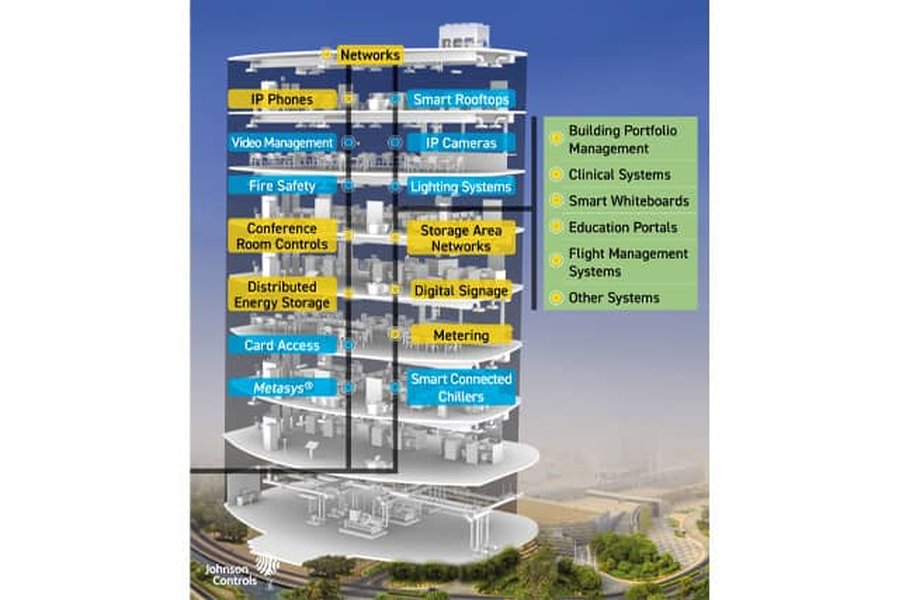
Advanced smart building management interface showcasing integrated systems monitoring for enhanced operational efficiency.
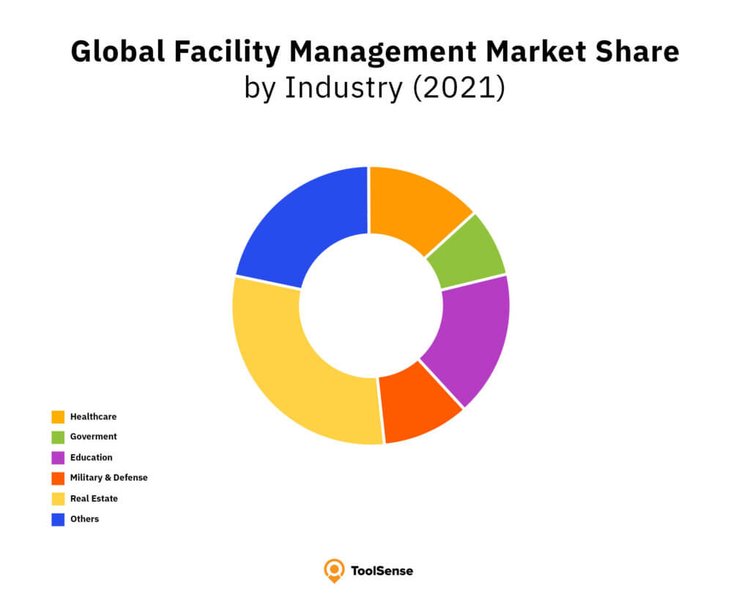
Visualization of global facility management market segmentation highlighting growth opportunities across various service categories.
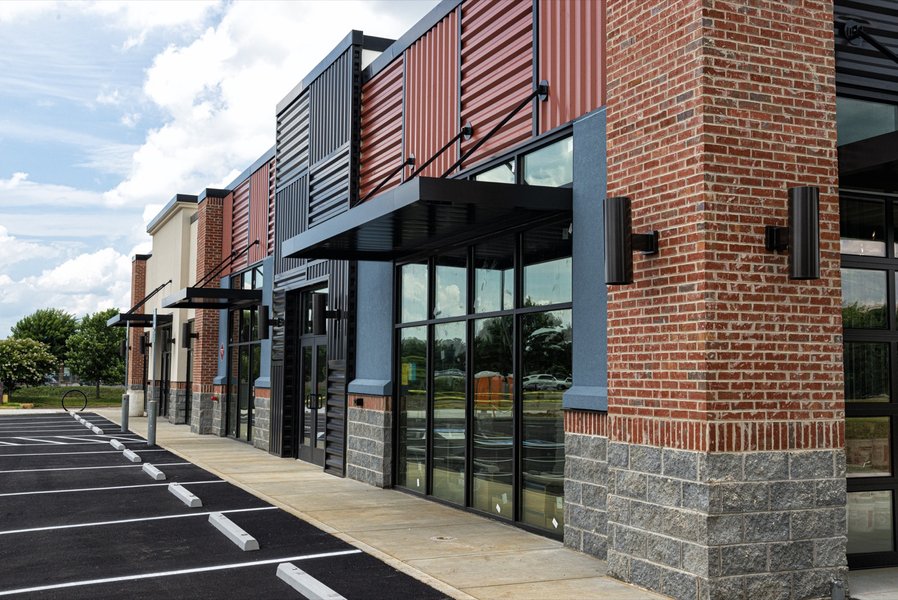
Modern facility services in action, demonstrating the integration of technology and professional expertise in maintaining commercial properties.
Technology Integration in Facility Services
The successful integration of technology into facility services operations represents one of the most significant growth opportunities in the market. This video provides insights into how emerging technologies are disrupting the real estate and facility management landscape:
This video examines how technological innovations like IoT, AI, and automation are revolutionizing facility management practices. It highlights the efficiency gains and competitive advantages available to service providers who effectively integrate these technologies into their operations, while also discussing implementation challenges and best practices for technology adoption in the facility services sector.
Frequently Asked Questions
References
- The $2 Trillion Opportunity: Transforming Real Estate and Facility Services in 2025 - Ithy.com
- Global Facility Management Market – Industry Trends and Forecast to 2031 - Data Bridge Market Research
- Facility Management Statistics 2024 - ToolSense
- 2025 Facility Trends: What's Ahead in Facilities Management - FacilitiesNet
- Commercial Real Estate Facility Management Services - Avison Young
-
Smart Buildings and Facilities Management - Johnson Controls
Recommended Searches
Last updated April 8, 2025