
Real-Time Emotional Arousal Monitoring for macOS Applications
Enhancing your macOS app with advanced speech emotion detection
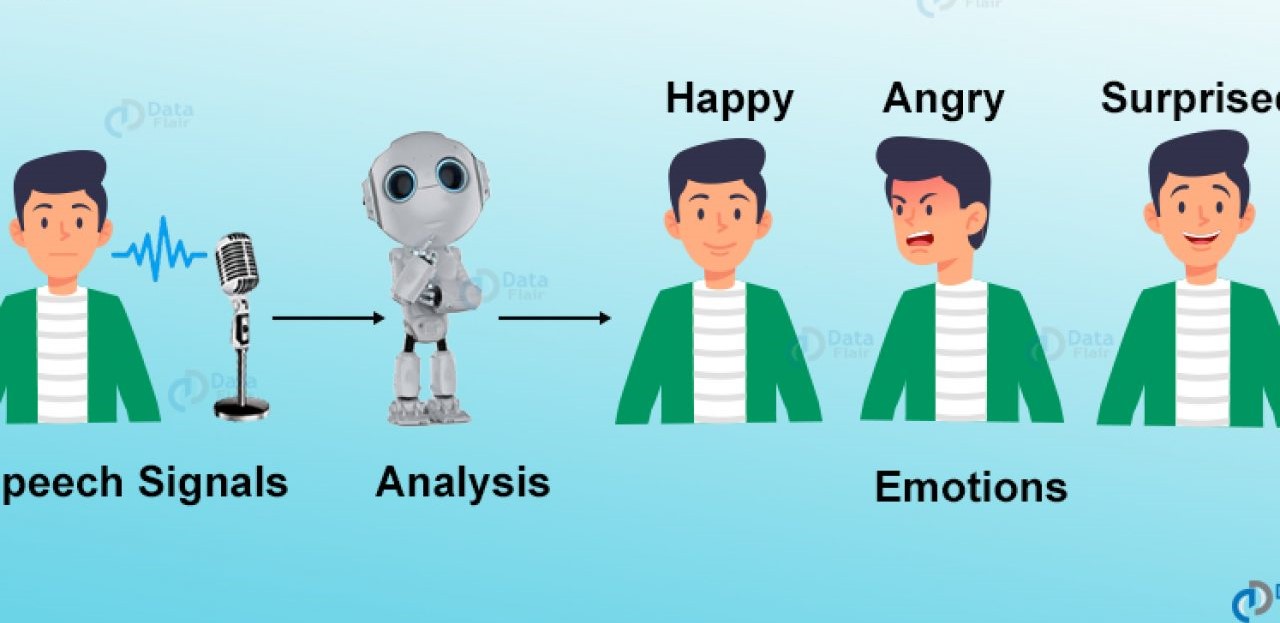
Key Takeaways
- Utilize robust frameworks like openSMILE and OpenAI Whisper for real-time speech emotion analysis.
- Implement machine learning models such as LSTM and TC-LSTM to accurately detect emotional arousal.
- Leverage local processing on M3 Apple Silicon Macs to ensure privacy and high computational performance.
Introduction
Monitoring the emotional arousal of speech in real-time within a macOS application involves integrating sophisticated tools and models capable of analyzing speech patterns beyond mere decibel levels. Emotional arousal detection provides deeper insights into user interactions, enabling applications to respond dynamically to the user's emotional state. This comprehensive guide explores the available tools, frameworks, and methodologies to implement real-time emotional arousal monitoring on an M3 Apple Silicon Mac.
Available Tools and Frameworks
openSMILE
openSMILE (open-source Speech and Music Interpretation by Large-space Extraction) is a widely recognized toolkit for feature extraction from audio. It is specifically designed for tasks such as emotion recognition and speech-based paralinguistic analysis.
- Features: Comes with pre-configured setups like “emobase” and “IS09_emotion” that are tuned for emotional expression analysis.
- Pros: Highly customizable, supports real-time processing, and has extensive documentation for integration.
- Cons: May require compilation from source for macOS, although documentation facilitates this process.
OpenAI Whisper with Metal Performance Shaders
OpenAI Whisper is renowned for its real-time speech recognition capabilities. When integrated with Metal Performance Shaders on macOS, it serves as a potent tool for real-time speech processing. While Whisper primarily focuses on transcription, it can serve as a foundation for analyzing speech patterns correlated with emotional arousal.
- Features: Real-time speech recognition, integration with Metal for enhanced performance.
- Pros: Leverages powerful GPU acceleration, ensuring efficient processing on Apple Silicon.
- Cons: Requires additional layers or models for direct emotional arousal detection.
AudioEmotionDetection GitHub Repository
The "AudioEmotionDetection" repository on GitHub offers a framework for real-time human emotion detection through voice and speech pattern analysis. This repository can be adapted or directly utilized to monitor emotional arousal within applications.
- Features: Pre-built models for emotion detection, real-time processing capabilities.
- Pros: Open-source, actively maintained, and customizable to specific needs.
- Cons: May require adjustments to focus specifically on arousal rather than general emotion recognition.
FILTWAM Framework
FILTWAM is an open-source framework utilized for real-time speech emotion recognition, including arousal detection. It provides a processing pipeline that can be customized to suit specific application requirements.
- Features: Supports CNN and LSTM networks, customizable processing pipeline.
- Pros: Flexible integration with various machine learning models, suitable for real-time applications.
- Cons: Requires implementation of the processing pipeline, which may necessitate in-depth technical knowledge.
Machine Learning Models for Arousal Detection
Convolutional Neural Networks (CNNs) and Long Short-Term Memory (LSTM) Networks
CNNs and LSTMs are prominent in the field of speech emotion recognition. CNNs excel in spatial feature extraction from spectrograms, while LSTMs are effective in capturing temporal dependencies in speech.
Time Convolutional LSTM (TC-LSTM)
The TC-LSTM model combines the strengths of CNNs and LSTMs, enabling the detection of emotion primitives like arousal from speech data.
Example Implementation Using PyTorch
import torch
import torch.nn as nn
import torch.nn.functional as F
from torch.utils.data import Dataset, DataLoader

# Example TC-LSTM Model
class TC_LSTM(nn.Module):
    def __init__(self, input_dim, hidden_dim, output_dim):
        super(TC_LSTM, self).__init__()
        self.conv = nn.Conv1d(input_dim, hidden_dim, kernel_size=3)
        self.lstm = nn.LSTM(hidden_dim, hidden_dim, num_layers=1, batch_first=True)
        self.fc = nn.Linear(hidden_dim, output_dim)

    def forward(self, x):
        x = F.relu(self.conv(x))
        x, _ = self.lstm(x)
        x = self.fc(x[:, -1, :])  # Take the last hidden state
        return x

# Load your dataset and create a custom dataset class
class SpeechDataset(Dataset):
    def __init__(self, audio_features, labels):
        self.audio_features = audio_features
        self.labels = labels

    def __len__(self):
        return len(self.audio_features)

    def __getitem__(self, idx):
        return self.audio_features[idx], self.labels[idx]

# Initialize model, dataset, and data loader
model = TC_LSTM(input_dim=13, hidden_dim=128, output_dim=1)  # Assuming MFCCs as input

# Train the model using your dataset
# ...

# Use the trained model for real-time arousal detection
def detect_arousal(audio_signal):
    # Preprocess audio signal to extract features (e.g., MFCCs)
    features = extract_features(audio_signal)

    # Convert features to PyTorch tensor
    input_tensor = torch.tensor(features).unsqueeze(0).unsqueeze(0)  # Add batch and channel dimensions

    # Run inference
    arousal_level = model(input_tensor).item()

    return arousal_level

# Example usage
audio_signal = capture_audio_from_mic()  # Implement this using Core Audio or AVFoundation
arousal = detect_arousal(audio_signal)
print(f"Detected Arousal Level: {arousal}")
Integration and Implementation Steps
1. Audio Input and Preprocessing
Begin by ensuring your macOS application can effectively capture audio input from the microphone. Utilize frameworks such as Core Audio or AVFoundation to handle audio data streams.
2. Feature Extraction
Extract relevant audio features that are indicative of emotional arousal. Commonly used features include:
- Mel-Frequency Cepstral Coefficients (MFCCs): Capture the power spectrum of audio signals.
- Fundamental Frequency (F0): Variations can signal changes in emotional states.
- Spectral Features: Including spectral rolloff, bandwidth, and centroid.
3. Model Selection and Training
Select a machine learning model suited for arousal detection. Models such as Long Short-Term Memory (LSTM), Convolutional Neural Networks (CNNs), or hybrid models like Time Convolutional LSTM (TC-LSTM) are effective.
4. Real-Time Processing Pipeline
Develop a pipeline that processes audio input in real-time. This involves:
- Capturing Audio: Use the selected framework to continuously capture mic input.
- Preprocessing: Normalize and prepare the audio data for feature extraction.
- Feature Extraction: Extract MFCCs and other relevant features.
- Inference: Run the processed features through the trained model to detect arousal levels.
5. Integration with macOS Application
Integrate the real-time processing pipeline into your macOS application. Ensure efficient threading or asynchronous processing to handle simultaneous audio capture and model inference without blocking the main application thread.
6. Optimization and Testing
Optimize the system for latency and accuracy. Test with diverse audio inputs to fine-tune threshold values and ensure reliable arousal detection across different scenarios.
Comparative Analysis of Tools and Frameworks
| Tool/Framework | Description | Pros | Cons | Compatibility | Reference |
|---|---|---|---|---|---|
| openSMILE | Open-source toolkit for audio feature extraction and emotion recognition. | Highly customizable, supports real-time processing. | May require compilation from source on macOS. | Compatible with M3 Apple Silicon Macs. | openSMILE GitHub |
| OpenAI Whisper | Real-time speech recognition model integrated with Metal Performance Shaders. | Efficient GPU acceleration, robust speech recognition. | Requires additional models for emotion detection. | Compatible with Apple Silicon via Metal. | OpenAI Whisper GitHub |
| AudioEmotionDetection | GitHub repository for real-time human emotion detection from audio. | Open-source, customizable for specific emotion detection. | May require modification for focused arousal detection. | Compatible with macOS. | AudioEmotionDetection GitHub |
| FILTWAM | Framework for real-time speech emotion recognition. | Supports CNN and LSTM integration, flexible pipeline. | Requires implementation of processing pipeline. | Compatible with Apple Silicon. | FILTWAM GitHub |
| Hume AI | Commercial API offering Valence & Arousal models for speech analysis. | High accuracy, easy integration via API. | Not a locally run tool, requires internet connection. | Not ideal for local processing needs. | Hume AI Products |
Implementation Example Using PyTorch
Below is an example of how to implement a TC-LSTM model using PyTorch for real-time arousal detection:
import torch
import torch.nn as nn
import torch.nn.functional as F
from torch.utils.data import Dataset, DataLoader

# Define the TC-LSTM Model
class TC_LSTM(nn.Module):
    def __init__(self, input_dim, hidden_dim, output_dim):
        super(TC_LSTM, self).__init__()
        self.conv = nn.Conv1d(input_dim, hidden_dim, kernel_size=3)
        self.lstm = nn.LSTM(hidden_dim, hidden_dim, num_layers=1, batch_first=True)
        self.fc = nn.Linear(hidden_dim, output_dim)

    def forward(self, x):
        x = F.relu(self.conv(x))
        x, _ = self.lstm(x)
        x = self.fc(x[:, -1, :])  # Use the last hidden state
        return x

# Custom Dataset Class
class SpeechDataset(Dataset):
    def __init__(self, audio_features, labels):
        self.audio_features = audio_features
        self.labels = labels

    def __len__(self):
        return len(self.audio_features)

    def __getitem__(self, idx):
        return self.audio_features[idx], self.labels[idx]

# Initialize Model, Dataset, and DataLoader
model = TC_LSTM(input_dim=13, hidden_dim=128, output_dim=1)  # Assuming 13 MFCC features

# Training Loop (Simplified)
def train_model(model, dataloader, epochs=10):
    optimizer = torch.optim.Adam(model.parameters(), lr=0.001)
    loss_fn = nn.MSELoss()
    for epoch in range(epochs):
        for features, labels in dataloader:
            optimizer.zero_grad()
            outputs = model(features)
            loss = loss_fn(outputs, labels)
            loss.backward()
            optimizer.step()
        print(f"Epoch {epoch+1}/{epochs}, Loss: {loss.item()}")

# Real-Time Arousal Detection Function
def detect_arousal(audio_signal):
    # Extract MFCC features from audio_signal
    features = extract_mfcc(audio_signal)  # Implement this function
    input_tensor = torch.tensor(features).unsqueeze(0).unsqueeze(0)  # Add batch and channel dimensions
    with torch.no_grad():
        arousal_level = model(input_tensor).item()
    return arousal_level

# Example Usage
audio_signal = capture_audio_from_mic()  # Implement using Core Audio or AVFoundation
arousal = detect_arousal(audio_signal)
print(f"Detected Arousal Level: {arousal}")
Real-Time Processing Considerations
Implementing real-time emotional arousal detection necessitates careful consideration of system performance and responsiveness. Key factors include:
- Latency: Ensure that the processing pipeline can handle audio input and model inference with minimal delay.
- Threading and Asynchronous Processing: Utilize multi-threading or asynchronous programming paradigms to prevent blocking the main application thread.
- Resource Management: Optimize memory and CPU usage to maintain application performance, especially when running complex models.
Threading Example in Swift
Using Grand Central Dispatch (GCD) for asynchronous processing in a macOS application:
// Capture audio and process in background
DispatchQueue.global(qos: .userInitiated).async {
    let audioSignal = captureAudio()
    let arousal = detectArousal(audioSignal)
    DispatchQueue.main.async {
        updateUI(with: arousal)
    }
}
Optimization Tips
-
Model Optimization: Prune or quantize models to reduce computational load without significantly impacting accuracy.
-
Efficient Feature Extraction: Implement optimized algorithms for feature extraction to minimize processing time.
-
Hardware Acceleration: Leverage GPU acceleration through Metal Performance Shaders or other frameworks to enhance processing speed on Apple Silicon.
Conclusion
Monitoring the emotional arousal of speech in real-time within a macOS application is achievable through the integration of robust frameworks and machine learning models. Tools like openSMILE and OpenAI Whisper provide a solid foundation for audio processing, while models such as LSTM and TC-LSTM offer the necessary capability for accurate arousal detection. Leveraging the computational power of M3 Apple Silicon Macs ensures that these processes run efficiently and securely on the local machine, maintaining user privacy. By following the outlined steps and considering optimization strategies, developers can enhance their applications with sophisticated emotional intelligence features.
References
Last updated February 5, 2025