
The Transformative Journey of the Gulf Countries: A Recent History
From Oil Reliance to Diversification and Regional Influence
Key Highlights of Recent Gulf History
- Economic Diversification: Gulf countries are actively moving away from oil dependency, investing heavily in sectors like tourism, technology, and finance to build sustainable post-oil economies.
- Increased Regional Engagement: The Gulf states, particularly Saudi Arabia and the UAE, are asserting a more prominent political and economic role in the wider Middle East and Africa, leveraging financial resources and diplomatic initiatives.
- Socioeconomic Reforms: Significant social and economic reforms are underway across the GCC, including changes to labor laws and efforts to enhance the quality of life, though challenges remain in areas like political freedoms and human rights.
The recent history of the Gulf countries is a dynamic narrative of rapid transformation, driven by the immense wealth generated from hydrocarbon resources and ambitious visions for the future. While oil continues to play a significant role, the region has embarked on a path of economic diversification, increased regional engagement, and substantial socioeconomic reforms.
Defining the Gulf Countries
Understanding the Key Players
The term "Gulf countries" primarily refers to the Arab states bordering the Persian Gulf. The most prominent grouping is the Gulf Cooperation Council (GCC), established in 1981 to foster economic, political, and military cooperation. The six member states of the GCC are:
- Bahrain
- Kuwait
- Oman
- Qatar
- Saudi Arabia
- United Arab Emirates
While Iraq has a coastline on the Persian Gulf and is an Arab League member in the region, it is not part of the GCC. Iran also borders the Gulf but is a Persian, not Arab, nation and is generally considered separately in regional political and economic analyses.
The political structures within these countries vary, though most are monarchies. Saudi Arabia and Qatar are absolute monarchies, while others like Kuwait have more established parliamentary systems, albeit with varying degrees of political freedom and representation. Bahrain has experienced periods of political turmoil, particularly during the Arab Spring.
Map illustrating the countries bordering the Persian Gulf.
The Impact of Oil: A Foundational Shift
From Poverty to Petro-States
The discovery and subsequent exploitation of vast oil reserves in the mid-20th century fundamentally reshaped the Gulf region. Before the widespread production of oil, many of these areas had traditional economies based on fishing, pearl diving, and limited trade. Oil wealth brought unprecedented prosperity, leading to rapid modernization, urbanization, and significant improvements in infrastructure and social services.
In the initial decades, particularly from the 1950s to the mid-1970s, oil revenues were largely controlled by the ruling elites. This period saw the Gulf states gain full independence and begin to assert their newfound influence on the global stage, notably through organizations like OPEC. The oil embargoes of the 1970s demonstrated the power of oil as a political tool.
Recent Economic Trajectories and Diversification Efforts
Building a Post-Oil Future
In recent years, recognizing the finite nature of oil reserves and the volatility of energy markets, Gulf countries have significantly accelerated efforts to diversify their economies. National visions and ambitious projects are central to this transformation, aiming to reduce reliance on hydrocarbons and build sustainable, knowledge-based economies.
Key Areas of Diversification:
- Tourism and Hospitality: Countries like the UAE (particularly Dubai) and Saudi Arabia are investing heavily in developing world-class tourism infrastructure, including luxury resorts, entertainment venues, and cultural attractions.
- Finance and Banking: The Gulf has emerged as a significant financial hub, attracting international banks and investment firms. Efforts are ongoing to strengthen regulatory frameworks and promote financial technology.
- Logistics and Trade: Leveraging their strategic geographic location, Gulf states are expanding ports, airports, and logistics networks to become major global trade and transit points.
- Technology and Innovation: Significant investments are being made in technology sectors, including artificial intelligence, renewable energy, and smart cities. Projects like Saudi Arabia's NEOM exemplify this ambition, although they have also faced controversy.
- Manufacturing and Industry: There is a push to develop non-oil industrial bases, including petrochemicals (though still linked to oil), manufacturing, and advanced technologies.
These diversification efforts are reflected in economic data. In 2024, non-fossil fuel industries in GCC countries saw growth. Economic growth in the GCC region is projected to rebound in 2024 and 2025, with forecasters anticipating growth rates significantly higher than the global average over the next five years. This growth is being driven by recovering domestic demand, increased wages, and supportive monetary policies.

Visual representation of economic activity and growth in the Gulf region.
Socioeconomic Reforms and Challenges
Alongside economic diversification, Gulf countries are undergoing significant socioeconomic reforms. These include efforts to improve the business environment, attract foreign investment, and enhance the quality of life for citizens and expatriates. Reforms to labor systems, such as changes to the Kafala system, are being implemented, though challenges related to migrant worker rights persist.
While economic progress is evident, the region continues to face challenges related to political freedoms, human rights, and demographic pressures. Debates around political participation and the role of civil society continue.
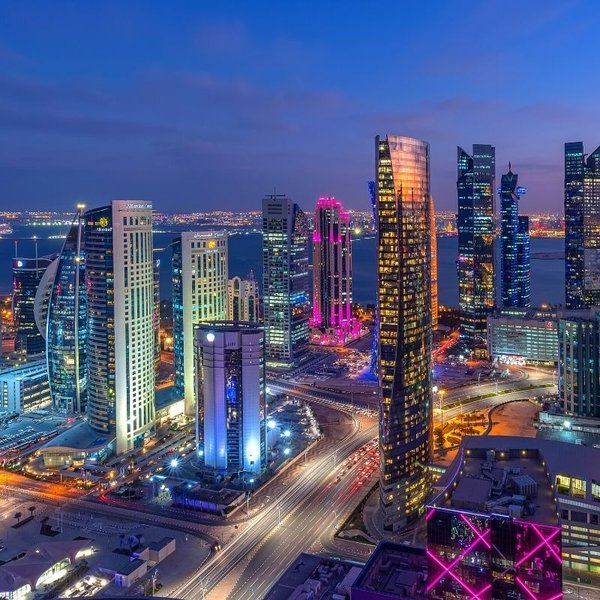
An image depicting aspects of life and urban development in the Gulf.
Geopolitical Dynamics and Regional Influence
Asserting a Stronger Regional and Global Role
In recent years, Gulf countries, particularly Saudi Arabia and the UAE, have adopted a more assertive foreign policy and significantly increased their regional and global influence. Leveraging their financial power and strategic location, they are playing more prominent roles in regional conflicts, diplomatic initiatives, and international forums.
Key Aspects of Gulf Geopolitics:
- Engagement in Regional Conflicts: Gulf states have been actively involved in conflicts in Yemen and have played roles in Libya and Syria, often supporting different factions. Their involvement is driven by a mix of security concerns, regional rivalries (particularly with Iran), and a desire to shape the regional order.
- Relations with Iran: Relations between Gulf Arab states and Iran have historically been complex and often strained due to regional rivalries and differing political and religious ideologies. However, there has been a recent trend towards de-escalation and diplomatic engagement, including a Chinese-brokered agreement between Saudi Arabia and Iran in 2023.
- Engagement with Global Powers: Gulf countries maintain close ties with Western powers, particularly the United States, for security and economic reasons. However, they are also diversifying their partnerships, strengthening relationships with countries like China and Russia, reflecting a multipolar approach to foreign policy.
- Influence in the Horn of Africa and Mediterranean: Gulf states have expanded their influence in the Horn of Africa and the Mediterranean through investments, aid, and diplomatic engagement, seeking to secure economic interests and enhance their strategic depth.
- The Israeli-Palestinian Conflict: The ongoing conflict remains a significant factor in regional dynamics. Gulf states have expressed concerns over the conflict in Gaza and have been involved in diplomatic efforts, including supporting calls for a ceasefire.
- Intra-GCC Relations: While the GCC was formed to promote unity, there have been periods of tension and disagreement between member states, such as the diplomatic rift with Qatar between 2017 and 2021. Despite these challenges, the underlying rationale for cooperation remains.
The desire for regional stability is a key driver of Gulf foreign policy, as it directly impacts their economic diversification goals and ability to attract investment and tourism. Their strategies are characterized by a dual focus on internal development and external stabilization.
This video explores the increasing global confidence and influence of Gulf states like Saudi Arabia and the UAE, extending beyond their traditional role as oil producers. It highlights their evolving geopolitical strategies and their growing importance in international affairs.
Key Recent Developments and Future Outlook
Navigating a Changing Global Landscape
Several key developments have shaped the recent history of the Gulf and will continue to influence its trajectory:
-
The Arab Spring and its Aftermath: The wave of protests and uprisings across the Middle East and North Africa from 2011 onwards had a significant impact on the Gulf. While most GCC monarchies avoided the widespread unrest seen elsewhere, the events prompted some reforms and increased focus on social stability.
-
The Proposed Gulf Union: In the wake of the Arab Spring, Saudi Arabia proposed transforming the GCC into a "Gulf Union" with tighter integration, a move seen by some as an attempt to counter Iranian influence and solidify Saudi leadership. However, this proposal faced objections from other members and has not fully materialized.
-
Economic Transformation Programs: National visions like Saudi Arabia's Vision 2030 and the UAE's Vision 2021 (and subsequent plans) outline ambitious goals for economic diversification, social development, and modernization. These programs are driving significant investment in infrastructure, technology, and human capital.
-
The Energy Transition: As the world moves towards cleaner energy sources, Gulf countries are grappling with the implications for their oil-dependent economies. While they remain major hydrocarbon producers, they are also investing in renewable energy and exploring ways to adapt to a post-fossil fuel era.
-
Increased Engagement in Syria: Despite previous stances, some Gulf states, notably Saudi Arabia and the UAE, are showing increased engagement with the Syrian government, signaling a shift in regional dynamics and power realities.
-
Hosting International Events: The successful hosting of major international events, such as the FIFA World Cup in Qatar (2022) and the ongoing development of large-scale projects, have raised the global profile of the Gulf states.
Looking ahead to 2025 and beyond, the Gulf region is expected to continue its path of economic diversification and increased regional engagement. Relations with Iran are likely to remain a key factor, as will the ongoing dynamics of the Israeli-Palestinian conflict. The region's ability to navigate the energy transition and address internal socioeconomic challenges will be crucial for its long-term stability and prosperity.
Comparison of Key Gulf Countries (GCC)
Snapshot of Economic and Political Differences
While the GCC members share many commonalities, there are also notable differences in their political systems, economic structures, and approaches to regional issues. The following table provides a brief comparison:
| Country | Political System | Dominant Economic Sector (Historically) | Key Diversification Areas | Notable Recent Development/Characteristic |
|---|---|---|---|---|
| Bahrain | Constitutional Monarchy | Oil, Finance | Finance, Tourism | Experienced political unrest in 2011. |
| Kuwait | Constitutional Monarchy with a powerful elected National Assembly | Oil | Finance, Logistics | Oldest established parliament-type system in the southern Gulf. |
| Oman | Absolute Monarchy with an elected advisory council | Oil, Gas | Tourism, Logistics, Mining | Known for its relatively neutral foreign policy. |
| Qatar | Absolute Monarchy (with mooted elections for a national parliament) | Natural Gas | Finance, Media (Al Jazeera), Tourism, Sports (World Cup 2022) | Experienced a diplomatic rift with other GCC members (2017-2021). |
| Saudi Arabia | Absolute Monarchy | Oil | Tourism, Entertainment, Technology (Vision 2030 projects) | Largest economy and most populous GCC country, pursuing extensive reforms. |
| United Arab Emirates | Federal Absolute Monarchy | Oil (significant in Abu Dhabi), Trade, Tourism, Real Estate | Tourism, Finance, Logistics, Technology, Real Estate | Known for its rapid development, global hubs (Dubai, Abu Dhabi), and diverse economy. |
Frequently Asked Questions about the Gulf Countries
What is the Gulf Cooperation Council (GCC)?
The Gulf Cooperation Council (GCC) is a political and economic alliance of six Middle Eastern countries: Bahrain, Kuwait, Oman, Qatar, Saudi Arabia, and the United Arab Emirates. It was established in 1981 to promote cooperation and integration among its member states.
Why are Gulf countries diversifying their economies?
Gulf countries are diversifying their economies to reduce their reliance on oil and gas revenues, which are subject to price volatility and the long-term global shift towards renewable energy. Diversification aims to create sustainable economic growth and employment opportunities for future generations.
What are some of the major challenges facing the Gulf countries?
Major challenges include continuing economic diversification away from oil, managing the social impacts of rapid modernization and large expatriate populations, addressing human rights concerns and calls for greater political participation, and navigating regional geopolitical tensions, particularly with Iran.
How has the Arab Spring impacted the Gulf countries?
While most GCC countries did not experience the level of unrest seen in other Arab states, the Arab Spring prompted governments to implement some social and economic reforms to address citizen grievances and maintain stability. It also led to increased regional involvement by some Gulf states.
What is the role of Vision 2030 and similar programs?
Vision 2030 (Saudi Arabia) and similar national visions in other Gulf countries are comprehensive strategic frameworks aimed at transforming their economies and societies. They outline goals for economic diversification, social development, infrastructure projects, and improving the quality of life.
What is the current state of relations between Gulf countries and Iran?
Relations have historically been tense, but there has been a recent trend towards de-escalation and diplomatic engagement, including a significant agreement between Saudi Arabia and Iran in 2023. However, underlying regional rivalries and mistrust still exist.
References
Last updated April 24, 2025