
Deformability of Red Blood Cells
Understanding the Cellular Mechanics and Its Impact on Physiology
Key Takeaways
- Essential for oxygen delivery and microcirculation.
- Depends on specialized membrane structures and cytoskeletal proteins.
- Measurement techniques provide critical insights for diagnosing blood disorders.
Introduction
The deformability of red blood cells (RBCs) is a fundamental property that enables these cells to perform their primary function: the efficient transport of oxygen from the lungs to tissues and the removal of carbon dioxide from those tissues. This remarkable ability to change shape without rupturing is not just important for the delivery of gases but is also crucial for navigating the intricacies of the human circulatory system, where blood must traverse capillaries that are often much narrower than the diameter of an average RBC.
In this comprehensive discussion, we explore the mechanisms behind RBC deformability, the factors that influence it at both the cellular and molecular levels, and its implications in health and disease. Particular emphasis is placed on the unique structural adaptations that allow red blood cells to deform and on the various scientific techniques that have been developed to measure these properties. An in-depth understanding of RBC deformability is critical for both clinicians and researchers, as changes in this attribute can have profound effects on blood flow, tissue oxygenation, and overall circulatory health.
Mechanisms of Red Blood Cell Deformability
Cellular Structure
Cell Membrane Composition
The red blood cell membrane is composed primarily of a lipid bilayer, which provides the basic structural framework of the cell. Interwoven within this bilayer are various proteins that contribute to the cell's mechanical properties. A significant component is the phospholipid matrix that confers fluidity to the membrane while maintaining its integrity. Cholesterol and other lipids further modulate membrane fluidity and viscosity, factors that directly affect the cell's deformability.
Cytoskeletal Network
Underlying the lipid bilayer is a complex cytoskeletal network, primarily composed of proteins such as spectrin, actin, and ankyrin. This mesh-like network forms a flexible support system that plays a pivotal role in maintaining the cell’s biconcave shape—a key factor in both its mechanical resilience and its ability to undergo deformation. The spectrin network, in particular, is responsible for distributing mechanical stresses across the cell, ensuring that even when the cell is forced through narrow capillaries, it can recover its original configuration without damage.
Role of the Biconcave Shape
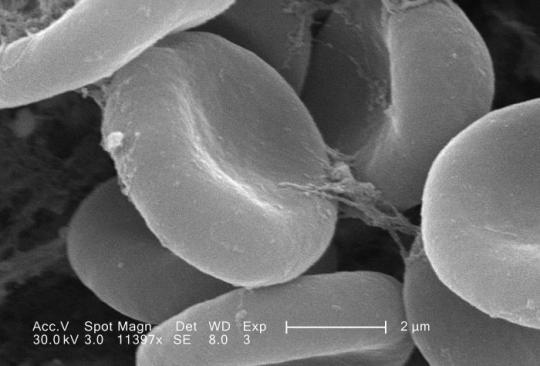
The unique biconcave disc shape of red blood cells is an evolutionary adaptation that optimizes both their functional efficiency and deformability. This shape maximizes the surface area-to-volume ratio, a feature that is critical for effective gas exchange. The indentation on either side of the cell not only facilitates optimal contact with the microvascular endothelium but also provides an inherent flexibility that allows the cell to deform easily when encountering mechanical stress in capillaries. The curvature inherent in this shape acts as a built-in mechanism for distributing deformative forces, reducing the likelihood of membrane rupture.
Role of Cytoplasmic Viscosity
The cytoplasm of red blood cells is densely packed with hemoglobin, the protein responsible for oxygen transport. Despite this high concentration of hemoglobin, the cytoplasm maintains a level of fluidity that supports the cell’s deformability. The viscosity of the cytoplasm is a critical factor; if it were too high, the cell would be less able to change shape under stress. Conversely, if the cytoplasm were overly fluid, it could compromise the structural stability required during the deformation process. Therefore, a delicate balance exists between maintaining sufficient cytoplasmic viscosity for stability and ensuring enough fluidity to allow for the necessary shape changes.
Factors Affecting RBC Deformability
Physiological Factors
Several intrinsic physiological factors influence red blood cell deformability. One of the most significant is the metabolic state of the cell. ATP, the energy currency of the cell, is necessary for maintaining the integrity of the cytoskeletal network and the function of various ion pumps embedded in the membrane. Adequate levels of ATP enable the cell to rapidly orchestrate shape changes in response to shear stress. Additionally, the redox state within the cell can modulate deformability; shifts in the balance of oxidized and reduced molecules can affect post-translational modifications of cytoskeletal proteins, thereby influencing their mechanical properties.
Pathological Conditions
The deformability of red blood cells can be compromised under several pathological conditions. In diseases such as sickle cell anemia, genetic mutations lead to the production of abnormal hemoglobin molecules that crystallize within the cell, resulting in rigid, sickle-shaped cells. This abnormal morphology significantly reduces deformability and can lead to occlusion of small blood vessels, precipitating painful crises and tissue ischemia.
Other conditions, such as hereditary spherocytosis, involve defects in membrane proteins that disrupt the stability and elasticity of the RBC membrane. In such cases, the cells often take on a spherical shape with a decreased surface area-to-volume ratio, further reducing their ability to deform. Additionally, diabetes and malaria are known to alter the mechanical properties of red blood cells, through mechanisms involving oxidative stress and immune-mediated damage, respectively.
Aging is another factor that plays a role in deformability. As red blood cells age over their approximately 120-day lifespan, they gradually lose their flexibility through cumulative wear and tear. Senescent cells are typically removed from circulation by the spleen, a process that serves as a quality control mechanism to ensure efficient blood flow and oxygen delivery.
Methods for Measuring Deformability
Ektacytometry
One of the most widely used techniques for assessing red blood cell deformability is osmotic gradient ektacytometry. This method involves subjecting the cells to a range of osmotic conditions while exposing them to controlled shear stress. Laser diffraction is then used to analyze the extent of cell deformation, providing quantitative data on their mechanical properties. This technique is invaluable not only for research purposes but also in clinical settings, where it aids in diagnosing diseases characterized by impaired deformability.
Micropipette Aspiration and Optical Tweezers
In addition to ektacytometry, techniques such as micropipette aspiration and optical tweezers are employed to study the mechanical behavior of individual red blood cells. Micropipette aspiration involves applying a controlled suction force to a cell through a fine glass pipette, allowing researchers to observe and measure the resulting deformation. Optical tweezers, on the other hand, use highly focused laser beams to trap and manipulate single cells, providing detailed insights into the forces required for deformation and the cell’s subsequent recovery dynamics.
Other Techniques
Beyond these methods, there are several other techniques used to evaluate RBC deformability, such as the RBC filterability test. This test assesses the ability of red blood cells to pass through filters with defined pore sizes, simulating the passage through capillaries. Each method offers unique insights into different aspects of cellular mechanics and can be applied in a complementary fashion to obtain a comprehensive understanding.
Summary Table of Measurement Techniques
| Technique | Principle | Applications |
|---|---|---|
| Ektacytometry | Uses osmotic gradients and shear stress to measure elongation via laser diffraction | Diagnosis of hematological disorders, research on cell mechanics |
| Micropipette Aspiration | Applies a controlled suction force to observe cellular deformation | Single cell mechanics, research in membrane elasticity |
| Optical Tweezers | Employs focused laser beams to manipulate and measure deformation forces | Study of biophysical properties at the cellular level |
| RBC Filterability | Assesses the ability of cells to navigate through filters with small pore sizes | Evaluation of microcirculation efficiency, quality control in stored blood |
Clinical Implications
Importance in Health and Disease
The deformability of red blood cells is not only a fascinating biophysical property but also a crucial factor in maintaining circulatory health. Normal, highly deformable red blood cells can traverse the smallest capillaries with ease, ensuring that all tissues receive an adequate supply of oxygen. When deformability is impaired, however, blood flow can be significantly hindered, leading to increased vascular resistance and subsequent tissue ischemia. Such impairments are seen in various diseases, including sickle cell anemia and metabolic disorders like diabetes, where the red blood cell’s ability to deform is compromised by alterations in cell structure or metabolic disturbances.
Additionally, during inflammatory conditions and oxidative stress, modifications in the cytoskeletal and membrane proteins can further reduce RBC deformability, potentially leading to hemolysis—the premature rupture of red blood cells—and the subsequent release of their intracellular contents. This phenomenon not only reduces the oxygen-carrying capacity of blood but also can trigger inflammatory cascades, exacerbating the underlying pathology.
Therapeutic Monitoring and Transfusion Medicine
In clinical practice, assessments of red blood cell deformability are instrumental in monitoring the progression of blood disorders and evaluating the efficacy of therapeutic interventions. For example, in patients with hereditary spherocytosis or sickle cell anemia, regular monitoring of RBC deformability can aid in the early detection of disease exacerbations. Such monitoring is also crucial in the context of blood transfusions. Stored blood may accumulate changes over time, leading to a reduction in cell flexibility; understanding these alterations can help in the selection of high-quality blood for transfusion to minimize complications during transfusion therapy.
Conclusion
In summary, the deformability of red blood cells is a critical biological property that underpins the efficiency of oxygen transport and microcirculation. This flexibility is derived from a finely tuned interplay between the lipid bilayer of the cell membrane, its supporting cytoskeletal network, and the unique biconcave shape that provides an optimal surface area-to-volume ratio. Both intrinsic factors, such as ATP levels and cytoplasmic viscosity, and extrinsic pathological conditions, including genetic disorders and oxidative stress, can influence cellular deformability.
Advanced measurement techniques, ranging from osmotic gradient ektacytometry to sophisticated single-cell assays using micropipette aspiration and optical tweezers, have enabled researchers to quantify and analyze the mechanics of red blood cell deformation. These insights are not only enhancing our fundamental understanding of cell physiology but also playing an increasingly important role in clinical diagnosis and treatment strategies for various hematological and metabolic disorders.
Ultimately, the study of red blood cell deformability exemplifies the intricate relationship between cellular structure and function—a relationship that is essential for sustaining life by ensuring that blood can navigate the body’s complex vascular system while delivering vital oxygen to tissues.
References
- Erythrocyte Deformability - Wikipedia
- Article on RBC Deformability - PubMed
- Research on Mechanical Properties - PubMed
-
PMC Article on RBC Mechanics
- IntechOpen Chapter on Blood Cells
- ScienceDaily Report on RBC Flexibility
- Blood Journal Article on Red Cell Membrane Skeleton
- UCSD Research on Red Blood Cells
-
PMC Article on RBC Deformability
-
ScienceDirect Overview of Erythrocyte Membrane
- UCSD Jacobs School News on RBC Research
-
ScienceDirect Topics on RBC Membrane
- American Journal of Physiology Article
- Red Blood Cell - Wikipedia
More
Last updated February 18, 2025