
Unveiling the Powerhouse: How Ansys RedHawk-SC Dominates the Chip Signoff Arena
A deep dive into RedHawk-SC's capabilities and how it stacks up against key competitors in the demanding world of semiconductor design.
In the intricate world of semiconductor design, ensuring power integrity, reliability, and performance of System-on-Chips (SoCs) is paramount, especially with the relentless push towards advanced sub-16nm process nodes. Ansys RedHawk-SC has emerged as a critical tool in this domain. This analysis offers a comprehensive comparison of RedHawk-SC against its competitors, illuminating its strengths and market positioning.
Key Highlights: RedHawk-SC's Competitive Edge
- Industry Gold Standard: RedHawk-SC is widely recognized and validated by all major foundries as the benchmark for SoC power noise, electromigration (EM), and reliability signoff, crucial for designs at advanced nodes including 3nm FinFET technology.
- Unmatched Scalability & Performance: Built upon the Ansys SeaScape big data analytics platform, RedHawk-SC offers a cloud-native architecture enabling near-linear scalability. This allows it to efficiently handle enormous and complex chip designs, processing billions of instances with high speed and capacity.
- Comprehensive Multiphysics Simulation: RedHawk-SC integrates electrical, thermal, and, through extensions like RedHawk-SC Electrothermal, mechanical stress analysis. This holistic view is indispensable for the reliability of modern 2.5D/3D-IC packages and complex systems.
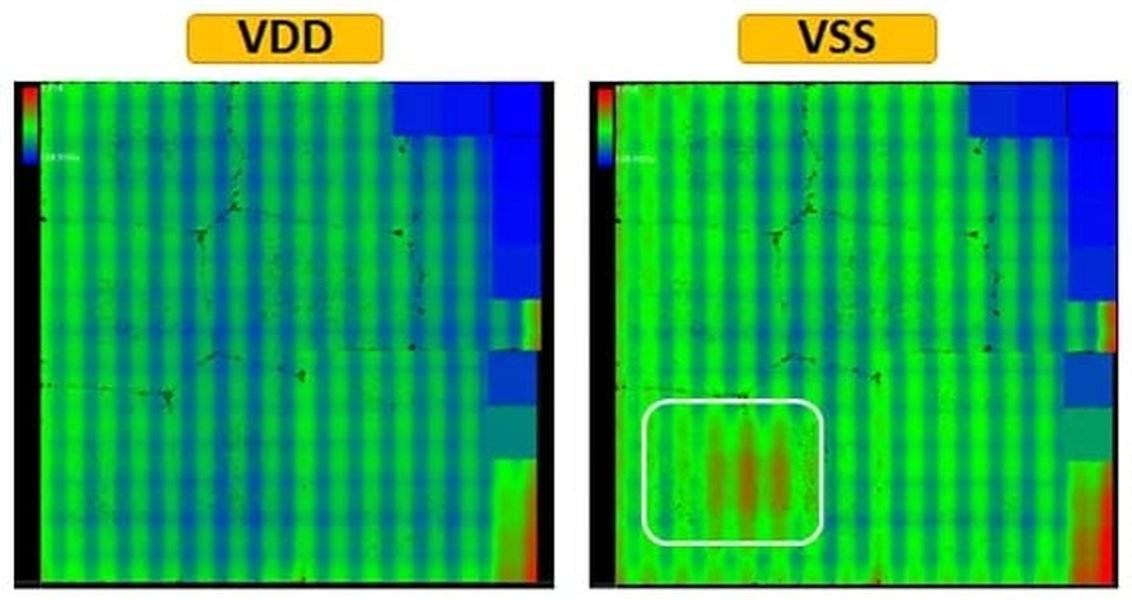
Visualizing complex semiconductor simulations within the Ansys ecosystem, a core capability of RedHawk-SC.
Deep Dive into Ansys RedHawk-SC's Capabilities
Ansys RedHawk-SC is specifically engineered for the signoff of power noise and reliability in SoCs. Its primary functions include analyzing full-chip IR drop (voltage drop), electromigration, and thermal reliability for digital integrated circuits. Its architecture is a key differentiator.
Core Strengths Driving Its Leadership
Foundry Certification and Industry Trust
RedHawk-SC's algorithms are certified for accuracy by all major semiconductor foundries across all FinFET processes, down to the most advanced 3nm nodes. Thousands of successful tapeouts underscore its reliability, significantly mitigating project and technology risks by allowing designers to avoid overly conservative margins.
Cloud-Native Architecture: The SeaScape Platform
The Ansys SeaScape platform provides RedHawk-SC with a purpose-built, big data analytics framework. This enables cloud-native execution, allowing for massively parallel full-chip analysis across thousands of CPU cores with near-linear scalability and remarkable memory efficiency per core. This is crucial for handling today's giga-scale designs.
Comprehensive Power and Reliability Analysis
RedHawk-SC offers robust techniques to detect and correct dynamic voltage drop issues, which is essential for creating low-power digital designs without compromising performance. It performs detailed analysis of power grid weaknesses, electromigration risks, and thermal hotspots.
Multiphysics Co-simulation with RedHawk-SC Electrothermal
A significant extension, RedHawk-SC Electrothermal, facilitates full-system thermal and power integrity co-simulation for chips and 2.5D/3D-IC packages. It unifies electrical and thermal analysis at chip, board, and system levels, and can also incorporate package signal integrity and thermal-mechanical stress and warpage analysis. This multiphysics approach is vital for advanced packaging technologies.
Ansys RedHawk-SC Electrothermal proficiency badge, signifying expertise in advanced multiphysics simulation.
Advanced "What-if" Analytics and ECO Efficiency
The software provides powerful "what-if" exploration capabilities. Designers can quickly assess the impact of Engineering Change Orders (ECOs), cell movements, or different voltage drop mitigation strategies without needing to rerun extensive full simulations, thereby accelerating design closure.
Hardware Security Analysis with RedHawk-SC Security
Ansys RedHawk-SC Security is an add-on that identifies and analyzes data integrity and hardware security vulnerabilities pre-silicon. It leverages physics-based simulation to assess on-chip power noise and near-field electromagnetic emissions, aiding in side-channel leakage analysis (SCLA) and helping to ensure product security before manufacturing.
Seamless Integration with EDA Flows
RedHawk-SC integrates smoothly with all major Electronic Design Automation (EDA) implementation flows, accepting industry-standard design formats. This broad compatibility ensures its place within established semiconductor design methodologies.
Introducing Ansys RedHawk-SC: A Visual Overview
The following video provides an introduction to Ansys RedHawk-SC, highlighting its next-generation capabilities for SoC power noise signoff and its foundation on the Ansys SeaScape platform. It offers insights into how the tool addresses the challenges of sub-16nm design success.
The Competitive Landscape: RedHawk-SC vs. The Field
While RedHawk-SC holds a commanding position in its niche, the EDA market features various tools. Understanding their focus areas helps clarify RedHawk-SC's unique value proposition.
Direct Competitors in IC Power Integrity & Reliability
These tools offer solutions for similar challenges in the IC power integrity space, primarily for digital designs.
- Cadence Voltus: A strong contender for power integrity and IR drop analysis. Voltus is often favored for its tight integration within Cadence's digital implementation flows. However, RedHawk-SC is frequently preferred for its superior cloud scalability, more comprehensive multiphysics co-simulation capabilities, and is often the tool of choice for final signoff due to its extensive foundry certifications and proven accuracy in numerous tapeouts.
- Synopsys Solutions (e.g., PrimeRail, tools within Fusion Compiler): Synopsys offers robust power integrity analysis and signoff tools integrated within its comprehensive digital design platform. These are strong in signoff and well-regarded, but RedHawk-SC often differentiates with its SeaScape-based architecture for massive scalability and its specialized multiphysics extensions.
Complementary Ansys Solutions
Within the Ansys portfolio, some tools address related but distinct aspects of chip design and are complementary to RedHawk-SC rather than direct competitors.
- Ansys Totem-SC: This is a transistor-level power noise and reliability analysis platform specifically for analog, mixed-signal (AMS) IP, and fully custom designs. It generates IP models that can be used by RedHawk-SC for SoC-level signoff. Thus, Totem-SC works in conjunction with RedHawk-SC for comprehensive analysis of complex SoCs containing both digital and AMS components.
- Ansys PathFinder: An end-to-end solution for Electrostatic Discharge (ESD) verification. RedHawk-SC integrates with PathFinder for comprehensive ESD analysis, making PathFinder a complementary tool within the Ansys ecosystem.
Tools for Different Design Domains
Several other tools are sometimes mentioned in broader comparisons but serve different primary purposes and do not directly compete with RedHawk-SC's core functionality of chip-level power integrity and reliability signoff.
- PCB Design Tools (e.g., Altium Designer, Design Force, KiCad, Autodesk EAGLE): These tools focus on printed circuit board (PCB) design, encompassing schematic capture, layout, ECAD/MCAD integration, and manufacturing outputs. While essential for electronic product development, they operate at a different level of abstraction and do not offer the specialized, deep-chip analysis of RedHawk-SC.
- General CAD/CAE Software (e.g., SOLIDWORKS, Autodesk Fusion): These are primarily mechanical CAD (MCAD) software or broader product development platforms. While they might have some electronics-related capabilities (like Fusion 360's PCB design), they are not specialized for IC power integrity analysis.
- Other Specialized Tools:
- CircuitHawk: Focuses on design error detection, electrical stresses, and reliability prediction at the schematic level, prior to PCB layout.
- Ansys Exalto: Performs post-LVS RLCk extraction for accurately predicting electromagnetic and substrate coupling effects.
- NVIDIA Modulus: An AI-driven simulation platform for physics-based modeling, more general-purpose than RedHawk-SC's specific IC reliability focus.
- Calibre Design Solutions (Siemens EDA): Primarily known for IC physical verification (DRC, LVS), DFM, and layout-related tasks, often complementary to power analysis tools.
At-a-Glance: Feature Comparison
This table provides a comparative overview of Ansys RedHawk-SC and selected other tools based on key features and target applications. This helps to quickly understand their primary roles in the electronics design ecosystem.
| Feature/Aspect | Ansys RedHawk-SC | Cadence Voltus | Synopsys (PrimeRail/Fusion) | Altium Designer | Ansys Totem-SC |
|---|---|---|---|---|---|
| Primary Focus | Digital SoC Power Integrity & Reliability Signoff | Digital IC Power Integrity Analysis | Digital IC Power Integrity & Signoff | PCB Design Workflow | Analog/Mixed-Signal Power Noise & Reliability |
| Core Strengths | Multiphysics, Cloud Scalability, Foundry Certified, Big Data Analytics | Cadence Flow Integration, Power Analysis | Synopsys Flow Integration, Signoff Capabilities | Unified PCB Design, Ease of Use, Collaboration | Transistor-level accuracy, AMS IP Modeling, Cloud Scalability |
| Target Users | Semiconductor Designers, SoC Signoff Engineers | Digital IC Designers | Digital IC Designers | PCB Designers, Electrical Engineers | Analog/Mixed-Signal IP Designers |
| Technology Node Support | Advanced (down to 3nm FinFET) | Advanced | Advanced | N/A (PCB context) | Advanced (for custom/analog) |
| Cloud-Native Architecture | Yes (Ansys SeaScape platform) | Some cloud support | Some cloud support | Yes (Altium 365 platform for collaboration & data management) | Yes (Ansys SeaScape platform) |
| Multiphysics Capability | Extensive (Electrical, Thermal, Mechanical via RedHawk-SC Electrothermal) | Primarily Electrical | Primarily Electrical | Limited to PCB thermal analysis (if available) | Electrical, Thermal (specialized for AMS) |
Visualizing the Competitive Landscape: A Radar Chart
The following radar chart offers a visual comparison of Ansys RedHawk-SC against key alternatives across several critical dimensions relevant to semiconductor and electronics design. This illustrates the specialized strengths of each tool. The scores (ranging notionally from 3 to 10, where higher is better for the specific attribute) reflect their general positioning based on the synthesized information.
Mapping the EDA Ecosystem Relative to RedHawk-SC
This mindmap visualizes the broader Electronic Design Automation (EDA) tool landscape, highlighting where Ansys RedHawk-SC and its various competitors or complementary tools fit in. It emphasizes RedHawk-SC's specialization in SoC power integrity and reliability signoff for digital designs.
Electromigration, Thermal"] id1_1_2["Extensions: Electrothermal (3D-IC),
Security (Side-Channel Analysis)"] id1_1_3["Platform: Ansys SeaScape
(Cloud-Native, Big Data Analytics)"] id1_2["Direct Competitors (Digital Focus)"] id1_2_1["Cadence Voltus"] id1_2_2["Synopsys PrimeRail /
Fusion Compiler solutions"] id2["Analog & Mixed-Signal (AMS) Power Integrity"] id2_1["Ansys Totem-SC (Transistor-Level)"] id2_2["Other AMS EDA Tools"] id3["IC Physical Verification & ESD"] id3_1["Ansys PathFinder (ESD Analysis)"] id3_2["Siemens Calibre Design Solutions
(Broader Verification - DRC, LVS)"] id4["PCB Design & Layout"] id4_1["Altium Designer"] id4_2["Zuken Design Force"] id4_3["KiCad (Open Source)"] id4_4["Autodesk EAGLE"] id5["General Mechanical & Product CAD/CAE"] id5_1["SOLIDWORKS"] id5_2["Autodesk Fusion (includes PCB)"] id6["Specialized & Emerging Areas"] id6_1["Ansys Exalto (RLCk Extraction)"] id6_2["NVIDIA Modulus (AI for Physics Simulation)"] id6_3["BQR CircuitHawk (Schematic-level Reliability)"]
Frequently Asked Questions (FAQ)
What makes Ansys RedHawk-SC the "industry gold standard" for SoC signoff?
Is Ansys RedHawk-SC suitable for PCB design?
How does RedHawk-SC handle very large and complex chip designs?
Can RedHawk-SC analyze analog or mixed-signal designs?
What are the key multiphysics capabilities of RedHawk-SC?
Conclusion
Ansys RedHawk-SC stands as a formidable leader in the specialized domain of digital SoC power integrity and reliability signoff. Its strengths lie in its foundry-certified accuracy for advanced process nodes, unparalleled scalability via the SeaScape cloud-native architecture, and comprehensive multiphysics analysis capabilities, particularly with extensions like RedHawk-SC Electrothermal and RedHawk-SC Security. While direct competitors like Cadence Voltus and Synopsys solutions offer strong alternatives, often excelling in integration within their respective EDA flows, RedHawk-SC frequently maintains an edge in handling the sheer complexity and multiphysics challenges of cutting-edge designs. Other tools like Altium Designer, Ansys Totem-SC, or SOLIDWORKS serve different, albeit sometimes related, segments of the broader electronic and mechanical design landscape, highlighting RedHawk-SC's highly specialized yet critical role in modern semiconductor development.
Recommended Further Exploration
To delve deeper into related topics, consider exploring these queries:
- What are the latest advancements in 3nm FinFET technology and their impact on power integrity?
- How does cloud computing enhance semiconductor design and verification processes?
- Explore the challenges and solutions for thermal management in 3D-IC packaging.
- What are the emerging threats in hardware security and how can pre-silicon analysis help?
References

Last updated May 21, 2025