
Redox Flow Battery Datasheet
Comprehensive technical specifications and performance details
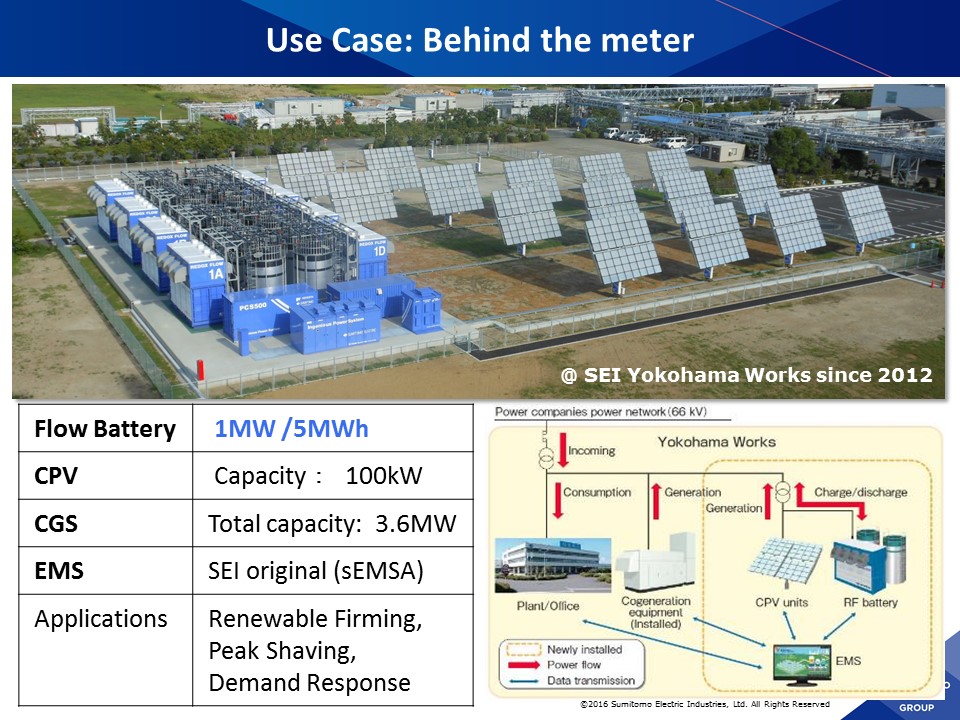
Key Highlights
- Scalability: Independent design of cell stacks and electrolyte tanks for flexible power and energy capacity.
- Long Cycle Life: Capable of tens of thousands of cycles with minimal degradation and deep discharge capability.
- Safety & Efficiency: Utilizes non-flammable, environmentally friendly electrolytes with fast response times and competitive round-trip efficiencies.
Overview
A redox flow battery (RFB) is an electrochemical energy storage system that harnesses the principle of reduction-oxidation (redox) reactions to store and release electrical energy. Unlike traditional batteries where both energy and power components are integrated into a single unit, RFBs employ separate electrolyte tanks and a cell stack for electrochemical reactions, allowing independent scaling of energy capacity and power output. This design provides the unique ability to optimize the system for long-duration energy storage applications such as grid support, renewable energy integration, and microgrid operations.
Technical Specifications
General System Configuration
The architecture of a redox flow battery is based on two main components: the cell stack and the balance of system (BOS). The cell stack is responsible for the electrochemical redox reactions, while the BOS includes the auxiliary systems such as electrolyte storage tanks, pumps, piping, and a power management system for seamless operation.
Electrolytes and Chemistry
Most RFB systems use vanadium-based chemistries; particularly, the Vanadium Redox Flow Battery (VRFB) employs vanadium ions in different oxidation states to avoid cross-contamination, ensuring a long cycle life. Additionally, alternative chemistries such as iron-chromium or zinc-bromine can be considered, though vanadium systems remain the most common due to their operational reliability and safety profile.
Cell Stack Configuration
The cell stack comprises multiple identical cells connected in series. Each cell includes:
- Two electrodes (positive/cathode and negative/anode) commonly made from carbon-based materials.
- An ion-exchange membrane that separates the two electrolytes and permits selective ion transfer to complete the electrical circuit.
- Supporting hardware to ensure uniform electrolyte flow and effective thermal management.
Performance Metrics
The performance of a redox flow battery is characterized by several key parameters which are critical for its operation and efficiency:
| Parameter | Description | Typical Value/Range |
|---|---|---|
| Energy Storage Capacity | The amount of energy the battery can store, measured in kilowatt-hours (kWh). | Up to 1,000 kWh (configurable based on electrolyte volume) |
| Power Rating | The maximum electrical power output, typically defined by the cell stack. | Ranges from 50 kW to 250 kW (or higher in custom designs) |
| Depth of Discharge (DoD) | The percentage of total available capacity that can be used during each cycle. | 100% (no significant degradation when fully discharged) |
| Cycle Life | Number of full charge/discharge cycles the battery can undergo. | Over 10,000 cycles; some designs report virtually unlimited cycles |
| Round Trip Efficiency (RTE) | Efficiency with which stored energy can be retrieved, accounting for losses. | 70% to 80% |
| Response Time | Speed at which the system can react to a change in load demand. | Less than 70 ms |
| Self-Discharge Rate | The rate of energy loss while the battery is idle. | Approximately 0.05% per day |
| Operating Temperature | Optimal ambient temperature range for the electrolytes. | Typically 10°C to 40°C (with some systems operating between -20°C and 50°C) |
Physical and Safety Parameters
Container and Installation
RFB systems are often designed in a containerized format for ease of transportation and installation. The physical dimensions vary with system capacity. For instance, a 1 MW system may require a container with dimensions approximately 24 x 15 x 4 meters.
Weight Considerations
The overall weight of an RFB system is a function of both the cell stack and the electrolyte tanks. While the cell stack itself might weigh a fraction of the total system, the addition of large volumes of electrolyte often makes the complete system weight substantial.
Safety and Certifications
Safety is a key design criterion. Redox flow batteries utilize non-flammable, non-toxic materials with a high degree of intrinsic safety. The use of aqueous electrolytes further reduces fire risks. Certifications and standards such as UL1741, EN 62103, IEEE519, and IEEE1547 ensure that systems meet rigorous safety and performance benchmarks.
System Components
Major Components Overview
The overall system layout of a redox flow battery divides into primary components that work in synchronization to achieve reliable and efficient energy storage:
1. Cell Stack
The cell stack is the heart of the battery, where the redox reactions occur. It is composed of a series of cells that each contain:
- Electrodes: Typically graphite or other carbon-based materials, providing a conductive surface for the reactions.
- Membrane: An ion-selective barrier that prevents mixing of the two electrolytes while allowing ionic conduction to complete the circuit.
2. Electrolyte Tanks
Separate external tanks store the positive and negative electrolytes. The system allows independent scaling, meaning that the total energy stored is directly proportional to the electrolyte volume.
3. Pumps and Piping
Pumps circulate the electrolytes from the tanks through the cell stack and back, ensuring continuous and uniform distribution of the active species. Appropriate piping and valves regulate flow rates to optimize performance.
4. Power Management System
Advanced power electronics and control systems manage the charging and discharging cycles. They monitor parameters such as state of charge (SOC), voltage, current, and temperature in real time to protect the battery and maximize efficiency.
Operational Details
Operating Conditions
Operational conditions directly influence the performance and longevity of a redox flow battery. Here are the key operational parameters:
- Temperature Range: Optimal performance is generally achieved within 10°C to 40°C. Specialized systems can operate from -20°C up to 50°C.
- Altitude Limitations: For certain systems, operational efficiency may decrease at altitudes above 2000 meters, with associated derating.
- Noise Levels: Due to pump and cooling systems, the noise typically stays below 75 dBA at a 1-meter distance.
Performance Optimization
Maximizing the performance of redox flow batteries involves continuous monitoring and control. Key areas of focus include:
- Electrolyte Management: Regular checks and maintenance of electrolyte composition and concentration help ensure stable performance.
- Flow Rate Regulation: Adjusting the pump speeds to maintain uniform electrolyte distribution enhances efficiency and prevents hotspots.
- Thermal Management: Adequate cooling or heating systems prevent temperature extremes that could affect reaction rates and cell stability.
Application and System Advantages
Primary Applications
Redox flow batteries are versatile and can be used in a variety of energy storage applications:
- Grid-Scale Energy Storage: Provides load balancing, frequency regulation, and support for renewable energy sources.
- Renewable Integration: Facilitates the integration of solar and wind power by compensating for intermittent output.
- Microgrids & Remote Communities: Offers reliable backup and off-grid energy solutions, thereby enhancing energy security.
- Peak Shaving and Load Leveling: Helps reduce peak demand charges by supplying power during high usage periods.
Advantages
The design and operational features of redox flow batteries offer a range of advantages, including:
- Operational Longevity: Capable of over 10,000 cycles with deep discharge capabilities without significant degradation.
- Modular Scalability: The independent scaling of energy and power makes these batteries adaptable to varying energy demands.
- High Safety Profile: Use of aqueous, non-flammable electrolytes minimizes the risk of fire or explosion.
- Low Maintenance Requirements: Simplicity in design and continuous monitoring contribute to reduced operational costs over time.
- Environmental Sustainability: Non-toxic materials and the potential for long operational life make RFBs an eco-friendly option.
Installation, Maintenance, and Warranty
Installation Practices
Containerized and modular designs allow redox flow battery systems to be installed quickly at various scales. Installation typically involves setting up the cell stack, electrolyte tanks, pumping systems, and integrated monitoring platforms. Standard best practices include ensuring adequate ventilation, avoiding extreme temperature environments, and timely calibration of flow control systems.
Maintenance Requirements
Redox flow batteries are designed for minimal routine maintenance. The primary upkeep involves:
- Electrolyte Monitoring: Regular checks on chemical balance and composition to prevent degradation.
- Pump and Valve Inspections: Ensuring that circulation systems are functioning flawlessly.
- System Diagnostics: Integrated software monitors voltage, current, and temperature to alert operators to any incipient issues.
Warranty and Certification
Redox flow battery systems often come with comprehensive warranty coverage, typically ranging from 5 to 10 years with no cycle limitations. Certifications such as UL1741, EN 62103, IEEE519, and IEEE1547 help validate system safety, performance, and adherence to industry standards.
Comparison Table
The table below summarizes the comparative specifications and benefits of redox flow batteries:
| Specification | Feature | Typical Value/Range |
|---|---|---|
| Energy Capacity | Modular scalability based on electrolyte volume | Up to 1,000 kWh or more |
| Power Rating | Determined by the cell stack configuration | 50 kW to 250 kW (customizable) |
| Round Trip Efficiency | Energy conservation efficiency | 70% - 80% |
| Cycle Life | Charge/discharge cycles with minimal performance loss | Over 10,000 cycles |
| Depth of Discharge (DoD) | Maximizes utilization without harm | 100% |
| Response Time | Capability to respond to rapid load changes | < 70 ms |
| Operating Temperature | Ambient conditions for optimal functioning | 10°C to 40°C (extendable) |
| Safety | Non-flammable, environmentally friendly materials | Meets major safety certifications |
References
For further reading and detailed technical information, please consult the following resources:
- E22 Energy Storage Solutions - Datasheet E22
- Sumitomo Electric - Flow Batteries
- Lockheed Martin - Flow Batteries Overview
- Wikipedia - Vanadium Redox Battery
- Stryten - Vanadium Redox Flow Battery
Recommended Related Queries
Explore these related topics to deepen your understanding of redox flow battery technologies and their applications:
Last updated March 10, 2025